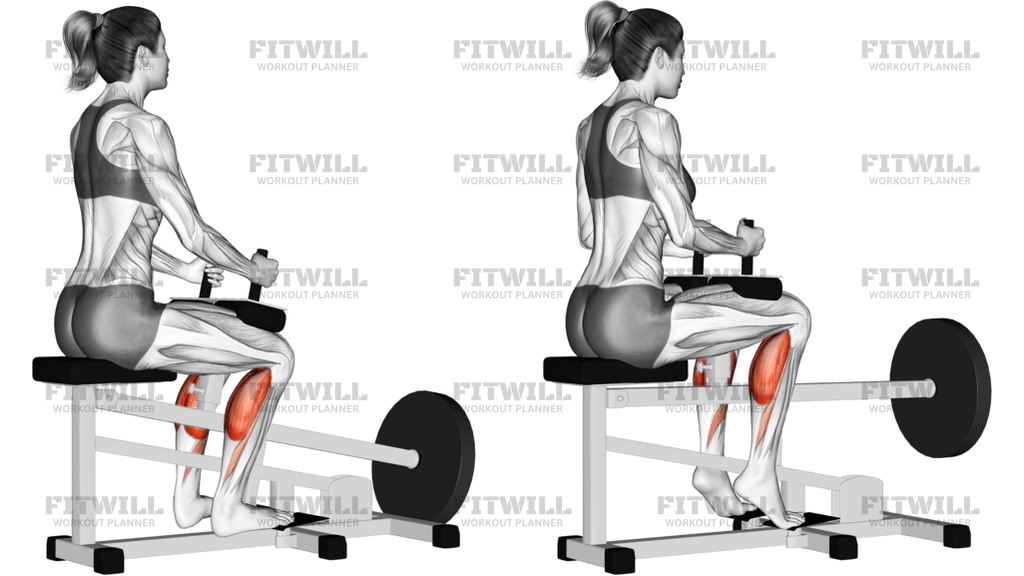
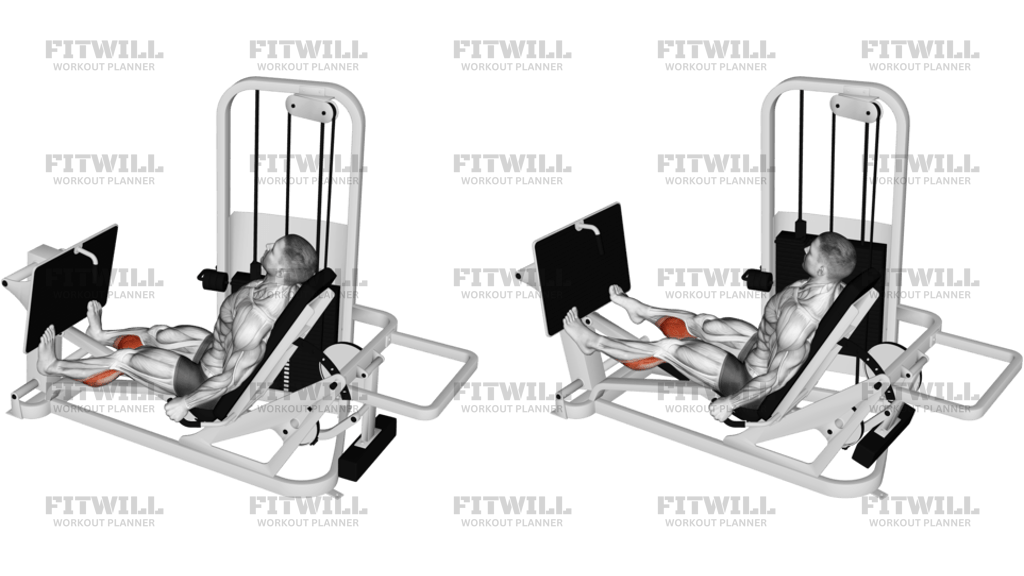
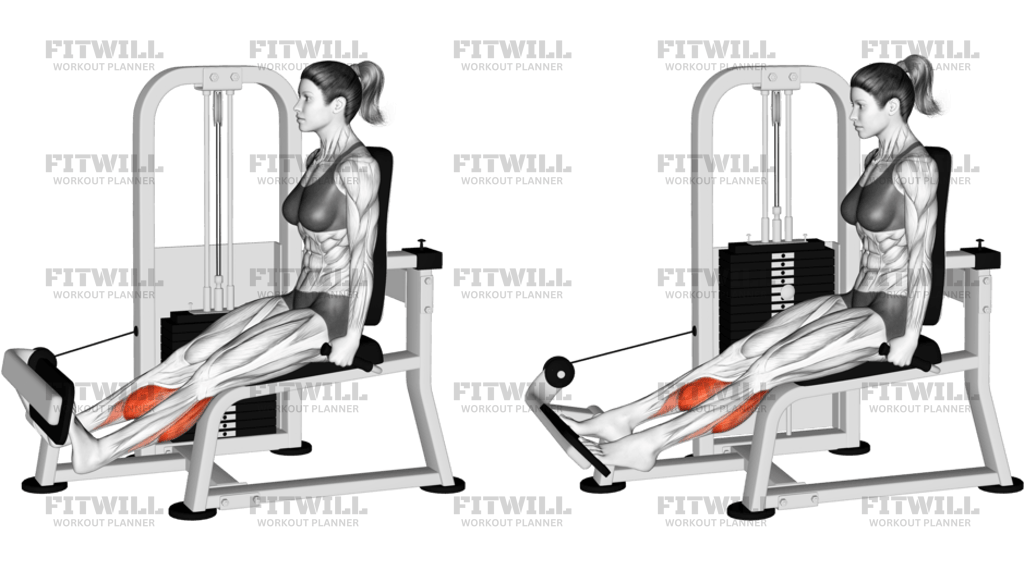
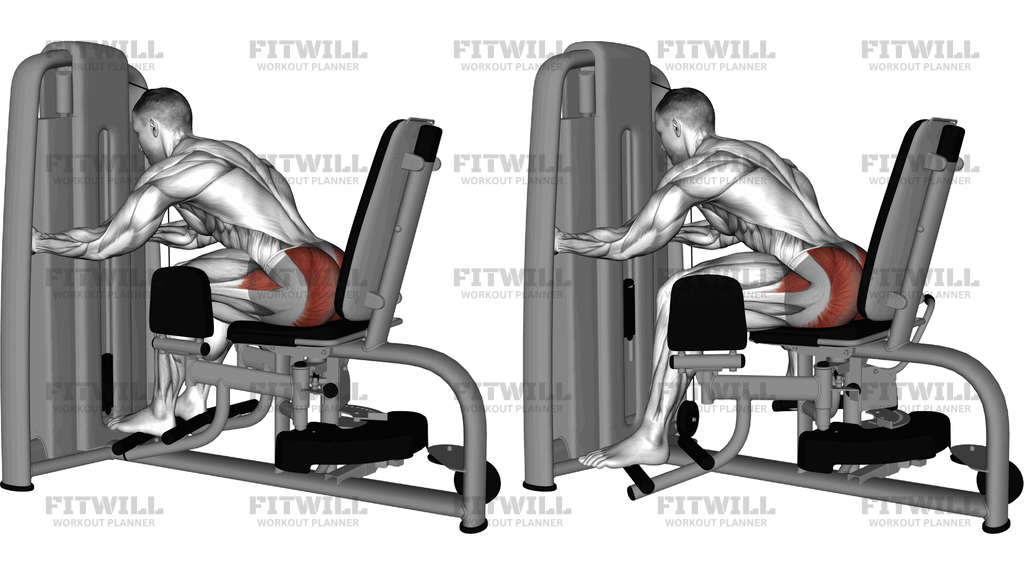
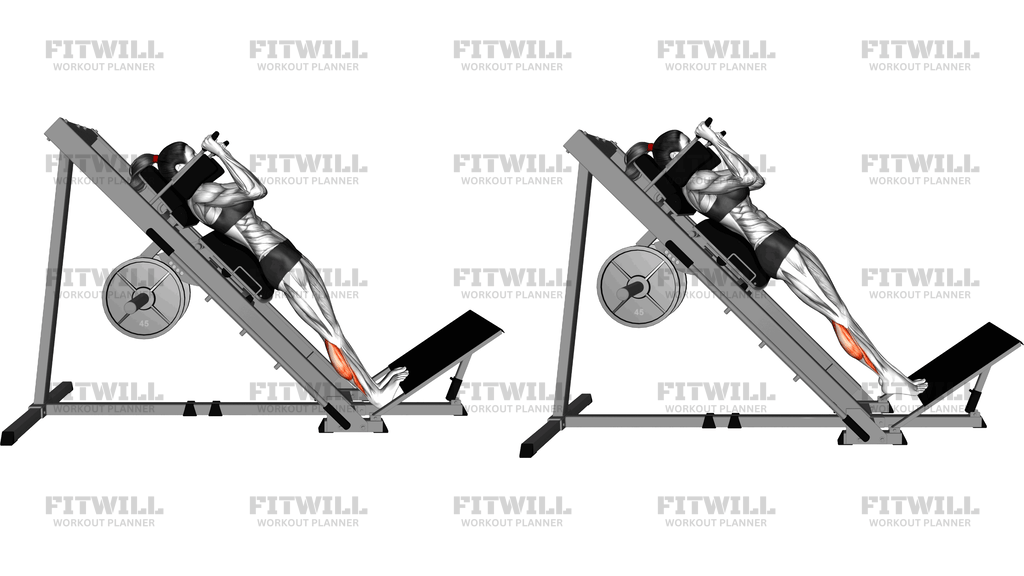
Lever Lying Leg Curl Calf Raise
The Lever Lying Leg Curl Calf Raise is a seated calf raise performed on a lever leg curl machine. Instead of curling with the ankles, you sit on the machine's bench with the roller pad resting across your thighs, place the balls of your feet on a step platform in front of you, and drive up onto your toes. The pad on the knees acts as the resistance, and you can add a light dumbbell on top of the pad or hold the machine's handles to control the load. The highlighted working area is the calf complex, mainly the gastrocnemius with the soleus underneath.
This setup is useful because the machine puts you in a stable, upright seated position with the knees bent to roughly ninety degrees. That bent-knee angle shifts more of the work toward the soleus, which is exactly what a seated calf raise is meant to train. Lifters who already use the leg curl station can add this without changing equipment, and it suits people who find standing calf raises uncomfortable on the lower back or who want to isolate the calves without balance demands.
Setup matters more than load here. The roller pad should sit just above the knees, not on the thigh midpoint, so it stays secure as the knees rise and lower with the heels. The step platform needs to be tall enough that your heels can drop below the level of your forefoot at the bottom without touching the floor. If the platform is too low, your range gets cut short; if your heels slam down at the bottom, you lose tension and invite bouncing.
To execute well, press through the balls of the feet and big toes, rise as high as the ankles allow, and pause briefly at the top with the calves fully shortened. Lower under control until you feel a solid stretch along the calf, then start the next rep without bouncing. Keep the hands resting on the pad rather than pushing hard unless you intentionally want to add pressure, and keep the torso tall against the machine's backrest.
Common use cases include hypertrophy work for the lower legs, rehabilitation-friendly calf training after clearance from a professional, and pairing with leg curls in the same session since you are already positioned at the machine. A practical safety note: start lighter than you think you need, because calves respond to high reps and tight, controlled ranges, not to heavy bouncing with the heels crashing down at the bottom of each rep.
Fitwill
Log Workouts, Track Progress & Build Strength.
Achieve more with Fitwill: explore over 9600 exercises with images and videos, access built-in and custom workouts, perfect for both gym and home sessions, and see real results.
Start your journey. Download today!




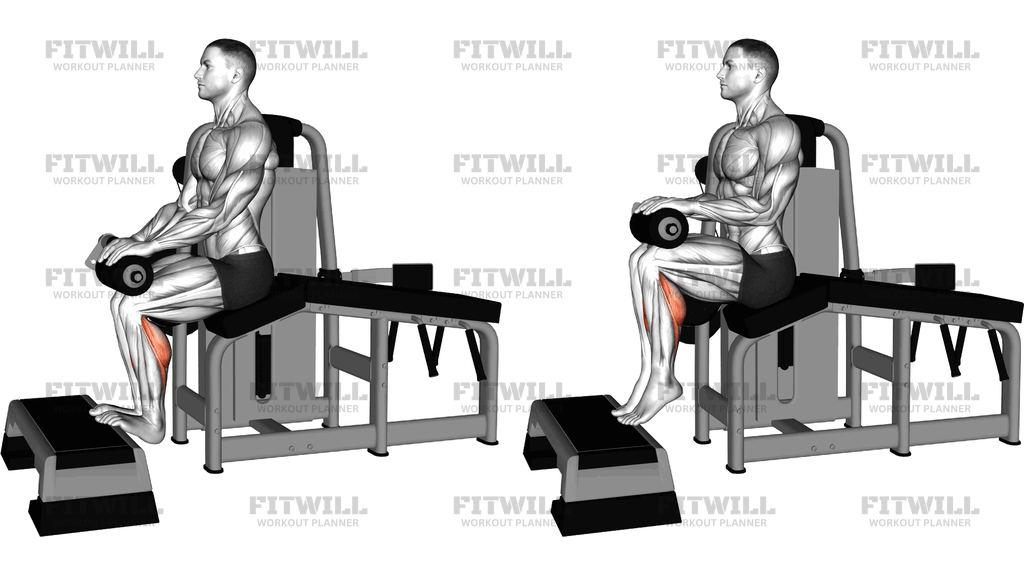
Instructions
- Sit on the seat of the lever leg curl machine with your back upright against the pad and your knees bent at about ninety degrees over the edge of the seat.
- Place the machine's roller pad across your thighs just above the knees, and if you want extra resistance, rest a light dumbbell on top of the pad while your hands hold it steady.
- Position the balls of both feet on the step platform in front of the seat so your heels hang off the edge and can drop below the level of your toes.
- Grip the machine's handles lightly or rest your hands on the pad to keep the load stable across your knees.
- Start with your heels lowered into a full calf stretch and your weight on the balls of the feet.
- Press down through the platform, lifting your heels as high as possible so your knees and the pad rise together.
- Pause for one to two seconds at the top with the calves fully contracted.
- Lower your heels slowly until you reach the stretched position again, keeping the movement smooth rather than letting the heels drop.
- Exhale as you press up and inhale as you lower back down.
- Complete your reps, then remove the pad or dumbbell from your thighs before standing off the machine.
Tips & Tricks
- Position the pad directly above the kneecaps. If it slides toward the mid-thigh, the knees can push it forward on each rep and the load shifts awkwardly.
- Do not let the heels crash at the bottom. The stretch position is productive only if you arrive there under control and keep tension on the calves.
- Keep the balls of the feet, especially the big-toe side, in firm contact with the platform. Rolling onto the outside of the foot is a common fault that reduces calf work and strains the ankle.
- Push the knees gently into the pad rather than driving with your hands. Pressing hard with the arms turns this into a leg press instead of a calf raise.
- If your calves give out before your grip or the pad slips, your weight is too heavy. The seated position lets you use high reps, so aim for a load you can pause with at the top.
- Keep the torso against the backrest. Leaning forward over the knees shortens the working angle and makes the rep feel easier without training more muscle.
- Adjust the seat height if the machine allows it so the knees stay bent around ninety degrees; nearly straight legs change the exercise into more of a gastrocnemius-biased version with different leverage.
- Hold the top contraction for a full second instead of rushing. Calves are accustomed to constant low-level work, so a deliberate pause at the top does more than extra speed.
- Check that the step platform sits on a non-slip surface and does not rock when your weight shifts onto the forefoot.
Frequently Asked Questions
Which muscles does the Lever Lying Leg Curl Calf Raise work?
The primary muscles are the calves, with the gastrocnemius and soleus sharing the work. Because the knees stay bent at roughly ninety degrees, the soleus takes on a large share of the load, while ankle stabilizers assist throughout.
Why perform a calf raise on a lever leg curl machine instead of a standing calf raise?
The machine gives you a fixed seated position with the pad across the knees, so you get direct vertical resistance without balance demands or spinal loading. It is also convenient because you can move straight from leg curls into calf work at the same station.
Is the bent-knee position important in the Lever Lying Leg Curl Calf Raise?
Yes. The bent knee slackens the gastrocnemius slightly, which shifts more demand onto the soleus underneath. If you want more gastrocnemius emphasis, a straighter-leg version such as a standing calf raise is the better choice.
Do I need to add a dumbbell on top of the roller pad?
Not necessarily. The machine's roller pad alone may provide enough resistance depending on the weight stack or lever setting. Add a light dumbbell only when the pad alone feels too easy and you can still control every rep.
How high should the step platform be for this exercise?
It should let your heels drop clearly below the level of your forefoot at the bottom without touching the floor. If your heels hit the ground, the stretch portion of each rep is cut short and the range becomes too small to be productive.
What is the most common mistake in this movement?
Bouncing the heels off the platform at the bottom to help start the next rep. The stretch reflex takes tension off the calves and puts extra stress on the Achilles area, so lower slowly and restart each rep from a still position.
Can beginners do the Lever Lying Leg Curl Calf Raise?
Yes, it is actually beginner friendly because the seated position removes balance requirements. Start with the pad alone, use higher reps, and focus on a full stretch at the bottom and a clear pause at the top before adding any dumbbell weight.
How can I substitute if my gym has no lever leg curl machine?
Any seated calf raise works as a substitute: sit on a bench with a weight plate or dumbbell across the knees and the forefeet on a step or plate. The key details to copy are the bent knees, the pad or weight over the thighs, and the elevated forefoot.
Is this exercise safe for the Achilles tendon?
The deep stretch at the bottom loads the Achilles region, which is normal for calf training, but repeated bouncing under heavy load is where problems arise. Control the lowering phase, progress load gradually, and stop if you feel sharp pain rather than normal muscle fatigue.