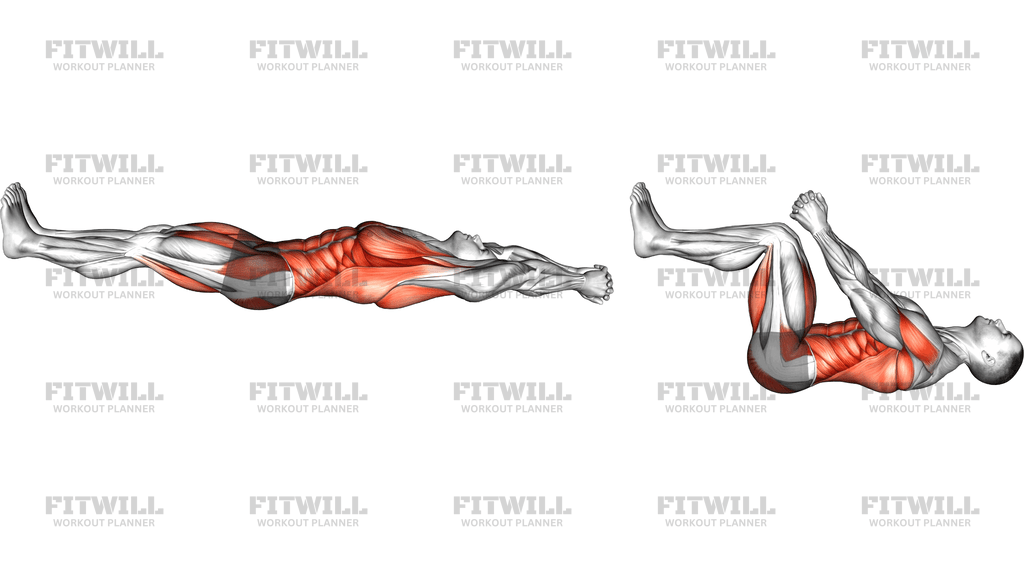
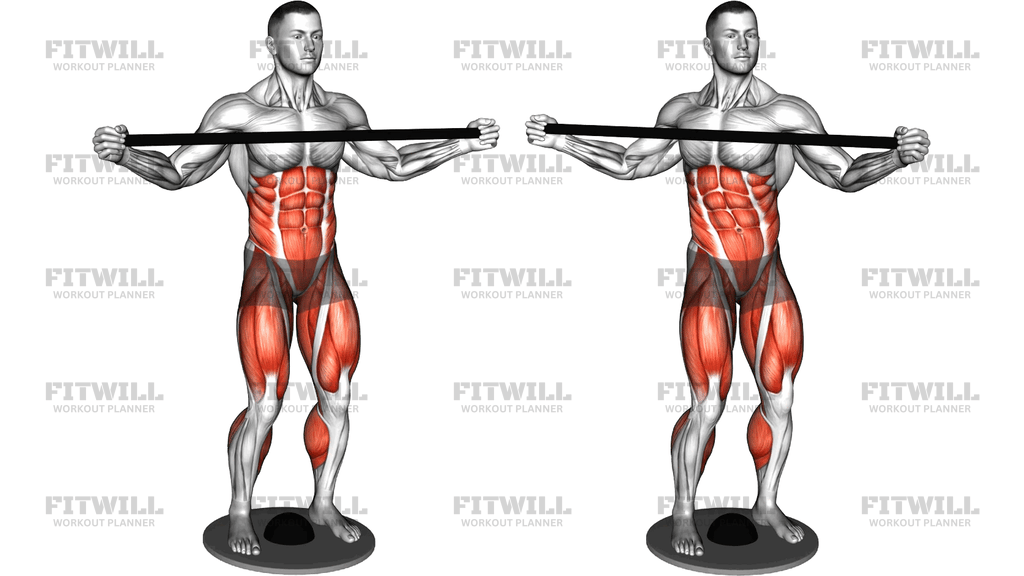
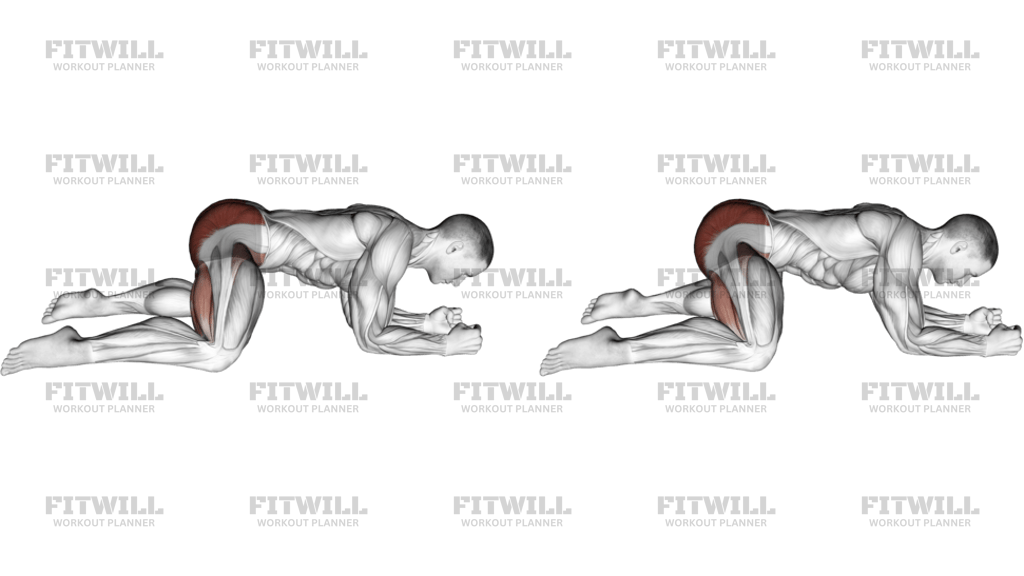
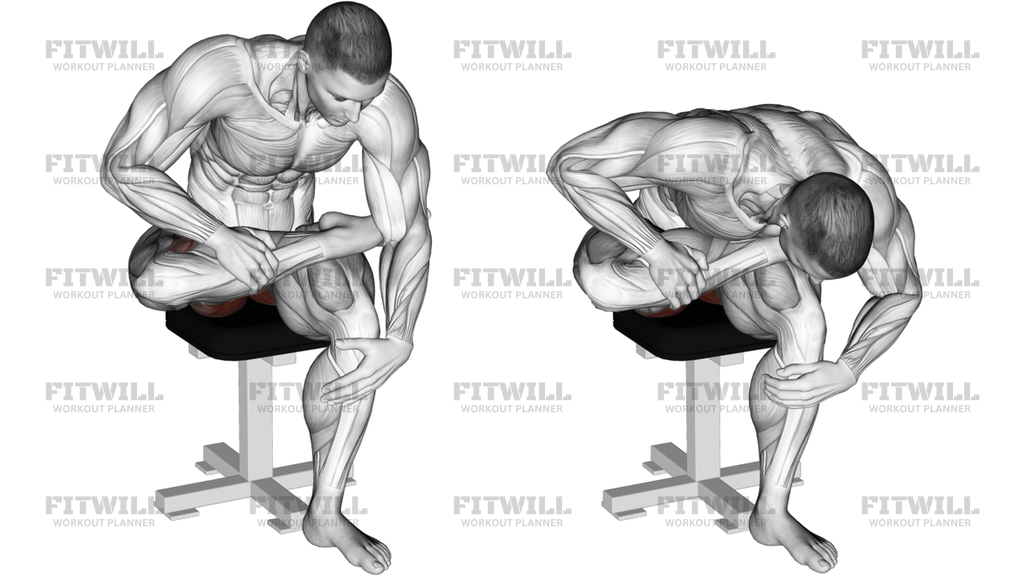
Alternating Child To Downward Dog To Body Rock
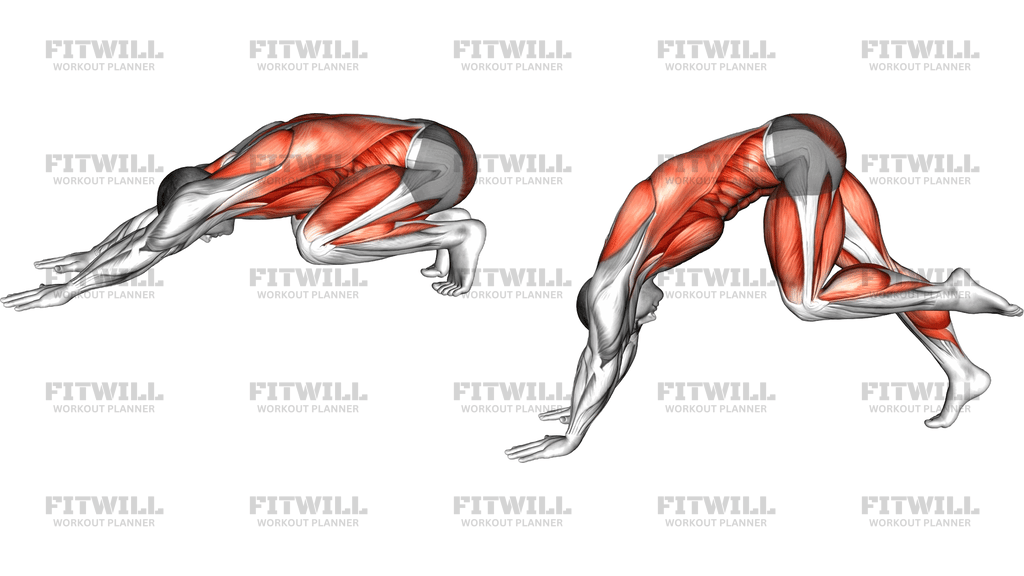
The Alternating Child To Downward Dog To Body Rock is a flowing bodyweight movement that links three familiar floor positions into one continuous sequence. You begin in child's pose with the hips settled back toward the heels and the arms reaching long on the mat, press up through downward dog with the hips high and the body folded into an inverted V, then shift your weight forward and lower down into a controlled body rock before returning to the start. The alternating element means you switch which leg or knee leads with each cycle, keeping both sides of the body working evenly through the flow.
This movement is useful for almost anyone who spends time sitting, because it moves the spine through flexion and extension, opens the shoulders, and lengthens the lats, hamstrings, and calves in a single pass. It is a staple in warm-ups, cool-downs, yoga-style sessions, and mobility circuits. Because you are working on a mat with no external load, the exercise is easy to scale: slow the tempo for more of a stretch, or speed it up and add a gentle rocking rhythm to raise the core demand and get the blood moving.
The setup matters more than people expect. Your hands should be planted about shoulder-width apart with the fingers spread and the index fingers pointing forward, and your knees should rest on a cushioned surface since they bear weight in child's pose and during the transitions. A mat protects the knees and gives your palms enough traction so the hands do not slide forward as you rock. If the hands drift or the feet slip, the whole sequence loses its rhythm and the lower back starts doing work it should not.
To execute it well, think of the movement as a wave rather than three separate poses. Exhale as you lift the hips into downward dog and press the chest back toward the thighs, then let the weight roll forward over the shoulders as the hips lower toward the mat, keeping the arms engaged so the shoulders do not collapse. The rock should feel smooth and controlled, not bouncy. Then reverse the wave: press the floor away, lift the hips, and settle back into child's pose before starting the next repetition on the opposite side.
Common use cases include pre-workout preparation for pushing and pressing days, recovery sessions after heavy lifting, and desk-break routines where you need to undo a compressed posture quickly. Pay attention to the wrists and shoulders: if the rock forward pushes the shoulders past the wrists and causes pinching, shorten the range by not letting the head travel as far past the hands. Move within a range that feels like a stretch and a controlled effort, and keep the transitions quiet and deliberate rather than dropping or flopping between positions.
[ Workout Log & Planner ]
Put your next workout in Fitwill
Keep your plan and training log ready when you are.


Instructions
- Kneel on an exercise mat with your knees about hip-width apart, then sit your hips back toward your heels and walk your hands forward so your arms are extended and your forehead or chest hovers just above the mat in child's pose.
- Spread your fingers, press the palms firmly into the mat, and lightly brace your core so your midsection is active before you start moving.
- Tuck your toes under and drive your hips up and back into downward dog, straightening the legs as much as your hamstrings allow while pressing the chest back toward your thighs.
- From downward dog, shift your weight forward over your hands, letting the shoulders travel past the wrists as your hips lower toward the mat into the body rock.
- Keep your arms engaged and elbows soft but not locked as your body rocks forward, so your shoulders support the movement instead of sagging toward the floor.
- Reverse the path by pressing the floor away, lifting the hips back up through downward dog, and then lowering the knees back down to child's pose.
- Alternate the lead leg or knee each time you return to child's pose, so both sides go through the same number of cycles.
- Exhale as you lift into downward dog and rock forward, and inhale as you settle back into child's pose.
- Pause briefly in child's pose at the end of each cycle to reset your hand position and brace before starting the next repetition.
- Complete your target repetitions or time interval with a smooth, even tempo, finishing on the side you started with so the work stays balanced.
Tips & Tricks
- The most common mistake is letting the hands slide forward during the body rock, which drops the shoulders too far past the wrists; press the fingertips into the mat and keep the hand position fixed from start to finish.
- If your heels never get near the floor in downward dog, bend the knees slightly and prioritize a long spine over straight legs, then work on ankle and hamstring flexibility separately.
- Do not let the lower back collapse as the hips lower during the rock; keep the abs braced so the forward shift comes from shoulder and hip movement rather than an arched spine.
- Avoid rushing the transition out of child's pose, since popping up too fast tends to dump weight into the wrists; drive the hips up first and let the chest follow.
- If your knees are sensitive, fold the mat double or place a pad under them, because child's pose and the return transition put direct pressure on the kneecaps.
- Watch for the head craning up during the rock; keep the neck in line with the arms and look slightly back toward the shins or the mat to protect the cervical spine.
- Make the alternating element obvious by deliberately switching which knee rests first in child's pose each cycle, otherwise one side quietly does more of the work.
- Keep the weight distributed across the whole palm, not dumped into the heel of the hand, to reduce wrist strain through the forward rock.
- Slow the tempo down if the flow turns into bouncing; a controlled two- to three-second rock forward gives a far better stretch through the lats and shoulders than a fast, uncontrolled swing.
Frequently Asked Questions
What muscles does the Alternating Child To Downward Dog To Body Rock work?
It primarily challenges the core to control the rocking transition, while the lats, shoulders, and arms handle the weight-bearing. The hamstrings, calves, and glutes are worked as they lengthen and shorten through the downward dog position.
Is the Alternating Child To Downward Dog To Body Rock suitable for beginners?
Yes, because it uses only body weight on a mat and the range can be scaled easily. Beginners can reduce how far the shoulders travel past the wrists during the rock and keep the knees bent in downward dog.
Why do I need a mat for the Alternating Child To Downward Dog To Body Rock?
The knees carry direct pressure in child's pose and on every return transition, so a mat cushions them. It also gives your palms and toes traction so your hands and feet do not slide during the rock.
What does the alternating part of the Alternating Child To Downward Dog To Body Rock mean?
It means you switch which leg or knee leads with each cycle of the flow. This keeps both sides moving through the same range and prevents one hip or shoulder from doing consistently more work.
Should my shoulders go past my wrists during the body rock?
A modest forward shift past the wrists is part of the movement, but it should never feel pinching or strain in the shoulders. If it does, stop the rock earlier and keep the shoulders stacked closer to the hands.
Can I use this instead of static stretching before a workout?
Yes, this dynamic flow works well as a warm-up because it takes the spine, shoulders, and hips through range of motion while moving. For a cool-down, slow the tempo down and hold the child's pose and downward dog positions a little longer.
My heels never reach the floor in downward dog during this flow. Is that a problem?
Not necessarily, as tight calves or hamstrings often limit heel position. Keep a slight knee bend and focus on pressing the chest back and lengthening the spine rather than forcing the heels down.
What can I substitute if the Alternating Child To Downward Dog To Body Rock bothers my wrists?
You can perform the same flow on your forearms, keeping the hips moving between the child's pose and downward dog positions. This removes most of the wrist extension while keeping the spinal and hamstring benefits.
How many repetitions should I do of the Alternating Child To Downward Dog To Body Rock?
Five to ten full cycles, alternating sides each time, is a solid dose for a warm-up. For a mobility-focused session, work up to one to two minutes of continuous, controlled flow.
How do I know if I am doing the body rock correctly?
The movement should feel like a smooth wave from hips high to hips low with no jerking, and your hand and foot positions should not change during the cycle. If you hear your knees thump down or your palms slide, slow down and reset before each rep.