Balance Plate Standing Twist
Balance Plate Standing Twist is a standing core rotation exercise performed on an unstable, round balance plate. You stand with both feet on the plate, hold a stick or band horizontally across your upper chest with straight arms, and rotate your torso from side to side while your lower body works continuously to keep you level. Because the surface moves under your feet, every turn of the trunk forces your abs, hips, and calves to coordinate in real time.
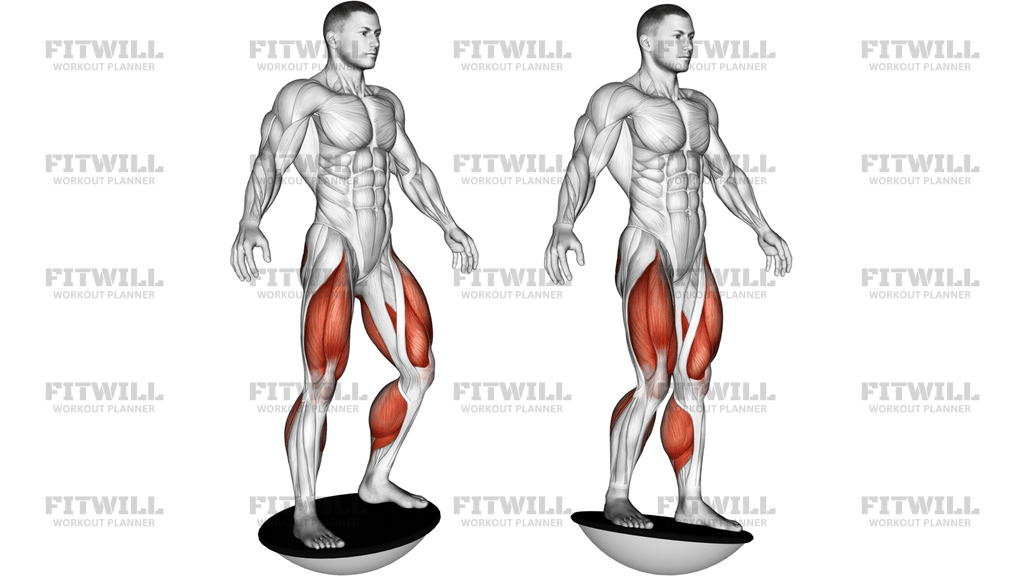
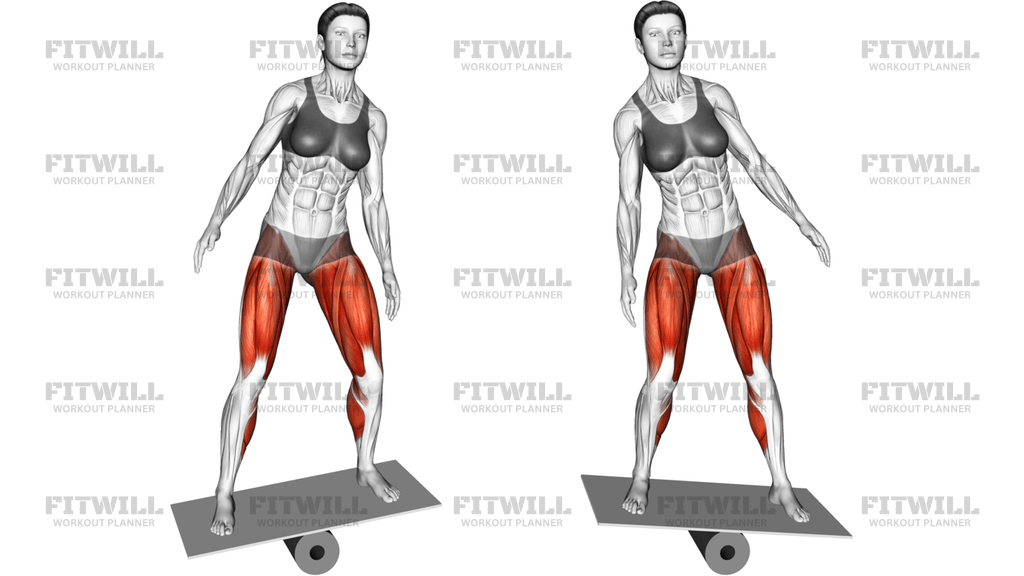
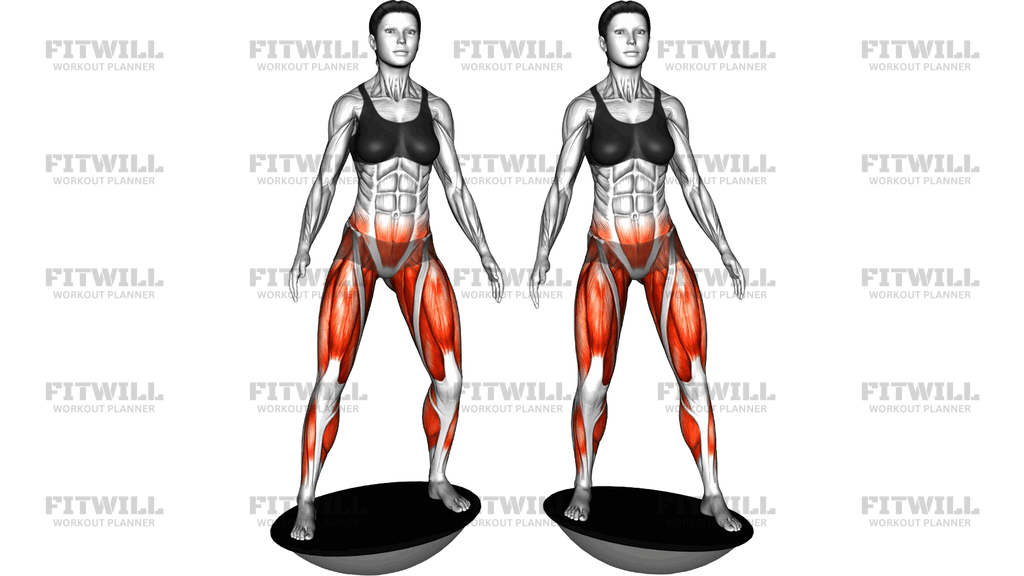
The main workload lands on the abdominal wall, especially the obliques that drive rotation, while the quadriceps, calves, and smaller stabilizing muscles around the ankles and hips handle the balance demands. The straight, extended arms act like a long lever: the further your hands are from your spine, the more effort the core needs to turn and control the weight of the arms and the stick. This makes the movement surprisingly demanding despite the light equipment.
The unstable base is what separates this from an ordinary standing twist. On a flat floor, your feet quietly absorb rotational forces. On the balance plate, those forces travel down into your legs, so your body has to stiffen and adjust with every repetition. That combination of trunk rotation and lower-leg stabilization makes it a useful exercise for anyone who wants core control that carries over to walking, running, lifting, and directional sports.
Setup matters more here than in most standing core work. Position your feet roughly hip-width apart near the center of the plate, keep the stick level with your collarbones, and soften your knees slightly rather than locking them. A rigid stance fights the plate; a slightly springy stance lets you ride it. Keep your head and chest facing forward as the arms and ribcage swing, and let the rotation come from the waist rather than from twisting the knees inward.
This exercise fits well into warm-ups, core circuits, and balance-focused sessions. It is commonly used by people recovering general stability after long periods of inactivity, older adults working on fall resistance, and athletes who need controlled rotation under unstable conditions. Beginners should start with slow, small turns and no extra load; the plate itself provides plenty of challenge.
Keep the tempo moderate and stop the set when your balance deteriorates rather than when your abs fatigue. Quality turns on a moving surface beat fast, sloppy ones. If you feel wobbly at first, stand near a wall or rack so you can steady yourself with one hand until your confidence builds.
[ Workout Log & Planner ]
Put your next workout in Fitwill
Keep your plan and training log ready when you are.


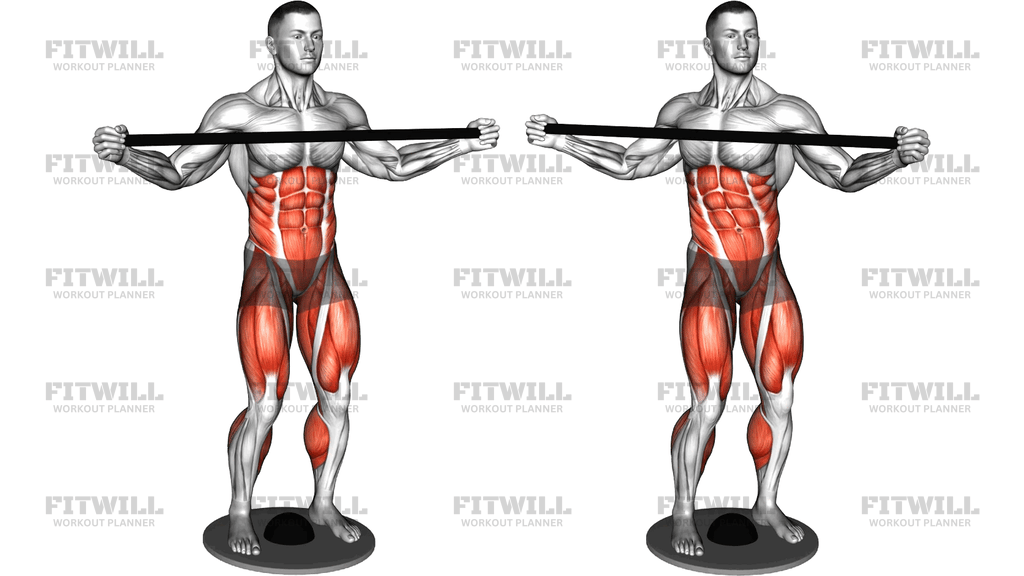
Instructions
- Place a balance plate on a flat, non-slip floor and step onto it with both feet about hip-width apart, toes pointing forward.
- Hold a stick or taut band with an overhand grip, hands wider than your shoulders, and raise it to collarbone height with your arms almost straight.
- Soften your knees, keep your back tall, and brace your abs as if preparing for a light push to the stomach.
- Keep your head and hips facing forward as the reference point; only the ribcage and arms should rotate.
- Swing the stick smoothly to one side by turning your waist, stopping when your shoulders have rotated about 45 degrees or when you feel your hips start to drag around.
- Control the stick back through the center without pausing, then rotate to the opposite side with the same range.
- Exhale as you turn into each twist and inhale as you return through the middle.
- Keep constant light pressure through the whole foot — big toe, little toe, and heel — to stay level on the plate.
- Complete your target repetitions or continue alternating for time, then step off the plate carefully, one foot at a time.
Tips & Tricks
- If the plate tilts sharply to one side mid-set, you are shifting your weight into the turn instead of rotating above your hips — reset to center before continuing.
- A common mistake is letting the knees twist inward with each swing; press the knees slightly outward and let the rotation happen at the waist.
- Keep the stick at collarbone height the whole time. Letting it drop turns the move into a loose arm swing and takes tension off the abs.
- Widen your grip if the twist feels too easy; a longer lever increases the core demand without adding weight.
- Slow the turnaround at each end of the rotation. Catching the stick and whipping it back is where most people lose their balance on the plate.
- Do this exercise early in your workout, before grip and ankle stabilizers are tired, so balance failure does not cut the set short.
- If your calves burn before your abs, bend the knees a little more and shorten the range until your legs adapt to the surface.
- Practice the twist on solid ground first if the plate feels overwhelming, then move onto it once the rotation pattern feels automatic.
Frequently Asked Questions
Which muscles does the Balance Plate Standing Twist work the most?
The abs and obliques drive the rotation, while the quads, calves, and ankle stabilizers work continuously to keep you level on the plate. The glutes and hips assist with controlling the side-to-side shifts.
Why use a balance plate instead of twisting on the floor?
The moving surface forces your legs and deep core to react to every rotation, turning a simple twist into a full-body stability drill. On solid ground, your feet absorb most of the rotational force and the balance work largely disappears.
Is the Balance Plate Standing Twist suitable for beginners?
Yes, provided you start with slow, small rotations and keep the arms relatively close in. Standing near a wall for support during the first few sessions is a sensible way to build confidence.
How far should I rotate during each twist?
Aim for roughly 45 degrees of shoulder rotation to each side, or slightly less if your hips start swinging with the arms. The end range is where control matters, so stop where you can reverse the movement smoothly.
Should my feet move during the exercise?
No, keep both feet planted in the same spot on the plate for the entire set. The feet should make small pressure adjustments, but lifting or repositioning them means the rotation is coming from the lower body instead of the waist.
What is the most common mistake with this movement?
Letting the head and hips turn with the arms, which converts a core exercise into a full-body sway. Keep your eyes and pelvis facing forward and isolate the turn to the ribcage and waist.
Can I substitute anything if I do not have a balance plate?
You can perform the same stick twist on a folded exercise mat, a foam pad, or even bare floor. You will lose some of the ankle and calf stabilization work, but the oblique training remains.
How many repetitions should I do?
Start with 10 to 15 controlled twists to each side, or 30 to 45 seconds of continuous alternating turns. Stop when your balance noticeably degrades, since sloppy reps on an unstable surface teach poor patterns.
Is it safe for people with lower back issues?
Controlled standing rotation with light load is generally well tolerated, but anyone with a history of back problems should keep the range small, move slowly, and clear the exercise with a qualified professional first.