Sitting Lotus Pose Woodchoper
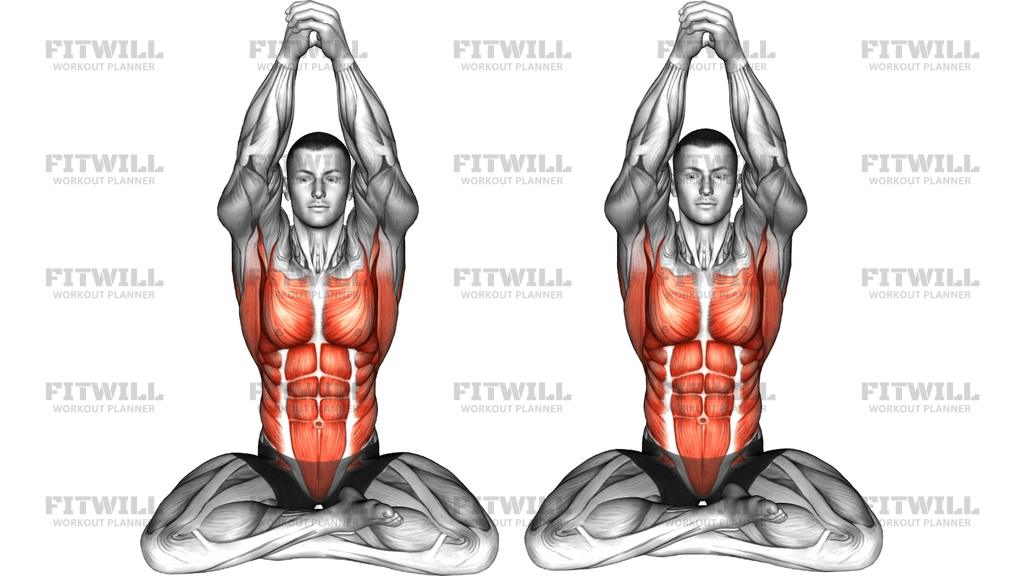
The Sitting Lotus Pose Woodchopper is a body-weight core exercise performed from a seated cross-legged position. You sit in a lotus or easy cross-legged posture, clasp your hands together, and raise both arms straight overhead. From that tall, lifted position, you sweep the clasped hands down and across your body in a diagonal chopping arc, then control the arms back up overhead. It blends the grounded hip position of a seated yoga posture with the rotational torso mechanics of a woodchopping movement.
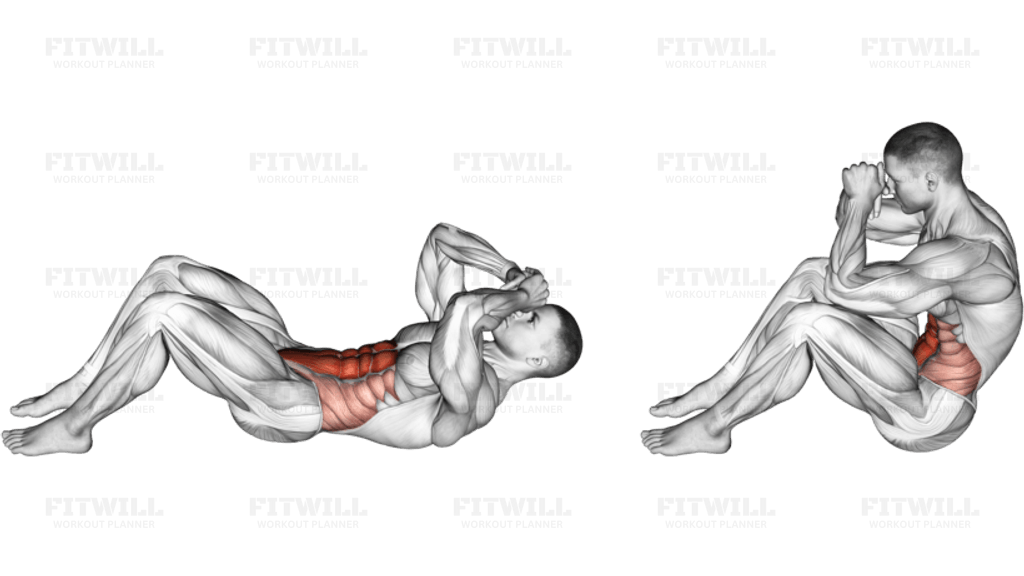
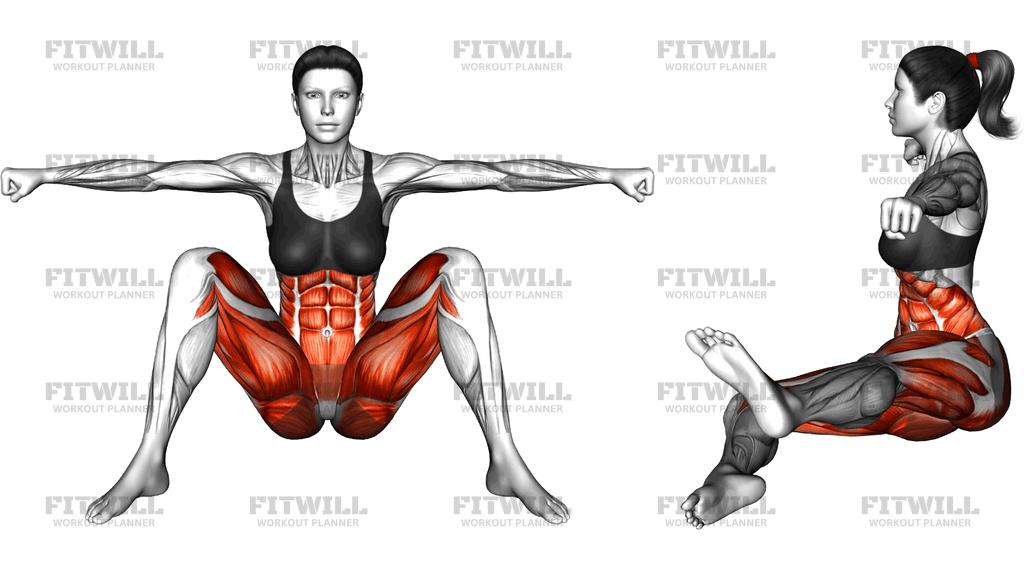
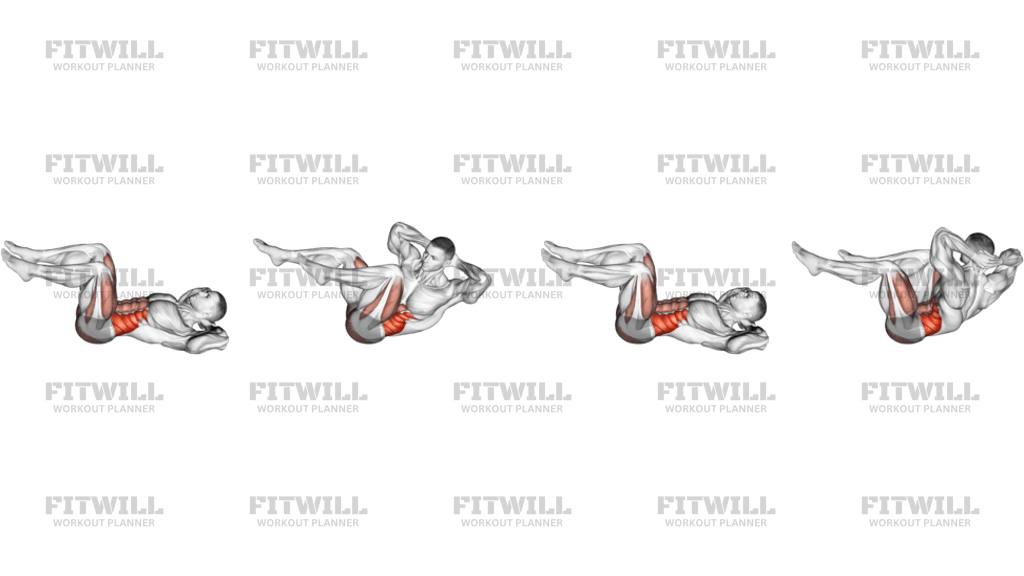
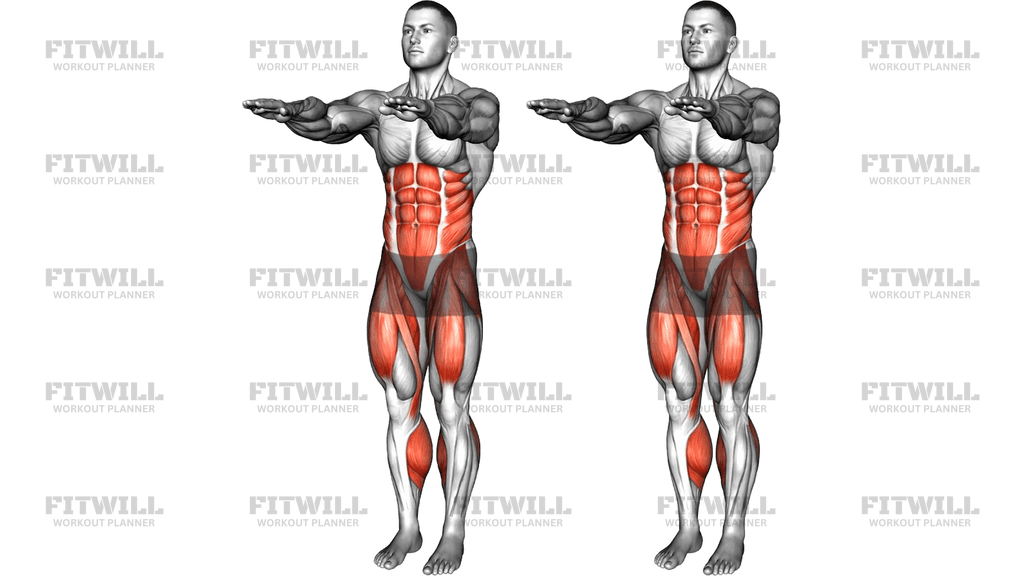
Because your legs are folded and locked in place, the exercise forces your trunk to do the work. Your abdominal wall, especially the rectus abdominis highlighted along the front of the torso, braces hard to keep you upright, while the obliques drive and control the diagonal sweep. The chest and shoulders stay engaged through the overhead reach, and the hips work to keep your knees settled toward the floor as your torso rotates.
This movement suits people who want a low-impact way to train rotation without loading the spine with weight. It is useful as a warm-up before more demanding rotational work, as a core finisher, or as part of a mobility-focused session. Anyone who sits at a desk for long hours can benefit, since it combines trunk rotation with an active overhead reach that opens the chest and shoulders.
The setup matters more than it might seem. A stable cross-legged base is what allows the torso to rotate freely, so take a moment to ground yourself before moving. Sit up on the edge of a folded mat or cushion if your hips are tight, and let your sit bones bear your weight evenly. With a wobbly base, the lower back tends to round and the chop becomes a slumping motion instead of a controlled rotation.
To execute it well, keep the arms long and the hands high for as long as possible during the descent. The chop should feel like a diagonal line drawn from above your head down across your chest toward the opposite hip, powered by the waist rather than by bending forward. Move at a deliberate pace, exhale on the way down, and pull the arms back overhead with the same control.
A practical safety note: if your knees or hips complain in a full lotus position, use a simple cross-legged sit instead. The exercise trains your trunk either way, and forcing deep hip rotation under a moving torso is where most people run into trouble. Keep the range honest and the movement smooth, and let flexibility improve gradually over repeated sessions.
[ Workout Log & Planner ]
Put your next workout in Fitwill
Keep your plan and training log ready when you are.


Instructions
- Sit on an exercise mat or firm cushion and cross your legs so each foot rests on the opposite thigh for a full lotus, or simply cross your shins in front of you for an easy pose.
- Rest your hands on your knees, sit tall, and settle your weight evenly onto both sit bones with your knees relaxing toward the floor.
- Interlace your fingers and press both arms straight overhead until your elbows are long and your hands are stacked above your head.
- Brace your abdominal wall and lift through the crown of your head so your spine stays long before any movement starts.
- Exhale as you sweep the clasped hands down and across your body in a diagonal arc, from overhead toward the hip on the opposite side, rotating through the waist.
- Keep your arms extended and your chest lifted throughout the chop rather than letting your hands collapse toward your lap.
- Inhale as you pull the clasped hands back up along the same diagonal path until your arms are fully overhead again.
- Complete all repetitions on one side, then switch the diagonal so the hands chop toward the other hip, or alternate sides rep by rep if that feels more natural.
- After the final rep, lower the arms, uncradle your legs one at a time, and gently straighten them to reset before switching the leg cross.
Tips & Tricks
- If your knees hover far off the floor in lotus, sit on a folded mat or low cushion first; elevating the hips lets the knees drop and gives the rotation a steadier base.
- The most common mistake is turning the chop into a forward slump. Watch that your chest stays facing forward and tall as the arms come down; the twist should come from the waist, not from curling the upper back.
- Keep the elbows from bending as the hands descend. Bent arms shorten the lever, let the shoulders shrug, and take work away from the chest and abdominals.
- Do not yank the arms down with momentum. If the hands fall faster than you can stop them, the obliques are being skipped instead of trained; slow the descent until it feels deliberate.
- Keep both sit bones planted during the sweep. If one hip lifts and you rock sideways, narrow the angle of the chop slightly until you can rotate without losing the base.
- Switch which leg is on top between sets. Crossing the same leg first every session builds an imbalance into the hip position before the movement even starts.
- Tight hips are the usual reason this exercise feels awkward, not a weak core. Spend a few sessions in the seated position with arms simply overhead before adding the full chop.
- Let your breathing lead the tempo: exhale on the chop down, inhale on the return. Holding your breath usually means the range or speed is too aggressive.
- If your shoulders pinch in the overhead clasp, widen the hand position slightly or hold a small gap between the hands instead of forcing the fingers to interlock.
Frequently Asked Questions
What muscles does the Sitting Lotus Pose Woodchopper work?
The abdominal wall is the primary worker, with the obliques driving the diagonal rotation. The chest and shoulders stay active through the overhead reach, and the hips stabilize the cross-legged base.
Do I need full lotus flexibility to do the Sitting Lotus Pose Woodchopper?
No. A simple cross-legged sit gives you the same stable base and lets the exercise train your trunk just as effectively. Move toward full lotus gradually if that is a goal in itself.
Can beginners perform the Sitting Lotus Pose Woodchopper?
Yes, and it is actually a gentle entry point into rotational core training since there is no external load. Beginners should start with a smaller chop arc and a slower tempo before extending the range.
Why should my arms stay straight during the chop?
Straight arms keep the torso working as one connected lever, which loads the abdominals and obliques properly. Bending the elbows turns the movement into an arm exercise and lets the trunk off the hook.
Should I stay seated in the same leg cross for the whole set?
Yes, keep one cross for a complete set so your base stays consistent, then re-cross with the opposite leg on top before the next set. This keeps the hips balanced over time.
My knees lift far off the floor when I sit cross-legged. Is that a problem?
It is common with tight hips and it makes the base less stable. Sit on a folded mat or low cushion to raise your hips so the knees can settle downward, then begin the movement.
How can I tell if I am rotating instead of just bending forward?
Your chest should stay tall and turn slightly sideways during the chop rather than dropping toward your thighs. If you feel your upper back rounding or your head dropping, reduce the arc and focus on the twist.
What can I use instead of the Sitting Lotus Pose Woodchopper if sitting on the floor is uncomfortable?
The same clasped-arm diagonal chop works from a sturdy chair or a kneeling position with a mat under the knees. Once the seated posture is comfortable again, return to the cross-legged version.
Is it safe to do the Sitting Lotus Pose Woodchopper with lower back sensitivity?
Generally yes because it is unloaded and controlled, but keep the arc small, stay tall through the spine, and stop if rotation produces discomfort. Anyone with a recent back issue should get clearance before adding rotational work.
How does this exercise differ from a standing woodchopper?
Removing the legs takes the hips and legs out of the power chain, so the trunk has to produce and control all of the rotation on its own. It is a more isolated core challenge, while the standing version allows far more load and hip drive.