Bodyweight Lying Reach Over
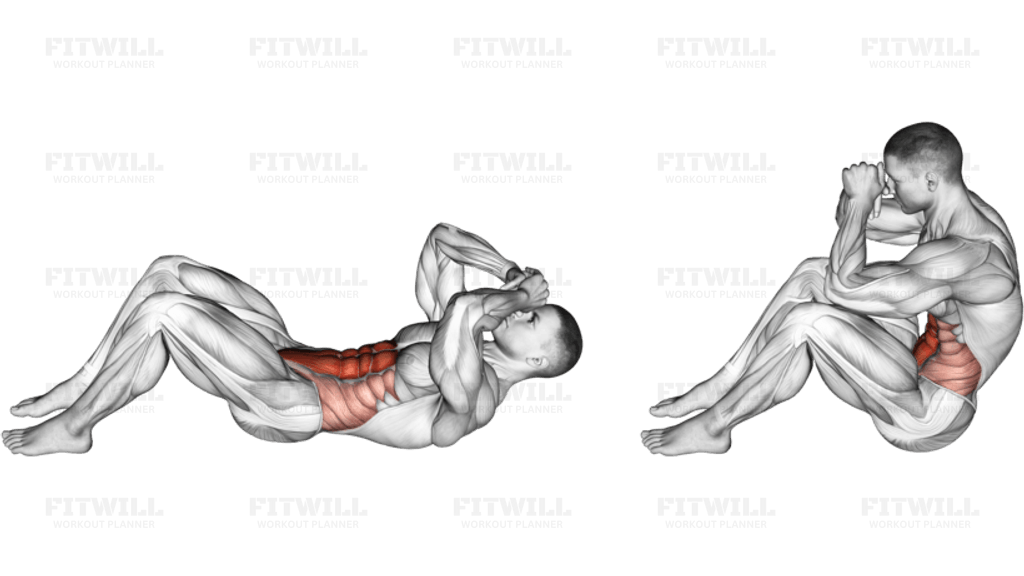
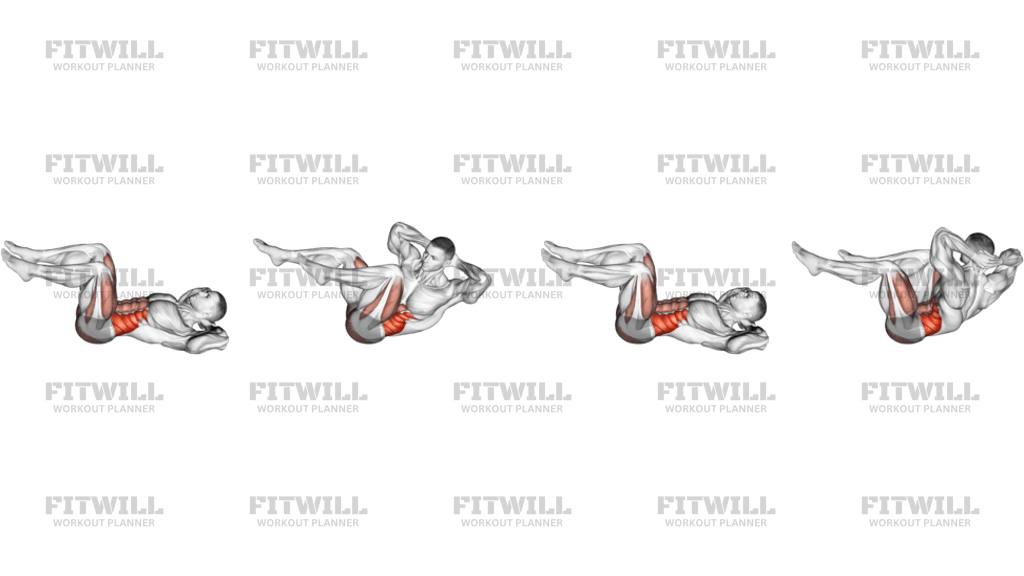
The Bodyweight Lying Reach Over is a floor-based core exercise that combines a full-body stretch with a powerful abdominal tuck. You start lying flat on your back with legs long and arms clasped and extended overhead along the floor. From there, you crunch your torso up while simultaneously pulling both knees in toward your chest, sweeping your clasped hands up and over your knees so they travel past your hips in one coordinated reach. The position then opens back out to the long, stretched starting layout, and the cycle repeats.
What makes this movement valuable is the way it trains the abs through a long range. Most crunch variations only take the spine through a short flexion arc with the arms fixed at the chest. Here, the arms start overhead, which lengthens the rectus abdominis and the lats before every rep, so each tuck has to pull the trunk up from a fully extended position. The hip flexors work hard to bring the knees in, the obliques stabilize the trunk as it curls, and the shoulders get a gentle dynamic stretch every time the arms sweep overhead.
Because the whole movement happens on the floor with no equipment, it is easy to slot into almost any routine. It works well as a warm-up primer for ab training, as a mid-set challenge in bodyweight circuits, or as a finishing movement after heavier compound lifts. People who sit a lot often appreciate the overhead reach component, since it opens the shoulders and lengthens the front of the torso between rounds of tucking.
Setup matters more than it looks. Lie on a mat or other padded surface with enough clear space above your head for your arms and enough room below for your legs. Keep your lower back in contact with the floor at the start, clasp your hands together, and soften the elbows slightly rather than locking them. If the floor is hard or your tailbone is bony, a folded towel under the hips makes the rolling motion far more comfortable.
To execute it well, think of the rep as one smooth fold and unfold rather than two separate motions. Exhale as you curl the shoulder blades off the floor, drive the knees toward the chest, and reach the clasped hands up and over the knees so they pass beyond the hips. Pause briefly in the tucked position, then lower with control, letting the arms travel back overhead and the legs extend to the floor together. The lowering phase is where most people get sloppy; letting the legs and arms crash down turns a precise core exercise into a bouncing mess.
A few practical safety points: move at a pace you can control, keep the neck relaxed by looking at your knees rather than jamming the chin, and stop short of any pinching sensation in the front of the hips or low back. If your hamstrings or lower back feel tight in the extended position, bend the knees slightly during the layout portion rather than forcing the legs perfectly straight. Quality of the fold matters far more than rep speed.
[ Workout Log & Planner ]
Put your next workout in Fitwill
Keep your plan and training log ready when you are.


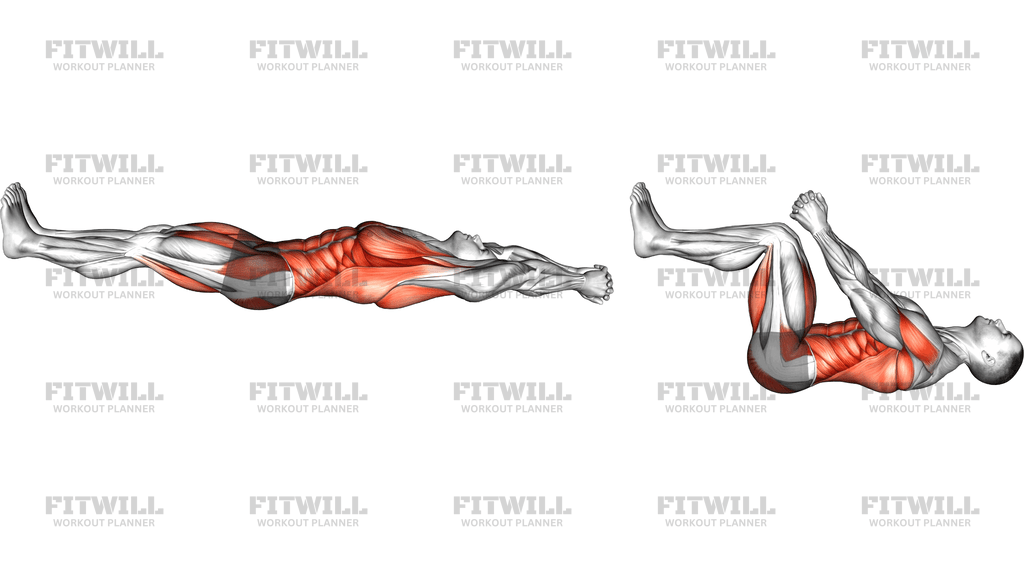
Instructions
- Lie flat on your back on a mat with your legs extended and your lower back pressed gently toward the floor.
- Clasp your hands together and extend your arms straight overhead so they rest along the floor above your head, elbows slightly soft.
- Brace your core lightly and take a breath in, keeping your ribcage down and your neck relaxed.
- Exhale as you curl your shoulder blades off the floor while simultaneously drawing both knees in toward your chest.
- Sweep your clasped hands up and forward, reaching them over and past your knees so they travel beyond your hips at the top of the tuck.
- Hold the tucked position for a beat, with your shins close to your chest and your arms reaching long past your legs.
- Reverse the motion with control: lower your torso back down while extending your legs and returning your arms overhead to the long starting layout.
- Let your legs and arms settle onto the floor briefly to reset the stretch, then begin the next rep.
- Breathe out on every tuck and reach, and breathe in as you open back out to the starting position.
- Complete your set with even pacing, keeping the fold and the unfold equally smooth.
Tips & Tricks
- If your heels or arms slap down at the end of each rep, you are rushing the opening phase; slow the return until both limbs land quietly.
- A common mistake is pulling the knees in without actually curling the torso, which shifts the work to the hip flexors alone. Lead with the shoulder blades lifting and the knees will follow naturally.
- Keep the chin slightly tucked and your eyes on your knees; craning the head forward to chase the reach strains the neck without adding any abdominal work.
- If your lower back arches or feels strained when the arms go overhead, bend your elbows a little or stop the arms at a comfortable height instead of forcing them to the floor.
- Rather than yanking the hands past the knees with momentum, drive the reach from the abs so the hands arrive because the trunk curled, not because the arms swung.
- If your tailbone digs into the floor during the tuck, place a folded towel under your hips before starting.
- Tight hamstrings pulling the legs straight too early can drag your lower back off the floor; extend the legs only as far as you can while keeping the back in contact with the mat.
- Exhale sharply as you fold to help the ribs drop and the abs shorten fully; holding your breath usually produces a shallow, half-hearted crunch.
- If your shoulders feel pinched in the overhead position, widen your clasped hands slightly or hold a light towel between them to reduce the extension demand.
Frequently Asked Questions
What muscles does the Bodyweight Lying Reach Over work?
The primary movers are the abs, especially the rectus abdominis, which curls the trunk from a fully stretched overhead-arm position. The hip flexors bring the knees toward the chest, the obliques steady the trunk, and the lats and shoulders get a dynamic stretch when the arms travel overhead.
Why do the arms start overhead instead of at the chest?
Starting with the arms extended overhead lengthens the abs and lats before each rep, so the trunk has to curl through a longer range than in a standard crunch. That longer arc is what separates the Reach Over from ordinary sit-up variations.
Is the Bodyweight Lying Reach Over suitable for beginners?
Yes, though beginners may want to reduce the range by keeping the arms lower overhead or bending the knees during the layout phase. Once the basic fold feels controlled, extend the arms and legs fully for the complete version.
How is this different from a jackknife or V-up?
A jackknife or V-up usually lifts straight legs and straight arms to meet above the hips, while the Bodyweight Lying Reach Over tucks the knees in toward the chest and sweeps the clasped hands over and past the knees. The tucked-knee version keeps the hips and lower back in a friendlier position for most people.
Why do I feel this more in the front of my hips than in my abs?
That usually means the hip flexors are dominating because the torso is not curling enough. Focus on lifting the shoulder blades first and exhaling hard as you fold, so the abs lead the movement and the knees simply follow.
My lower back lifts off the floor when I extend my legs. What should I change?
Extend the legs only as far as you can while keeping your lower back in contact with the mat, or keep a slight knee bend throughout. Tight hamstrings and hip flexors commonly pull the pelvis into an arch when the legs go long.
Can I do the Bodyweight Lying Reach Over every day?
As a bodyweight movement with no external load, it can be performed frequently, but the abs still need recovery like any muscle. Two to four sessions per week with adequate rest between challenging sets is a sensible rhythm for most people.
What can I use instead if lying on the floor is uncomfortable?
A mat or a towel under the hips and spine usually solves discomfort on a hard surface. If floor work is not possible, a standing knee tuck with an overhead arm reach trains a similar fold pattern without getting down on the ground.
How many reps should I aim for?
Because the emphasis is on a controlled, long-range fold rather than speed, sets of 8 to 15 smooth repetitions work well. Stop the set when the fold starts to feel rushed or your lower back begins to arch on the return.
Is it safe for my neck and lower back?
It is generally safe when performed with control: keep the chin gently tucked, avoid pulling on the head, and never force the arms or legs flat if that creates strain. If you feel pinching or sharp discomfort anywhere, shorten the range or stop and consult a qualified professional.