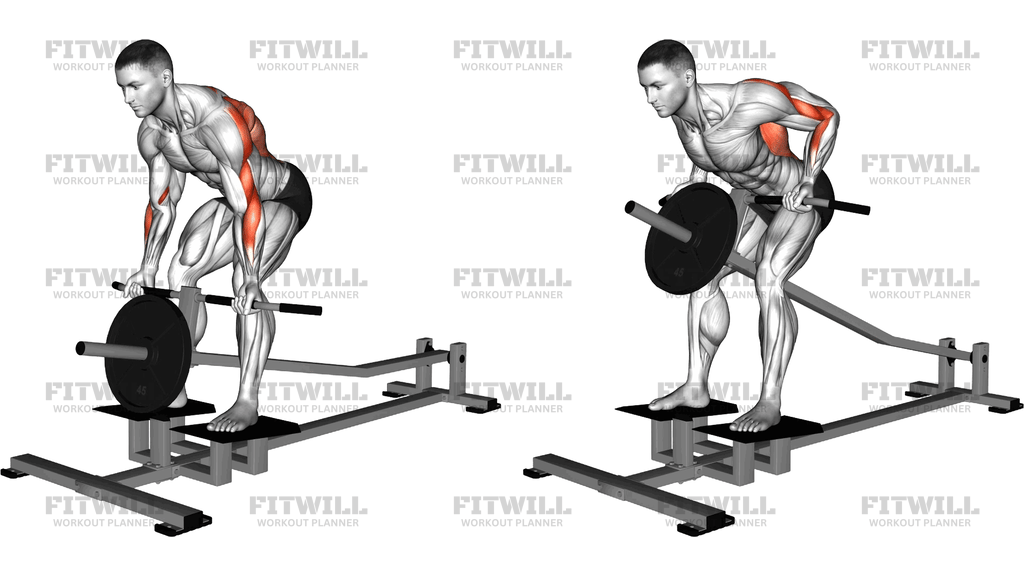
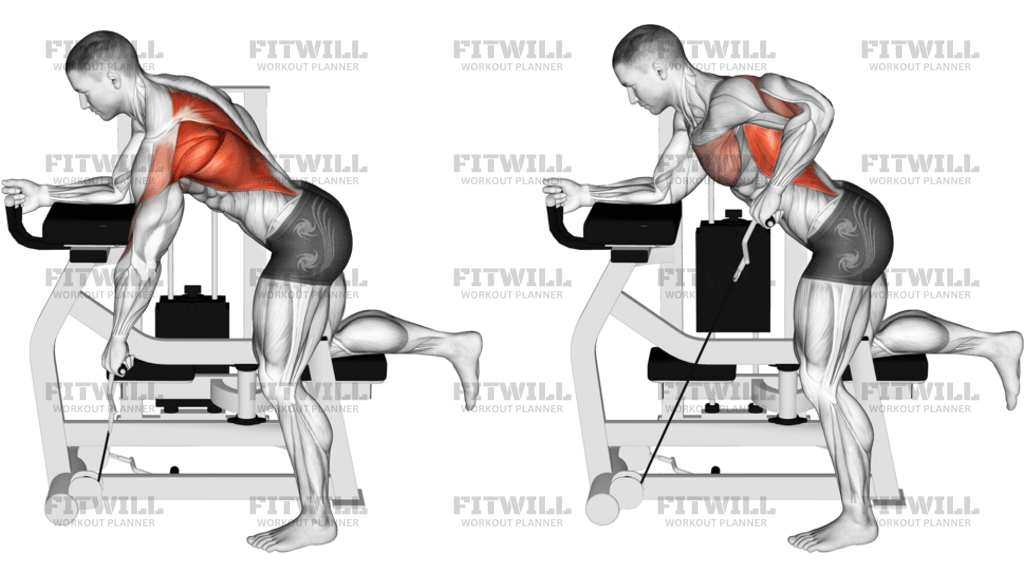
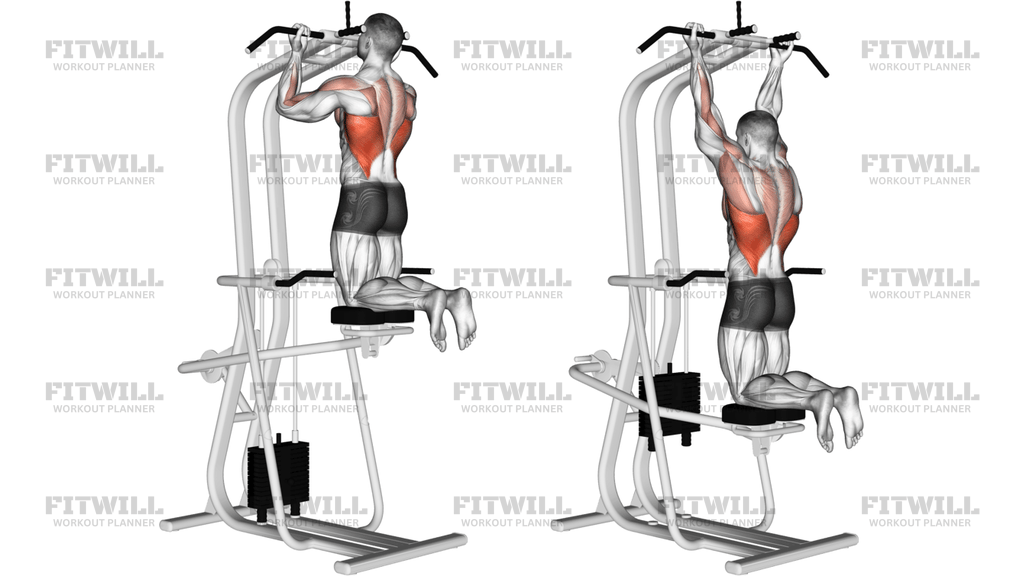
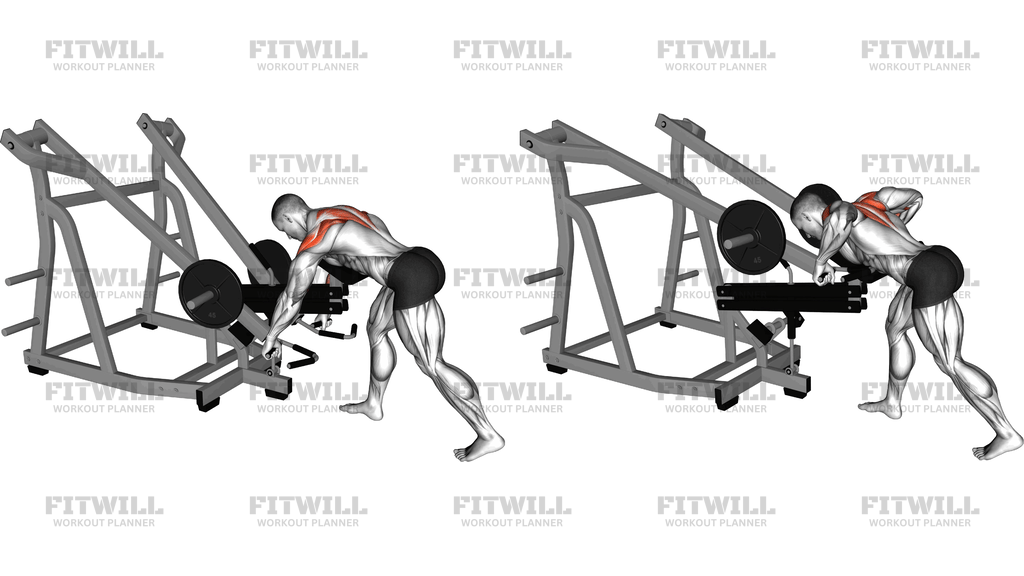
Lever Stack Seated Low Row
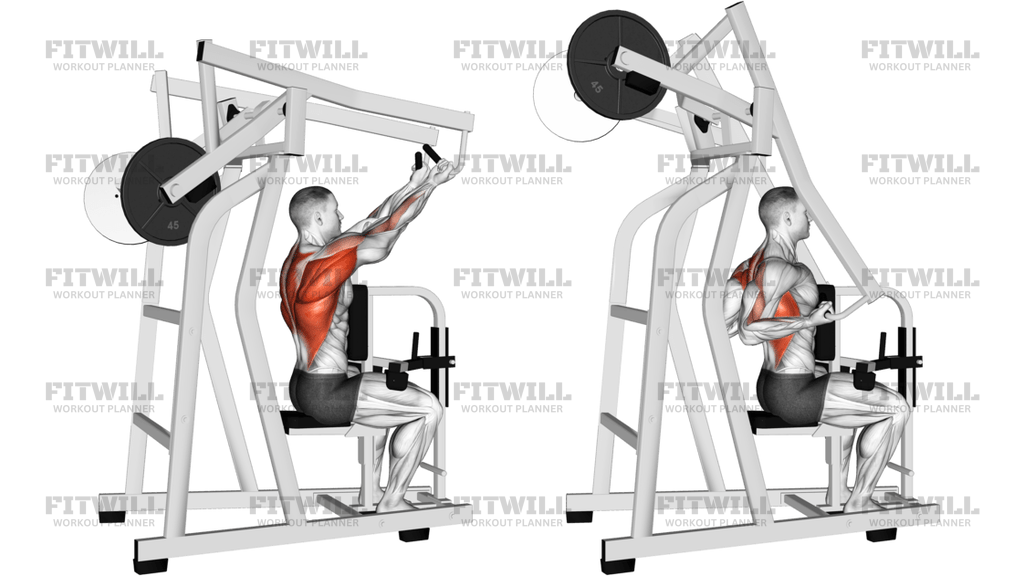
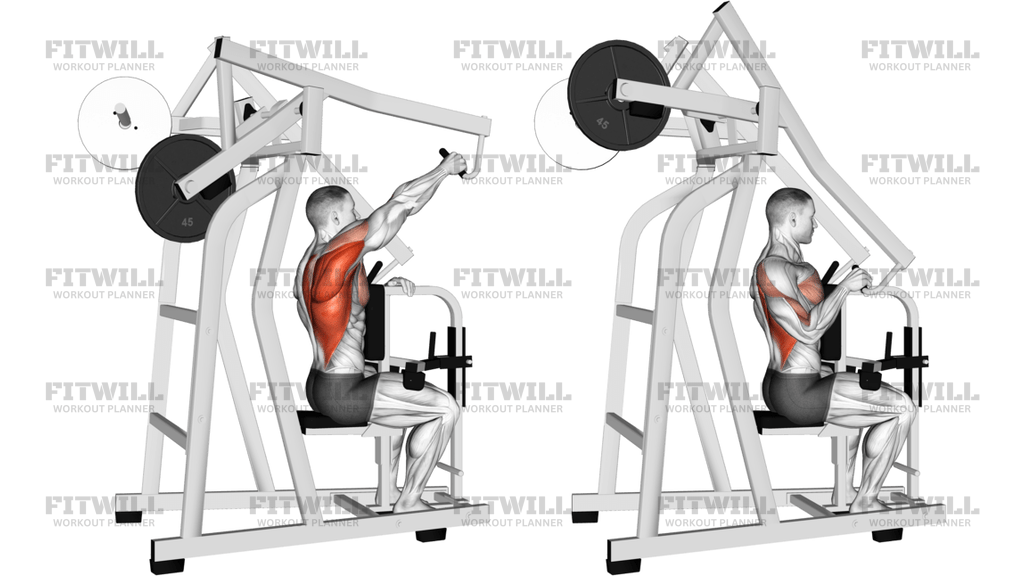
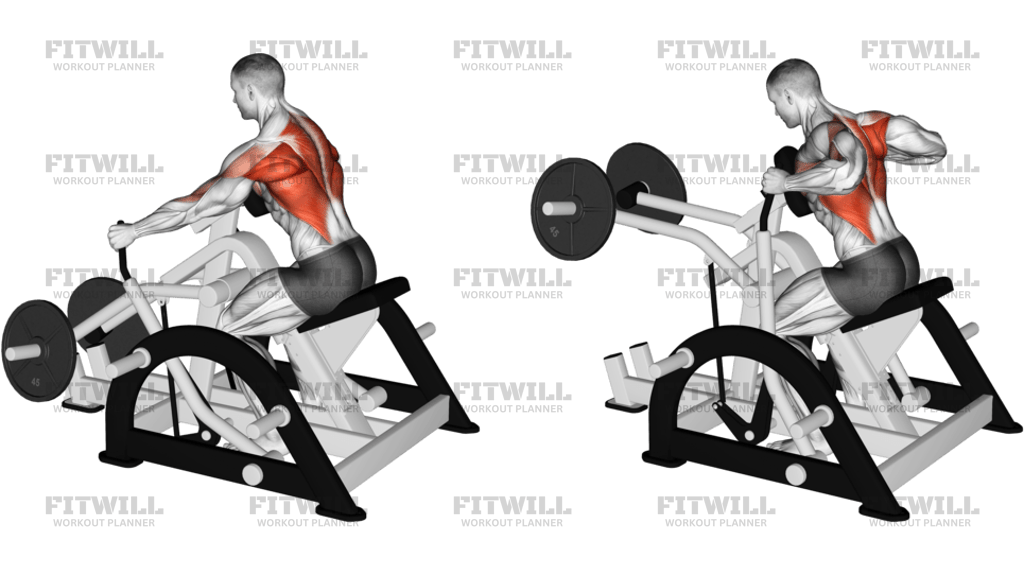
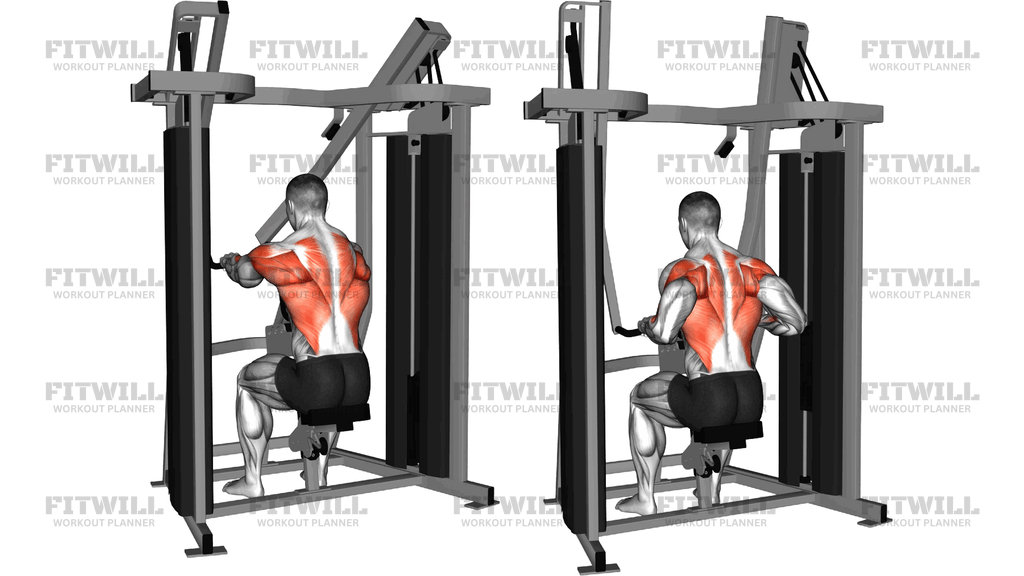
The Lever Stack Seated Low Row is a plate-loaded machine row performed facing the machine, with the arms extending forward at a low angle before being drawn back toward the lower chest and upper abdomen. Because the movement runs on a fixed lever arm, the resistance follows a controlled arc, which makes it easier to keep tension on the back muscles from the stretched position all the way through the pull. It is a staple back-builder in gyms that use leverage or stack-loaded row machines.
This exercise primarily targets the lats, with strong involvement from the rhomboids and mid-traps as the shoulder blades retract at the end of each rep. The rear delts assist with the horizontal pull, the biceps and forearms work as secondary movers and grip support, and the muscles of the lower back and core stabilize the torso against the seat. Compared with a barbell row, the chest-forward, seated setup removes much of the demand on spinal positioning, letting you focus on the pulling muscles themselves.
Setup matters more than people expect on this machine. The seat height should place the handles roughly at lower-chest level when your arms are extended, and your feet should be flat and braced so your body does not drift forward as the weight pulls you in. If the seat is too high the pull turns into more of an upright row for the traps; too low and the shoulders roll forward awkwardly at the stretch.
Execution is straightforward but benefits from intent. Keep the torso tall and relatively still, drive the elbows back past the ribs, and squeeze the shoulder blades together at the finish before letting the arms extend under control. Avoid turning it into a trunk-rocking exercise; a small backward lean at the very end of the pull is normal, but most of the work should come from the arms and upper back.
The Lever Stack Seated Low Row suits a wide range of trainees. Beginners appreciate the guided path and reduced lower-back stress, while more experienced lifters use it for higher-rep back volume, mind-muscle work, or as a finisher after free-weight rows and pulldowns. It is also a practical choice for rehab-minded training or anyone returning from a layoff, since the fixed lever makes it hard to cheat the weight into motion. Keep the loads moderate at first, prioritize a full stretch and a firm squeeze, and only add weight once the reps stay clean.
[ Workout Log & Planner ]
Put your next workout in Fitwill
Keep your plan and training log ready when you are.


Instructions
- Adjust the seat so that, when seated facing the machine, your arms extend forward and slightly downward to reach the handles at roughly lower-chest height.
- Plant your feet flat on the floor or foot pegs about hip-width apart, with your chest upright and a slight forward torso angle toward the machine.
- Grip the handles firmly with a neutral or overhand grip and let the arms extend fully, feeling a stretch across the upper back without letting the shoulders collapse forward.
- Brace your core and keep your chest tall before initiating the first pull.
- Pull the handles back toward your lower chest or upper abdomen, driving your elbows past your ribs rather than flaring them high.
- At the end of the pull, squeeze your shoulder blades together and pause briefly with the hands near your torso.
- Slowly extend your arms back to the starting position, following the lever's arc until you feel the stretch across the lats and upper back.
- Exhale as you pull the handles in, and inhale as you let the weight return.
- Keep your hips and torso anchored throughout the set; avoid rocking backward to move the weight.
- Complete the set, release the handles carefully, and let the lever arm settle before standing up.
Tips & Tricks
- If your shoulders creep up toward your ears during the pull, lighten the load and think about pulling with your elbows, not your hands.
- A seat set too low is a common setup error here; it forces you to reach down and rounds your upper back at full extension, so raise the seat until the handles meet your hands at chest level.
- Do not let the weight slam the lever back at full extension. Control the last third of the stretch, which is where the lats and rhomboids get the most benefit.
- Pause for a full second with the shoulder blades retracted at each rep. Rushing past this point turns the exercise into an arm-dominant curl-and-release.
- If your lower back feels loaded instead of your back muscles, you are likely leaning back too far; keep the torso angle mostly fixed and let the arms do the traveling.
- Use a full grip with the thumbs wrapped rather than a loose hook grip, since grip failure tends to cut sets short before the back is properly fatigued.
- Vary the rep range intentionally: moderate loads in the 10 to 15 range with a strong squeeze work better on this machine than heavy singles, where the fixed path gives you less room to adjust under strain.
- If your forearms fatigue early, try a thumbless-style grip on the handles to reduce forearm flexor involvement and shift emphasis to the upper back.
Frequently Asked Questions
Which muscles does the Lever Stack Seated Low Row work?
The lats are the primary mover, with the rhomboids, mid-traps, and rear delts working hard as you pull the handles toward the torso. The biceps and forearms assist, while the lower back and core stabilize your seated position.
Is the Lever Stack Seated Low Row good for beginners?
Yes. The fixed lever path removes a lot of the balance and positioning demands of free-weight rows, so beginners can learn to feel their back muscles working with a lower risk of form breakdown. Start light and focus on a full stretch and squeeze.
How high should the seat be on the Lever Stack Seated Low Row?
Set it so your arms extend forward and slightly down to reach the handles at roughly lower-chest height. If the seat is too high the pull drifts toward your traps; too low and your upper back rounds at full extension.
Should my torso stay completely still during the row?
Mostly, yes. A small backward lean at the end of the pull is normal and even helpful, but if you need to rock your whole torso to move the weight, the load is too heavy. Keep the movement in the arms and shoulder blades.
What is the most common mistake on the Lever Stack Seated Low Row?
Shrugging the shoulders and pulling with the arms only. Fix it by leading with the elbows, driving them past the ribs, and deliberately squeezing the shoulder blades together at the end of each rep.
How does this machine row differ from a cable seated row?
The lever arm follows a fixed arc and the resistance comes from a plate stack or lever system, so the path never changes and tension stays consistent through the range. A cable row allows slightly more freedom of movement but also more room to cheat.
Can I use the Lever Stack Seated Low Row if I have lower-back sensitivity?
Many people with tired or sensitive lower backs tolerate machine rows better than barbell rows because the seat supports the body and the torso stays relatively fixed. Still, keep the loads moderate, avoid trunk rocking, and stop if you feel discomfort rather than muscle effort.
What can I substitute if my gym has no leverage row machine?
A seated cable low row with a close-grip handle is the closest match, since it also pulls toward the lower chest with the torso upright. Dumbbell rows or barbell rows train similar muscles but demand more stabilization.
Where should the handles finish at the end of each rep?
Aim for the handles to arrive near your lower chest or upper abdomen with your elbows just behind your ribs. Pulling to the sternum or higher shifts work toward the traps and away from the lats.