Barbell Hang Clean
The Barbell Hang Clean is an explosive weightlifting movement where you start with the barbell held at thigh height — the "hang" position — rather than pulling it from the floor. From there, you extend your hips, knees, and ankles in one violent, coordinated effort, pull yourself under the bar, and catch it across your front shoulders before standing tall. Because the bar never touches the ground between reps, the entire set is performed under continuous tension, which is exactly what makes it such a demanding and effective lift.
This exercise belongs to the family of Olympic lifting movements, and it trains the body as one connected system. The triple extension of the hips, knees, and ankles drives the bar upward, which means the quads, glutes, and hamstrings produce most of the force. The traps, shoulders, and arms then have to move fast to secure the bar in the front rack position, while the entire midsection works to keep your spine rigid through the pull and the catch. Very few barbell exercises demand this much speed, coordination, and full-body tension at once.
Athletes use the Barbell Hang Clean to develop explosive power that transfers directly to sprinting, jumping, throwing, and changing direction. Because the bar starts at the hang position, the lift is slightly more accessible than the full clean from the floor — you skip the most technically demanding part of the first pull and focus on the explosive second pull and the catch. That makes it a common choice for intermediate lifters, team-sport athletes, and anyone who wants to build athleticism with a barbell rather than just move weight slowly.
Setup matters more here than in most gym lifts. Your grip, stance, and bar position at the hang determine whether the bar travels vertically along the body or swings away from you, and a bar that drifts forward will pull you off balance at the catch. Keep the bar close, finish tall before pulling under, and receive the bar with elbows high so it rests on your front delts rather than hanging in your hands. Rushing these details is the most common reason lifters miss the bar forward or strain the lower back.
Start with an empty bar or light plates while you learn the timing, and treat the first several weeks as skill practice rather than a strength test. Warm up the wrists, shoulders, and hips before loading the bar, use bumper plates or a platform if you may need to drop the bar, and stop the set the moment your bar speed or technique noticeably breaks down. A clean done with good timing at a moderate weight builds more power — and is far safer — than a heavy one yanked up with a rounded back.
[ Workout Log & Planner ]
Put your next workout in Fitwill
Keep your plan and training log ready when you are.


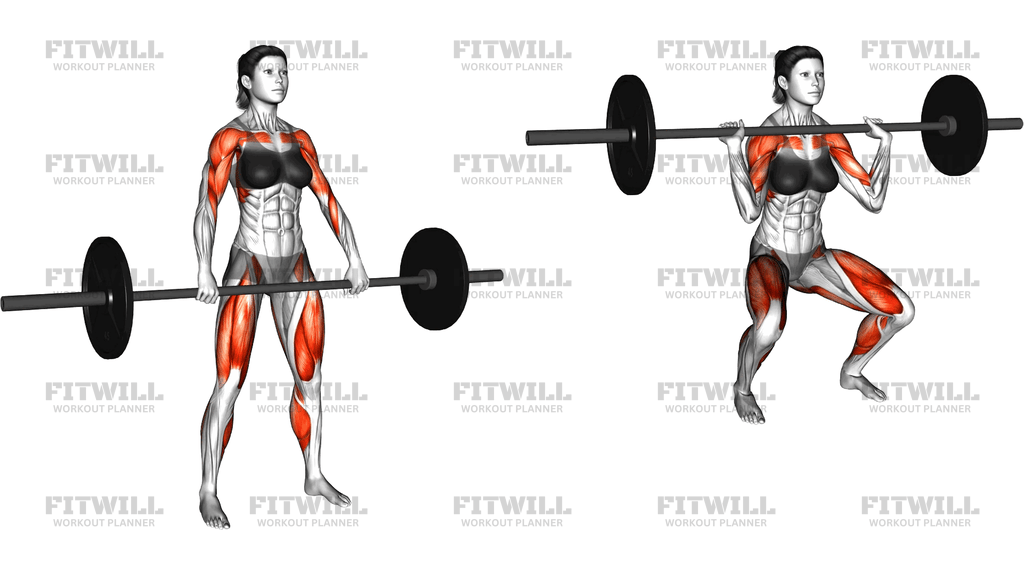
Instructions
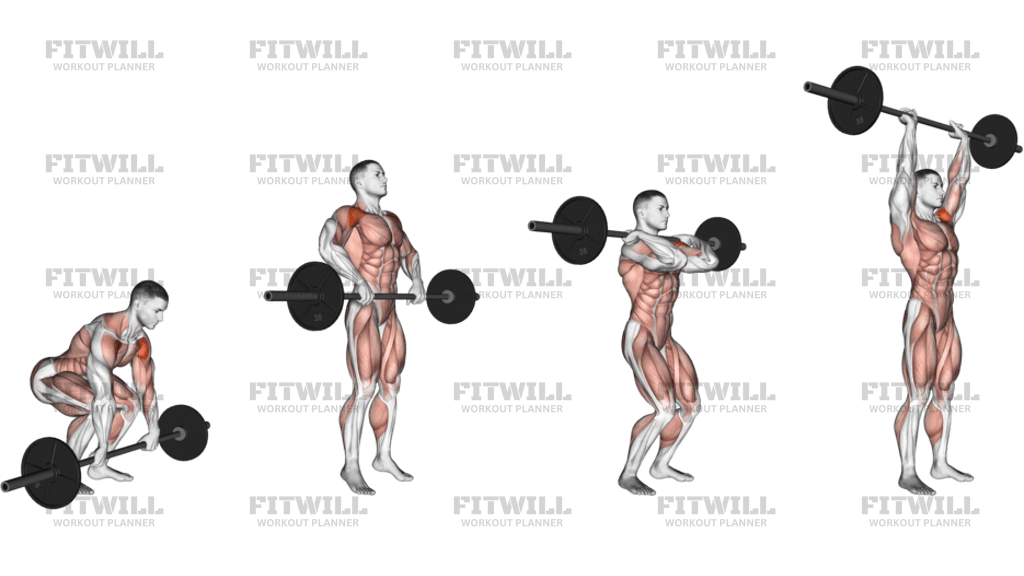
- Stand over a loaded barbell with your feet about hip-width apart, then grip the bar slightly wider than shoulder width with an overhand grip.
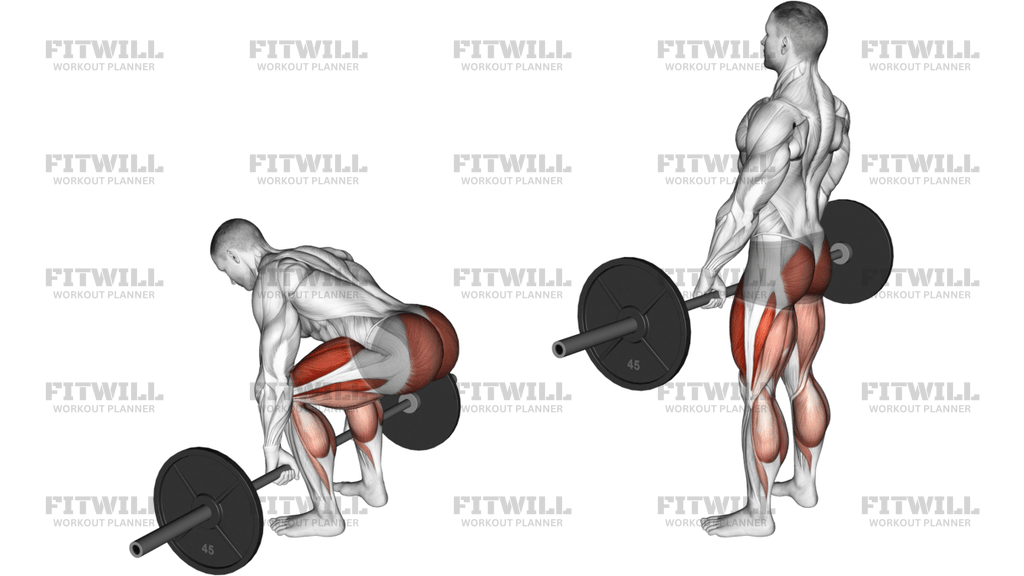
- Deadlift the bar up to standing, then hinge forward slightly so the bar hangs at mid-thigh against your legs with your knees softly bent and shoulders slightly ahead of the bar. This is the hang position.
- Set your grip and brace: squeeze the bar, pull your shoulders back and down, and brace your core as if preparing to be punched in the stomach.
- Inhale, then in one explosive motion drive your hips forward, extend your knees, and rise onto your toes, keeping the bar close to your body as it travels up.
- As the bar reaches chest height, quickly pull your elbows up and out, then whip them under the bar to catch it on your front shoulders.
- Drop into a partial squat as you catch, letting the bar rack across your front delts with elbows high and fingers relaxed under or around the bar.
- Absorb the catch with control, then stand up fully by driving through your heels until your hips and knees are locked out and the bar rests on your shoulders.
- Exhale at the top, lower the bar in a controlled way back to the hang position at your thighs, and reset your grip and brace before the next rep.
- Keep your eyes forward and your weight balanced over the middle of your feet throughout the entire lift, from hang to catch to stand-up.
Tips & Tricks
- The most common fault is pulling with the arms too early. Your arms should stay long and relaxed until the hips and knees have finished extending — the arms only steer the bar, they do not lift it.
- If the bar swings away from your body at the top, you are likely leaning back or opening the hips too early. Cue yourself to drag the bar up your thighs and finish tall before pulling under.
- Catching the bar on your wrists instead of your shoulders usually means the elbows are too low. Work your front rack mobility and think "elbows up and through" as you receive the bar.
- A soft or forward-collapsing catch often comes from hesitating at the top. Commit to pulling yourself under the bar the moment your hips reach full extension rather than waiting for the bar to peak.
- Keep the bar in contact with your legs through the hang position. A gap between bar and thighs means the weight is drifting forward and will pull you onto your toes at the catch.
- Use bumper plates and a lifting platform if your gym allows dropping the bar after a missed rep — the bar can roll off the shoulders quickly if a catch goes wrong.
- If your wrists or shoulders cannot get into a comfortable front rack, spend time on wrist flexor and thoracic mobility rather than forcing heavy weight into a poor position.
- Stop the set when the bar slows down. The Barbell Hang Clean is a speed lift; grinding out slow, ugly reps trains slowness and raises your injury risk.
- Filming yourself from the side is one of the fastest ways to improve — you can clearly see whether the bar path stays vertical close to your body or loops away from you.
Frequently Asked Questions
What muscles does the Barbell Hang Clean work?
The quads, glutes, and hamstrings generate the explosive triple extension, while the traps, shoulders, and forearms work to pull and secure the bar. Your core and lower back stay heavily engaged to keep the spine rigid from the hang through the catch.
Is the Barbell Hang Clean good for beginners?
It can be, but it should be learned light and slowly. Beginners benefit from starting with an empty bar or a PVC stick, drilling the jump-and-catch timing before adding meaningful load, and ideally getting feedback from a coach in the first sessions.
Why does the Barbell Hang Clean start at the thighs instead of the floor?
Starting from the hang removes the slow first pull from the floor and lets you focus on the explosive second pull and the catch. It also places more demand on the ability to generate force from a static hang position, which is why many athletes prefer it for power development.
How wide should my grip be for the Barbell Hang Clean?
Grip the bar slightly wider than shoulder width — roughly a hand-width or so outside your shoulders. A grip that is too narrow makes the front rack catch uncomfortable, while too wide a grip shortens the pull and reduces the power you can put into the bar.
What is the most common mistake in the Barbell Hang Clean?
Pulling with the arms before the hips and legs finish extending, often called an early arm pull. This bleeds power out of the lift and usually sends the bar forward, leading to missed catches. Keep the arms relaxed and let the hips do the work.
How many reps should I do per set?
Hang cleans are best kept in low rep ranges — typically 3 to 5 reps per set — because technique and bar speed deteriorate quickly under fatigue. Higher rep sets turn the movement into a conditioning exercise and greatly increase the chance of sloppy, risky reps.
What can I substitute if I do not have a barbell or cannot rack the bar?
Dumbbell or kettlebell hang cleans work the same explosive pattern with an easier catch, and trap bar or medicine ball jumps train triple extension power without needing a front rack. If wrist or shoulder mobility blocks your rack, a hang high pull keeps most of the pulling benefit.
Should I drop the bar after each Barbell Hang Clean rep?
Not necessarily — lowering the bar under control back to the hang builds eccentric strength and saves your equipment, but dropping it is acceptable if you are using bumper plates on a platform. Never drop a bar with iron plates or onto an unprotected floor.
Is it safe for my lower back?
When performed with a braced core, a neutral spine, and appropriate loads, the lift is well tolerated and builds a resilient posterior chain. Risk rises when lifters round the back at the hang, pull with the arms, or keep grinding reps after technique breaks down, so keep loads honest and stop when form slips.