Barbell Hang Snatch Below The Knees
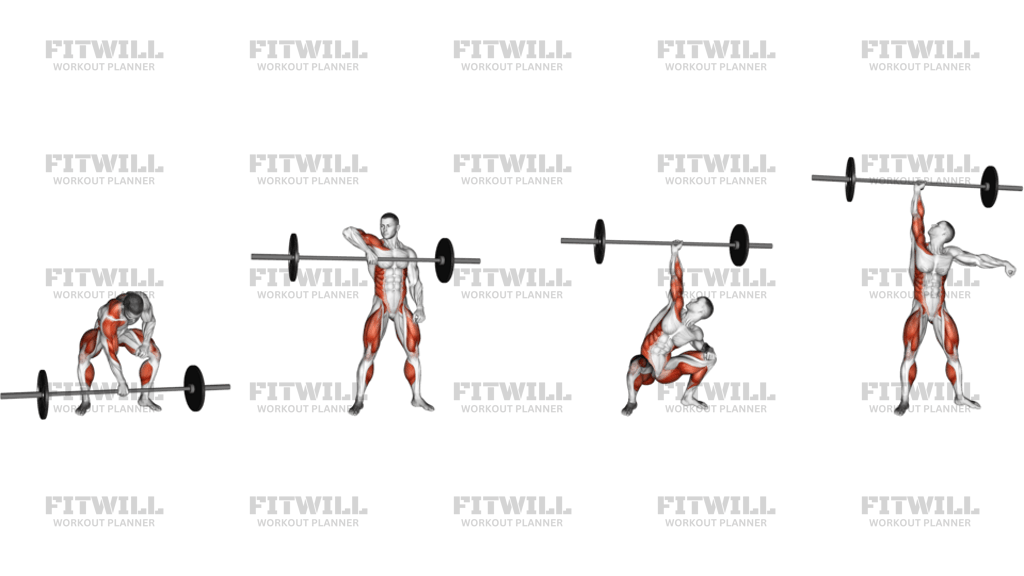
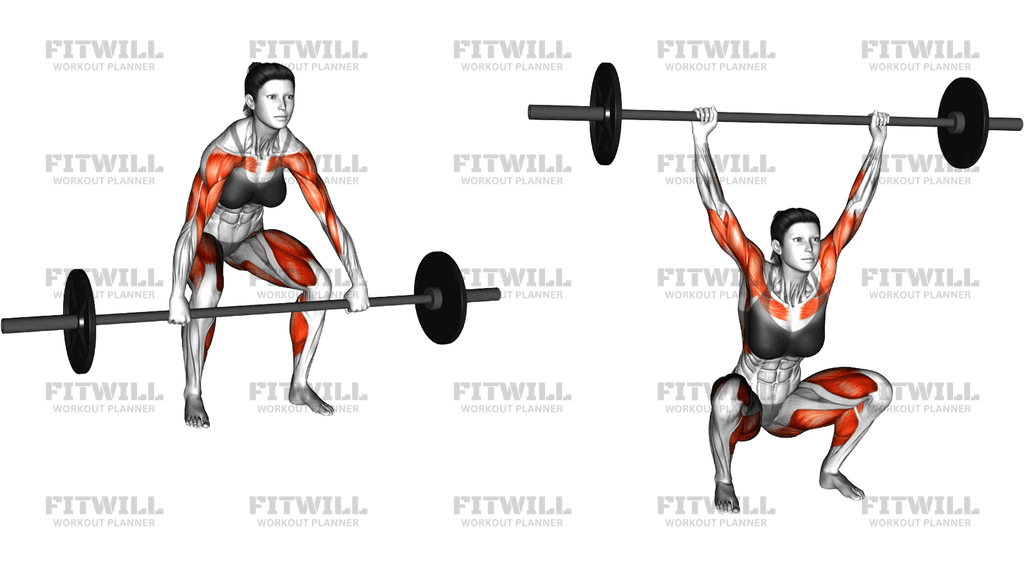
The Barbell Hang Snatch Below The Knees is an Olympic weightlifting variation where you start with the bar hanging just below your knees, then drive it overhead in one explosive motion and catch it in a deep squat. Because the bar starts below the knee rather than at the hip or above the knee, you have to generate power through a longer pull, which makes this version excellent for building strength through the hamstrings, glutes, and lower back while still demanding the speed and coordination of a full snatch.
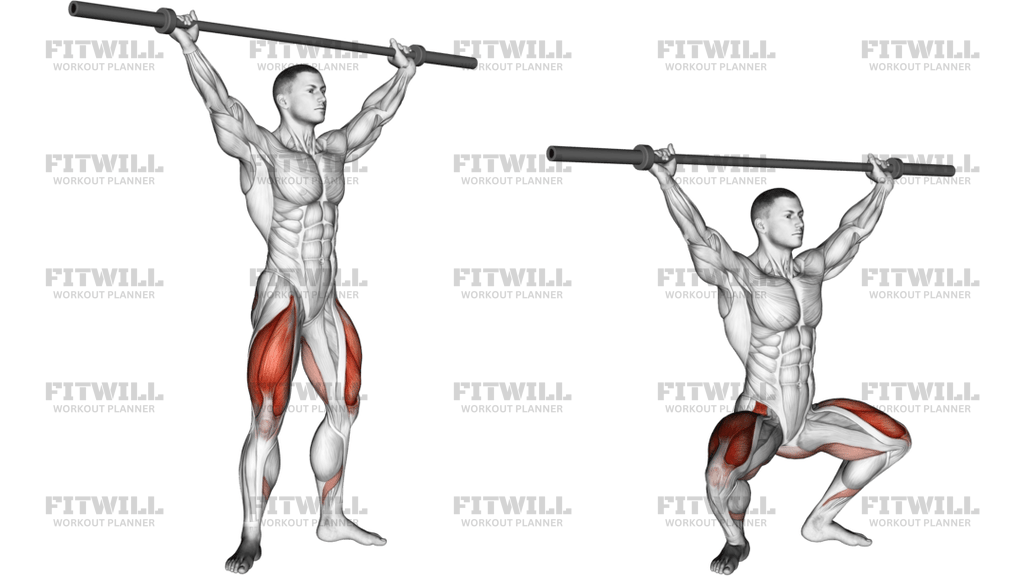
This movement suits intermediate lifters who already own a competent barbell deadlift and overhead squat. Weightlifters use it to strengthen the first and second pull phases of the snatch, and general strength athletes use it to develop explosive hip extension that transfers to sprinting, jumping, and other athletic work. If you can overhead squat a bar comfortably and know how to hinge at the hips, you are in a reasonable place to learn it with light weight.
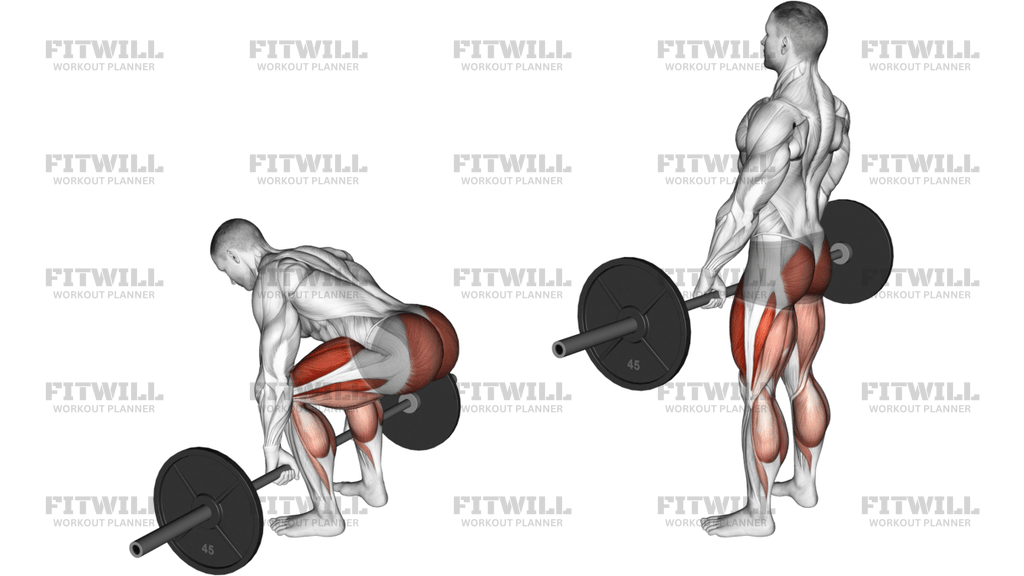
The start position is the defining feature. You set up like a deadlift with a wide snatch grip, hinge forward, and bring your shins toward the bar until the bar sits just below your knees. This longer range forces the hamstrings and glutes to load heavily at the bottom, and it punishes a soft back or a rushed pull. The bar must travel close to your legs the entire way up; any drift away from the body turns a powerful lift into a forward swing you have to chase.
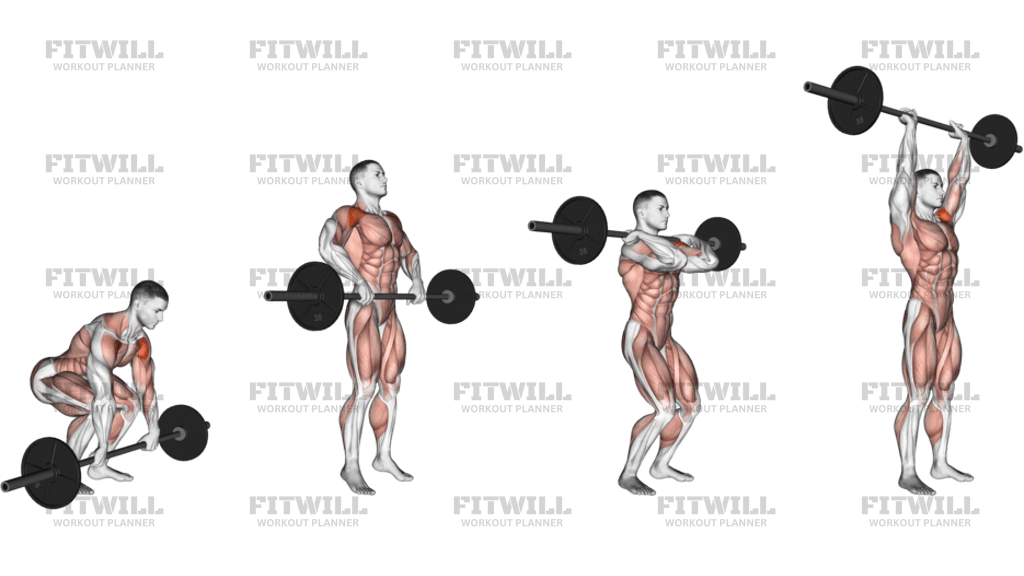
Execution comes down to sequencing. You push the floor away to break the bar from the hang, keep the bar dragging up your thighs, then violently extend your hips and knees while rising onto your toes. As the bar reaches its highest point, you pull yourself under it, rotate your elbows under the bar, and catch it locked out overhead in a squat with your heels down and chest up. From there, stand up with the bar overhead to finish the rep.
In practice, this exercise is used as a technique builder and a power developer. Because the hang start removes the floor pull, you get more quality reps per set and can focus entirely on bar path and timing. It is also forgiving on grip compared to full snatch work since the bar never touches the platform mid-set. Keep loads light at first; the catch is where most lifters lose the bar, and a controlled miss is far safer than a desperate save.
[ Workout Log & Planner ]
Put your next workout in Fitwill
Keep your plan and training log ready when you are.


Instructions
- Load a barbell on the floor and take a wide snatch grip, hands roughly a hand-width or more outside the rings.
- Hinge at the hips and bend your knees to deadlift the bar up to the hang position, then lower it until it sits just below your knees with the bar close to your shins.
- Set your feet about hip-width apart with toes slightly turned out, and keep your weight balanced over the middle of your feet.
- Brace your core and pull your shoulders back so your spine stays neutral and your chest sits above the bar.
- Inhale, then push through the floor to stand, dragging the bar up along your thighs and keeping your arms straight.
- As the bar passes mid-thigh, explode by extending your hips and knees hard, rising onto your toes as the bar accelerates upward.
- At the top of the extension, pull your elbows out and under the bar, then drop quickly into a squat and press the bar to a locked-out overhead position.
- Catch with your heels flat, knees tracking over your toes, and the bar balanced over the middle of your head, then stand up to complete the rep.
- Exhale at the top, lower the bar under control back to the just-below-the-knee hang, reset your brace, and repeat.
Tips & Tricks
- If you find yourself swinging the bar forward at the top, the cause is usually early arm pull. Keep your arms relaxed and let hip extension move the bar before the pull under happens.
- A rounded lower back in the hang start kills your power and pulls you onto your toes. Reset your brace before every rep instead of grinding through a set of sloppy positions.
- Bumping the bar away from your thighs mid-pull means your shoulders have drifted ahead of the bar. Keep your chest up and the bar in light contact with your legs through the whole pull.
- Missing the catch forward is often a squat problem, not a pull problem. If you cannot sit into a deep overhead squat with the bar balanced, drill overhead squats before adding snatch speed.
- Start with just the bar or light plates. The jump from below the knee is longer than a high hang, so timing feels different and heavy attempts hide bad habits.
- Do not rush the transition between the pull and the catch. If your hips finish the extension before your elbows move, you will crash the bar instead of meeting it overhead.
- Use bumper plates so you can safely drop a missed bar from overhead, and always miss it away from your body rather than trying to muscle a bad rep into position.
- Chalk your hands or use straps for higher-rep sets, but learn the lift hook-gripping the bar first so your grip pattern matches full snatch work.
Frequently Asked Questions
Which muscles does the Barbell Hang Snatch Below The Knees work the most?
The glutes and hamstrings drive the explosive extension from the hang position, with strong contributions from the quads, traps, shoulders, and lower back during the pull under and overhead catch. Your grip and core work hard to control the bar throughout.
How is this different from a snatch from above the knee?
Starting below the knees lengthens the pull, so you get more hamstring and glute loading and more time to practice keeping the bar close during the first pull. The above-the-knee version shortens the range and emphasizes the final pop at the hip.
Can beginners learn the Barbell Hang Snatch Below The Knees?
Beginners can learn it, but they should already be comfortable hinging and holding an overhead squat with a light bar. Starting with an empty barbell and a coach or video feedback keeps the learning curve manageable.
Why does the bar keep swinging away from my body?
The bar drifts forward when your shoulders sit ahead of it at the start or when you pull with your arms too early. Keep the bar in contact with your thighs and wait for hip extension before the pull under.
What can I substitute if I cannot overhead squat yet?
A power snatch from the hang, where you catch in a quarter squat instead of a deep squat, is the most direct substitute. Overhead squat practice with a light bar or PVC pipe should run alongside it until your depth improves.
How wide should my grip be?
A common starting point is roughly a hand-width outside the knurling rings, adjusted so the bar rests at your hip crease with your arms straight. Wider grip lets you catch lower without the bar dropping behind you.
Should I wear a lifting belt for this exercise?
A belt is optional for heavier sets, but it is not a substitute for bracing. At learning loads, most lifters get more benefit from practicing a tight, braced trunk without one.
How many reps should I do per set?
Because this is a speed and technique lift, keep sets low at two to five reps and prioritize crisp reps over fatigue. Technique tends to fall apart quickly once grip and lower back endurance run out.
Is it safe to drop the bar during a missed rep?
With bumper plates and clear space around you, pushing a missed bar away and in front of your body is far safer than trying to catch a losing position. Never fight a rep that is falling behind your head.