Dumbbell Single Leg Romanian Deadlift On Bench
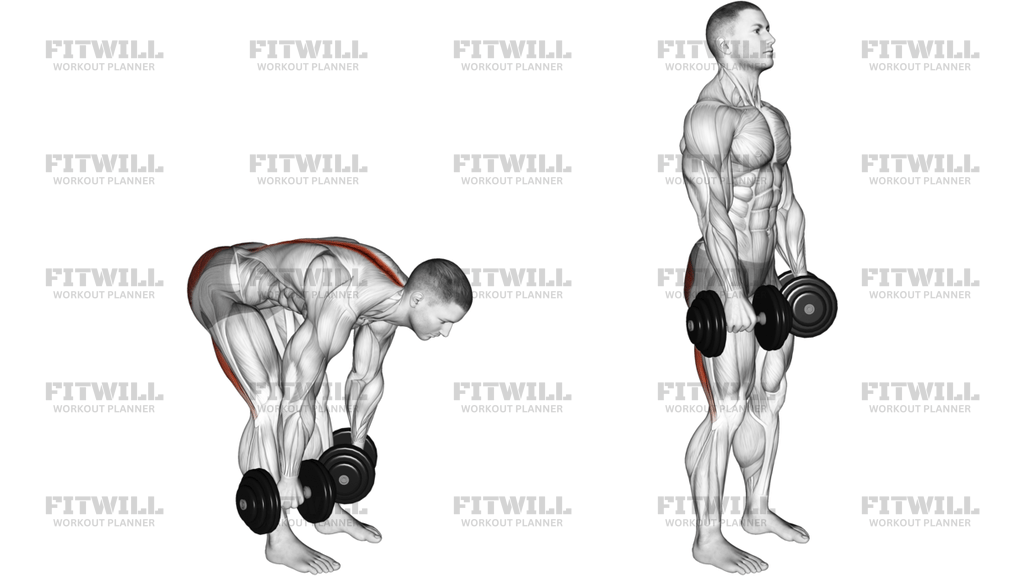
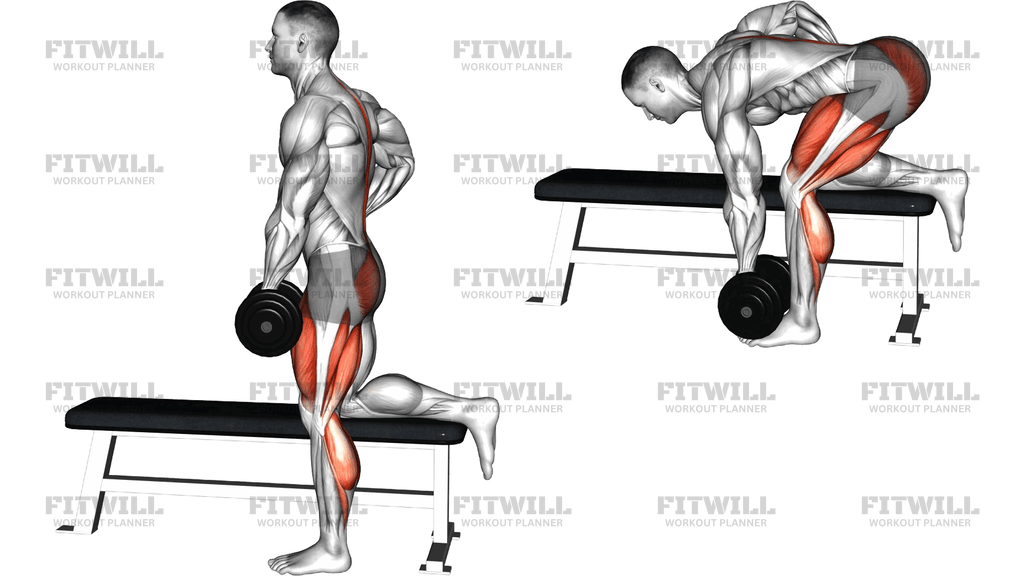
The Dumbbell Single Leg Romanian Deadlift On Bench is a single-leg hinge performed with the rear foot elevated on a flat bench behind you. You stand on one working leg, rest the top of your other foot on the bench, and hinge forward at the hips while holding a dumbbell on the same side as the elevated leg. The bench takes the balance demands down a notch compared to a fully free-standing single-leg deadlift, but it keeps the anti-rotation and hip-control work that makes this pattern so valuable.
This movement mainly trains the hamstrings and glutes of the standing leg, with the erector spinae and deep core working hard to keep your torso level as the dumbbell pulls you forward and slightly to one side. Because the load sits on only one side of your body, your obliques and hip stabilizers have to resist rotation through the entire hinge, which is something a two-legged barbell Romanian deadlift simply does not ask for.
The bench-elevated setup matters because it gives you a stable reference point for the rear leg. Lifters who wobble badly on a free-standing single-leg RDL can usually load this version properly right away, which means the hamstrings and glutes actually get challenged instead of the balance system failing first. The slight split stance also lets you sit the hips back a little deeper with a flatter back, so you get a longer hamstring stretch at the bottom.
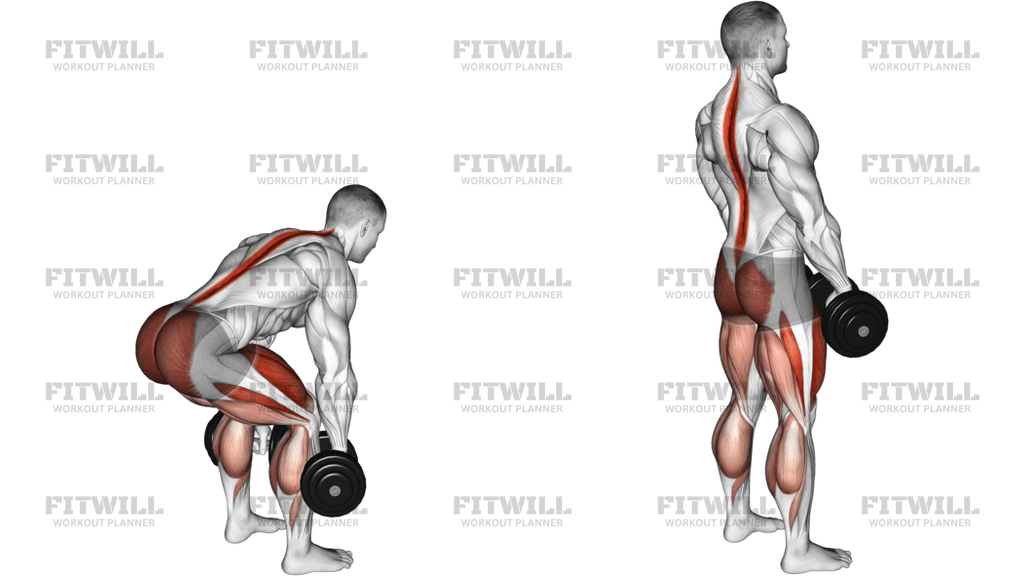
Execution is all about the hips, not the arms. Push your hips back, let the dumbbell travel straight down toward the floor in front of your shin, and keep your spine long from tailbone to crown. Hinge only as far as you can without rounding your lower back or twisting your shoulders, then drive your hips forward to stand tall again, squeezing the glute of the working leg at the top.
This exercise fits well into lower-body days as an accessory after squats or deadlifts, or as a primary hinge when back discomfort limits bilateral barbell work. It is also a smart progression for unilateral deadlifts, a useful tool for addressing left-to-right strength differences, and a common choice for runners and field-sport athletes who need single-leg hip strength and control under load.
[ Workout Log & Planner ]
Put your next workout in Fitwill
Keep your plan and training log ready when you are.


Instructions
- Place a flat bench behind you and stand roughly one to two feet in front of it, facing away.
- Place the top of your rear foot on the bench so the instep rests on the pad, and shift your weight fully onto the front leg with a soft knee bend.
- Hold a dumbbell in one hand at your side — the hand on the same side as your elevated rear leg — with a firm overhand grip and your shoulders pulled back.
- Brace your abs and set your lower back in a neutral position before you start moving; do not wait until you are already bent over.
- Push your hips straight back and hinge forward, letting the dumbbell travel vertically down in front of your standing shin while your torso lowers toward the floor.
- Stop when you feel a strong hamstring stretch in the front leg or when your back starts to round — usually somewhere near shin level or slightly below.
- Drive your hips forward and push the floor away through the heel of your working leg to return to a tall standing position.
- Squeeze the glute of the standing leg at the top without leaning back or hyperextending your lower back.
- Exhale as you hinge down and inhale as you return, or simply keep a steady brace and breathe shallowly through the set.
- Complete all repetitions on one side, then switch the dumbbell to the other hand and rest your opposite foot on the bench.
Tips & Tricks
- Most people set up too close to the bench. If your rear knee bangs into the pad or you cannot hinge without hitting it, step your front foot a few inches farther forward.
- Keep roughly two-thirds of your weight on the front leg. If the rear foot starts pushing hard into the bench, it becomes a bilateral lift and the hamstrings of the working leg stop getting challenged.
- If your torso twists toward the dumbbell at the bottom, the load is likely too heavy. Rotate less weight into the set and think about keeping both shoulders square to the front.
- Let the dumbbell hang straight down rather than reaching it forward. Reaching turns the hinge into a leaning back-saver and shifts tension off the hamstrings.
- Keep the back knee slightly bent and relaxed. Locking it out straight behind you changes the hip angle and shortens the hamstring range you can use.
- A common fault is standing tall between reps and losing the hip hinge pattern. Reset your brace and push the hips back deliberately on every repetition instead of bouncing.
- If you feel your lower back working more than your hamstrings, cut the depth in half and focus on pushing the hips farther back rather than lowering the chest farther down.
- Start with a light dumbbell and film yourself from the side once. Checking whether your back stays flat and your hips stay square tells you more than any amount of internal cueing.
- Hold the bench-top foot lightly with your toes curled for grip, not to push. The bench is a balance reference, not a second working limb.
Frequently Asked Questions
What muscles does the Dumbbell Single Leg Romanian Deadlift On Bench work?
The hamstrings and glutes of the standing leg do most of the work, with the erector spinae supporting the hinge. The one-sided load also challenges the obliques and deep core to keep your torso from rotating.
Should the dumbbell be in the same hand as the leg on the bench or the opposite hand?
In the standard version shown here, the dumbbell is held in the hand on the same side as the elevated rear leg, which is the opposite side of the working stance leg. Switching hands is acceptable, but be consistent so you can compare sides accurately.
Is this version easier than a regular Single Leg Romanian Deadlift?
Yes, mostly because the bench gives the rear foot a stable anchor and removes much of the balance struggle. That lets most lifters use more load and reach a deeper hinge than they could free-standing.
How far forward from the bench should my front foot be?
About one to two feet, enough that you can hinge forward without your rear knee hitting the bench pad. If your front foot is too close, the movement turns into a lunge-like position and the hamstring stretch suffers.
How low should I lower the dumbbell?
Lower it until you feel a strong stretch in the front hamstring or until your lower back begins to round, which for most people is around shin level. Depth matters less than keeping the back flat and the hips square.
Why do I feel this more in my lower back than my hamstrings?
This usually means you are hinging by letting your chest drop instead of pushing your hips back, or the weight is too heavy to control. Reduce the load, cut the depth, and deliberately reach the hips toward the wall behind you.
Can beginners do the Dumbbell Single Leg Romanian Deadlift On Bench?
Yes, and it is often a better beginner choice than the free-standing single-leg version because the bench removes the balance bottleneck. Start with a very light dumbbell or even body weight for a set or two to learn the hinge first.
What can I use instead of a bench for the rear foot?
Any stable padded surface around shin-to-knee height works, such as a sturdy box, a chair against a wall, or a low step platform. Avoid anything that can slide or tip when you place weight on your rear foot.
How many sets and reps should I use?
Two to four sets of 8 to 12 repetitions per side works well for strength and muscle, with a moderate dumbbell and controlled tempo. Keep the reps even on both sides and start with your weaker leg.
Is it safe to do this exercise if I have lower back discomfort?
A neutral-spine hinge is generally well tolerated, but if bending forward under load causes pain, stop and get cleared by a qualified professional first. You can also regress to a body-weight version or a supported hip hinge while you build tolerance.