Dumbbell Straight Leg Deadlift
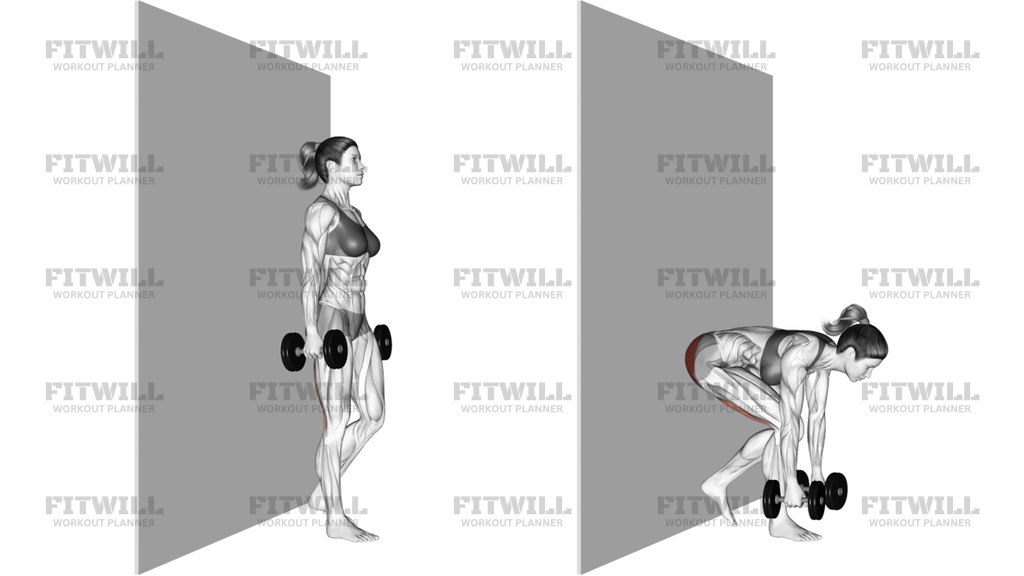
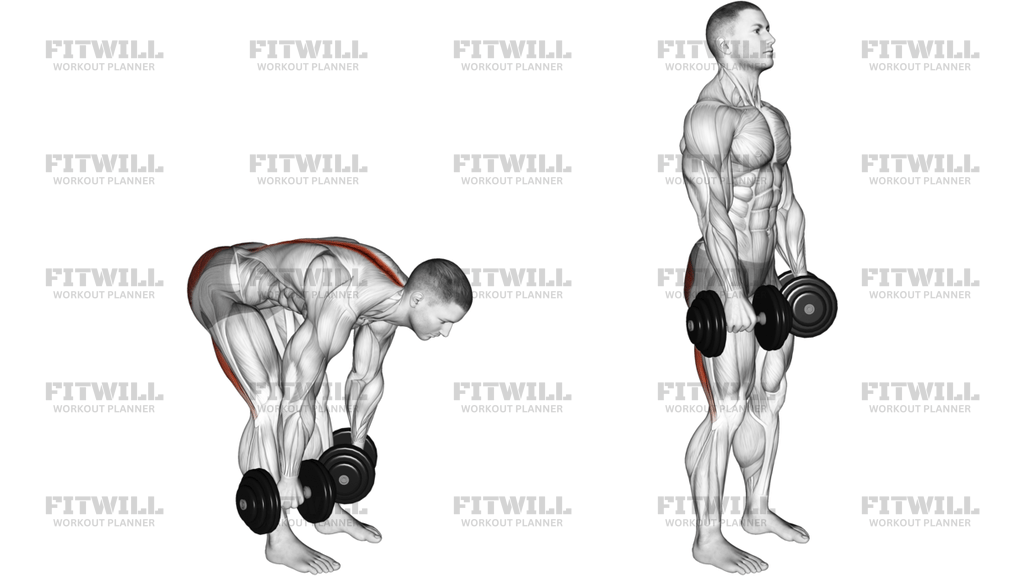
Dumbbell Straight Leg Deadlift is a standing dumbbell hip-hinge that loads the glutes and hamstrings while teaching the torso to stay long and braced. The image shows the dumbbells hanging beside the thighs and the hips sending back first, which is the key pattern to preserve. Despite the name, the knees should stay softly unlocked rather than locked hard straight.
This exercise is useful when you want to train the posterior chain without turning the rep into a squat. The glutes and hamstrings do most of the work, while the lower back, core, upper back, and grip stabilize the hinge. Keeping the dumbbells close to the legs reduces shear and makes the rep easier to control through the return.
Set up by standing tall with the feet about hip width, dumbbells in front of the thighs, and weight balanced through the whole foot. Before each descent, brace the midsection, soften the knees, and push the hips straight back. The dumbbells should travel down the front of the legs, not drift away from them.
Lower only as far as you can keep a neutral spine and feel the hamstrings lengthen. In the bottom position, the torso will be angled forward while the shins stay nearly vertical. From there, drive the hips forward and stand up by squeezing the glutes, not by leaning back at the top. The finish should be tall and stacked, not hyperextended.
Use this movement for lower-body strength, hamstring loading, or as an accessory after squats and lunges. It also works well as a bridge toward conventional deadlifts and Romanian deadlifts. If your back rounds, the dumbbells swing, or the stretch shifts out of the hamstrings and into the spine, shorten the range and lighten the load immediately.
[ Workout Log & Planner ]
Put your next workout in Fitwill
Keep your plan and training log ready when you are.


Instructions
- Stand tall with a dumbbell in each hand, arms long, dumbbells resting in front of the thighs.
- Set your feet about hip width apart and keep your weight spread across the whole foot.
- Soften the knees slightly, brace your torso, and keep your shoulders pulled gently back and down.
- Push your hips back first, keeping the dumbbells close to the front of your legs as you hinge.
- Lower the weights until you feel a strong hamstring stretch and can still keep a neutral spine.
- Keep the shins nearly vertical and let the torso fold forward under control instead of rounding.
- Pause briefly in the bottom position, then drive the hips forward to stand back up.
- Finish tall by squeezing the glutes, keeping the ribs stacked over the pelvis, and repeat for the desired reps.
Tips & Tricks
- Keep the dumbbells brushing close to the thighs and shins; letting them drift forward usually pulls you out of the hinge.
- Maintain only a soft knee bend. If the knees keep bending more on the way down, the movement is turning into a squat.
- Think about moving the hips backward, not the chest downward. The torso should follow the hinge, not lead it.
- Stop the descent when your hamstrings are stretched and your back can still stay long and neutral.
- Use a controlled lowering phase, since the eccentric is where this variation usually teaches the hinge best.
- Do not finish by leaning back or over-squeezing the lower back; stand tall with the glutes, not the lumbar spine.
- Choose a load that you can lower evenly on both sides without twisting through the hips or shoulders.
- If your grip fails before your hamstrings, reduce load or reps so the hinge stays the limiting factor.
Frequently Asked Questions
What muscles does Dumbbell Straight Leg Deadlift work?
It mainly works the glutes and hamstrings. The core, lower back, upper back, and grip help stabilize the dumbbells and keep the hinge organized.
Is Dumbbell Straight Leg Deadlift beginner-friendly?
Yes, if you keep the weight light and the range short enough to protect your spine position. Beginners usually learn it best with soft knees and slow reps.
How low should the dumbbells go?
Lower them only until you feel the hamstrings stretch and your back can stay neutral. For many people that is around mid-shin, but the exact depth depends on hamstring mobility.
Should my knees stay straight the whole time?
No. The knees should stay softly unlocked so the hips can hinge back cleanly. Locking the knees hard usually shifts stress to the hamstrings and back.
What is the difference between this and a squat?
In this exercise the hips move back and the shins stay almost vertical. In a squat the knees travel forward more and the torso stays more upright.
Why should the dumbbells stay close to my legs?
Keeping the weights close shortens the lever arm, makes the hinge more stable, and reduces the chance of the dumbbells pulling you forward or away from the posterior chain.
Where should I feel the rep?
You should feel a deep stretch in the hamstrings on the way down and strong work from the glutes and hamstrings on the way up. If you mostly feel your lower back, the hinge needs to be shortened or lighter.
Can I use this with limited hamstring mobility?
Yes. Start with a smaller range and let the hips stop where the spine can still stay neutral. Over time, the range can usually improve as the hinge pattern and flexibility improve.