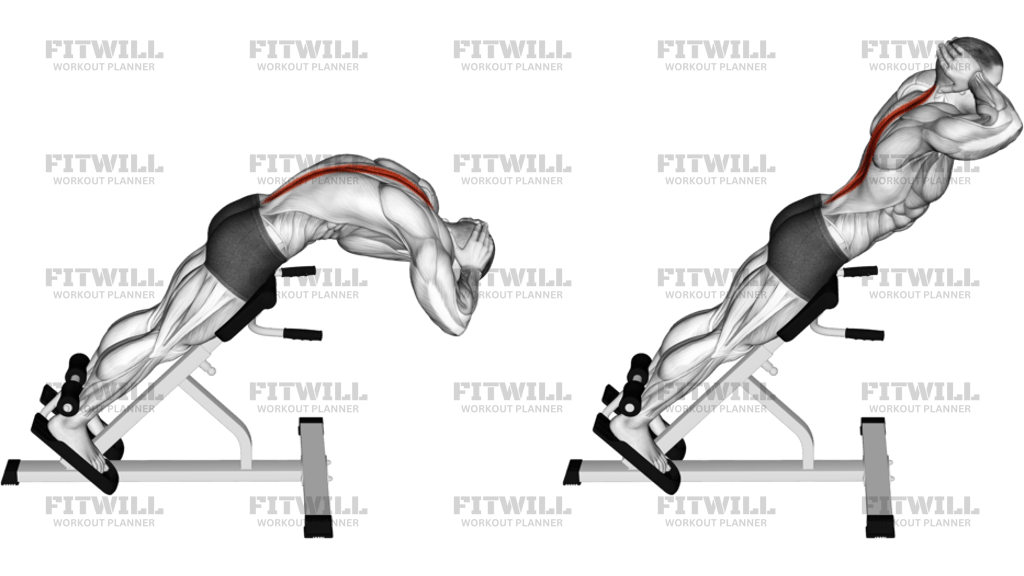
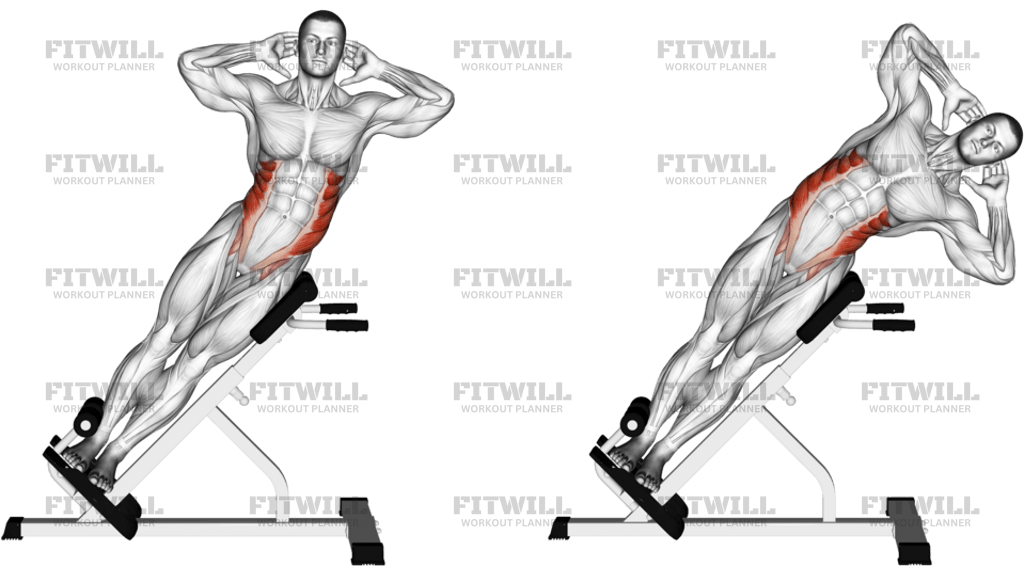
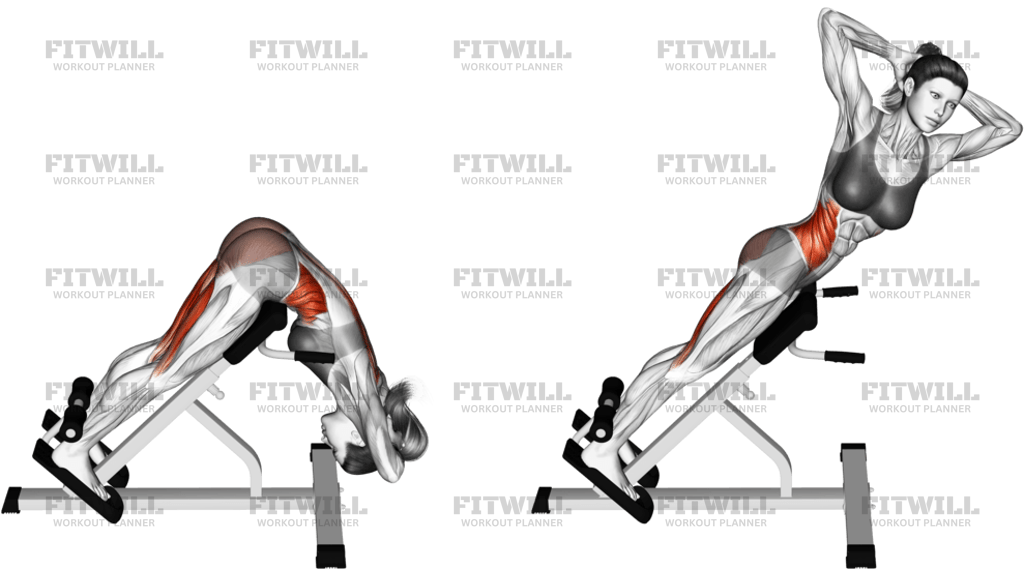
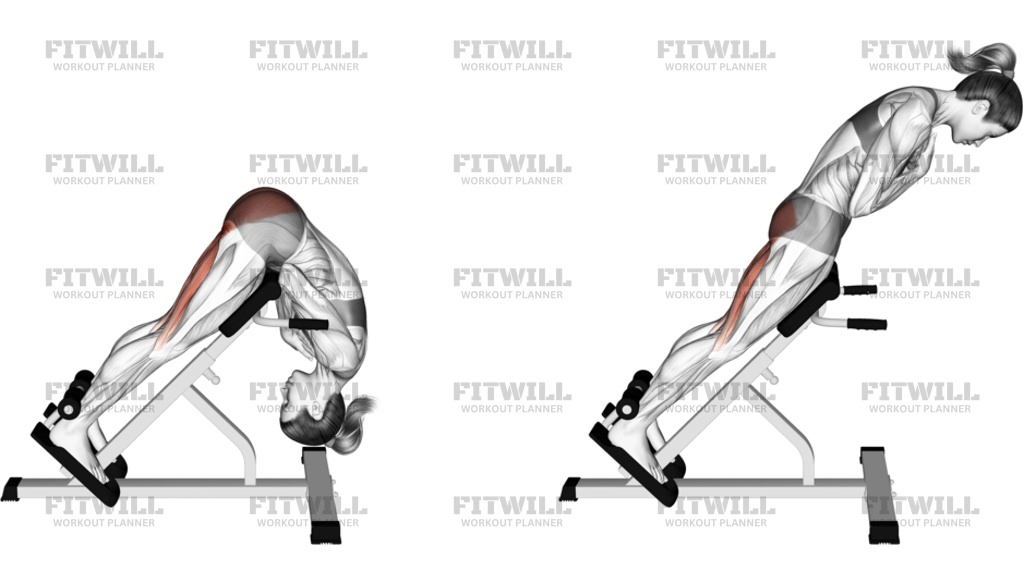
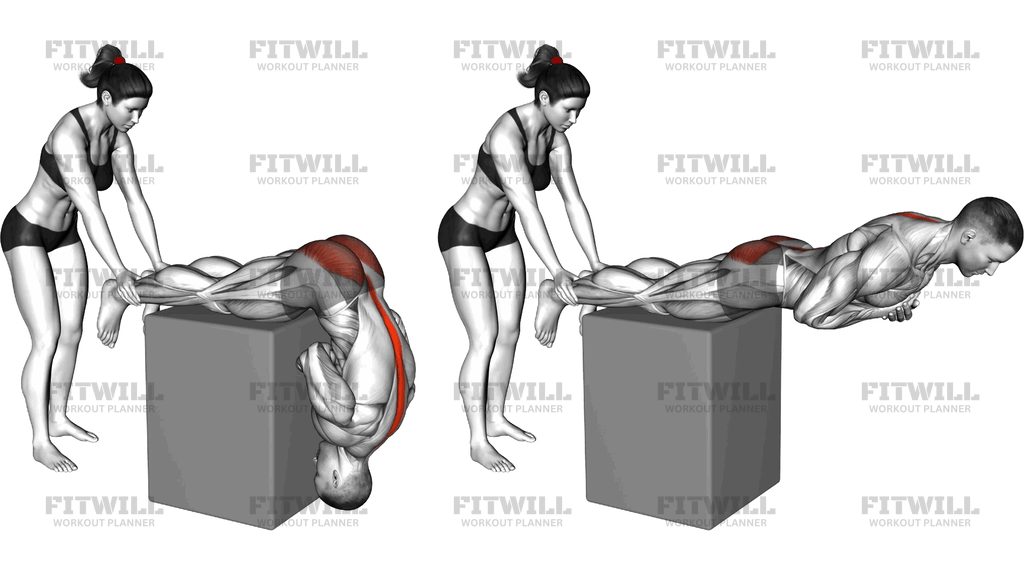
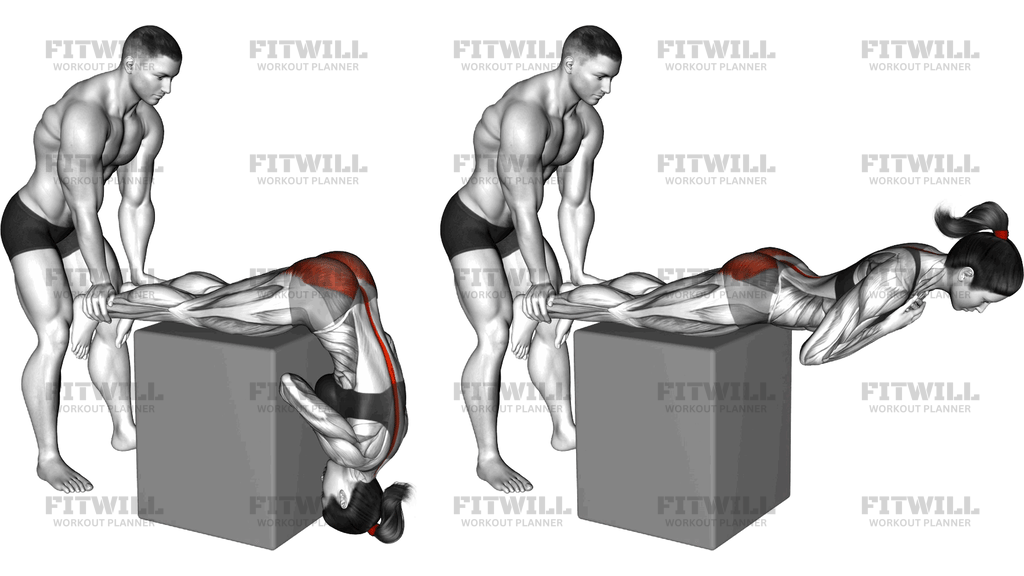
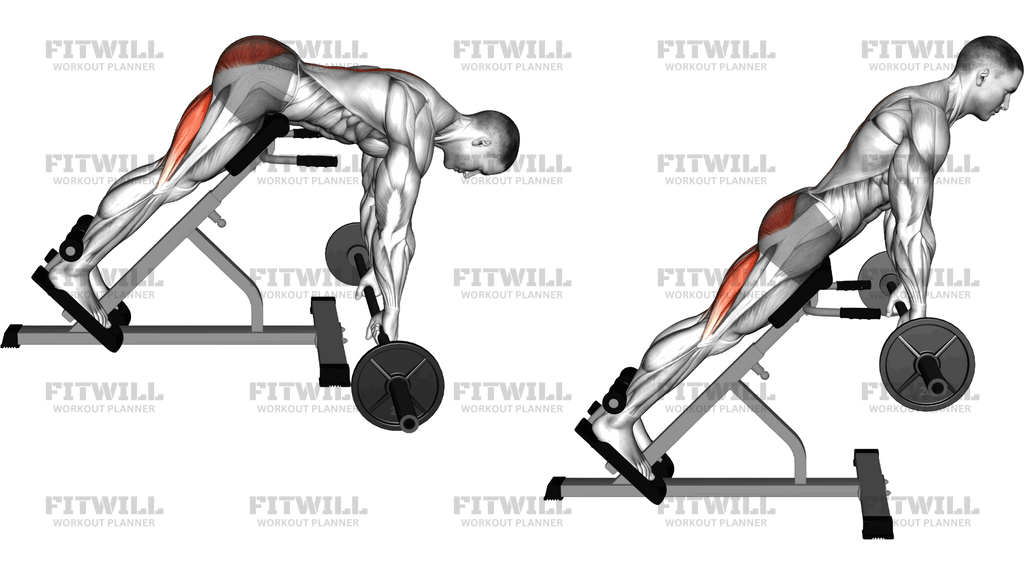
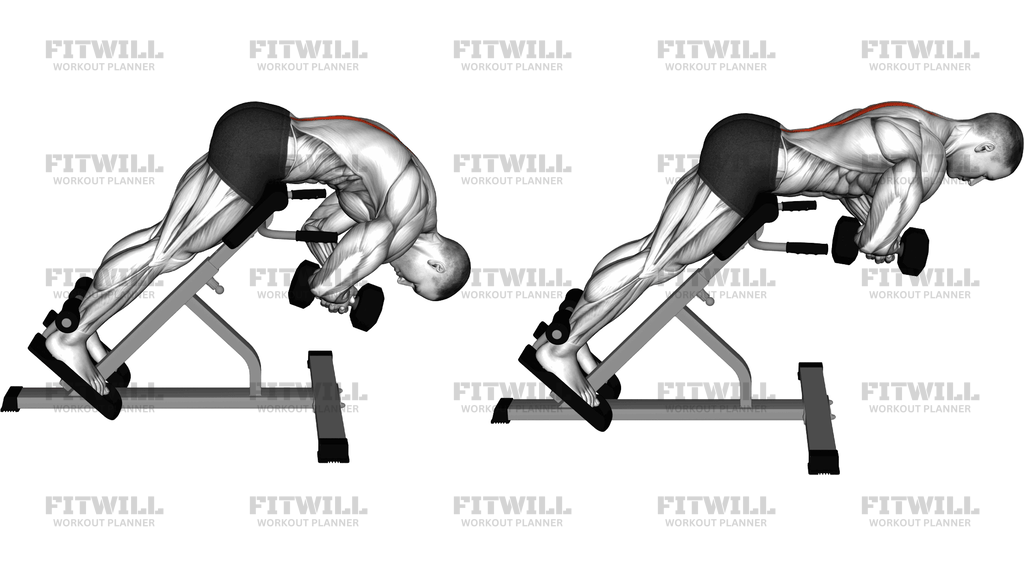
45 Degree Hyperextension Hold (Arms In Front Of C)
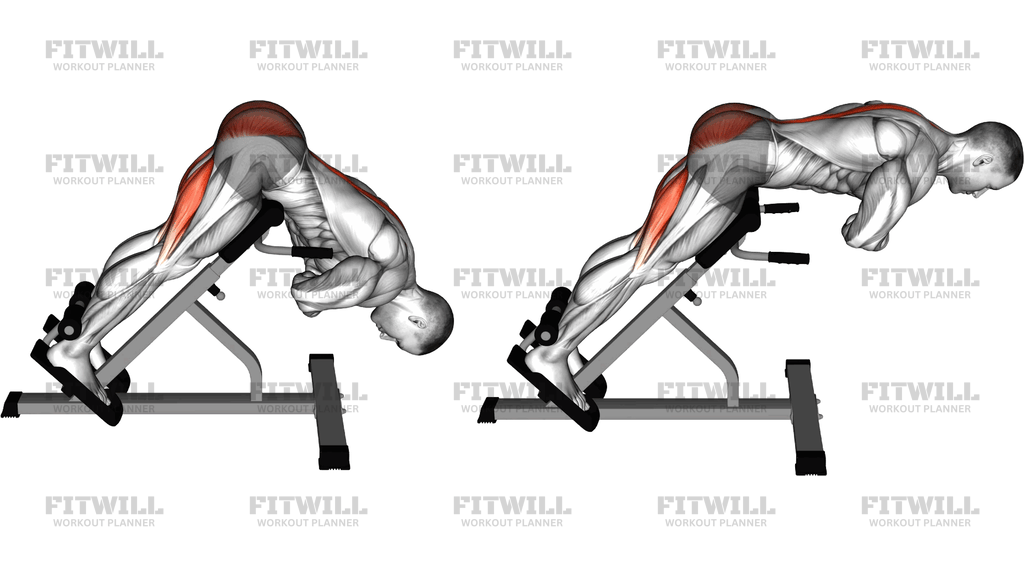
The 45 Degree Hyperextension Hold is an isometric variation of the classic back extension performed on a Roman chair or 45-degree hyperextension bench. Instead of hinging up and down through repetitions, you raise your torso to a straight line from heels to head and hold that position against gravity. With the arms held in front of the chest, the lever length of your upper body increases slightly, which makes the hold more demanding on the posterior chain than crossing the arms behind your head.
This exercise trains the erector spinae along the spine as the primary mover, with strong support from the glutes and hamstrings, which lock the hips into extension. Your core also works hard to keep the ribcage and pelvis aligned, so the hold doubles as anti-flexion training for the trunk. Because there is no repetitive bending of the spine, the hold is often easier to keep clean under fatigue than the dynamic version.
The hold is useful for lifters who want to build endurance and control in the lower back without piling on volume, for beginners learning what a neutral hip hinge position actually feels like, and for anyone rehabilitating gradually after a layoff who needs low-load back work. It also works well as a finisher after deadlifts or good mornings, or as a teaching tool before dynamic back extensions.
Setup matters a great deal here. The ankle pads should brace the back of your ankles, the hip pad should sit just below the hip crease so the pelvis can tip freely, and your body should form a slight V over the bench with the hips off the pad at the top. If the pad sits too high on your thighs, you lose hip extension; too low, and it digs into your stomach and shortens the range.
To execute well, hinge down from the hips until your torso points toward the floor, then squeeze the glutes and drive the hips into the pad to lift the trunk until your body is one straight line. Hold there, breathing steadily, for the target time. The most common errors are cranking the chest past horizontal into overextension, dropping the hips to cheat the hold, and letting the head sag. Stop the set when your hips start to sink or your lower back begins to arch beyond neutral.
[ Workout Log & Planner ]
Put your next workout in Fitwill
Keep your plan and training log ready when you are.


Instructions
- Set the ankle pads of the 45-degree hyperextension bench so they brace the back of your ankles when your feet are on the platform.
- Position the large hip pad just below your hip crease, then lie face down over the bench and hook your heels under the pads.
- Cross your arms over your chest or hold them straight out in front of you, keeping the shoulders relaxed and away from your ears.
- Hinge forward from the hips and lower your torso until it points toward the floor, keeping the spine long rather than rounded.
- Brace your abdominal wall as if preparing for a light push to the stomach before you start the lift.
- Squeeze the glutes and press the pelvis into the pad to raise your torso until your head, hips, and heels form one straight line.
- Hold that locked position for the prescribed time, keeping the chin tucked slightly and the neck in line with the spine.
- Breathe continuously during the hold; do not hold your breath, even as the position gets harder.
- When the set ends, lower your torso back down under control by releasing the hip hinge slowly rather than collapsing.
- Rest briefly, shake out the lower back, and reset your pad position before the next hold.
Tips & Tricks
- If your hips sink toward the bench as the hold continues, that is the first sign of failure in this position; end the set there instead of letting the lower back arch to compensate.
- Check that the hip pad sits below your hip crease. If it presses into your thighs, your pelvis cannot fully extend and the glutes and hamstrings lose their role in the hold.
- Keep the arms in front of the chest rather than behind the head. Pulling on the back of your head to lift higher loads the neck and encourages overextension.
- Think of the movement as driving the hips down into the pad, not lifting the chest up. This cue keeps the glutes engaged and protects the lumbar spine.
- Start with 15 to 30 second holds and build time gradually. Long holds with a sagging pelvis train nothing but bad positions.
- To make the hold harder without adding weight, slide slightly up the bench so more of your torso hangs past the pad, which lengthens the lever.
- Squeeze the heels into the ankle pads during the hold; this keeps the hamstrings active and stops the feet from drifting or lifting.
- Stop if you feel sharp or radiating sensations in the lower back. A working burn in the erectors, glutes, or hamstrings is expected; pinching is not.
- If the bench has no 45-degree angle, a flatter Roman chair also works, but the torso will be higher at the top, so shorten the holds accordingly.
Frequently Asked Questions
Which muscles does the 45 Degree Hyperextension Hold work?
The erector spinae of the lower back work isometrically to hold your trunk up, while the glutes and hamstrings hold the hips extended. The abdominal muscles stabilize the trunk throughout the hold.
How is the hold different from regular back extensions?
Regular back extensions move the torso up and down through repetitions, while the hold locks you in the top position for time. The static version removes momentum and repeated spinal flexion, making it easier to keep the lower back in a safe neutral position.
Why are the arms held in front of the chest in this exercise?
Holding the arms in front or across the chest lengthens the lever of your upper body slightly, which increases the demand on the glutes, hamstrings, and lower back compared with arms hanging down. It also prevents pulling on the neck, a common fault when hands go behind the head.
Is the 45 Degree Hyperextension Hold suitable for beginners?
Yes, and it is often a better starting point than dynamic back extensions because the position is easy to check and correct. Begin with short holds of 10 to 20 seconds and make sure you can keep a straight line from head to heels before extending the time.
How long should I hold the position?
Fifteen to forty-five seconds per set is a practical range for most people. If your hips start to sag or your lower back arches before time is up, the hold is too long for your current strength.
What is the most common mistake on the Roman chair setup?
Setting the hip pad too high so it sits on the thighs, which stops the pelvis from extending fully. The pad should rest just below the hip crease so only your lower abdomen contacts it.
Should my back be flat or slightly extended at the top?
Aim for a straight line from head to heels, which usually means a neutral spine with a gentle natural curve. Forcing the chest past horizontal into a big arch shifts stress onto the lumbar joints rather than the muscles.
What can I substitute if I have no hyperextension bench?
A stability ball with your feet braced against a wall can simulate the position, though it adds a balance challenge. An Reverse hyperextension on a flat bench or a glute bridge hold trains similar hip extension muscles with a different emphasis.
Is it safe for my lower back?
When the pad position is correct and you stop before form breaks down, the hold is a controlled, low-movement exercise for the muscles that support the spine. If you have a current or recent back injury, get clearance from a qualified professional before adding it.