Assisted Hyperextension
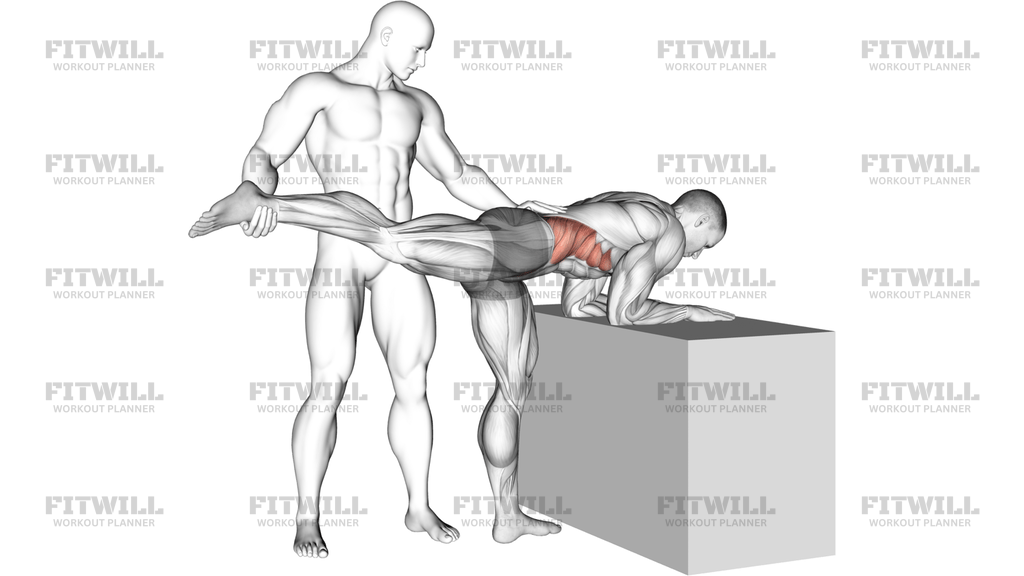
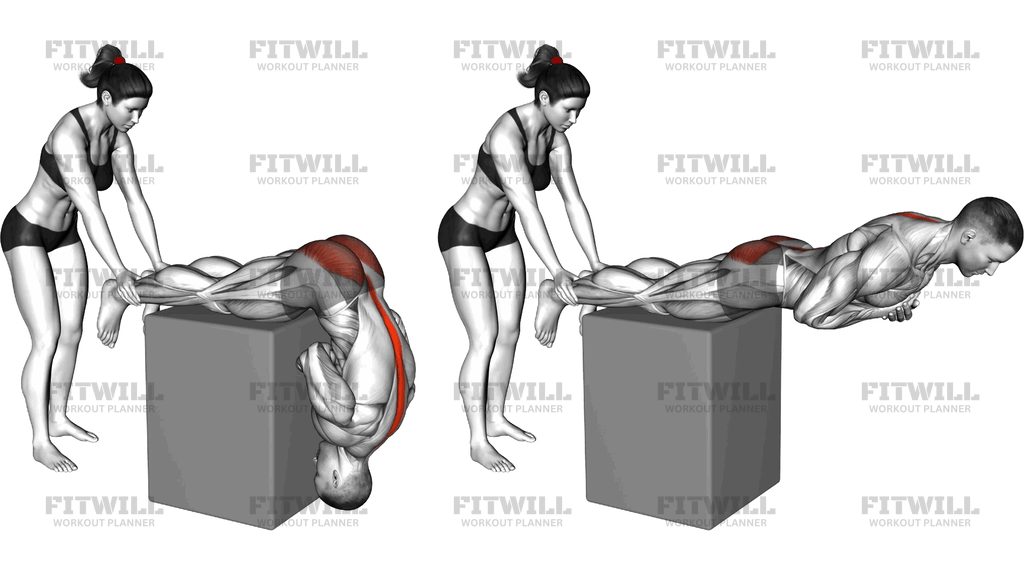
The Assisted Hyperextension is a partner-assisted back extension performed across an elevated box or bench. Instead of using a dedicated 45-degree hyperextension bench with foot pads, a training partner anchors your ankles against the top of the platform so you can hinge your torso down toward the floor and pull yourself back up to a straight body line. It is essentially a bodyweight back extension made possible by an extra set of hands.
This movement mainly trains the erector spinae running along the lower back, with strong involvement from the glutes and hamstrings as they extend the hips, and the deeper core stabilizers working to keep the trunk controlled. It is useful for people who want to build posterior chain endurance and strength but train in a home or small gym without a Roman chair or hyperextension bench, or for anyone whose feet slip out of traditional foot pads when the exercise gets hard.
The setup matters more here than in most back exercises, because the partner becomes your anchoring system. Your hip crease should sit right at the front edge of the box so your upper body can fold down freely while your partner pins your ankles or calves firmly against the top surface. If your hips are too far forward, you lose leverage; too far back, and the partner's grip has to do too much work.
To perform it well, cross your arms over your chest or place your hands behind your head, brace your trunk, and lower your torso toward the floor under control until you feel a mild stretch across the back of your hips and hamstrings. Rise back up by squeezing the glutes and driving the hips down into the box until your shoulders, hips, and ankles form one straight line, not an overarched position. The tempo should stay smooth in both directions; momentum off the bottom is where form usually breaks down.
Common use cases include posterior chain accessory work after squats or deadlifts, lower back conditioning for lifters who sit a lot, and progressive strengthening for people working toward unassisted variations. Communication with your partner is part of the exercise: agree on the range before the first rep, and have them release only after you are back in a stable position.
From a safety standpoint, keep the top of the movement at a straight line rather than an exaggerated arch, and keep the descent controlled rather than dropping the head toward the floor. If you feel pinching or sharp pain in the low back, shorten the range or reduce the number of reps before continuing.
[ Workout Log & Planner ]
Put your next workout in Fitwill
Keep your plan and training log ready when you are.


Instructions
- Find a sturdy, stable box or bench about knee to mid-thigh height that will not tip when your full weight rests across it.
- Lie face down across the platform with your hip crease positioned right at the front edge, legs extended behind you and feet hanging toward the floor.
- Have your partner stand behind you and anchor both of your ankles or lower calves firmly down against the top of the box with their hands, testing the grip before you commit your bodyweight.
- Cross your arms over your chest or lightly place your hands behind your head without pulling on your neck.
- Brace your abdominals and squeeze your glutes to set a neutral spine before you begin the descent.
- Inhale, then slowly hinge forward at the hips, lowering your head and torso toward the floor until you feel a gentle stretch through the hamstrings and lower back.
- Exhale and pull yourself back up by driving your hips down into the box and contracting the glutes and lower back, lifting until your shoulders, hips, knees, and ankles form one straight line.
- Do not arch past a straight body line at the top; pause briefly with the glutes engaged before starting the next rep.
- Breathe in on the way down and out on the way up for every repetition, keeping the pace smooth rather than bouncing out of the bottom.
- After your final rep, stay flat, tell your partner before they release your ankles, and carefully slide back off the box to stand up.
Tips & Tricks
- The most common failure point is the partner's grip: if only your feet are held loosely, your ankles can slip mid-set, so have them clamp down on the lower calves just above the ankles.
- Adjust your position on the box before the first rep, not during the set. Rolling forward or back halfway through changes the hinge point and shifts stress away from the hips and into the spine.
- If your low back takes over and you feel it more than your glutes, you are probably arching past a straight line at the top. Cut the range off when your shoulders align with your hips and ankles.
- Dropping the head and shoulders quickly toward the floor is a sign of too much speed. Slow the descent to a two- or three-second lowering phase and the bounce disappears.
- Hands behind the head often turns into pulling the neck forward. Cross your arms over your chest instead if you notice neck strain.
- Taller lifters usually need the hips placed slightly further off the edge so the torso can fold fully; shorter lifters sit further back so the partner's grip is easier to hold.
- Start with fewer reps than you would on a hyperextension bench, because the lack of foot pads means your hamstrings and hips do extra stabilizing work.
- If the floor is hard, place a mat under the spot where your head descends so you can lower fully without hesitating short of the stretch.
- Agree on a simple cue with your partner, such as tapping your leg on the box when you want to stop, so they can release safely mid-set.
Frequently Asked Questions
What muscles does the Assisted Hyperextension work?
The primary muscles are the erector spinae of the lower back, with the glutes and hamstrings working hard to extend the hips. The core also stays active to control the descent.
Is the Assisted Hyperextension safe for beginners?
It can be, provided the partner holds the ankles securely and the range is kept modest at first. Beginners should stop at a straight body line at the top and avoid any bounce out of the bottom.
Can I do Hyperextensions without a hyperextension bench?
Yes, that is exactly what this version solves. A stable box, bench, or similar platform plus a partner to anchor your ankles replaces the foot pads of a dedicated machine.
Where exactly should my hips sit on the box?
Place your hip crease right at the front edge of the platform, so your upper body hinges down freely while your partner can press your legs firmly into the top surface. Too far forward removes leverage, too far back overloads the partner's grip.
How far down should I lower my torso?
Lower until you feel a mild stretch through the hamstrings and lower back, typically somewhere near a 90-degree bend at the hips. Going deeper only helps if you can keep the descent controlled and pain-free.
Why should I avoid arching at the top of the Assisted Hyperextension?
Rising past a straight line adds compression to the lumbar spine without extra muscle benefit. Ending with shoulders, hips, knees, and ankles in one line keeps the work on the glutes and spinal extensors.
What should I do if my ankles slip out of my partner's grip?
Have the partner grip the lower calves just above the ankles and press down as well as back toward themselves. Wearing shoes or placing a towel under the legs can also improve friction.
How does the Assisted Hyperextension compare to a 45-degree hyperextension?
The muscle work is similar, but without foot pads your hips and hamstrings do more stabilizing and you depend on your partner for anchoring. The machine version makes loading and rep consistency easier, while this version needs no special equipment.
How many sets and reps should I do?
Two to four sets of eight to fifteen controlled reps is a reasonable starting point. Because the spine handles the load directly, favor smooth tempo and stop well before form degrades rather than chasing maximum reps.
Can I use this exercise if I have lower back discomfort?
Mild, muscle-based fatigue is normal, but sharp or pinching pain is not. Shorten the range, slow the tempo, or check with a qualified professional before continuing.