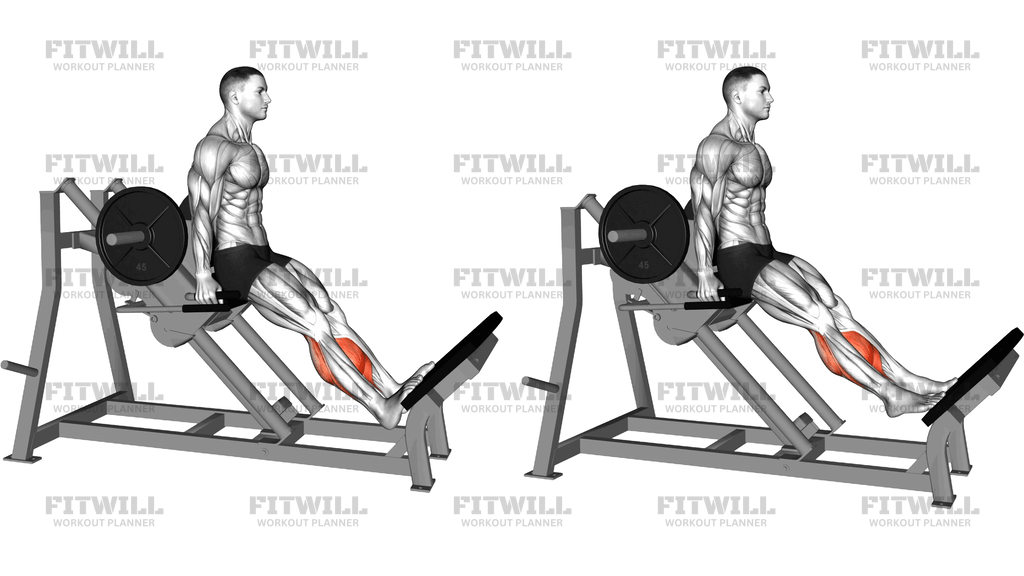
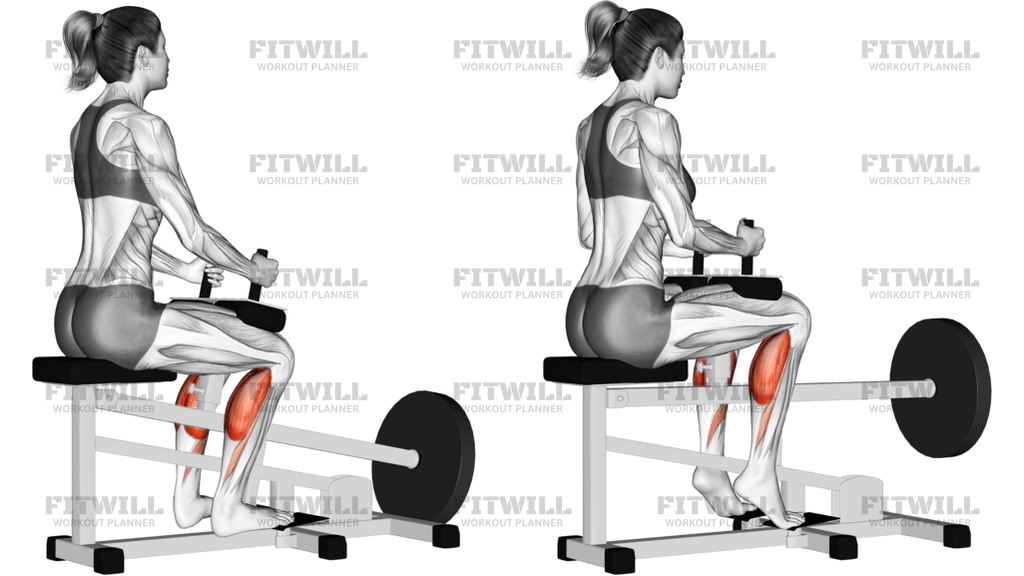
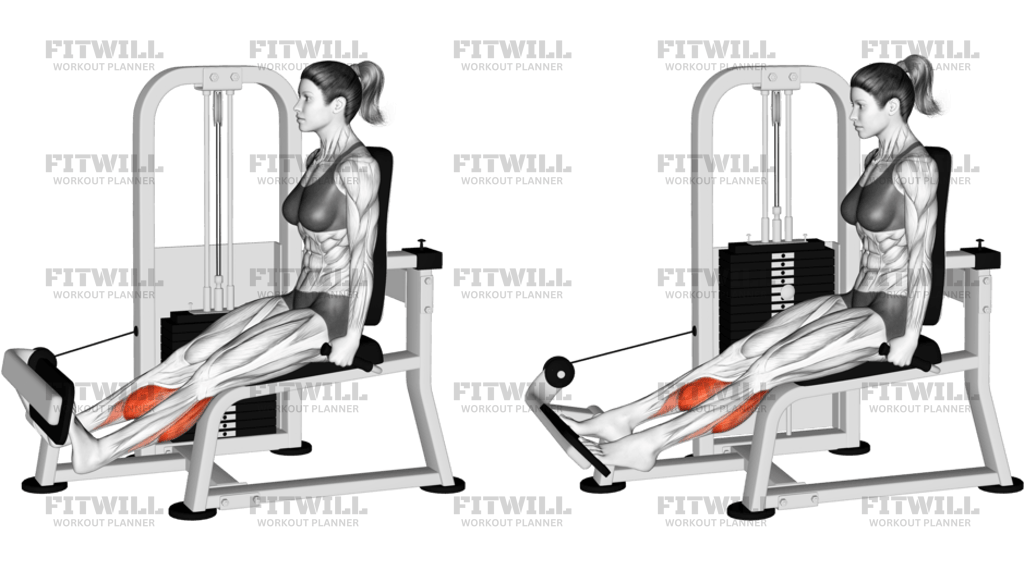
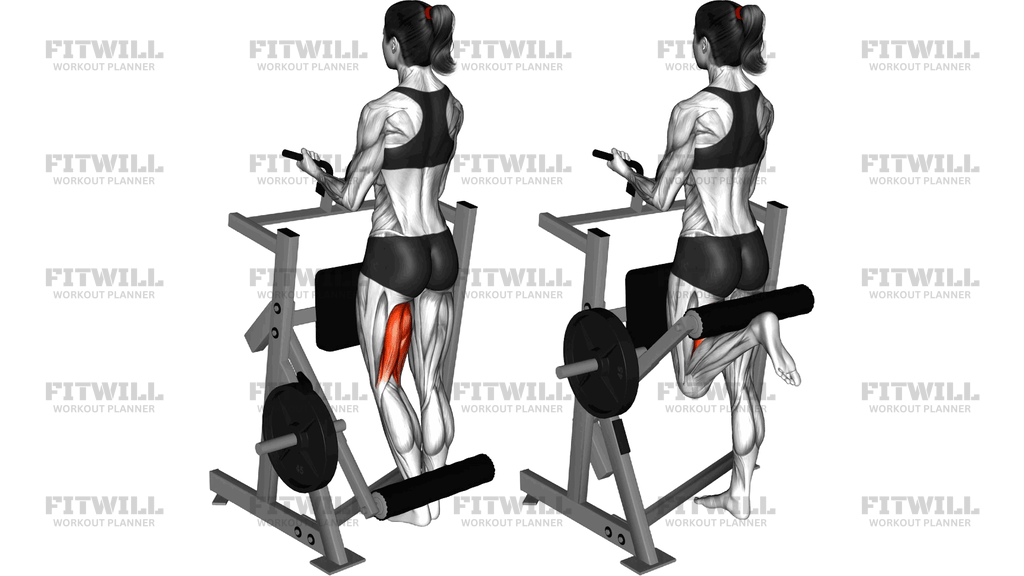
Lever Standing Calf Raise (Plate Loaded)
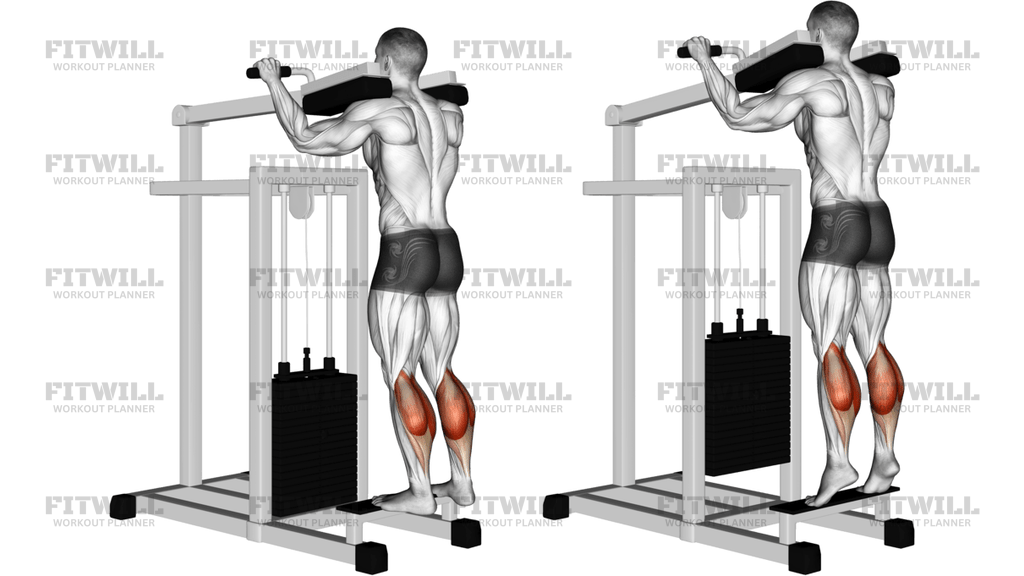
The Lever Standing Calf Raise (Plate Loaded) is a dedicated calf builder that uses a plate-loaded leverage machine with shoulder pads and an angled foot platform. You stand under the padded yoke, place the balls of your feet on the platform with your heels hanging off the edge, and drive up onto your toes against the resistance of the lever arm. Because the pads rest on your shoulders rather than a barbell resting in your hands, you get the loading of a heavy standing calf raise without grip fatigue or balance demands getting in the way.
This movement primarily targets the gastrocnemius, the two-headed muscle that gives the calf its visible shape. Because you perform it with straight legs, the gastrocnemius does most of the work, while the soleus underneath assists through the range of motion. The angled platform lets your heels drop below the level of your toes, which places the calves under a full stretch at the bottom of each rep — a position that is hard to load safely with free weights.
Setup matters more on this machine than most people realize. The pads should sit squarely on the meat of your traps, not your neck, and the platform angle should let your heels travel below the platform without your feet slipping forward. Knee position stays fixed throughout: your knees track over your toes but never bend and extend, because the moment your knees move, your quads and hips start stealing work from the calves.
Execution is simple but easy to rush. Lower your heels slowly until you feel a deep calf stretch, pause briefly, then press through the balls of your feet to rise as high as your ankles allow. The top of the rep matters as much as the bottom — many lifters bounce through the middle and never fully shorten the calf. A controlled tempo with a deliberate squeeze at the top will do more for calf development than heavy, bouncy reps.
This exercise suits lifters who want progressive overload on standing calf work, especially those who find barbell calf raises awkward or who have outgrown bodyweight versions. It fits well as a primary calf movement early in a leg session, typically for sets of 8 to 15 reps. Because the machine stabilizes the load for you, it is also a reasonable option for less experienced lifters learning what a full-range calf rep is supposed to feel like.
Keep a few safety points in mind. Warm up your ankles with lighter weight before loading heavy, since the stretched position places load on the Achilles tendon. Never bounce out of the bottom, and keep your torso upright under the pads — leaning forward turns this into a partial squat and shifts stress away from the calves.
[ Workout Log & Planner ]
Put your next workout in Fitwill
Keep your plan and training log ready when you are.


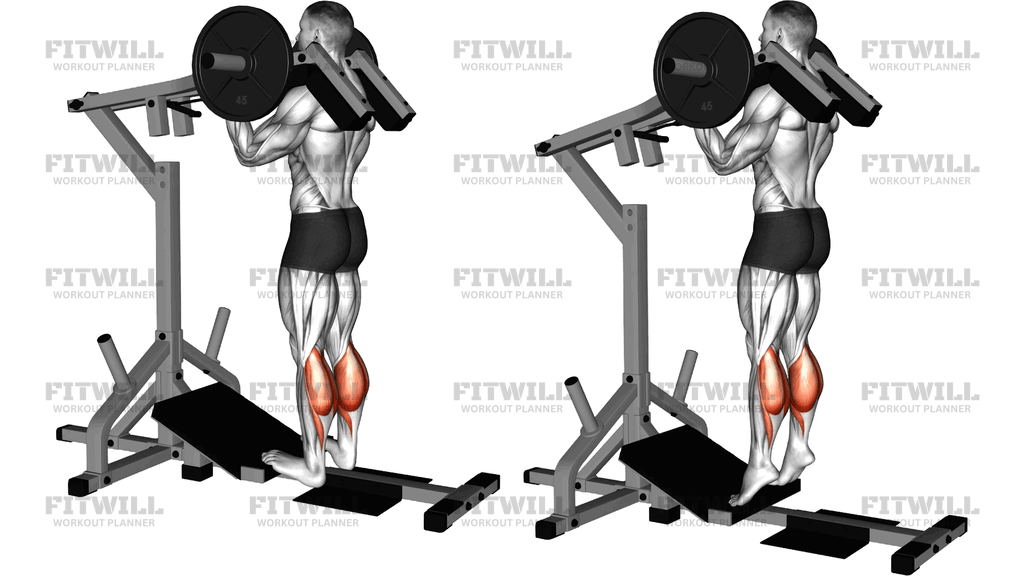
Instructions
- Load weight plates onto the machine's plate horn and set the lever arm so the shoulder pads are at roughly shoulder height when you stand upright.
- Step onto the angled foot platform and place the balls of both feet firmly on the plate with your heels extending off the back edge, about hip-width apart.
- Squat slightly to duck your head under the shoulder pads, then stand tall so the pads rest on your upper traps, and hold the machine's handles for balance.
- Release the safety stop and let the lever arm carry its weight onto your shoulders; brace your core and keep your torso upright with your gaze forward.
- Lower your heels slowly and under control until they drop below the platform edge and you feel a full stretch through both calves.
- Pause for a beat at the bottom without letting the weight crash or your heels slam down.
- Press through the balls of your feet and rise as high as your ankles allow, lifting your heels to their maximum height without bending your knees.
- Squeeze the calves hard at the top for a moment before beginning the next lowering phase.
- Exhale as you press up, and inhale as you lower your heels into the stretch.
- Complete all reps, then re-engage the safety stop before ducking out from under the pads.
Tips & Tricks
- Do not set the shoulder pads so high that you have to stand on your toes to get under them; the pad height should let you stand fully upright before the set begins.
- Bouncing out of the stretched bottom is the most common fault on this machine — it uses the Achilles tendon like a spring and removes tension from the gastrocnemius. Pause for one full second at the bottom to fix it.
- Keep your knees locked in a soft, fixed position. If your knees flex and extend during the rep, you are turning it into a squat pattern and the calves stop being the limiting factor.
- If your feet slide forward on the angled platform, shift them back so more of the forefoot sits on the plate; your heel should clear the edge by a couple of inches, not half your foot.
- Turn your toes out slightly or keep them straight to bias different parts of the calf, but keep both feet symmetrical — uneven stances let one side take over.
- Go lighter than you think for the first set. The leverage on these machines varies, and the stretched position is far harder than the top of the rep suggests.
- Do not shorten the top of the rep by stopping when you're merely standing tall. Keep rising until your ankles are fully extended and the calves are fully contracted.
- Keep your ribs down and core braced. Rounding back into the pads or hyperextending your lower back under heavy load shifts stress away from the target muscles.
- Use a slow two-to-three second lowering phase. Calves respond well to controlled eccentrics, and rushing the descent is where most of the range gets lost.
Frequently Asked Questions
Which muscles does the Lever Standing Calf Raise (Plate Loaded) work?
It primarily targets the gastrocnemius, the large visible muscle of the calf, with the soleus assisting underneath. Because the legs stay straight, the gastrocnemius does the majority of the work.
Why do my heels need to hang off the platform edge?
With your heels off the edge, they can drop below the level of your toes, giving your calves a full stretch at the bottom of each rep. Standing with your whole foot flat on the platform cuts the range of motion roughly in half.
Is the Lever Standing Calf Raise (Plate Loaded) suitable for beginners?
Yes. The shoulder pads and fixed path make it easier to learn than a barbell calf raise, and the machine handles the balance work for you. Beginners should start with light plates and focus on the full range before adding load.
Why do the shoulder pads hurt my neck during this exercise?
The pads are likely resting on your neck or the top of your shoulders instead of your upper traps. Stand tall, let the pads sit on the trapezius muscle, and hold the handles so some weight is supported through your arms if needed.
Should my knees be locked or bent during the movement?
Keep your knees essentially straight with a soft, fixed position. Straight-leg work biases the gastrocnemius, and any repeated knee bending turns the set into a squat-like movement that shifts effort away from the calves.
How is this different from a seated calf raise?
A seated calf raise bends the knee, which puts the gastrocnemius at a mechanical disadvantage and emphasizes the soleus instead. The standing version keeps the knees straight so the gastrocnemius works through its full range.
What can I use if my gym has no plate-loaded calf machine?
A Smith machine standing calf raise with a small platform or step under the balls of your feet is the closest substitute. Barbell or dumbbell standing calf raises also work, though grip and balance become limiting factors sooner.
How many reps should I do on the Lever Standing Calf Raise (Plate Loaded)?
Sets of 8 to 15 reps with controlled tempo work well for most lifters, and higher rep sets of 15 to 20 are also effective since the calves are used to sustained work. Prioritize full range over heavy weight.
Is it safe to let my heels drop all the way down into the stretch?
A full stretch is beneficial, but it should be reached slowly and without bouncing, especially with heavy load on your shoulders. If you feel pinching or sharp discomfort in the Achilles area, reduce the depth or the weight.