Cable Standing High Cross Neutral Grip Triceps Ex
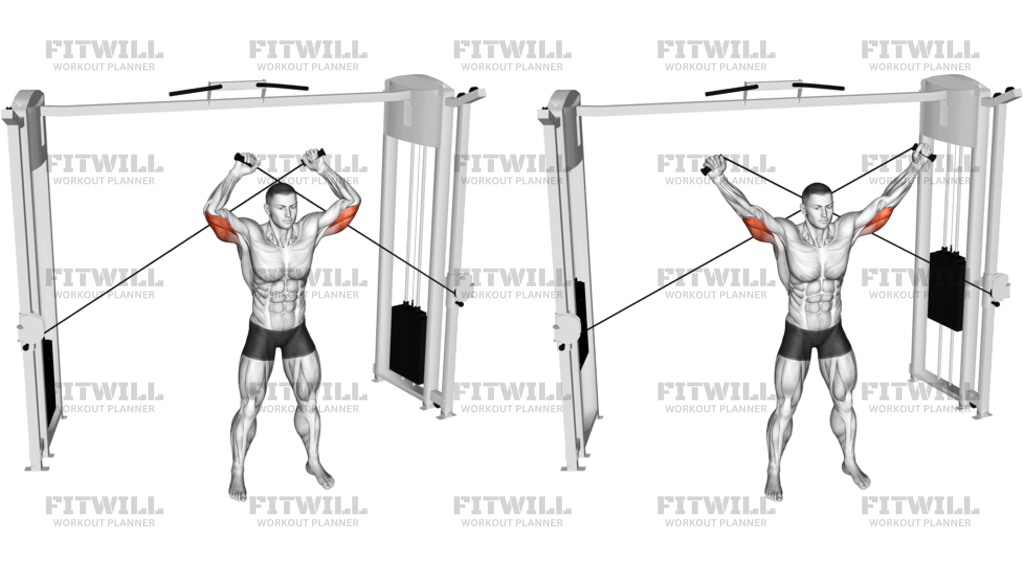
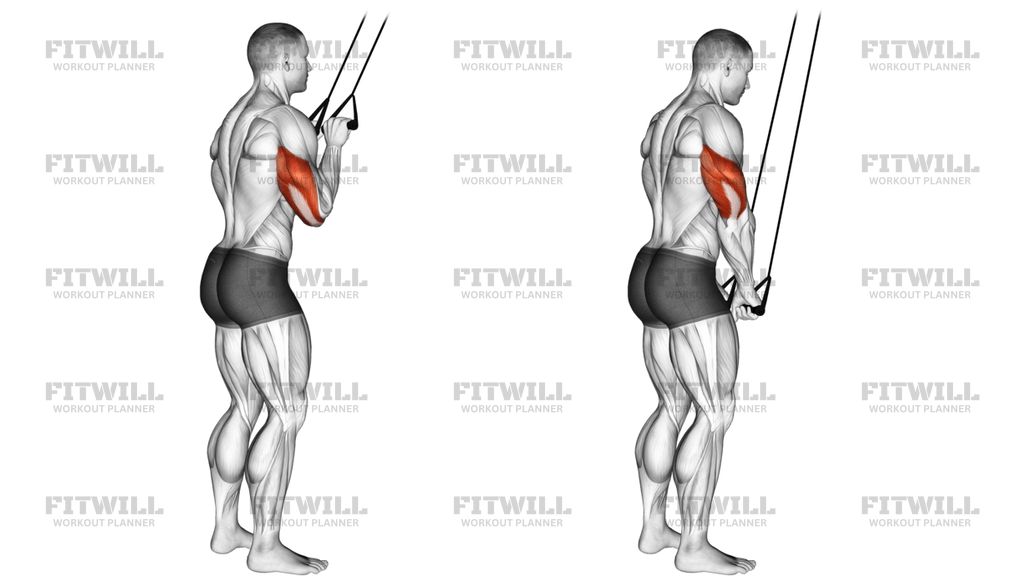
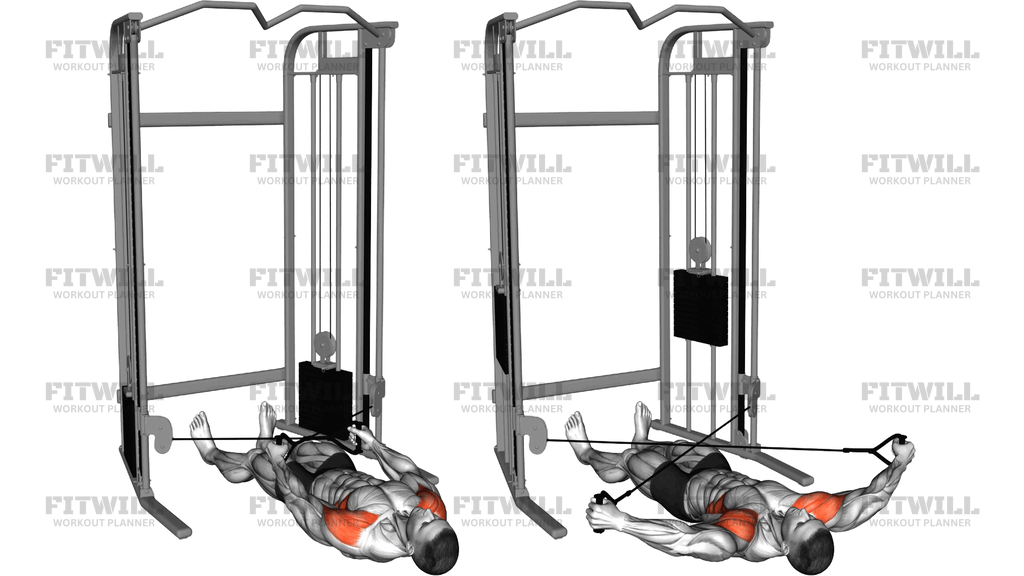
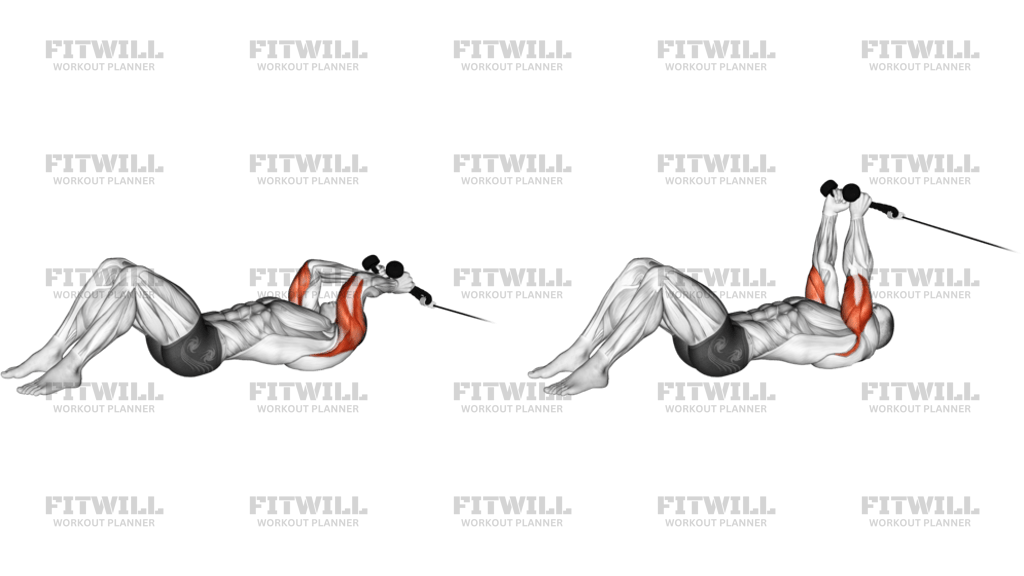
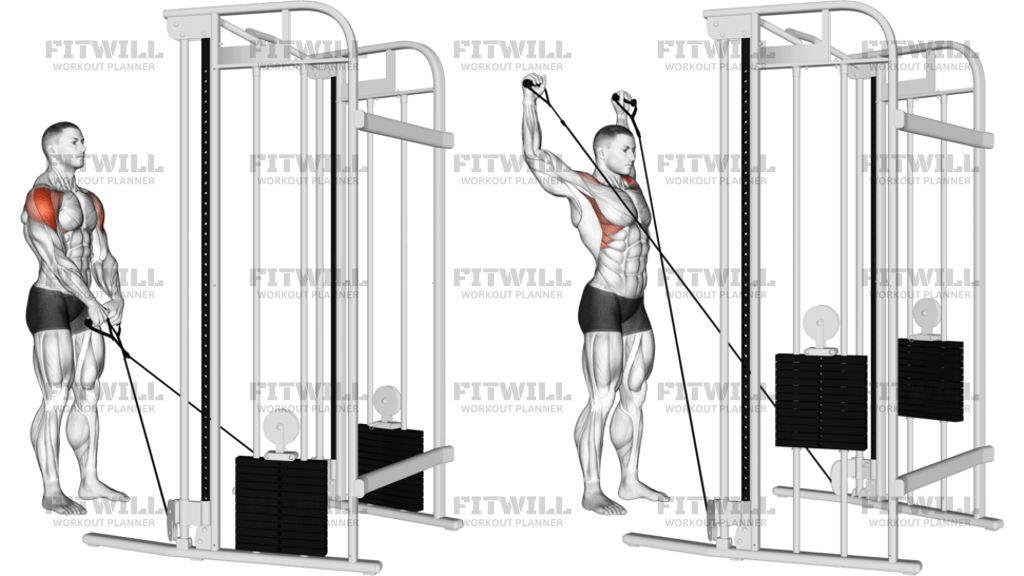
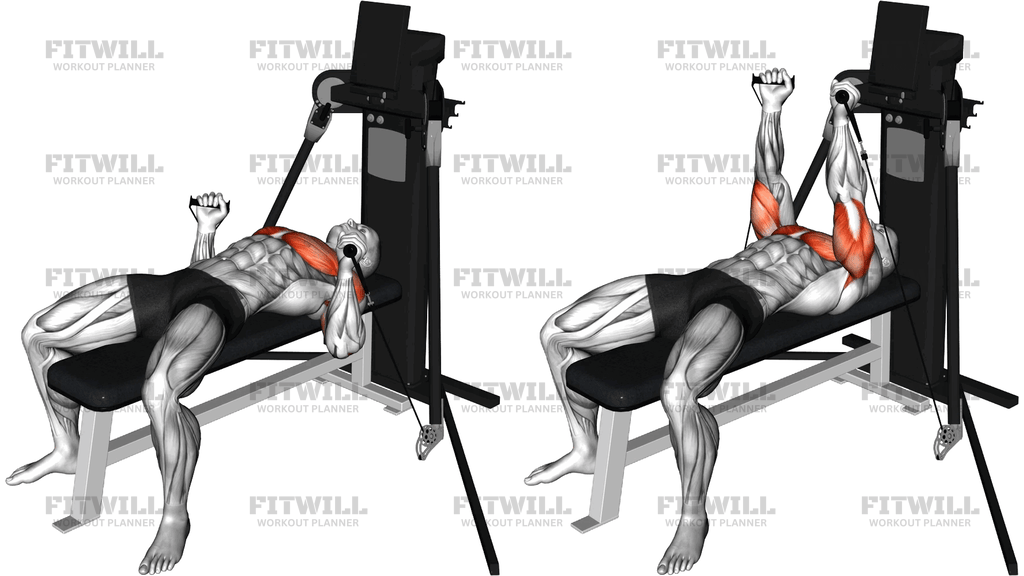
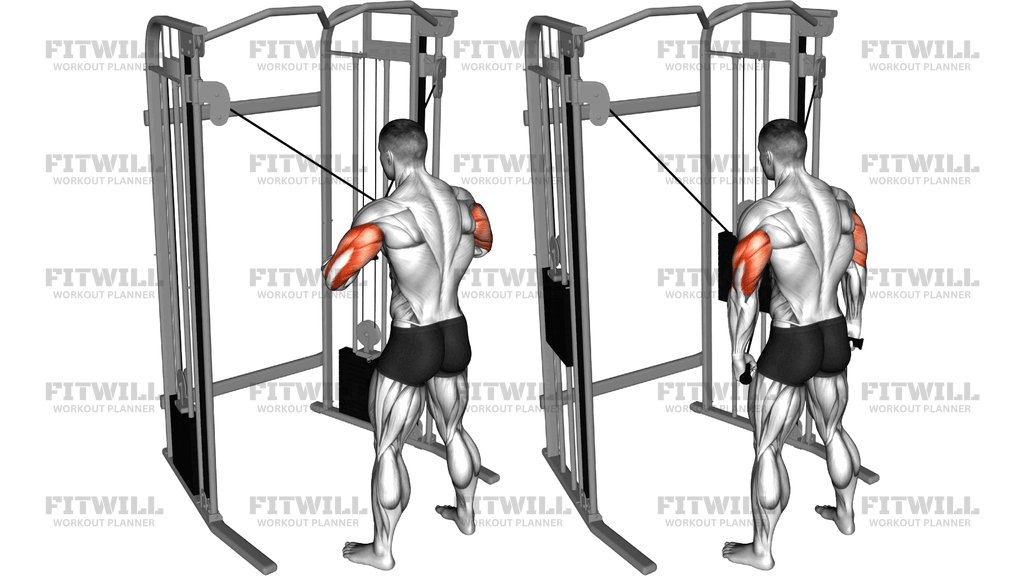
The Cable Standing High Cross Neutral Grip Triceps Extension is a standing pushdown variation performed on a dual pulley cable machine with both pulleys set at the highest position. You take one handle in each hand with a neutral, palms-facing grip, let the cables cross in front of your torso, and extend your elbows to press the handles down and slightly outward until your arms are straight at your sides. Because two cables pull from above and from opposite sides, the resistance angle is a little different from a standard single-cable pushdown, which many lifters find smoother on the elbows and more consistent through the whole range.
This movement targets the triceps, the three-headed muscle on the back of the upper arm responsible for straightening the elbow. The braced standing position also asks your core and shoulder stabilizers to hold your torso steady while the cables pull upward and slightly forward, though the triceps do the actual work. Keeping the elbows pinned to your sides is what keeps the load on the triceps rather than letting the shoulders and chest take over.
The neutral grip is the detail that separates this from most pushdown variations. With your palms facing each other and thumbs up, your wrists stay in a straight, comfortable line and your forearms are not forced into rotation. Lifters who get wrist discomfort with a straight bar or who feel their wrists bending backward during rope pushdowns often tolerate this grip much better, which makes it a solid option for higher-rep arm work.
Setup matters more than it looks. The pulleys must be fully raised so the cables pull from above your shoulders, and you need to stand far enough from the towers that the crossed cables have tension before your elbows even start to move. If you stand too close, the first part of the rep is slack and the triceps never get loaded at the hardest position. A staggered or hip-width stance with a slight forward lean gives you a stable base against the pull.
This exercise fits well as a secondary or finisher triceps movement after presses or dips, or as a main isolation exercise in an arm-focused session. Because the cables provide smooth tension and the neutral grip is joint-friendly, it also suits lifters managing cranky elbows who still want direct triceps volume. Work in the 8 to 15 rep range, prioritize a slow controlled return, and treat it as an isolation lift rather than a weight-moving contest.
[ Workout Log & Planner ]
Put your next workout in Fitwill
Keep your plan and training log ready when you are.


Instructions
- Set both pulleys of a dual cable machine to the highest position and attach a single handle to each cable so they hang at head height or above.
- Stand facing the machine in the center between the two towers, feet about hip-width apart with a soft bend in the knees.
- Grip one handle in each hand with a neutral grip, palms facing each other, then take a half-step back so the crossed cables are taut with your hands at upper-chest height.
- Tuck your elbows firmly against your sides, pull your shoulders down away from your ears, and brace your core to stop the cables pulling your torso up or forward.
- Extend both elbows at the same time, pressing the handles down and slightly out toward your hips while your upper arms stay fixed at your sides.
- Finish with your arms nearly straight at your sides, elbows unlocked, and squeeze the triceps for a beat without shrugging or leaning back.
- Slowly bend your elbows and let the handles travel back up to chest height under control, resisting the pull of the cables instead of letting them yank your arms up.
- Exhale as you press the handles down and inhale during the controlled return.
- Complete all reps with even tension on both cables, then release the handles one at a time and let the weight stack settle gently.
Tips & Tricks
- If your elbows drift forward as you press, the set turns into a chest and shoulder press. Re-tuck your elbows to your ribs before each rep and think of your upper arms as glued in place.
- Standing too close to the towers is the most common setup error here. If your hands are already fully extended at chest height before you press, step back until the cables pull taut in the start position.
- Keep your wrists straight and stacked over your forearms. The neutral grip makes this easy, but gripping too hard or cocking the wrists back still leaks force and irritates the joint.
- Do not turn the lockout into a shrug. If your shoulders ride up at the bottom, the weight is too heavy or you are rushing; drop the load and finish each rep with the elbow doing the work.
- The crossed cables pull you slightly up and toward the machine, so a slight forward lean with a braced trunk keeps you balanced. Avoid swinging your hips back on the press.
- Control the return for two to three seconds. Because two cables are loaded, letting the handles snap back wastes half the rep and jerks the stack.
- Match the left and right sides carefully. If one handle reaches lockout before the other, you are favoring your stronger arm; reduce the weight until both sides move together.
- If your elbows complain during the press, check that you are not locking out aggressively. Stop just short of full extension with tension held, rather than snapping the joint straight.
Frequently Asked Questions
What muscles does the Cable Standing High Cross Neutral Grip Triceps Extension work?
The triceps on the back of the upper arms are the primary movers, extending the elbows against resistance from both high pulleys. Your core and front shoulders work mainly to hold your torso stable while the crossed cables pull upward.
Why use a neutral grip instead of a straight bar or rope for this pushdown?
With palms facing each other, your wrists stay in a straight line and your forearms avoid forced rotation, which many lifters find more comfortable on the elbows and wrists. It also makes it easier to keep both arms working evenly, since each hand controls its own handle.
Why do the cables cross in front of my body during this exercise?
Each handle is attached to the pulley on the opposite side of the machine, so the cables cross at chest level. This creates an inward, downward resistance angle that keeps tension on the triceps through the entire range and pulls the hands slightly outward at lockout.
Is this exercise suitable for beginners?
Yes, as long as the weight is light enough to keep the elbows pinned to the sides. Start with a load you can control for 12 to 15 clean reps and master the fixed-elbow path before adding weight.
How do I stop my elbows from flaring out during Cable Standing High Cross Neutral Grip Triceps Ex?
Actively squeeze your upper arms against your ribs before the first rep and check them between reps. If they still drift, the weight is likely too heavy for you to control, so reduce it and rebuild the groove.
What can I substitute if my gym has only one adjustable cable?
A single-cable standing triceps pushdown with a rope or single handle trains the same elbow extension pattern. You can also perform this crossed version unilaterally by using one handle and letting the other arm stabilize.
How heavy should I go on this movement?
Choose a weight that lets you complete 8 to 15 reps without your torso rocking or your elbows leaving your sides. Two loaded cables add up quickly, so the stack number will feel heavier than a single-cable pushdown at the same effort.
Should I fully lock out my elbows at the bottom?
Reach a straight arm and squeeze the triceps, but avoid snapping or hyperextending the joint, especially under heavy load. Stopping just short of a hard lockout with continued tension is usually the most comfortable and effective finish.
Is it safe for my wrists and elbows?
The neutral grip and smooth cable resistance make this one of the more joint-friendly pushdown variations. Keep the movement controlled, avoid sudden lockouts, and warm up the elbows with a light set before loading up.
Where should this exercise fit in my workout?
It works best after compound pressing or dipping movements, when the triceps are pre-fatigued and you want focused isolation volume. Two to four sets at the end of an upper-body or arm session is a typical placement.