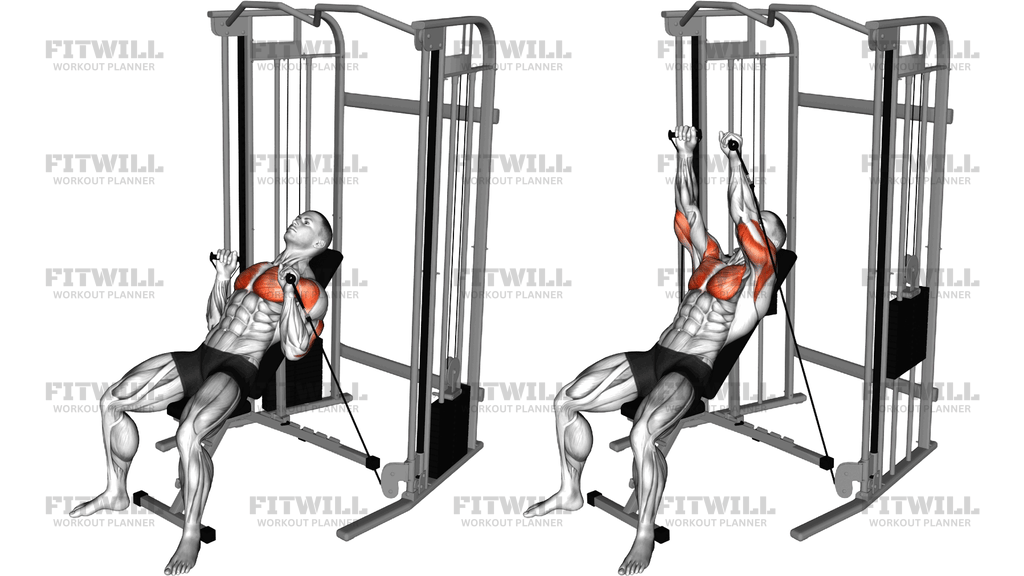
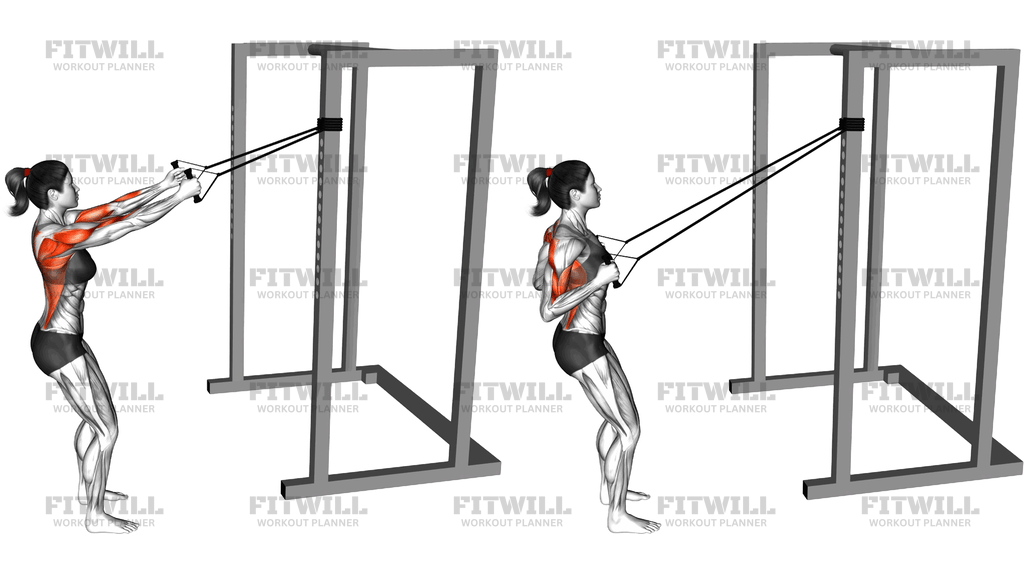
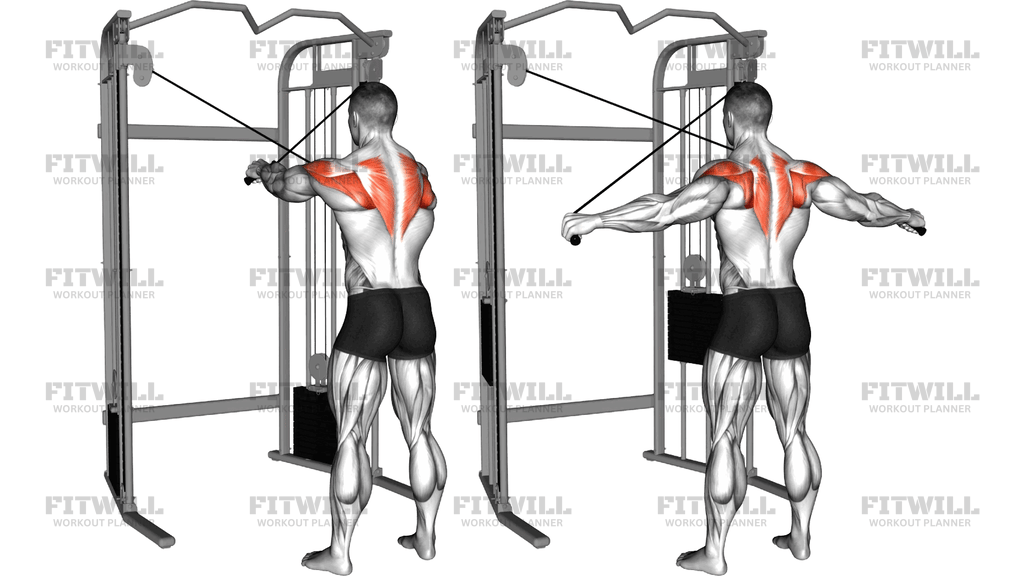
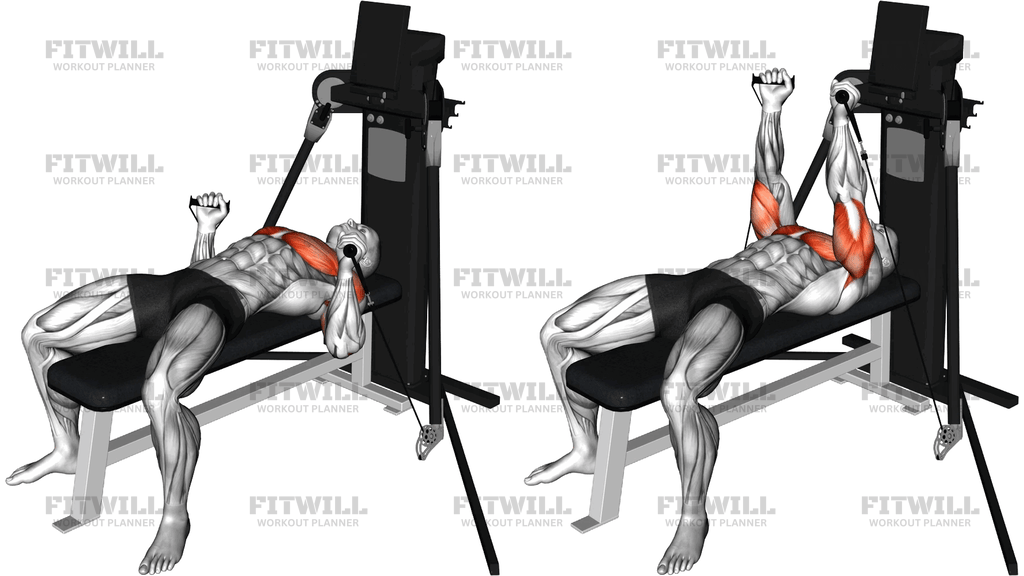
Cable Lying Cross Lateral Raise
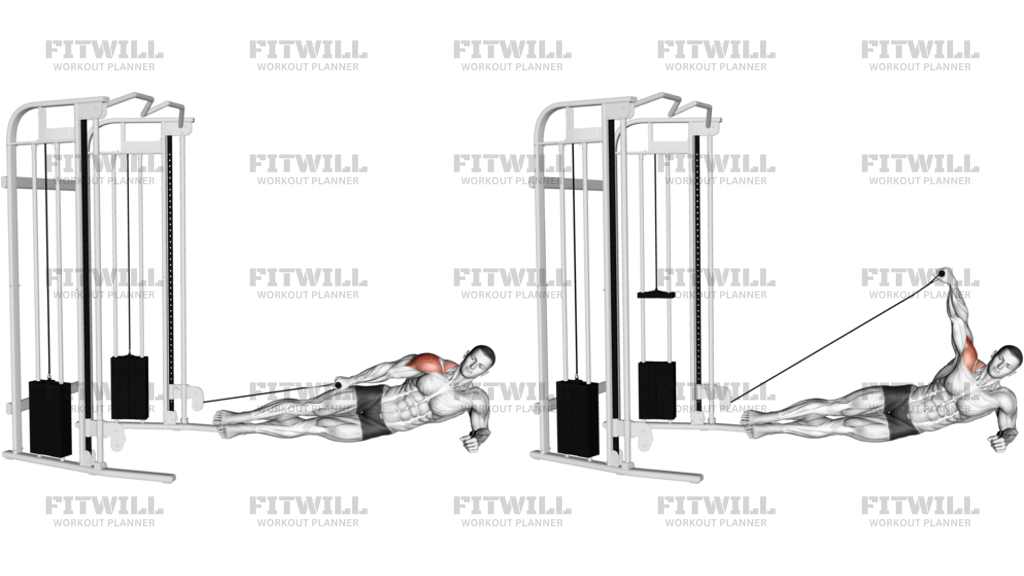
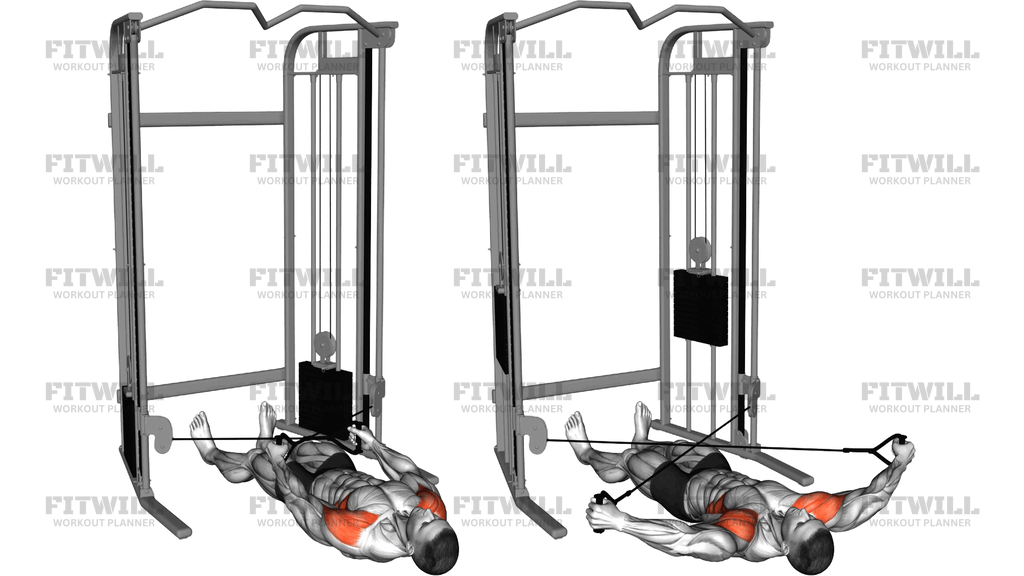
Cable Lying Cross Lateral Raise is a floor-based cable raise that trains the side delts with steady resistance and very little body English. Lying flat makes the movement stricter than a standing lateral raise, so the shoulders have to do the work instead of the torso, legs, or momentum. That makes it useful when you want a cleaner isolation stimulus and a setup that keeps the line of pull consistent from rep to rep.
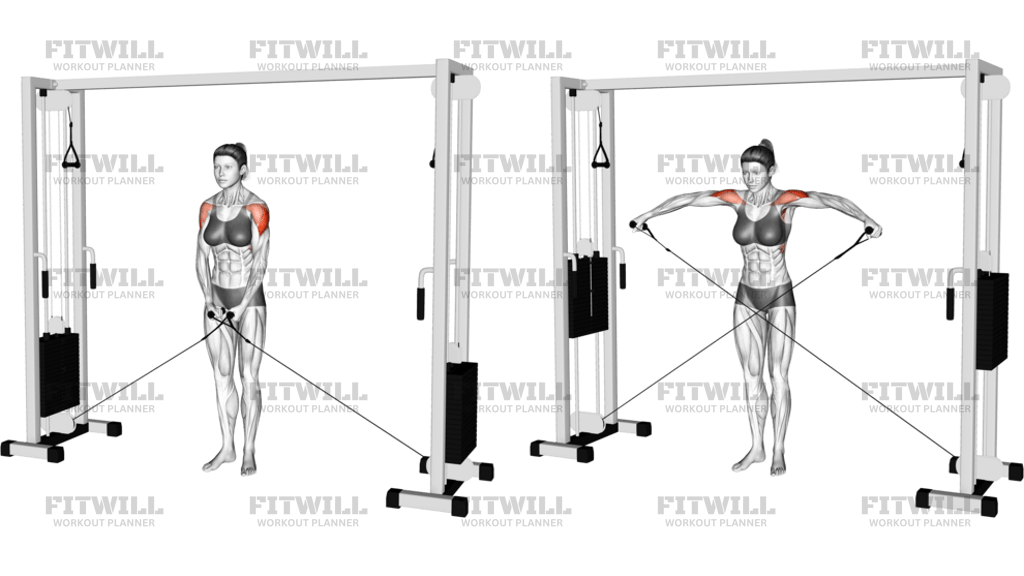
The crossed-cable setup changes the feel of the raise and keeps tension on the shoulders through a longer part of the range. Each arm works against the opposite low pulley, so the handles travel in a wide arc away from the body rather than straight up and down. The main target is the delts, while the upper back and triceps help stabilize the arms and keep the shoulders from shrugging.
A good set starts before the first rep. Center yourself between the stacks, lie on your back with the handles already crossed, and keep the ribs down so the lower back does not take over. Small position changes matter here because a shifted torso or uneven cable length can turn a shoulder exercise into a twisty, uneven pull.
On each repetition, lift the arms in a controlled arc until the upper arms reach about shoulder height, then lower slowly without losing tension. The elbows stay softly bent, the wrists stay neutral, and the neck stays relaxed on the floor. If the movement starts to feel like a shrug or a chest press, the load is too heavy or the range is too high.
Cable Lying Cross Lateral Raise is a good accessory exercise for shoulder-focused sessions, upper-body days, or any program that needs precise delt work with less cheating than dumbbells usually allow. It also works well for lifters who struggle to keep lateral raises strict in standing positions. Use a light to moderate load, keep the movement smooth, and stop the set when the shoulders can no longer lift the handles without compensation.
[ Workout Log & Planner ]
Put your next workout in Fitwill
Keep your plan and training log ready when you are.


Instructions
- Set the cable pulleys to the lowest position, attach a handle to each side, and cross the cables so each hand will work against the opposite stack.
- Lie on your back on the floor between the towers with your head, shoulders, and hips flat, knees bent, and feet planted for balance.
- Take the opposite-side handle in each hand, start with your arms low near your hips, and keep a slight bend in both elbows.
- Set your shoulders down away from your ears, brace your ribs toward the floor, and keep your chest from twisting as you begin the rep.
- Lift both arms out in a wide arc, leading with the elbows and keeping the wrists neutral as the handles rise.
- Raise the handles until your upper arms are about level with your shoulders, or stop a little sooner if the stack starts to pull you into a shrug.
- Pause briefly at the top, then lower the handles slowly back toward the floor while keeping tension on the cables.
- Reset your shoulders and breathing before the next rep, and finish the set only when you can no longer keep the movement strict.
Tips & Tricks
- Keep the cables crossed evenly; if one handle feels obviously heavier, re-center your body between the stacks before continuing.
- Hold a soft elbow bend from start to finish so the exercise stays a lateral raise instead of turning into a straight-arm pull.
- Think about moving the upper arms out to the sides, not lifting the hands straight up.
- Keep the ribs heavy on the floor; if your lower back arches, the shoulders are losing the job.
- Stop the raise around shoulder height; going higher usually turns the rep into a shrug and shifts tension into the traps.
- Use a lighter load than you would for standing cable laterals because the floor removes most of the body English.
- Let the wrists stay neutral or slightly thumbs-up so the front of the shoulder does not take over the movement.
- Lower the handles slowly and do not let the stacks yank your arms back to the start.
- Keep your head relaxed on the floor and avoid craning the neck to chase the top position.
- If one shoulder feels pinchy, shorten the range and keep the arm a little in front of the shoulder line instead of forcing it wider.
Frequently Asked Questions
What muscle does Cable Lying Cross Lateral Raise target most?
The side delts are the main target. The upper back and triceps help stabilize the arms, but they should not take over the lift.
Why do I lie on the floor for Cable Lying Cross Lateral Raise?
The floor removes leg drive and most torso swinging, so the shoulders have to control the path. It also makes it easier to keep the ribs down and keep the rep strict.
Do I need to cross the handles on purpose?
Yes. Each hand should work against the opposite low pulley so the cables cross over the torso and keep constant tension through the raise.
How bent should my elbows be on Cable Lying Cross Lateral Raise?
Keep a small, fixed bend in both elbows. If the angle keeps changing, the rep starts to turn into a press or a front-delt movement.
How high should I raise the handles?
Raise them until your upper arms are about level with your shoulders, then stop. Higher usually means more shrugging and less delt tension.
Can beginners do Cable Lying Cross Lateral Raise?
Yes, but start very light. The lying setup is strict, so a small load is enough to feel the side delts working.
What if I feel this more in my traps than my shoulders?
Lower the load, keep your shoulders away from your ears, and stop the raise a little lower. If you still shrug, the weight is probably too heavy for this setup.
Is Cable Lying Cross Lateral Raise a good substitute for dumbbell lateral raises?
Yes, especially if you want constant cable tension and less cheating. The floor position also makes it easier to keep each rep clean.