Cable Incline Cross Rear Fly
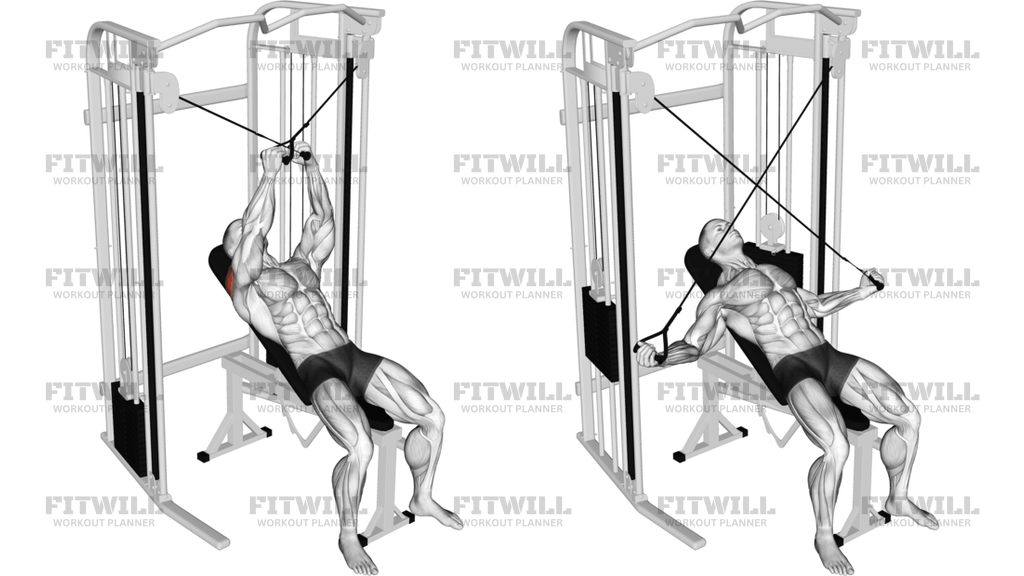
Cable Incline Cross Rear Fly is a bench-supported cable isolation exercise that puts the rear shoulders under steady tension while the upper back helps stabilize the motion. The crossed cable setup keeps resistance on the delts through most of the rep, which makes it useful when you want a controlled rear-delt stimulus instead of a loose swinging fly.
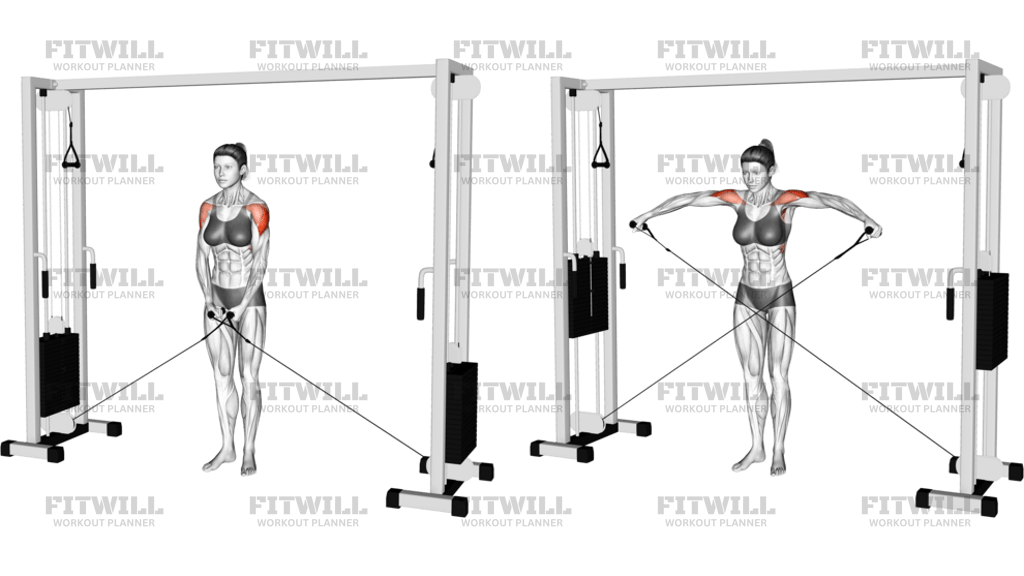
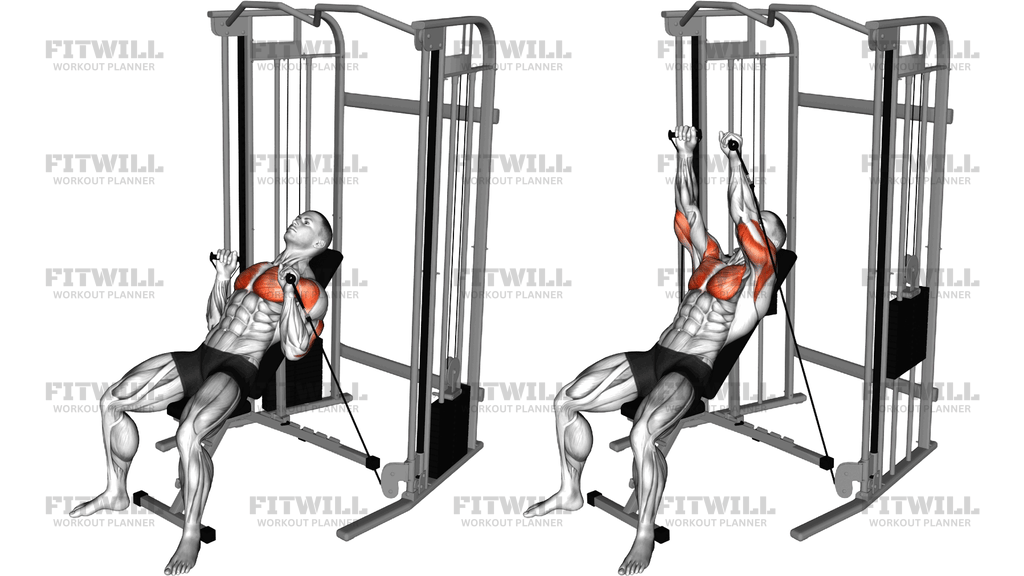
The bench angle and cable height matter because they determine whether the movement stays in the rear delts or drifts into a row, shrug, or triceps-driven press. In the position shown, the chest is open, the back is supported on the incline bench, and the handles travel in a wide arc from overhead and slightly in front of the face out to the sides. That path biases the posterior shoulder fibers and keeps the shoulders working through a long, clean line of tension.
Treat each repetition as a shoulder-driven sweep rather than a pull from the hands. The elbows stay softly bent, the wrists stay neutral, and the shoulders remain down away from the ears. As the handles separate, the upper arms move out and back until the rear delts are fully shortened without forcing the rib cage to flare or the lower back to arch. On the way down, let the cables bring the arms back with control so the tension never disappears.
This exercise fits well in accessory work, shoulder-focused sessions, or upper-body days where posture, scapular control, and rear-delt development matter. It is especially useful if regular fly variations feel too easy or if you want a more precise contraction than dumbbells often provide. Because the setup is more technical than a standing fly, light to moderate loading usually produces the best quality set.
Use the movement to build clean shoulder mechanics, not to chase load. If the bench is too steep, if the cables are too low, or if the torso starts rocking, the exercise quickly turns into something else. When the setup is right, Cable Incline Cross Rear Fly gives a very clear rear-shoulder burn with minimal momentum and a predictable return path.
[ Workout Log & Planner ]
Put your next workout in Fitwill
Keep your plan and training log ready when you are.


Instructions
- Set an incline bench between the cable stacks and set the back pad to a moderate angle so your upper back can stay supported.
- Attach handle grips to the high pulleys, then cross the cables so each hand takes the opposite side before you sit down.
- Sit back on the bench with your feet planted, chest lifted, and head supported while the handles start together above and slightly in front of your face.
- Keep a soft bend in both elbows, wrists straight, and shoulders set down away from your ears before you begin the first rep.
- Exhale and sweep the handles outward in a wide arc until your upper arms line up with your shoulders and your rear delts are fully engaged.
- Pause briefly at the open position without shrugging or leaning farther back into the bench.
- Inhale and return the handles along the same path under control until they meet again above the chest and face.
- Keep the bench support, cable tension, and arm angle consistent for every rep in the set.
Tips & Tricks
- Choose a light load first; this movement gets hard quickly once the rear delts take over.
- Keep the elbows softly bent at the same angle so the exercise stays in the shoulder instead of becoming a press or row.
- Let the handles travel out and slightly down in a smooth arc rather than pulling them straight back.
- Keep the chest open, but do not overarch the lower back to fake a bigger range.
- If your upper traps start burning before the rear delts, lower the bench angle or reduce the weight.
- The cables should stay crossed so tension remains even when the hands come back together at the top.
- Stop the rep when the upper arms are in line with the shoulders; forcing extra travel usually turns into shrugging.
- A slow return matters here because the rear delts get most of their work while the handles come back overhead.
Frequently Asked Questions
What muscle does Cable Incline Cross Rear Fly target most?
The rear delts are the main target, with the mid traps and rhomboids helping stabilize the shoulder blades.
Can beginners perform this exercise?
Yes. Start with very light resistance and learn the cable path before you add load.
Where should the handles start before each rep?
They should start together above and slightly in front of the face, with the cables crossed and light tension already on the rear shoulders.
What is the most common mistake with the bench-supported setup?
Setting the bench angle too steep or sitting too far forward, which turns the fly into a shruggy pull and reduces rear-delt tension.
Should I keep my elbows locked out?
No. Keep a small bend in the elbows and freeze that angle so the hands move without changing the arm mechanics.
Why are the cables crossed instead of pulled straight from each side?
The cross setup keeps the line of tension consistent through the opening phase and makes it easier to keep pressure on the rear delts.
How do I know if I am using too much weight?
If you have to jerk your torso, shrug at the top, or shorten the arc, the load is too heavy for this exercise.
Can I substitute dumbbells or a machine for this movement?
Yes. Dumbbell incline rear flys or a reverse pec deck can work, but the cable version gives a steadier tension curve.