Barbell Clean And Jerk
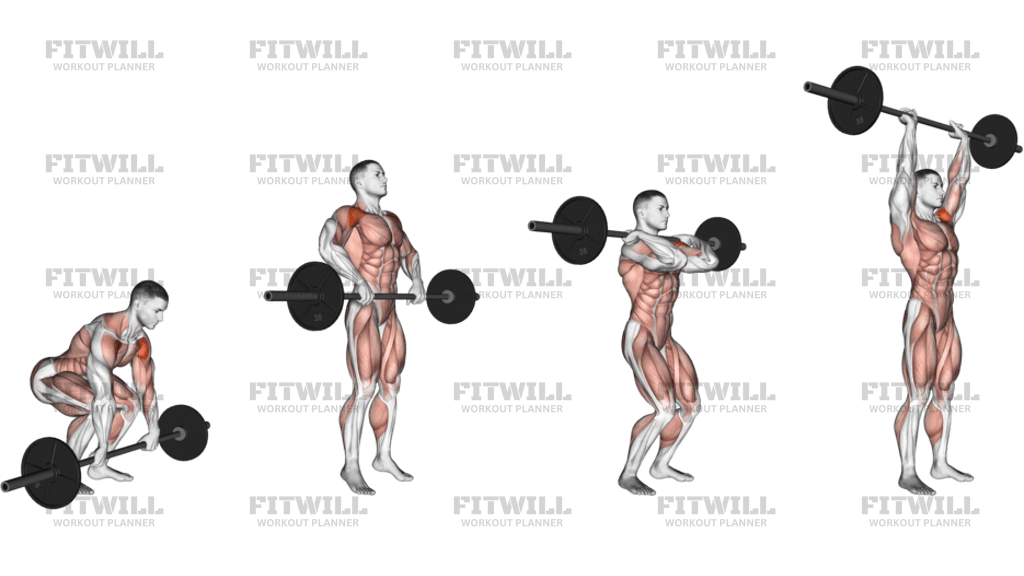
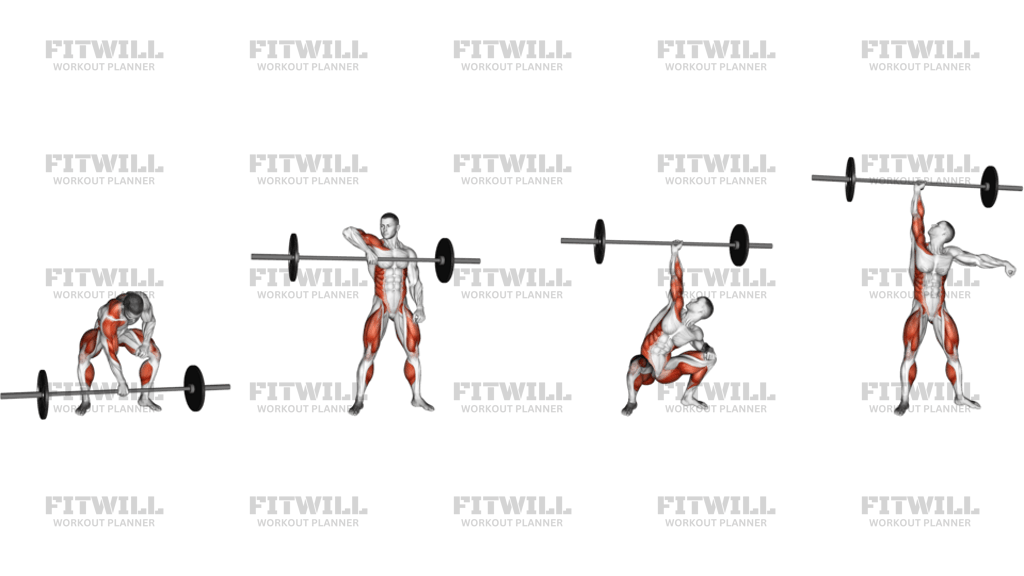
The Barbell Clean And Jerk is the second of the two Olympic lifts and one of the most demanding full-body movements in weightlifting. It takes a barbell from the floor to your shoulders in two distinct phases — the clean, where you pull the bar up and catch it across your front shoulders in a partial squat, and the jerk, where you drive it overhead to straight arms, usually with a split or dip-and-drive leg action. Every rep is essentially a maximum-effort sequence of jumps, squats, and presses stitched together into one fluid expression of power.
This lift rewards explosive hip and knee extension more than raw strength. The quads, glutes, and hamstrings generate the bulk of the force during the pull, while the traps, upper back, and forearms transmit it to the bar. The catch and jerk then demand a strong front rack position, solid core bracing, and coordinated shoulder and triceps work to hold a heavy bar steady overhead. Because the whole chain is involved, very little of the body is left idle during a properly executed rep.
For athletes, the Barbell Clean And Jerk builds the kind of triple-extension power that transfers directly to sprinting, jumping, and contact sports. For general lifters, it develops coordination, mobility, and the ability to produce force quickly — qualities that slow grinding lifts don't train as well. It is a staple in CrossFit programming, Olympic weightlifting competition, and strength and conditioning rooms, though it looks slightly different in each context depending on rep schemes and load.
Setup quality determines everything in this lift. Your hand placement on the bar, shin position, and back angle at the start dictate whether the bar travels close to your body or swings away in a loop that forces you to chase it. Similarly, a poor front rack — elbows dropped, bar resting on the hands instead of the shoulders — will sabotage the jerk before it even begins. Taking a few sessions to drill positions with an empty bar or light load pays off far more than adding weight to sloppy mechanics.
Execution happens fast. The pull should feel like a vertical jump with the bar in your hands: sweep the bar back into the hips, extend violently, then pull yourself under the bar and catch it with elbows high. For the jerk, a shallow dip with a vertical torso, an aggressive drive through the legs, and a quick split or squat under the bar gets the load overhead with locked elbows and the bar balanced over your midfoot. Lower the bar in a controlled way, reset your stance and grip, and treat each rep as its own deliberate attempt rather than rushing through a set.
Because the movement is technical and performed at speed, it deserves respect on the safety side. Train on a platform or surface where you can safely drop or set down the bar, use bumper plates when lifting heavy, and stop the set when your timing degrades — fatigue turns clean misses into shin and shoulder injuries far faster than heavy weight does. Beginners should work with a coach or light technique work before chasing numbers.
[ Workout Log & Planner ]
Put your next workout in Fitwill
Keep your plan and training log ready when you are.


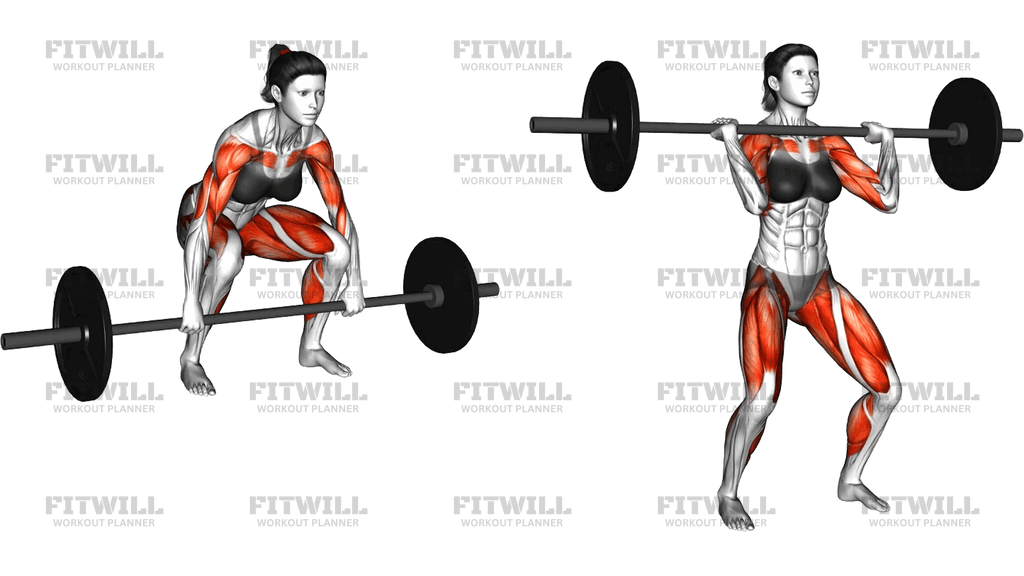
Instructions
- Stand over a loaded barbell with your feet hip-width apart, shins about an inch from the bar, toes turned slightly out.
- Bend down and grip the bar with a hook grip — fingers over the thumb — just outside your legs, then lower your hips until your shoulders sit slightly above the bar and your back is flat.
- Take a deep breath into your belly and brace your core hard, keeping your chest up and your weight balanced over the middle of your feet.
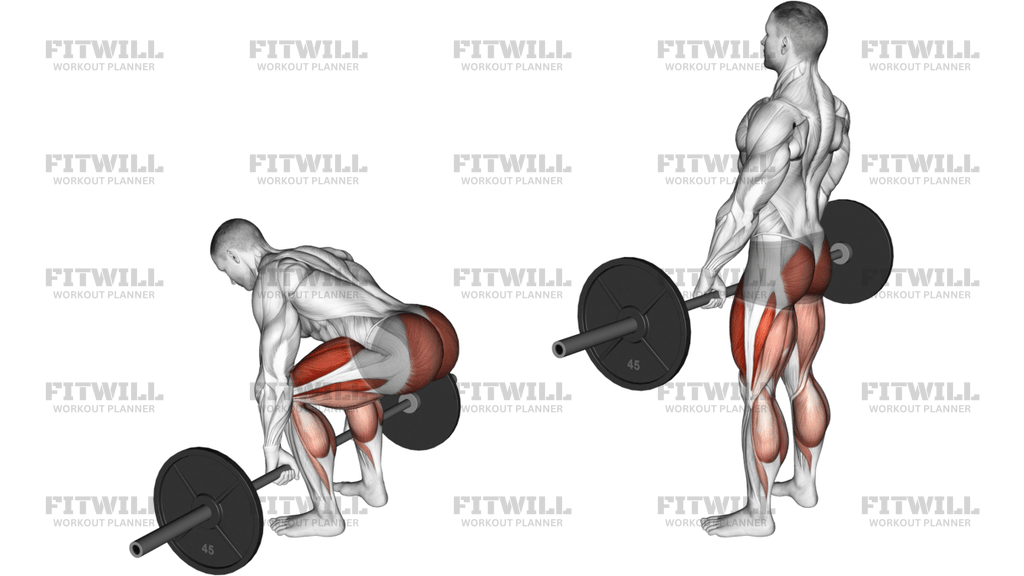
- Pull the bar off the floor by driving through your legs, keeping it close to your shins as your hips and shoulders rise together.
- As the bar passes your knees, sweep it back into your hips, then extend your hips, knees, and ankles violently — like a vertical jump — and shrug to give the bar upward momentum.
- Immediately pull your elbows up and around, drop under the bar, and catch it across your front shoulders in a front squat, with elbows high and the bar resting on the shelf of your shoulders, not your hands.
- Stand up fully out of the clean, reset your grip to full-hand on the bar, and take one stabilizing breath with elbows still high.
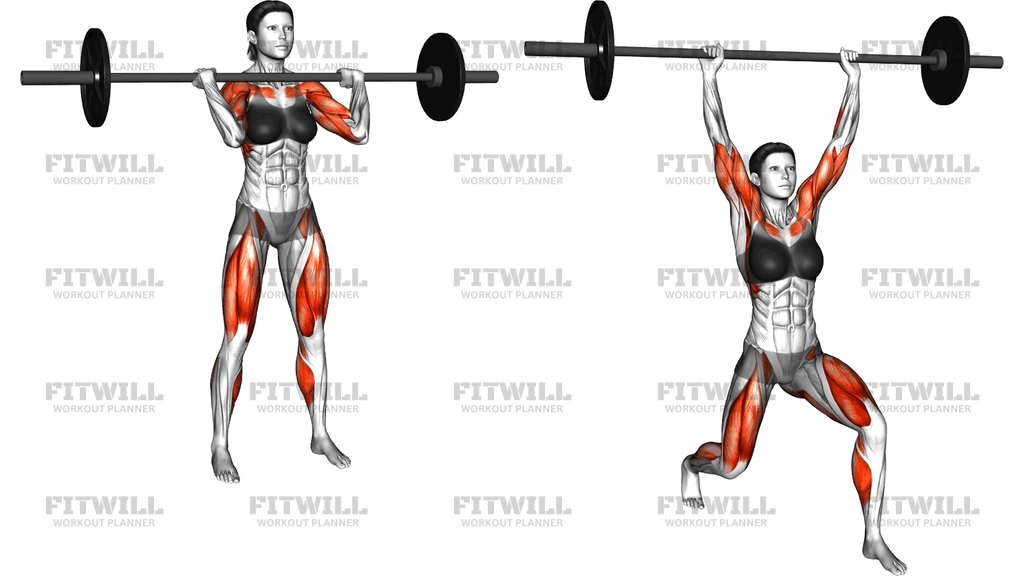
- For the jerk, dip a few inches by bending your knees with a vertical torso, then drive the bar overhead explosively while splitting your legs — one forward, one back — or dropping into a shallow squat, locking your elbows as the bar travels.
- Hold the bar overhead with it balanced over your ears and midfoot, bring your feet back together under the bar, then lower it to your shoulders or the floor in a controlled way.
- Reset your stance, re-grip, and breathe before starting the next rep — each clean and jerk should begin from a deliberate, braced setup.
Tips & Tricks
- The most common mistake is pulling with the arms too early. The arms stay straight and relaxed until the bar reaches hip height; if you feel your biceps working mid-pull, the bar will slow down instead of speeding up.
- If the bar loops away from your body and you have to jump forward to catch it, you're likely swinging it around your hips instead of extending vertically close to them. Cue yourself to brush the bar against your upper thighs during extension.
- Elbows dropping after the catch is a front rack problem, not a strength problem. Keep the elbows as high as mobility allows and let the bar rest on the front shoulders so the jerk drives off a stable shelf.
- In the jerk dip, keep the torso vertical. Leaning forward onto your toes during the dip sends the bar out in front of you and turns the jerk into a standing press-off-your-neck.
- Don't rush the transition between clean and jerk. Take a beat to stand tall, re-grip, and brace — jerking out of a wobbly recovery is where most lost lifts happen.
- Use a hook grip from the start rather than switching mid-lift. It feels uncomfortable at first, but it stops the bar rolling out of your fingers during the fast turnover.
- If your wrists ache in the rack position, work on shoulder, lat, and wrist mobility, and widen your hands slightly — forcing a narrow rack with tight shoulders puts the load on the joint instead of the shoulders.
- Film yourself from the side occasionally. The bar path should travel roughly straight up with slight rearward drift at hip level; a forward S-curve signals a pull that starts around the knees instead of past them.
- Stop the set when your technique changes, not when your muscles fail. Clean and jerk timing deteriorates fast under fatigue, and a mistimed catch is what leads to shin scrapes and shoulder strain.
- When learning, use light bumper plates or an empty bar so you can drop the bar safely from overhead or in front without damaging equipment or flooring.
Frequently Asked Questions
What muscles does the Barbell Clean And Jerk work?
It primarily trains the quads, glutes, and hamstrings, which produce the explosive pull and drive. The traps, upper back, shoulders, and triceps handle the bar turnover and overhead lockout, while the core and lower back stabilize you through both phases.
Is the Barbell Clean And Jerk suitable for beginners?
Yes, but only with light loads and attention to technique. Most beginners should spend time drilling the clean positions and a separate jerk drill with an empty bar or dowel before stringing the full lift together.
What is the difference between the clean and the jerk?
The clean takes the bar from the floor to your front shoulders, catching it in a front squat position. The jerk then drives the bar from the shoulders to full overhead lockout, usually with a split stance or a squat under the bar.
Why do lifters use a hook grip on the barbell?
The hook grip — fingers wrapped over the thumb — locks the bar into the hand so it can't roll out during the fast turnover of the pull. It's uncomfortable at first, but it's far more secure than a regular overhand grip at speed.
How do I fix a bar path that loops away from my body?
Looping usually means you're pulling around the hips instead of extending up close to them. Focus on sweeping the bar back into your hips during the second pull and think of jumping straight up rather than pulling back.
Should I catch the clean in a full squat or a power position?
Both are valid — a full squat catch lets you handle heavier loads, while a power catch (higher hips) is often used in training to emphasize the pull. If you're new, learning the power version first is a reasonable progression before adding the deeper catch.
What can I substitute if I don't have the mobility for the Barbell Clean And Jerk?
Dumbbell cleans, kettlebell swings, hang power cleans, and push presses train much of the same power and coordination with simpler requirements. You can reintroduce the full lift as your front rack and overhead mobility improve.
How heavy should I go when learning the movement?
Stay with an empty bar or very light bumper plates until your positions are consistent, then add weight gradually. The clean and jerk is timed, not just strong — a load that breaks your timing teaches bad habits.
Is it safe to drop the barbell after a rep?
Dropping from the shoulders or overhead is standard practice, but only with bumper plates on a platform or suitable flooring. With standard iron plates or on unsuitable surfaces, lower the bar under control to avoid damaging the plates, the floor, or the bar.