Lever T Bar Scapular Retraction Shrug (Chest Supp)
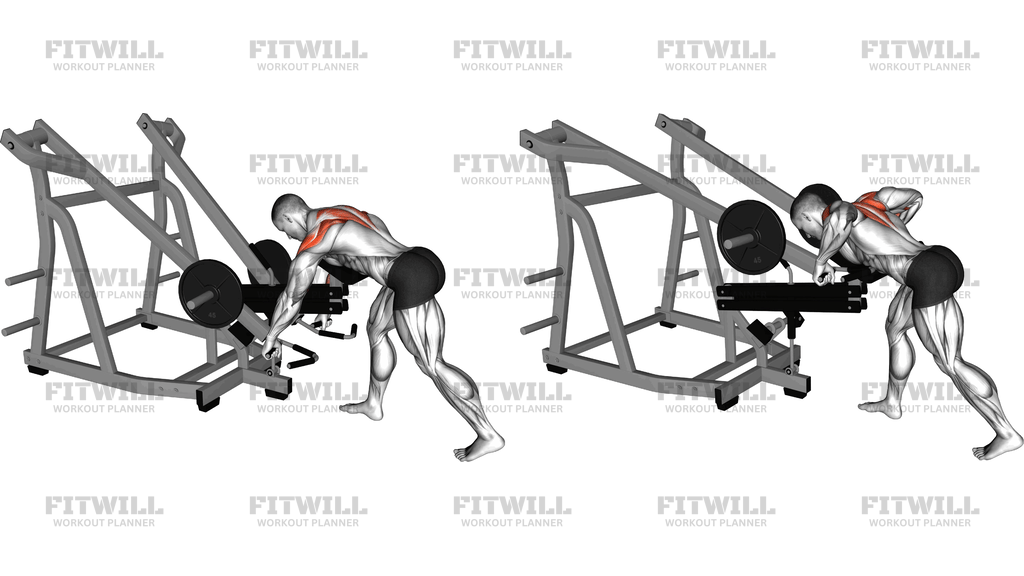
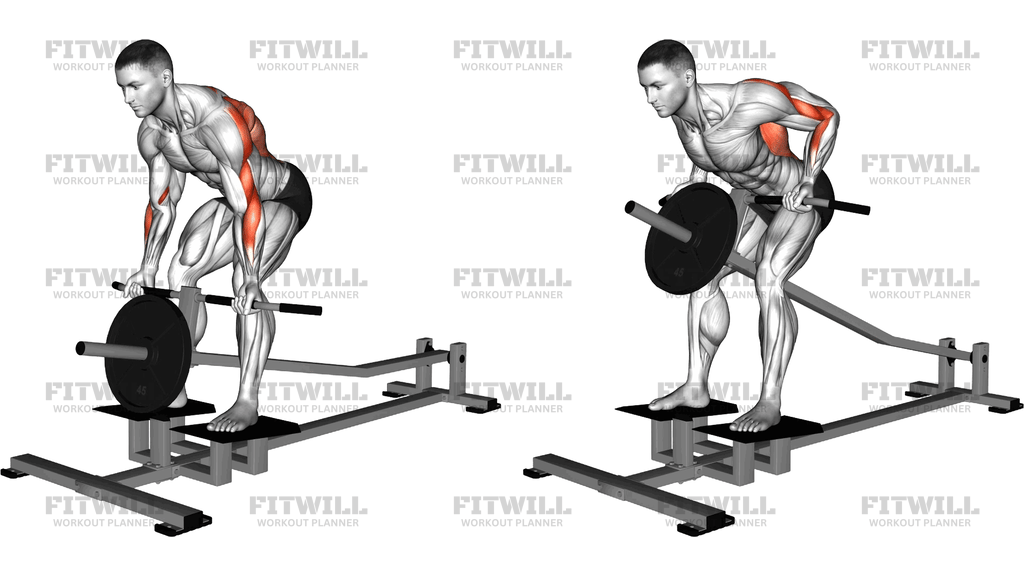
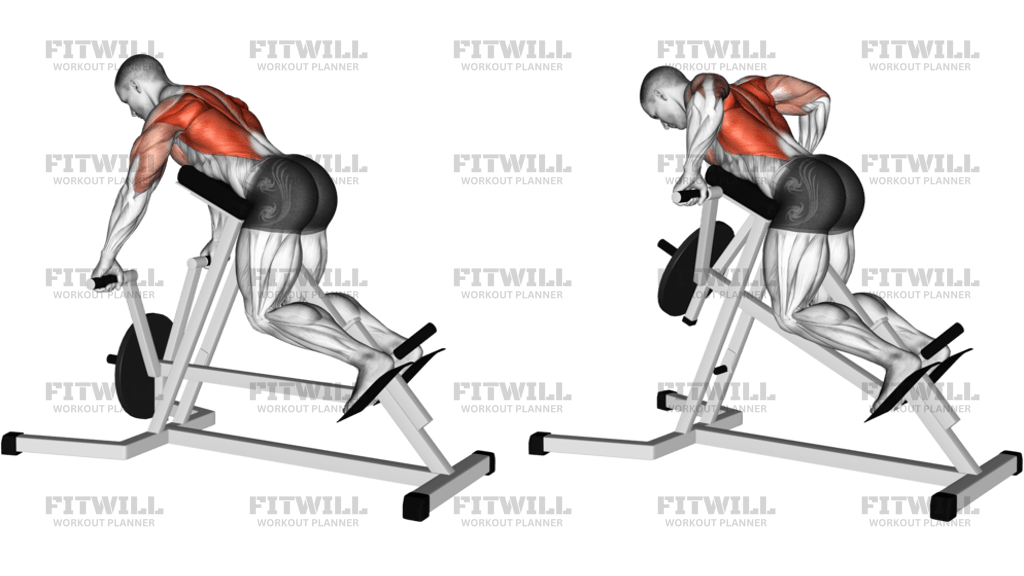
The Lever T Bar Scapular Retraction Shrug (Chest Supp) is a dedicated upper-back isolation exercise performed on a lever T-bar machine with a padded chest support. Unlike a standard T-bar row, the goal here is not to pull with the arms but to move the shoulder blades themselves. You hold the handles with your arms nearly straight, then draw the shoulder blades together and up toward the spine while the loaded T-bar lever travels through its fixed arc.
This movement is especially useful for lifters whose traps and rhomboids never seem to get worked hard by rows, because the elbows stay long and the arms stop stealing the load. It is also a common choice for people working on posture and shoulder mechanics, since controlled scapular retraction trains exactly the motion that tends to get lazy from long hours sitting at a desk or over a keyboard.
The chest support is what makes this version valuable. With your torso braced against the pad and your feet planted on the machine's platforms, momentum and lower-back strain are largely removed from the equation, so the tension lands squarely on the upper back. The setup matters: your chest should stay in contact with the pad for the whole set, because if you lift off or rock, you are using body English rather than scapular control, and the targeted muscles lose their stimulus.
To execute well, start light and treat this as a feel exercise rather than a load exercise. Keep your elbows softly locked, retract the shoulder blades fully, add a small upward shrug at the top, then lower the handles under control until you feel a gentle stretch across the upper back before starting the next rep. The range of motion is short, which is normal — a few inches of handle travel can produce a strong contraction through the traps and rhomboids.
Use this exercise as an accessory after your main rowing or pulling work, or as a teaching tool early in a training block to build awareness of scapular movement. Because the load is supported by the machine and the body is stabilized against the pad, it is generally friendly to intermediate lifters and even careful beginners, provided the weight stays modest and the shoulder blades do the moving, not the arms.
[ Workout Log & Planner ]
Put your next workout in Fitwill
Keep your plan and training log ready when you are.


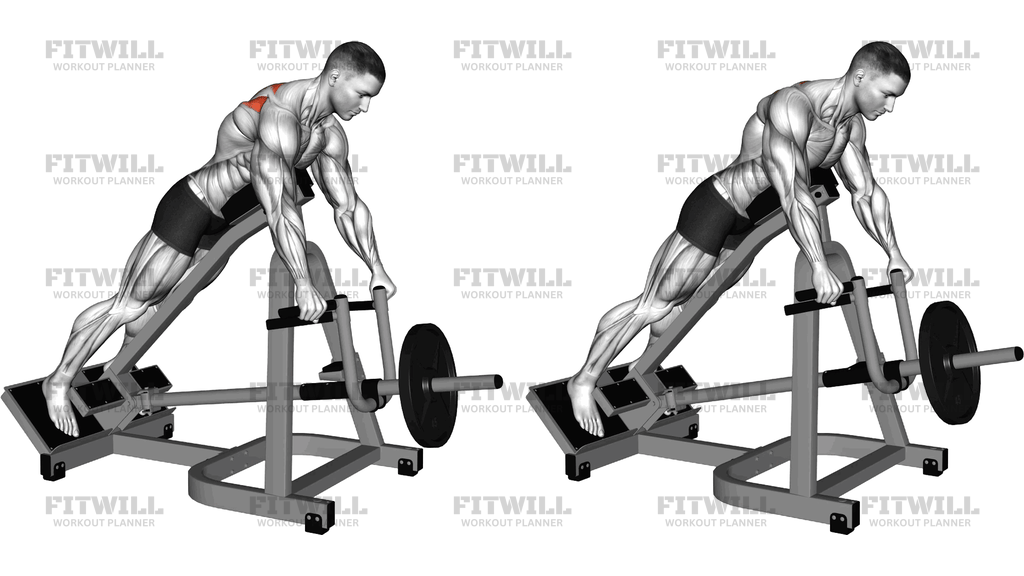
Instructions
- Set the machine so the chest pad sits comfortably against your sternum when you lean into it, and place both feet firmly on the foot platforms with a stable, staggered stance.
- Grip the T-bar handles with a neutral grip, arms hanging straight down toward the floor, and let the loaded lever settle so your shoulder blades drift slightly forward into a gentle stretch.
- Press your chest firmly into the pad and brace your core so your torso cannot rock during the set.
- Keeping your elbows nearly straight, pull the handles back by pinching your shoulder blades together toward your spine.
- At the fully retracted position, add a small upward shrug so the upper traps contribute and the lever reaches its end range.
- Pause for a beat at the top and squeeze the muscles between your shoulder blades rather than rushing through the rep.
- Lower the handles slowly along the same path until the shoulder blades protract forward and the upper back stretches slightly under the load.
- Exhale as you retract and shrug, inhale as you lower the weight back to the start.
- Complete your reps with the chest staying in contact with the pad, then release the handles one at a time and step off the platforms before adjusting the load.
Tips & Tricks
- If you feel the exercise in your biceps, your elbows are bending — this is the most common fault. Lock the arms out and think of pushing your shoulder blades together instead of pulling the handles.
- Do not let your chest peel off the pad as the weight gets heavy; reduce the load until your torso stays glued to the support for every rep.
- The range of motion is short by design. If the handles are traveling a long distance, you are probably rowing with your arms or rocking your body.
- Pause for one to two seconds at full retraction. Because the movement is small, the hold is where most of the benefit lives.
- Start with a much lighter weight than you would use for T-bar rows. The traps and rhomboids handle scapular work well, but momentum-free reps are harder than they look.
- Let the shoulder blades travel forward into a full stretch at the bottom of each rep rather than cutting the range short — the protracted start position is what allows a strong retraction.
- Keep your neck neutral and in line with your spine; jutting the chin up at the top shifts tension to the neck instead of the upper back.
- If your grip gives out before your upper back, use lifting straps, since this exercise is about scapular control rather than forearm strength.
- Place this exercise after heavier rows or pulls in your session so fatigue in the supporting muscles does not compromise your scapular control.
Frequently Asked Questions
What muscles does the Lever T Bar Scapular Retraction Shrug (Chest Supp) work?
The primary work is done by the trapezius and rhomboids, which pull the shoulder blades together and upward. The rear shoulders and supporting muscles around the shoulder girdle assist throughout the movement.
How is this different from a regular T-bar row?
In a row, the elbows bend and the lats and arms do much of the work. Here the arms stay nearly straight, so the shoulder blades themselves must retract and shrug, isolating the traps and rhomboids.
Is the chest support actually necessary?
The support removes momentum and lower-back demand, which is the whole point of the chest-supported setup. Without it, most lifters end up rocking and turning the exercise into a sloppy row.
Can beginners do the Lever T Bar Scapular Retraction Shrug (Chest Supp)?
Yes, and it can be a good learning tool for scapular control, since the machine stabilizes the body. Beginners should start very light and focus on feeling the shoulder blades move before adding load.
Why is the range of motion so short?
Scapular retraction only moves the shoulder blades a small distance, so a short handle path is expected. A large sweeping motion usually means the arms are rowing rather than the scapulae working.
Where should I place this exercise in my workout?
It works best as an accessory after your main rowing or pulling movements, when the upper back is warm but you still have control. It also pairs well with face pulls in a posture-focused session.
My grip fails before my upper back does — what should I do?
Use lifting straps, since grip strength is not the goal of this movement. Alternatively, reduce the load slightly and take longer pauses at the top of each rep.
Is it safe for the lower back?
The chest pad and foot platforms support the torso and take the load off the spine, making this friendlier to the lower back than free-weight shrugs or rows. Keep the weight reasonable and avoid lifting the chest off the pad to protect the position.
Can I substitute another exercise if I don't have this machine?
Chest-supported dumbbell shrugs on an incline bench or band scapular retractions with straight arms train a similar pattern. Neither matches the machine's fixed path exactly, but both emphasize the shoulder blades over the arms.