Snow Angel Face To Floor
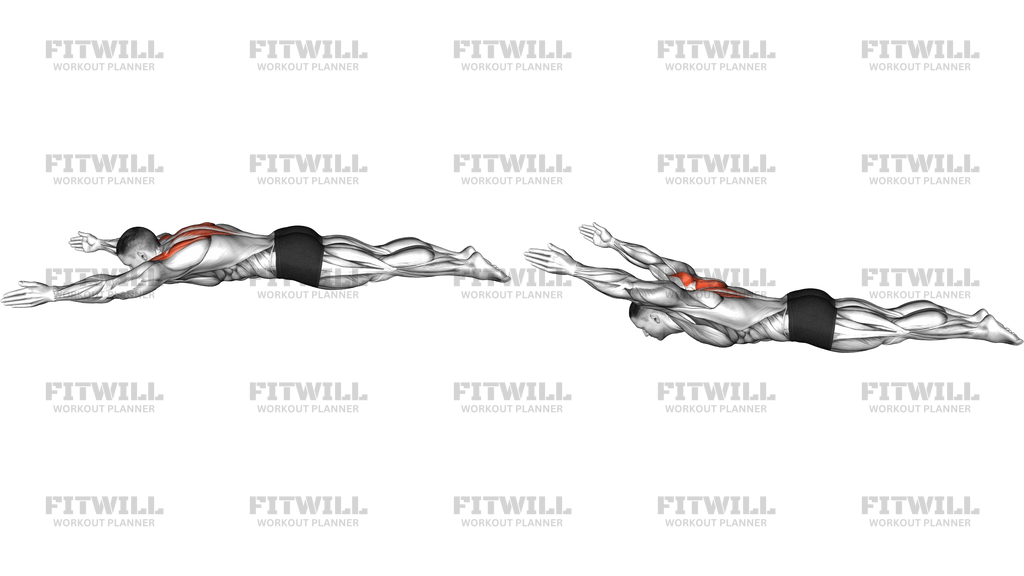
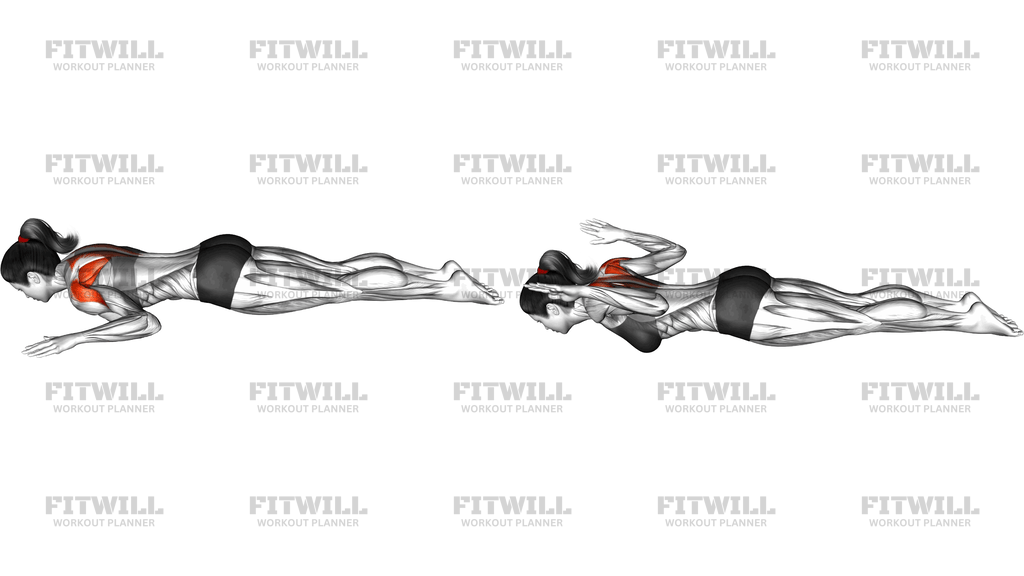
The Snow Angel Face To Floor is a prone body weight movement that flips the familiar floor snow angel onto your stomach. You lie face down with your arms stretched overhead, then sweep them in a wide arc out to the sides and down toward your hips, keeping both arms and chest hovering just off the floor the entire time. The face-down position is what separates it from the supine version: instead of fighting gravity as your arms rise in front of you, you are working against gravity as you pull them back and down, which places the demand squarely on the muscles that control your shoulder blades.
This exercise is a strong choice for anyone who spends long hours sitting at a desk, because it directly targets the lower and middle trapezius and the rhomboids — the muscles responsible for pulling the shoulder blades down and together. These areas tend to get lengthened and weak in a slouched posture, and strengthening them helps counterbalance all the pressing and forward-reaching most people do daily. Swimmers, overhead athletes, and lifters looking to build a more stable platform for pressing also benefit from the scapular control this pattern trains.
Beyond the upper back, the Snow Angel Face To Floor challenges the rear shoulders through the wide sweeping arc, and the erector spinae along your spine work isometrically to hold your chest slightly lifted. Because there is no external load, the exercise rewards quality of movement over force: slow, deliberate sweeps with the arms held just off the floor do far more than fast, sloppy reps that let everything drop and rest between strokes.
Setup matters more than it looks. Lying flat with your forehead down or face to the floor keeps your neck neutral, and starting with arms fully overhead gives you the longest possible arc to work through. If your chest is not gently lifted from the start, your arms will drag on the floor and the shoulder blades never get a chance to move properly. A thin mat or a towel under the torso and hips makes the position comfortable enough to keep your attention on the movement rather than on hard flooring.
To execute it well, keep the sweep wide and shallow in speed — think of pressing your arms through water rather than cutting through air. The end position has your hands near your hips with your palms facing down or slightly inward and your shoulder blades pulled toward your spine and pockets. Reverse the exact same arc back overhead without letting your hands touch down. Common use cases include warm-up activation before upper body training, posture-focused circuits, and rehabilitation-style shoulder work where light, controlled scapular movement is the goal.
Practically speaking, start with two or three sets of eight to twelve slow sweeps. If your arms keep touching the floor or your lower back starts to grip hard, that is a signal to reduce the chest lift or shorten the arc temporarily. Stop the set when the sweep path degrades — this is one exercise where the last quality rep is worth more than five rushed ones.
[ Workout Log & Planner ]
Put your next workout in Fitwill
Keep your plan and training log ready when you are.


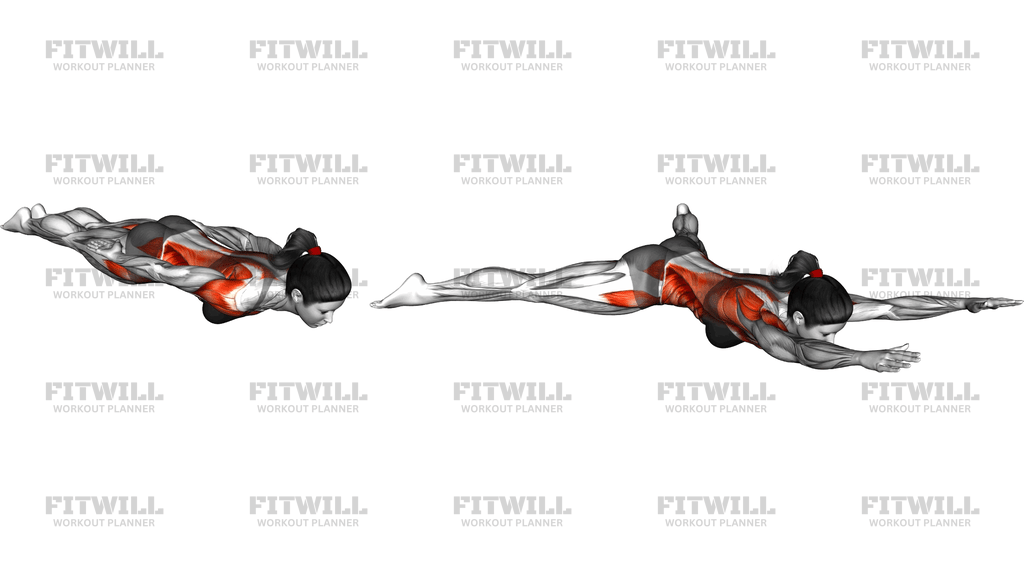
Instructions
- Lie face down on an exercise mat with your legs extended straight behind you, the tops of your feet resting on the floor and your forehead lowered toward the mat so your neck stays neutral.
- Extend both arms straight overhead, hands about shoulder-width apart or slightly wider, palms facing down, with your arms hovering just above the floor.
- Lightly brace your abdominals and lift your chest a few centimeters off the mat, keeping your gaze down so your head does not crane upward.
- Begin the sweep by moving both arms out to the sides in a wide arc, keeping them straight and off the floor the whole way.
- Continue the arc until your hands reach your hips, palms facing down, and squeeze your shoulder blades down and toward each other at the bottom.
- Pause briefly at your hips, then reverse the path exactly, sweeping your arms back out wide and overhead without letting them touch down.
- Exhale as you sweep your arms down toward your hips and inhale as you return them overhead.
- Complete all repetitions with your chest held in the same modest lift, then lower your torso and arms fully to the mat to rest before the next set.
Tips & Tricks
- If your arms keep grazing the floor mid-sweep, your chest lift has dropped or fatigue has set in — either re-lift slightly or end the set, because dragging arms means the upper back has stopped doing the work.
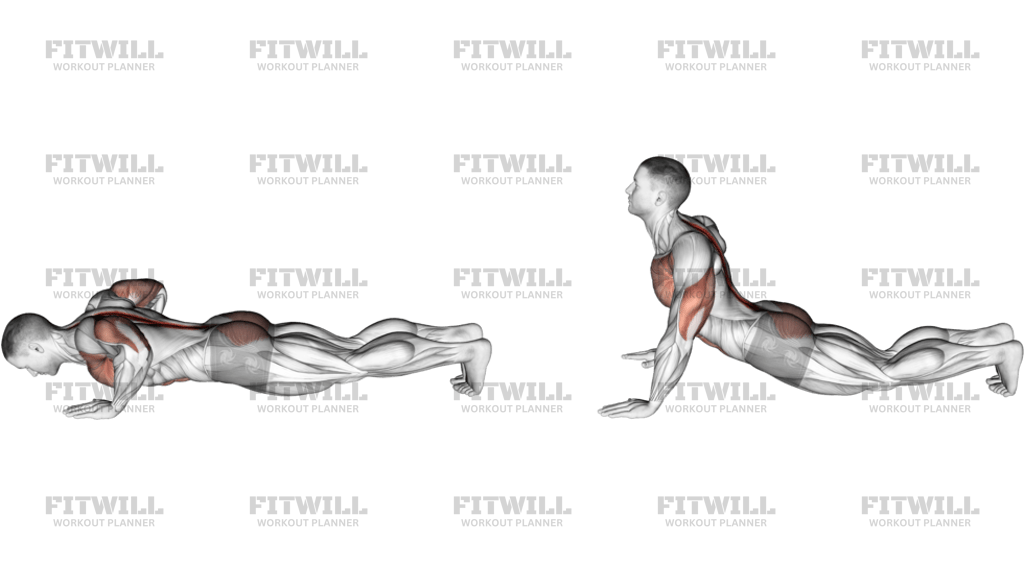
- Keep the lift in your chest small. Raising the torso high turns this into a lower back extension exercise and shifts tension away from the shoulder blades you are trying to target.
- Do not let your hands drift forward past your head at the top of the arc; keeping them roughly in line with your ears or slightly wider protects the shoulders and keeps the trapezius engaged.
- Think about leading the sweep from your shoulder blades rather than your hands. If your hands arrive at your hips but your blades never squeezed together, the rep was mostly arm movement.
- Bend in the elbows is the most common form break late in a set — straighten them again or shorten the arc slightly rather than turning the sweep into a pull-over motion.
- Press the tops of your feet and thighs into the mat to keep your hips from tilting; a rocking pelvis usually means the sweep is being rushed.
- If your lower back feels strained, reduce the chest height to just barely off the floor and focus only on the arm arc — the scapular work does not require a big back extension.
- Tempo is the loading here: a two-to-three second sweep each way makes even a body weight set challenging, while fast reps mostly build momentum.
- Place a folded towel under your forehead or chest if lying face down on a hard surface pulls your attention away from keeping the arms moving smoothly.
Frequently Asked Questions
Which muscles does the Snow Angel Face To Floor work the most?
The primary work comes from the lower and middle trapezius and the rhomboids, which pull your shoulder blades down and together as your arms sweep to your hips. The rear shoulders assist through the arc, and the erector spinae hold your chest in a slight lift throughout.
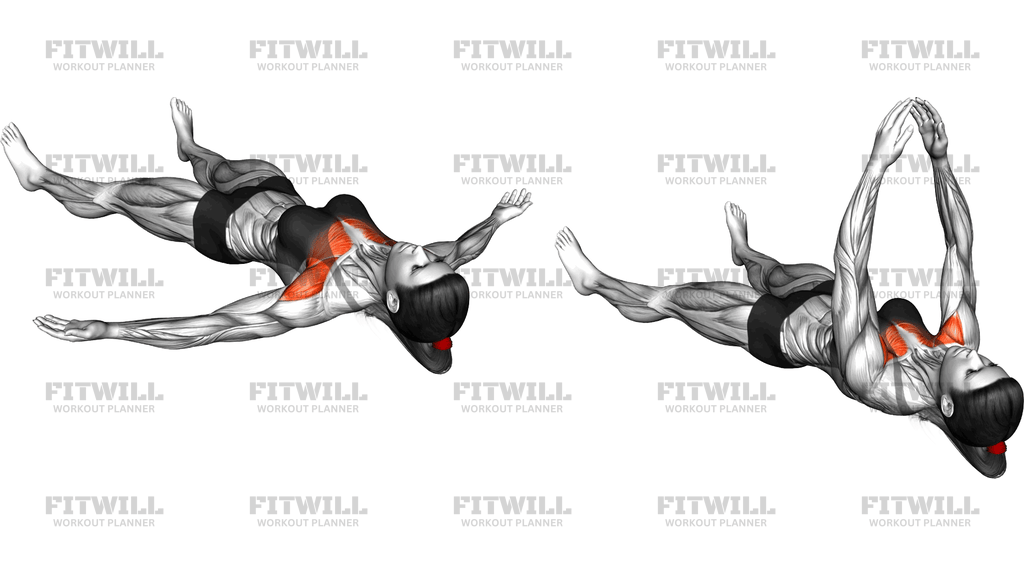
How is the Snow Angel Face To Floor different from a regular floor snow angel on your back?
Face down, gravity pulls your arms toward the floor, so you have to actively control them through the whole sweep instead of letting them rest. This makes the prone version a strengthening exercise for the upper back, while the supine version is much easier and more of a mobility drill.
Can beginners do the Snow Angel Face To Floor?
Yes, it is very beginner-friendly because it uses only body weight and a small range of load. Beginners should start with a shorter arc — sweeping only to shoulder height — and fewer reps until they can keep their arms off the floor for the full path.
Why do my arms keep touching the floor during the sweep?
This usually means your chest lift has dropped or your upper back has fatigued, leaving the arms unsupported. Re-set the small chest lift before each set, and if it happens mid-set, finish early rather than dragging your arms through the remaining reps.
Should my chest and head stay lifted the whole time?
Your chest should hold a modest lift so your arms can clear the floor, but your head and neck stay neutral with your gaze down. Lifting the chest high or craning the chin up shifts work to the lower back and neck and does not improve the shoulder blade training effect.
What can I use as a substitute if lying face down is uncomfortable?
A standing wall angel or a bent-over Y-T-W raise on a bench trains similar scapular muscles without requiring a prone position. If prone lying is fine but the floor is too hard, a folded towel or a thin mat under the torso solves most comfort issues.
How many reps and sets of the Snow Angel Face To Floor should I do?
Two to three sets of eight to twelve slow sweeps is a solid starting point. Because the resistance is your own arm weight, prioritize controlled tempo and a clean arc over adding volume.
Is it a problem if my lower back gets sore doing this exercise?
Some fatigue in the muscles along the spine is normal since they hold your chest up, but sharp or lingering strain is a sign you are lifting the torso too high. Lower your chest to just off the floor and let the arm sweep do the work.
When is the best time to use the Snow Angel Face To Floor in a workout?
It works well as an activation drill before pressing or pulling sessions, and as a finishing exercise on upper back or posture-focused days. Either way, keep the reps deliberate so the shoulder blades, not momentum, control the sweep.