Lying Prone V Lift
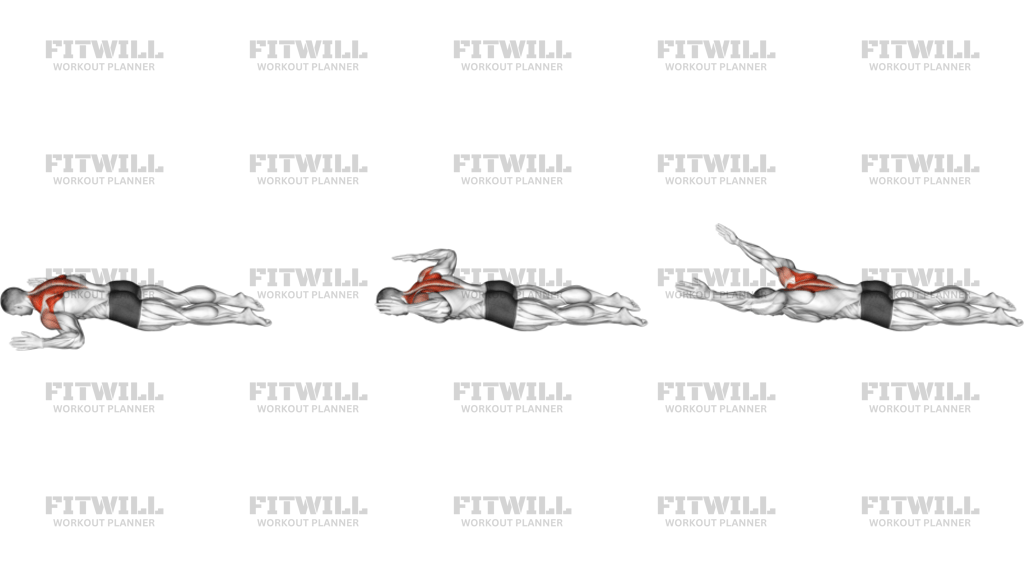
The Lying Prone V Lift is a bodyweight movement performed face down on the floor with your arms extended overhead in a wide V shape. From that stretched position, you lift both arms and your upper chest toward the ceiling, squeezing your shoulder blades together before lowering back down under control. It looks simple, but the long lever of straight arms overhead makes the mid and upper back work hard through a meaningful range of motion.
This exercise targets the upper back musculature, especially the middle and lower trapezius and the rhomboids, with the rear deltoids assisting as the arms rise. Because your torso extends slightly as you lift, the erector spinae along the lower back also work isometrically to hold your chest off the floor. Unlike rows or pulldowns, there is no elbow bend to shift work onto the lats and biceps, so the emphasis stays squarely on scapular retraction and upward rotation.
The overhead V position is what makes this setup valuable. Most people train the mid-back with the arms at their sides or in front of the body, which misses the lower traps and the fibers responsible for pulling the shoulder blades down and together. Extending the arms overhead lengthens those muscles first, then asks them to contract from a stretch, which is useful for anyone with rounded shoulders, desk-bound posture, or a weak link in overhead pressing.
Execution is all about quality over height. Lying flat with your legs relaxed, forehead or face down toward the mat, you brace the trunk lightly, then sweep the straight arms up and slightly back as the chest peels away from the floor. The lift should come from the shoulder blades and upper spine, not from cranking the neck or flaring the ribs. Pause briefly at the top, then lower the arms back to the mat slowly rather than dropping them.
The Lying Prone V Lift fits well as a warm-up activation drill before upper-body pulling or pressing days, as a standalone strength set for the upper back, or as a low-load finisher on back days. Because it requires no equipment beyond a mat or open floor space, it is easy to use at home or while traveling. Keep the reps moderate and the tempo slow; this movement rewards control far more than speed or range.
A few practical points keep it safe and effective. Only lift as high as your back and shoulders allow without strain, keep the neck long and in line with the spine, and stop if you feel pinching in the shoulders or sharp pain in the lower back. If the full V position is too demanding at first, bring the arms slightly wider or lower the range until strength builds.
[ Workout Log & Planner ]
Put your next workout in Fitwill
Keep your plan and training log ready when you are.


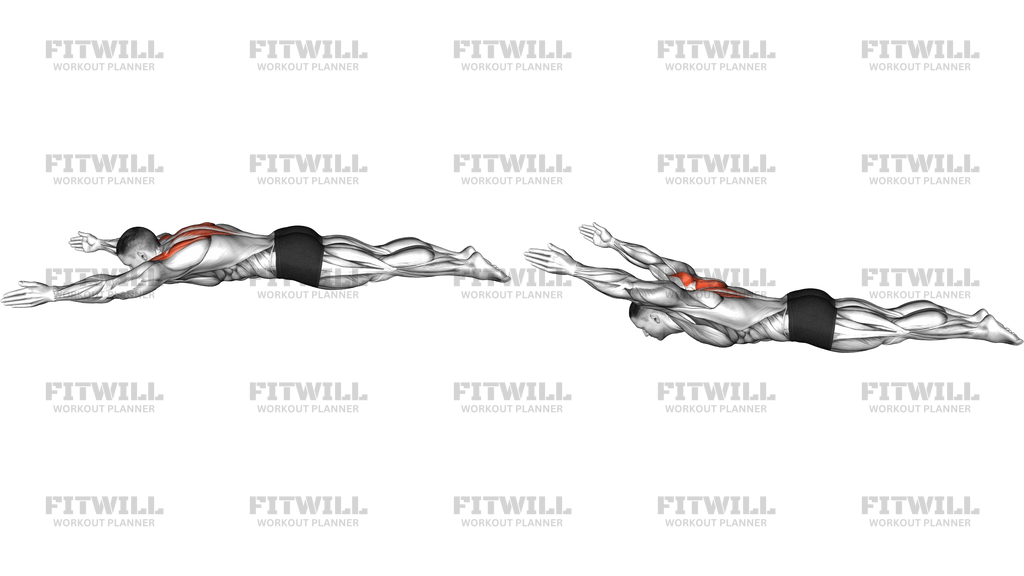
Instructions
- Lie face down on an exercise mat or carpeted floor with your legs straight and relaxed, feet about hip-width apart and the tops of your feet resting on the floor.
- Extend both arms straight overhead to form a wide V shape, hands shoulder-width or wider apart with palms facing down or slightly inward, and rest your forehead just above the mat.
- Lightly brace your abdominals and glutes to steady your pelvis, and keep the back of your neck long by looking down at the floor rather than lifting your chin.
- Inhale, then as you exhale, sweep both straight arms up and slightly back while lifting your upper chest a few centimeters off the floor.
- At the top, squeeze your shoulder blades down and together and hold the position for one to two seconds without shrugging toward your ears.
- Lower your arms and chest back to the mat slowly over two to three seconds, letting the shoulder blades spread apart as your hands return to the starting position.
- Breathe steadily throughout, exhaling on the lift and inhaling as you lower, and avoid holding your breath at the top.
- Complete your target repetitions, then rest briefly before the next set, resetting your arm position and neck alignment each time.
Tips & Tricks
- A common mistake is shrugging the shoulders toward the ears as the arms rise, which shifts work to the upper traps and neck. Think of reaching long through the fingertips instead of lifting the hands high.
- Bending the elbows turns this into a different exercise and shortens the lever. If your arms keep bending, the movement is likely too hard at that range, so reduce the lift height and keep the arms straight.
- Do not throw the head back to gain height. Excessive neck extension is a frequent cause of post-movement soreness, so keep your gaze on the mat and let the chest, not the chin, lead the lift.
- If you feel the work mostly in your lower back, you are overextending the spine. Lift the chest less, and focus on the shoulder blades pinching together as the main action.
- A one-to-two second pause at the top makes the mid-back muscles work far harder than extra repetitions performed quickly.
- Palms facing down or slightly inward usually feels more comfortable overhead than palms turned up, which can pinch the front of the shoulder in some people.
- Start with a narrow range and small lift height for the first week or two; the position is unfamiliar and the long arms make even a small elevation demanding.
- Squeeze the glutes lightly during each rep to anchor the pelvis and prevent the lower back from arching excessively to fake extra range.
Frequently Asked Questions
Which muscles does the Lying Prone V Lift work the most?
The primary work comes from the middle and lower trapezius and the rhomboids as the shoulder blades pull together, with the rear deltoids assisting the arm lift. The erector spinae of the lower back also contract to hold your chest off the floor.
Why are the arms overhead in a V instead of at my sides?
The overhead V position lengthens the mid and upper back muscles and emphasizes the lower traps and scapular control in a way that side-lying or bent-over raises do not. It also removes elbow bending, keeping tension on the shoulder blade retractors.
Is the Lying Prone V Lift suitable for beginners?
Yes, it is a low-load bodyweight drill that most beginners can learn quickly. Start with eight to twelve controlled repetitions and a modest lift height, and build range gradually as the upper back gets stronger.
How high should I lift my arms and chest?
Lift only until your arms and upper chest clear the floor while your shoulder blades squeeze together, usually a few centimeters. Chasing more height usually comes from arching the lower back or throwing the head back, not from better muscle work.
Why do I feel this more in my lower back than my upper back?
That usually means you are overextending the spine to lift higher. Reduce the lift height, brace your abdominals, squeeze the glutes lightly, and refocus on pinching the shoulder blades down and together.
Can I substitute another exercise if lying face down is uncomfortable?
A prone V raise on an incline bench or a standing Y-raise with light resistance bands trains a similar pattern. Both keep the arms overhead while removing floor pressure from the chest and ribs.
Should my palms face down or up in the V position?
Palms down or slightly inward is the standard grip and keeps the shoulder in a comfortable overhead position. Turning the palms up can pinch the front of the shoulder for some people, so only use it if it feels completely comfortable.
Where should the Lying Prone V Lift fit in my workout?
It works well as an activation drill before rows, pull-ups, or presses, or as a moderate-rep strength set for the upper back. Avoid doing it to fatigue before heavy pulling, since tired scapular muscles make those lifts harder to control.
Is it safe if I have a history of lower back or shoulder issues?
Keep the lift height small, move slowly, and stop if you feel pinching in the shoulders or sharp pain in the back. If you have a recent or significant injury, check with a qualified professional before adding this movement.