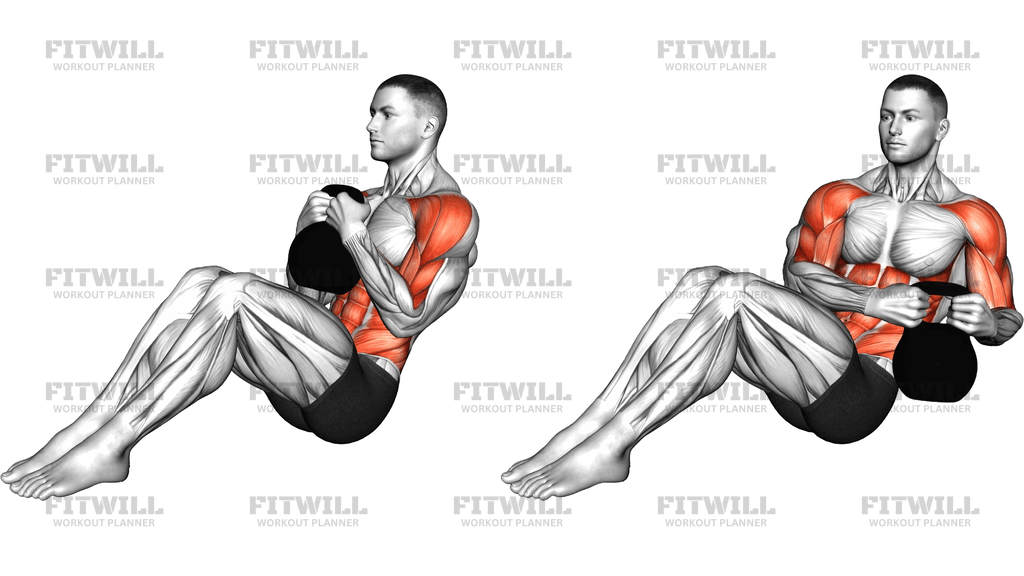
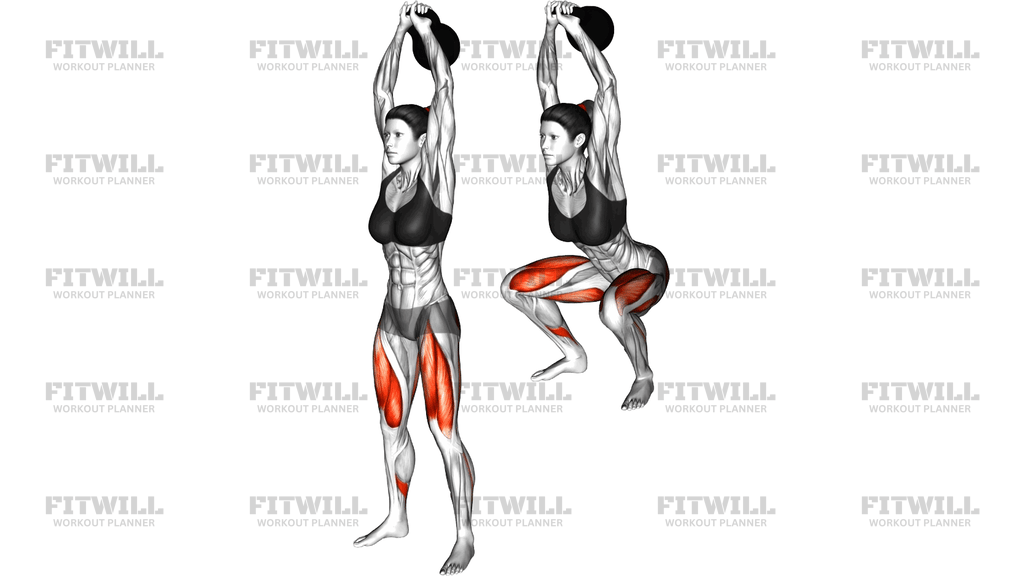
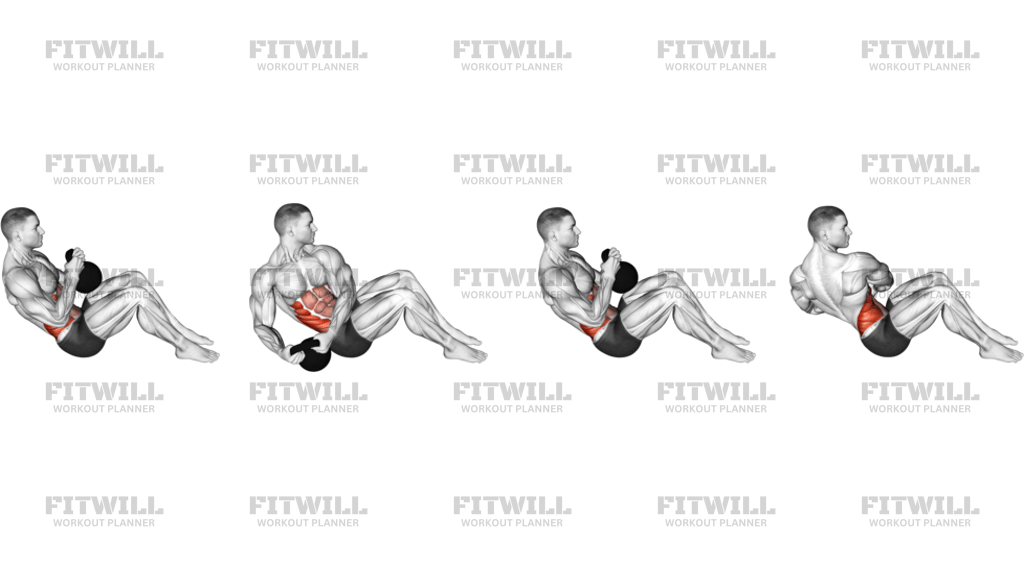
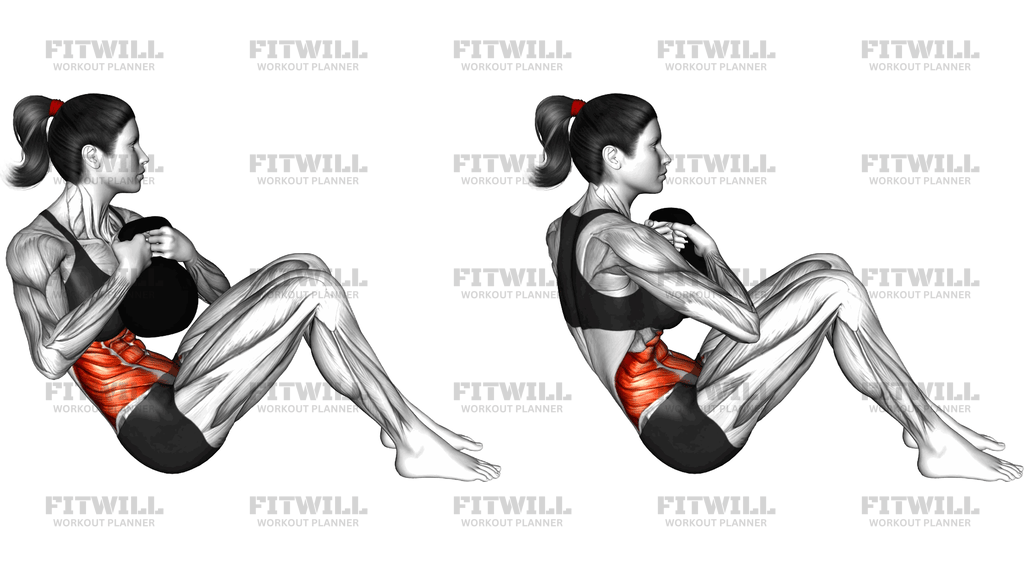
Kettlebell Upright Row
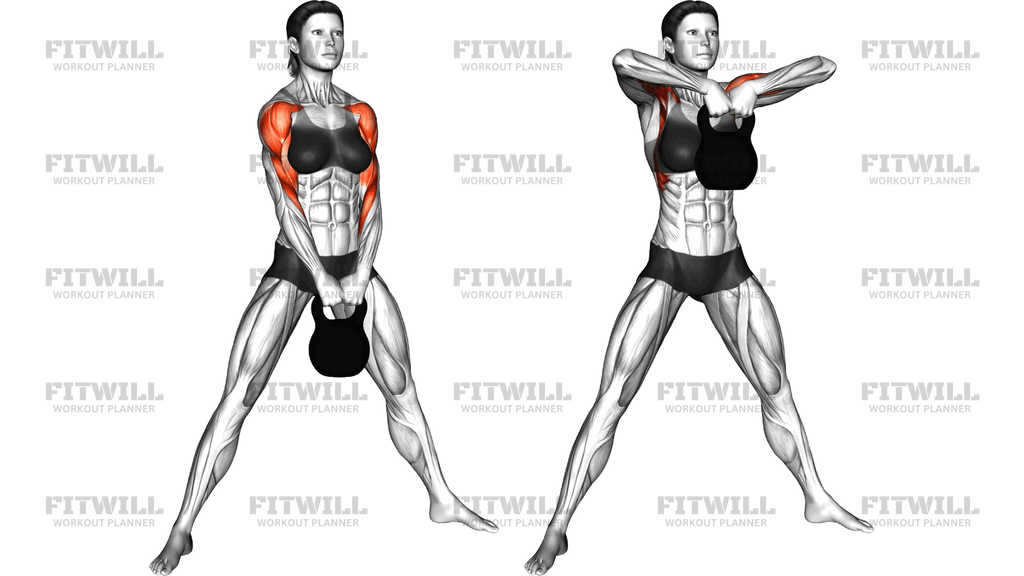
The Kettlebell Upright Row is a compound pulling exercise performed from a wide, stable stance with a single kettlebell held in both hands. From a hanging position in front of the thighs, you pull the kettlebell straight up along the front of the body, letting the elbows flare out wide and finish higher than the hands. The wide-footed setup shown in the standard execution gives you a solid base, which matters because the weight sits forward of your center of gravity as it travels up.
This movement primarily targets the side shoulders, with strong contributions from the upper traps as the shoulder blades elevate, and support from the biceps and forearms as they assist the pull. Because you are working both arms together with one implement, the kettlebell version tends to feel smoother through the midline than a barbell upright row, and the offset mass of the bell adds a small stabilization demand that dumbbells and barbells do not.
The Kettlebell Upright Row suits lifters who want to build shoulder width and trap density without loading the spine, and it fits well into upper-body days, kettlebell circuits, and warm-up progressions before heavier pressing. It is also a practical choice for home training, since one kettlebell and enough floor space for a wide stance are all you need.
Setup details matter more here than in many pulls. A stance roughly one and a half times shoulder width keeps the hips grounded while the shoulders do the work, and a two-handed overhand grip on the handle keeps the load centered. Keeping the wrists relatively neutral and the elbows leading the path is what separates a clean row from a wrist-cranked shrug.
Execution should feel like the elbows are doing the lifting, not the hands. Pull the kettlebell up the front of the torso until the elbows reach roughly chest to upper-chest height, pause briefly, then lower it under control back to the hang. Rushing the descent is the most common way to lose tension and turn a focused shoulder exercise into a momentum-driven swing.
As with any upright row variation, keep the working weight moderate and prioritize a pain-free path of motion. If you notice pinching at the front of the shoulders, reduce the range or the load before pushing on, and make sure the lower back stays neutral throughout the pull rather than rounding or arching to assist.
[ Workout Log & Planner ]
Put your next workout in Fitwill
Keep your plan and training log ready when you are.


Instructions
- Stand with your feet set about one and a half times shoulder width apart, toes turned out slightly, and place a kettlebell on the floor between your feet.
- Hinge at the hips and knees just enough to reach down, then grip the kettlebell handle with both hands using an overhand grip, hands roughly together in the center of the handle.
- Stand up tall so the kettlebell hangs at arm's length in front of your thighs, pull your shoulders back and down slightly, and brace your core to keep your torso upright.
- Exhale and pull the kettlebell straight up the front of your body, driving the elbows up and out wide while keeping them above the level of your wrists.
- Continue pulling until your elbows reach about chest height and the kettlebell sits just below your chin, with the upper traps visibly engaged.
- Pause for a moment at the top without shrugging your shoulders up toward your ears or leaning back.
- Inhale and lower the kettlebell slowly along the same vertical path back to the hang in front of your thighs, resisting the weight on the way down.
- Reset your brace briefly at the bottom, making sure your knees stay soft and your back stays neutral before starting the next rep.
- Complete your set, then set the kettlebell down on the floor between your feet by hinging at the hips, keeping your back straight.
Tips & Tricks
- Lead with the elbows, not the hands. If the kettlebell ends up higher than your elbows at the top, your wrists are doing the work and the shoulders lose their share of the load.
- Do not lift the kettlebell past chin height. Pulling higher than that shifts stress onto the upper traps and reduces the comfortable range at the shoulder joint for most people.
- Keep the wrists straight and relaxed. Bending the wrists backward under load is a common fault in this exercise and adds unnecessary strain to the forearms.
- The wide stance in this exercise is there to anchor you; avoid letting the knees cave inward or the hips drift forward as the kettlebell rises.
- If your lower back rounds at the hang position, use a lighter kettlebell or hinge slightly more at the hips so the bell clears your thighs without pulling your torso forward.
- Control the lowering phase for two to three seconds. The eccentric portion is where much of the shoulder and trap work happens, and dropping the bell wastes it.
- Avoid turning the last reps into partial swings. If you need to rock your torso to finish the pull, the weight is too heavy for strict form.
- A slightly wider grip on the handle makes the movement more shoulder-dominant and usually more comfortable at the shoulder joint than a narrow grip.
- Warm up the shoulders with lighter pulls or arm circles before adding a challenging kettlebell, since upright rows place the shoulder in an internally rotated position under load.
Frequently Asked Questions
Which muscles does the Kettlebell Upright Row work?
The side shoulders are the primary movers, with the upper traps working hard as the elbows rise. The biceps, forearms, and front shoulders assist the pull, and the core stabilizes the torso throughout.
Is the Kettlebell Upright Row safe for people with shoulder pain?
Upright rows place the shoulder in internal rotation while elevated, which some people find irritating. If you feel pinching, limit the pull to chest height, use a wider grip, or switch to lateral raises, and stop if discomfort persists.
How high should I pull the kettlebell during the Kettlebell Upright Row?
Pull until your elbows reach roughly chest height with the kettlebell just below your chin. Going higher adds little for the side shoulders and increases stress on the upper traps and shoulder joints.
Why use a wide stance for this exercise instead of standing with feet hip-width apart?
The wide stance creates a stable base because the kettlebell sits forward of your body as it travels up. It helps prevent swaying and keeps the focus on the shoulders rather than on balance corrections.
Can beginners do the Kettlebell Upright Row?
Yes, beginners can start with a light kettlebell, focusing on leading with the elbows and keeping the wrists straight. Learning the movement with a manageable load builds good habits before the weight increases.
What is the most common mistake in the Kettlebell Upright Row?
Letting the hands and wrists rise above the elbows, which turns the row into a wrist curl and offloads the shoulders. Another frequent fault is shrugging and leaning back to lift the bell with momentum.
What can I use if I do not have a kettlebell?
A dumbbell held vertically by the head or a single dumbbell gripped with both hands under the top works as a close substitute. A barbell or EZ barbell also allows the same movement pattern, though the grip is fixed in place.
How heavy should the kettlebell be for this exercise?
Choose a weight you can pull strictly for 10 to 15 reps without swinging your torso or bending the wrists. Because the shoulders are in a less mechanically favored position, upright rows generally use lighter loads than presses or swings.
How does the Kettlebell Upright Row differ from a kettlebell high pull?
The upright row is a strict, slower pull driven by the shoulders and traps, while the high pull uses hip drive and momentum to snap the elbows up. The upright row emphasizes controlled muscle work; the high pull is more explosive and total-body.