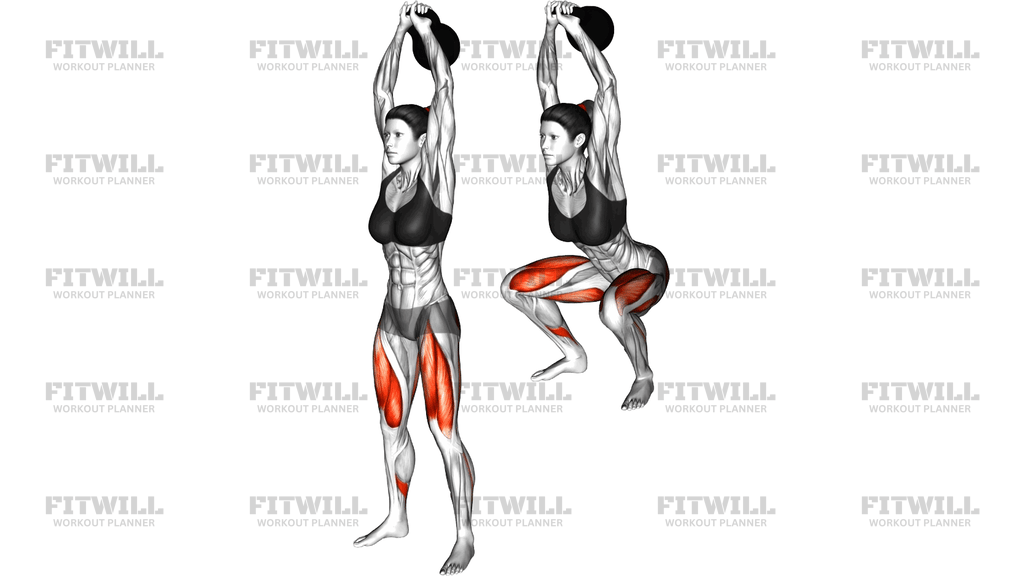
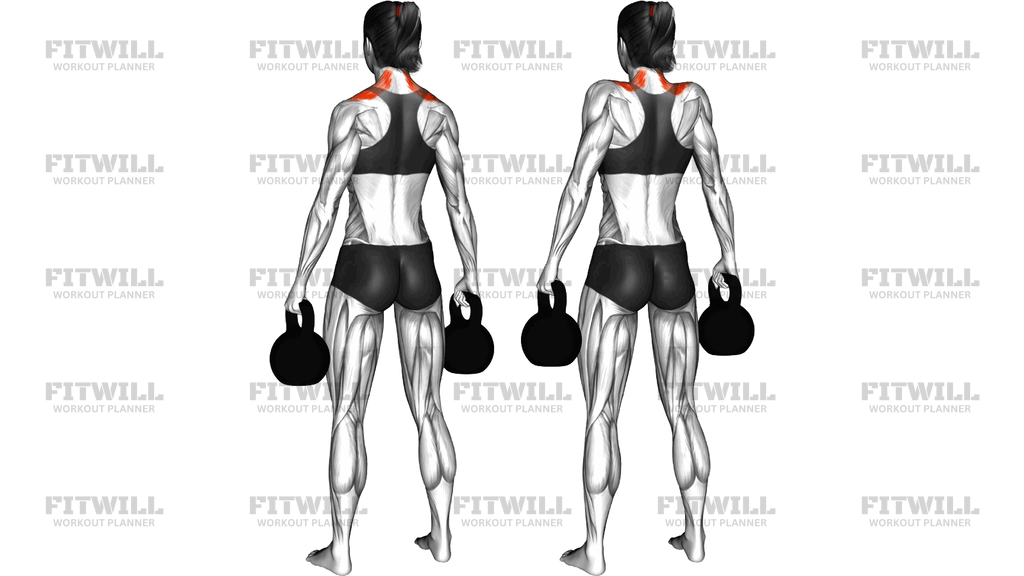
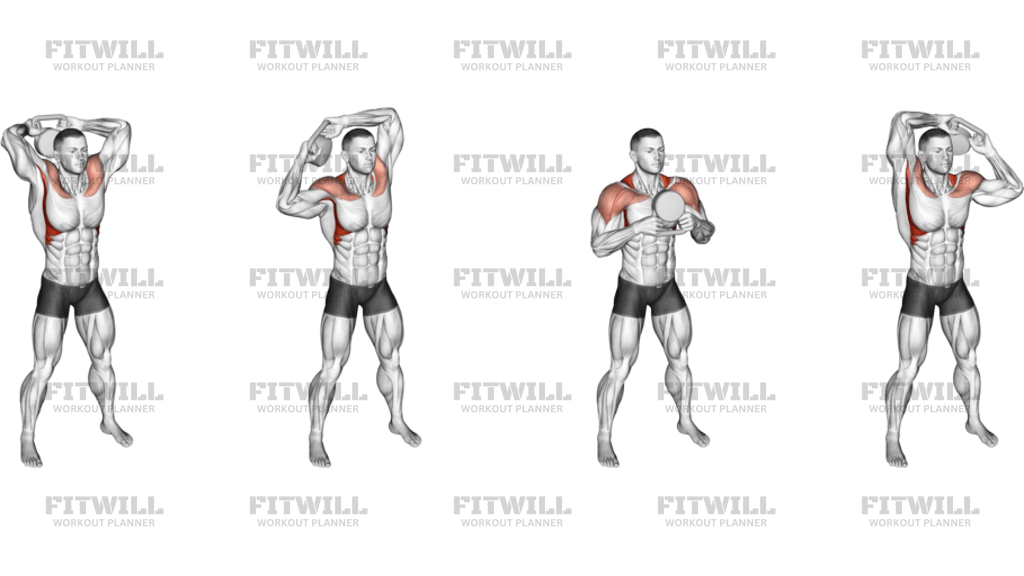
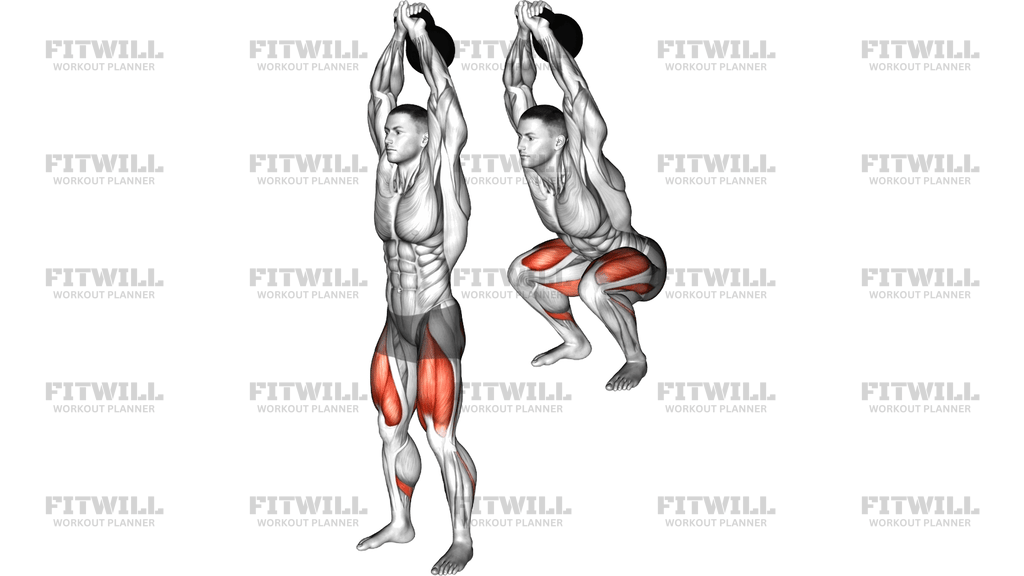
Kettlebell Double Strict Press
The Kettlebell Double Strict Press is a two-bell overhead press performed from a standing position, where you drive a kettlebell in each hand from shoulder height to a locked-out position overhead using only upper body strength. The word strict is the key: unlike a push press or jerk, your legs stay quiet and your torso stays tall, so the shoulders, triceps, and upper back do all of the work. Because kettlebells rest against the outside of your forearms with the weight sitting behind your wrist rather than in front of it like a barbell or dumbbell, the movement has a slightly different feel and demands more wrist and shoulder stability.
This lift suits intermediate lifters who already own a solid single-arm kettlebell press and want to load both sides at once. It is a favorite in general strength training and kettlebell sport preparation because it builds balanced pressing power without letting your stronger side take over, which often happens when you press one arm at a time. It is also efficient: two bells, a small patch of floor, and you have a complete upper body pressing session.
The primary work comes from the front and side shoulders, with the triceps finishing each lockout. The upper traps and upper back stabilize the shoulder blades as the arms travel overhead, and the entire midsection works isometrically to keep your ribs down and your spine neutral while heavy weight passes over your head. Even the grip and forearms get steady work just holding two kettlebell handles throughout the set.
Setup matters more with two bells than with one. Cleaning both kettlebells into the rack position in one motion, then settling your elbows and wrists before the first press, sets the tone for the whole set. If you start with your elbows flared wide or the bells drifting forward of your shoulders, the press path immediately becomes a fight. Take a breath, brace your midsection like you are about to be lightly punched in the stomach, and stand with your feet roughly hip-width apart.
To execute well, press both bells up and slightly back so they finish over your ears or just behind them, not drifting out in front. Straighten your elbows completely, keep your shoulders down away from your ears rather than shrugging up, and pause briefly at the top before lowering under control back to the rack. Exhale through the press, inhale at the top or on the way down, and reset your brace between reps if the bells shift at all.
As for safety, the strict press rewards honesty with load. If you have to lean back, bend your knees, or swing the bells to get them moving, the weight is too heavy for strict work and you would be better served pressing push press style or dropping to lighter bells. Keep the path of the kettlebells clear of your face by guiding your elbows slightly out and around during the first few inches of the press, and always lower the bells to the rack with control before setting them on the floor.
[ Workout Log & Planner ]
Put your next workout in Fitwill
Keep your plan and training log ready when you are.


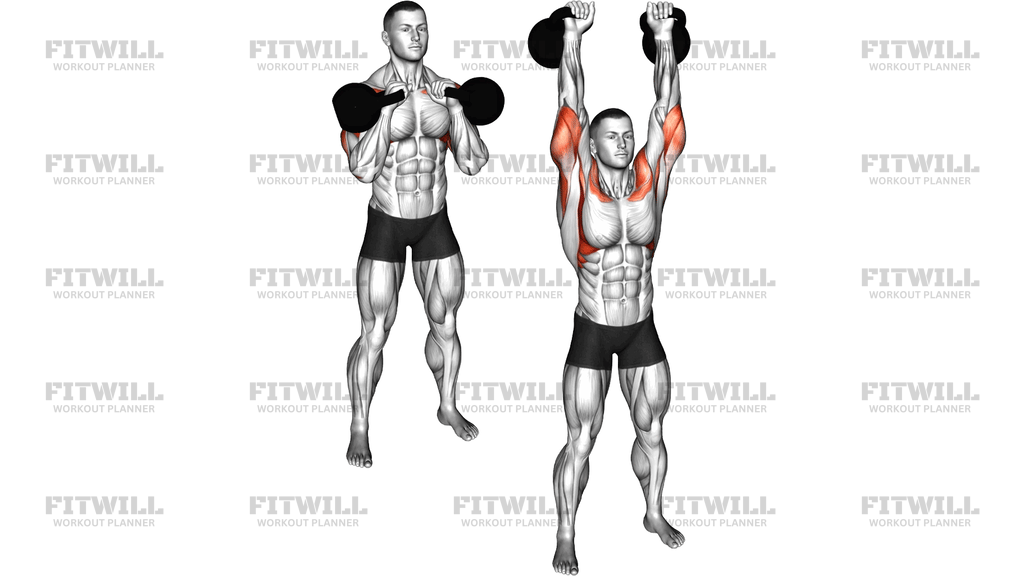
Instructions
- Stand with your feet about hip-width apart, toes pointing forward or slightly out, and clean two kettlebells to your shoulders so each bell rests on the outside of its forearm with your fists together in front of your chest.
- Set your elbows close to your ribs with forearms vertical, wrists straight, and the kettlebell handles settled across your palms in the rack position.
- Brace your midsection by tightening your abs and glutes, pull your ribs down, and take a breath into your belly before initiating the press.
- Press both kettlebells straight up, letting your elbows travel slightly out to the sides so the bells clear your shoulders and pass close to your head without hitting it.
- Continue until your elbows are fully locked out and the bells finish over your ears or slightly behind them, with your shoulders pressed down away from your ears.
- Pause for a beat at the top with straight arms and stable shoulder blades before starting the descent.
- Lower both bells under control by bending your elbows and guiding them back down and slightly inward to the rack position at your shoulders.
- Exhale as you press up, and inhale at the top or during the lowering phase so you stay tight through your trunk.
- Rebrace between reps if the bells have shifted in your rack, then repeat for your target repetitions.
- After your final rep, either lower both kettlebells to the rack and set them down together, or drop them one at a time to the floor in front of you from the rack, keeping your back tall.
Tips & Tricks
- If your wrists bend back at the top, choke down on the handle so the bell sits deeper in your palm; a bent-back wrist under load is a common reason the double press feels unstable overhead.
- Do not let the bells drift forward of your ears at lockout. If they finish in front of your head, your traps and rotator cuff take the strain instead of the shoulders, so consciously press up and slightly back.
- The most common cheat is a small knee dip or backward lean as the bells stall. Film a set from the side; if your lower back arches or your heels lift, drop the weight.
- Keep your fists nearly touching in the rack but allow them to separate a few inches as you press. Forcing the fists to stay together overhead jams the shoulder path.
- If one bell always locks out before the other, slow the stronger arm to match the weaker one. Equal timing keeps your torso from rotating under load.
- Round your upper back slightly forward at the start, like a small shield in front of your chest, to keep the bells from pulling you backward as they load the rack.
- Your legs should contribute nothing. Squeeze your glutes and quads hard during the press; that tension makes accidental knee drive obvious and easy to eliminate.
- Grip the handles firmly but not at maximum tension. Over-squeezing fatigues your forearms before your shoulders get their work.
- Warm up with a few single-arm presses per side first. Two bells double the demand on shoulder stability, and a cold shoulder joint makes the first heavy rep feel shaky.
Frequently Asked Questions
Which muscles does the Kettlebell Double Strict Press work most?
The front and side shoulders are the primary movers, with the triceps extending the elbows at lockout. The upper traps, upper back, and core work statically to keep your torso upright and the bells stable overhead.
How is the Kettlebell Double Strict Press different from a push press?
In a strict press your legs stay locked and your torso stays vertical, so only your upper body moves the weight. A push press adds a short knee dip and leg drive, letting you use heavier bells but reducing the direct shoulder work.
Can beginners do the Kettlebell Double Strict Press?
Beginners should first learn the single-arm kettlebell press and the double kettlebell clean, since getting two bells into the rack is its own skill. Once those feel solid, start with light bells and focus on a vertical press path before adding load.
How do I clean two kettlebells into the rack position to start the exercise?
Hinge and swing both bells back between your legs, then drive your hips forward and guide the handles to your shoulders in one motion, letting the bells roll onto the outside of your forearms. Keep your elbows close to your ribs so the weight settles rather than crashing down.
Why do my lower back and shoulders ache when I press both kettlebells overhead?
That usually means the bells finish in front of your body, so your lower back arches to compensate and your shoulder joint absorbs the load. Cue yourself to press up and slightly back so the bells end over your ears, and keep your ribs pulled down throughout.
How heavy should the kettlebells be for the Kettlebell Double Strict Press?
Choose a pair you can strict press for five to eight clean reps without knee bend or backward lean. Since two bells eliminate the balance help of a single press, most people use noticeably lighter bells than their one-arm press weight.
What can I substitute if I only have one kettlebell?
A single-arm strict press is the closest substitute and is actually a good standalone exercise. Alternating presses or a see-saw press, where one bell goes up as the other comes down, also train the same overhead pattern with one bell.
Should I keep my fists together during the whole press?
No. Fists together is a rack cue, not a lockout cue. Let your hands spread a few inches as the bells rise so your elbows can track naturally and your shoulders reach a stable overhead position.
Is it safe to drop the kettlebells after a hard set?
Dropping from the rack to the floor in front of you is acceptable if you have rubber or cast-iron bells and a clear floor, but lower them with your arms first and keep your torso tall so the falling weight does not yank your shoulders forward.