Kettlebell Shoulder To Shoulder Press
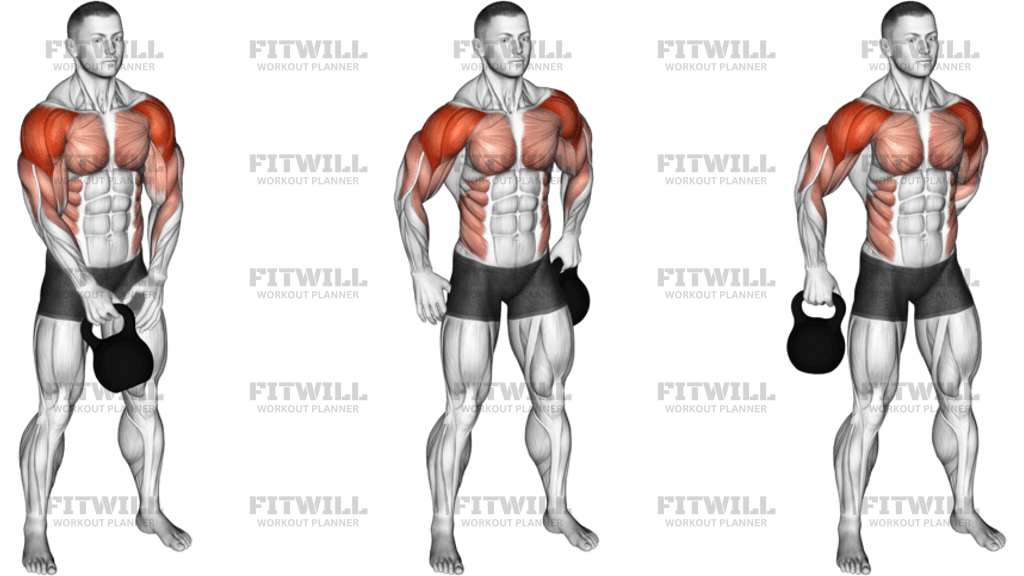
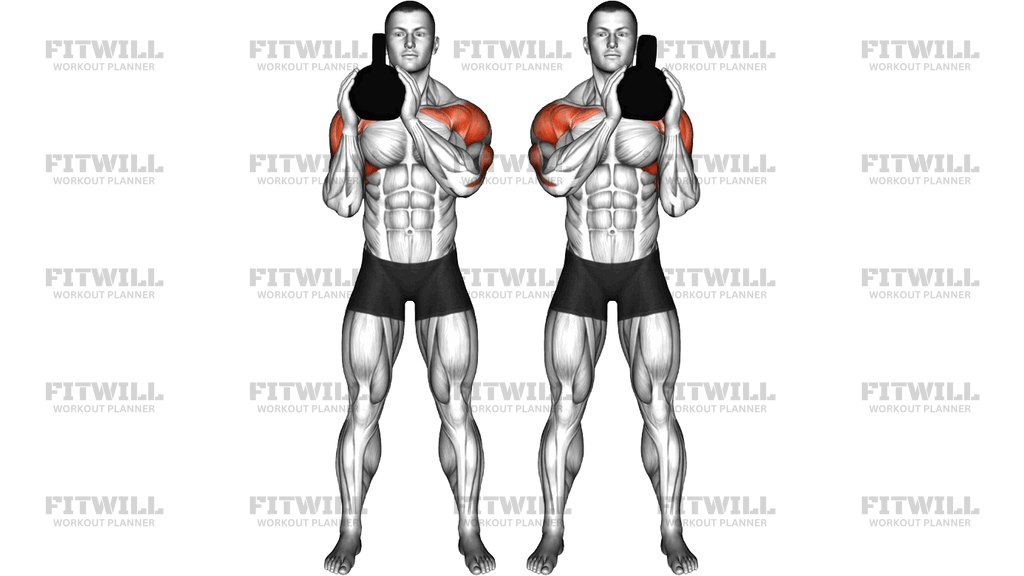
The Kettlebell Shoulder To Shoulder Press is a hand-to-hand pressing drill where you drive a kettlebell from one shoulder across to the other, switching hands with every rep. Instead of pressing overhead, the bell travels in a short arc across the upper chest: one hand presses it off the shoulder, the other receives it into the opposite rack position. Each repetition works both sides of the body in a single pass, which makes it an efficient warm-up and conditioning movement.
The main work falls on the front and side shoulders, with the triceps extending the arm and the upper traps helping control the bell as it settles into each rack. Because you are catching a moving kettlebell with the opposite hand, your grip, wrists, and trunk also stay busy. The abs and obliques brace against the slight rotation that happens every time the bell crosses your midline.
Setup matters more than it looks. The kettlebell should rest in a clean rack position on the back of the forearm, elbow tucked close to the ribs, with the wrist straight rather than bent back. If the bell sits too far out to the side, the transfer across the body becomes awkward and your shoulder has to chase the weight. A crisp rack on both sides keeps the arc short and the catch quiet.
To execute it well, press the bell up and slightly across the midline while it is still close to your chest, then slide your free hand under the handle as the bell arcs over. Guide it down onto the opposite forearm rather than letting it drop, exhale as it lands, and immediately press it back the other way. The movement should feel rhythmic, almost like a pendulum, with the bell never fully stopping between reps.
This drill fits naturally at the start of a pressing session as a warm-up, in the middle of a kettlebell circuit as a flow movement, or as low-fatigue volume on days between heavier lifts. Because each hand presses only half the reps before the switch, the local shoulder fatigue builds slowly, letting you accumulate a lot of total presses without one arm gassing out first.
Keep the weight conservative at first. A bell you could press overhead ten times is usually too heavy for smooth hand-to-hand transfers; start several sizes lighter. Stay tall through the spine, resist the urge to lean back, and stop the set as soon as the catch gets sloppy, since a loose catch is the most common way this drill goes wrong.
[ Workout Log & Planner ]
Put your next workout in Fitwill
Keep your plan and training log ready when you are.


Instructions
- Stand with your feet about hip-width apart, knees soft, and hold a kettlebell in the rack position on your right shoulder with the handle resting diagonally across your palm and the bell against the back of your forearm.
- Tuck your right elbow against your ribs, keep your wrist straight, and place your left hand loosely near the handle or at your side, ready to receive.
- Brace your abs and glutes and stand tall, as if a string were lifting the crown of your head.
- Exhale and press the kettlebell up and slightly across your midline, keeping the bell close to your chest rather than swinging it wide.
- As the bell arcs over the middle, slide your left hand through the handle and take over the weight at or just past the top of the arc.
- Guide the kettlebell down onto your left forearm until it settles into the rack on your left shoulder, elbow tucked, catching the impact softly by bending the knees a little.
- Without pausing, press the bell back across to the right side the same way, switching hands again at the top of the arc.
- Breathe steadily: exhale on each press, inhale as the bell lands in the rack.
- Continue alternating shoulders for your target reps, then set the bell down with a two-handed grip and reset before your next set.
Tips & Tricks
- Use a lighter bell than you would for a regular overhead press. If the catch lands hard on your forearm, the weight is probably too heavy for smooth transfers.
- Keep the arc tight. Pressing the bell out wide in front of you makes the hand switch much harder and drags your shoulder forward; think of the bell rolling just over your collarbone line.
- Do not let your wrist collapse back under the bell when it lands. Keep the handle across the heel of your palm and the forearm vertical in every rack.
- Watch your torso. Many lifters twist their whole upper body toward the receiving side; the switch should come from the hands and arms, not from rotating the trunk.
- If the bell keeps banging down on your forearm, actively pull it into the rack on the way down instead of letting it fall. A soft catch is a learned skill, not luck.
- Alternate which shoulder you start from set to set so both sides get the same pressing and receiving practice.
- The receiving elbow should meet the bell, not trail it. Get the free hand through the handle early in the arc so you own the weight before it drops below chest height.
- Stop the set when the catch gets noisy or your grip slips. Fatigue shows up in the transfer long before the press itself fails.
Frequently Asked Questions
What muscles does the Kettlebell Shoulder To Shoulder Press work?
The front and side shoulders do most of the pressing, with the triceps extending the arm and the upper traps stabilizing the rack. Your grip, forearms, and abs also work because you catch and control the bell with the opposite hand every rep.
Is the Kettlebell Shoulder To Shoulder Press a shoulder press or a transfer drill?
It is both. Each hand performs a real press off the shoulder, but the defining feature is the hand switch at the top of the arc, so you train pressing strength and receiving control at the same time.
Can beginners do the Kettlebell Shoulder To Shoulder Press?
Yes, as long as they start with a light bell and know the basic rack position. Beginners should practice pressing from each shoulder and handing the bell across at chest height before stringing reps together continuously.
Why does my kettlebell slam into my forearm during the switch?
That usually means the bell is too heavy, the receiving hand gets through the handle too late, or the bell is being dropped instead of guided down. Take a lighter bell and actively pull it into the rack on the way down.
How heavy should the kettlebell be for the Kettlebell Shoulder To Shoulder Press?
Choose a bell several sizes lighter than your regular overhead press weight, since the hand-to-hand catch demands more control. A weight you could press smoothly for fifteen or more reps per side is a reasonable starting point.
How is the Kettlebell Shoulder To Shoulder Press different from a regular alternating press?
In a regular alternating press the bell goes overhead and each arm works separately. Here the bell travels across the upper chest and changes hands every rep, adding a catching element and light rotational demand on the core.
Where should my feet and torso be during the Kettlebell Shoulder To Shoulder Press?
Stand with feet about hip-width apart, knees soft, and spine tall. Your torso should stay square and relatively still; the bell crosses your midline, but your trunk should not twist toward the receiving side.
What can I use if I do not have a kettlebell?
A single dumbbell can substitute, though the shape makes the catch less comfortable, so use a lighter weight and keep the head of the dumbbell resting on your forearm in each rack. The movement pattern stays the same.
Is the Kettlebell Shoulder To Shoulder Press safe for my wrists?
It is generally fine when the wrist stays straight and the bell rests on the forearm rather than pulling on the hand. If your wrist bends back under load or the catch feels jerky, reduce the weight and slow the tempo before continuing.