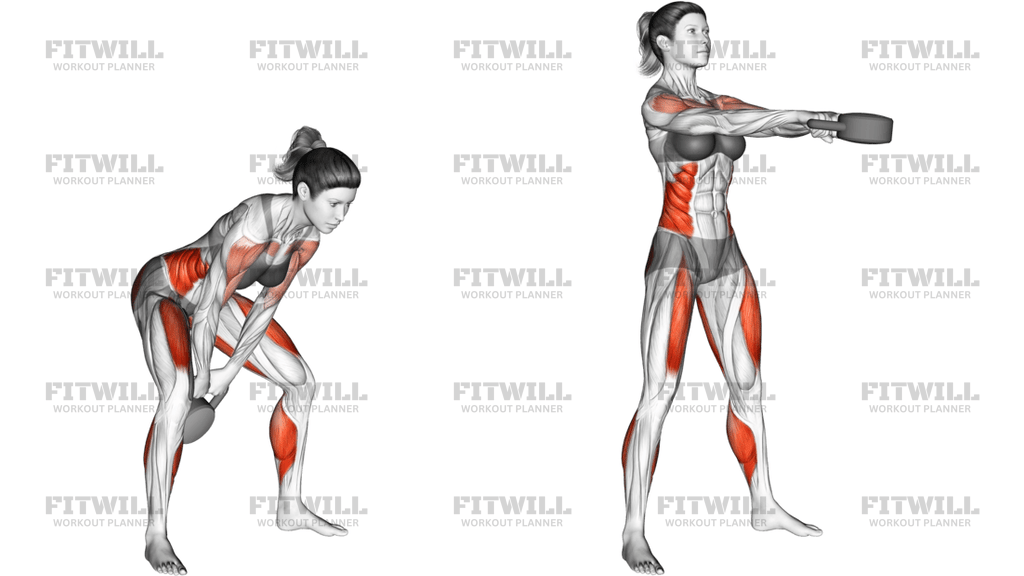
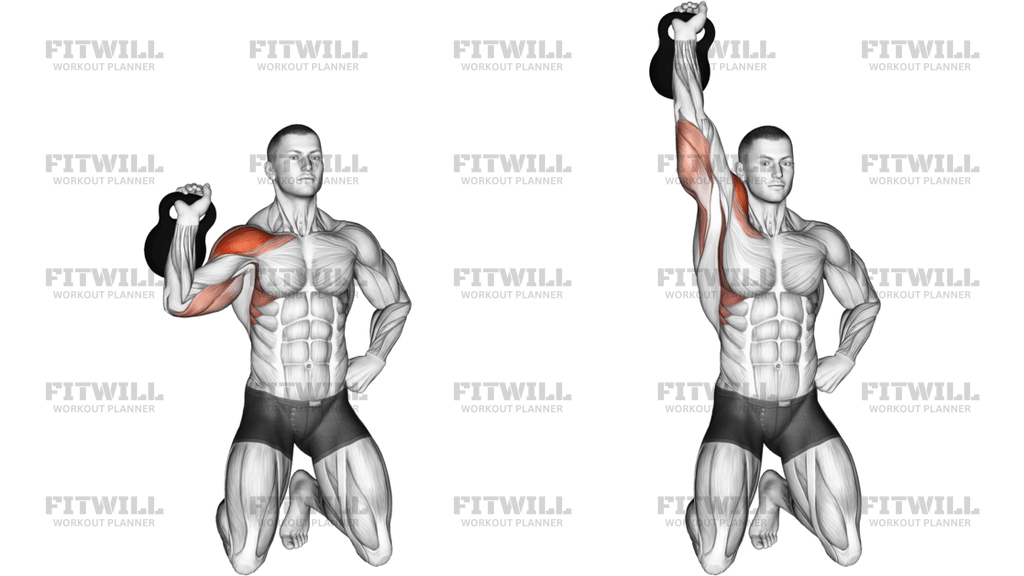
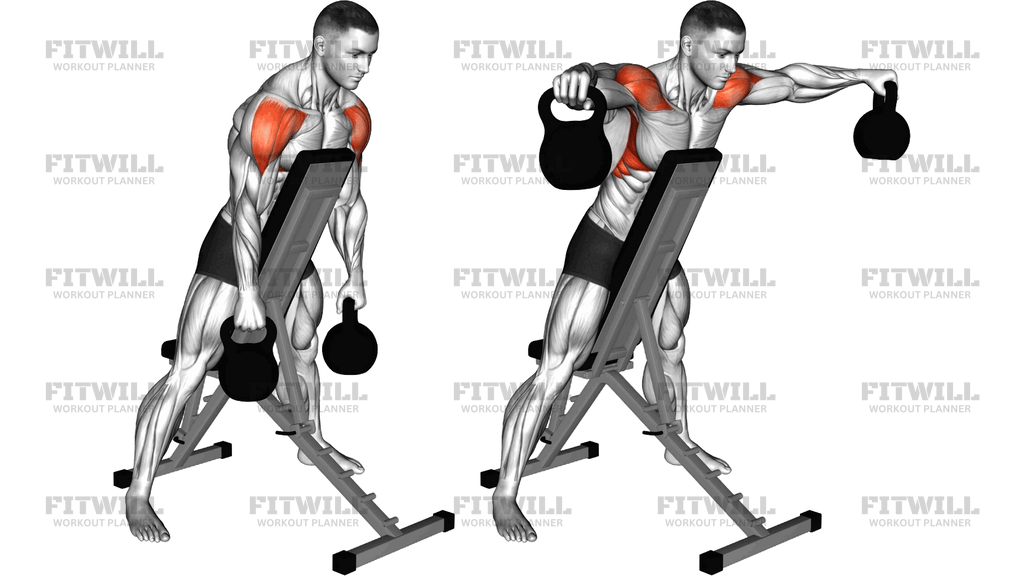
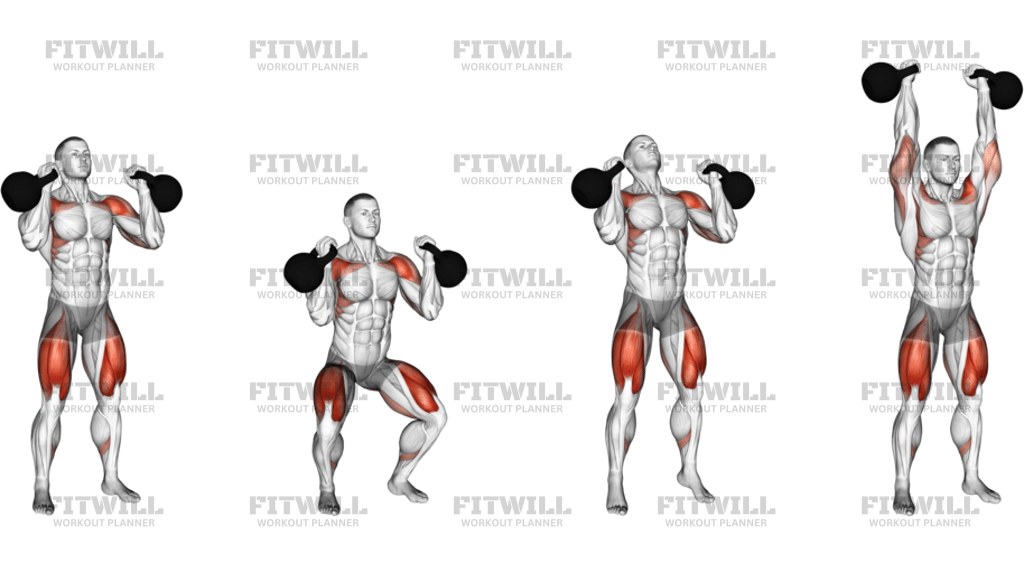
Kettlebell Slingshot
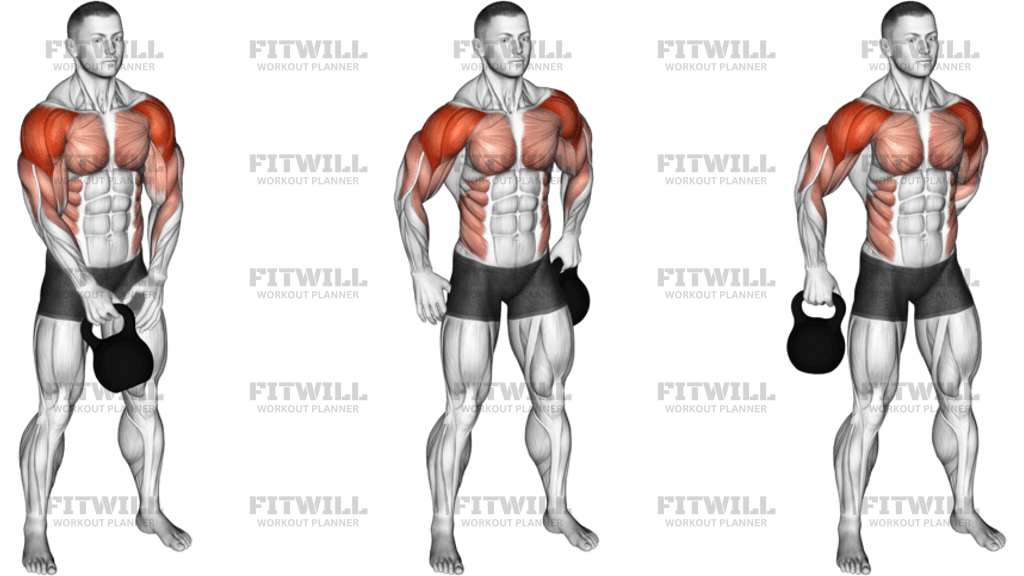
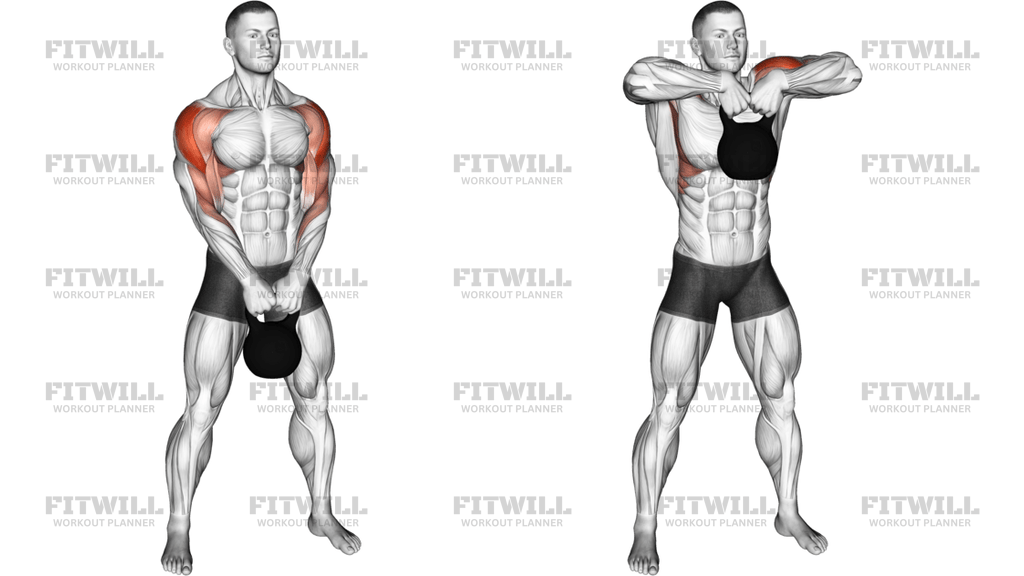
Kettlebell Slingshot is a standing kettlebell drill where you guide the bell in a smooth orbit around your hips and pass it from hand to hand without letting your torso collapse or twist. It trains shoulder control, upper-back engagement, arm endurance, and grip strength while also asking your core to keep the ribcage stacked over the pelvis.
The movement is useful because the bell never fully leaves your control. Instead of chasing a swing or a hard catch, you keep the kettlebell close to the body, trace a clean path around the waist, and manage the transfer with small, precise hand changes. That makes the exercise a good choice for coordination work, warm-ups, conditioning blocks, and light accessory work when you want the shoulders and upper back to stay active without heavy loading.
Start in a tall stance with your feet about hip-width apart and the kettlebell hanging in front of you. Keep the chest lifted, shoulders down, and knees softly bent. As the bell travels to one side, let your hips and ribcage stay mostly square while the arm guides the bell behind the body and around the opposite hip. The motion should look controlled and circular, not like a throw or a twist.
As you move, breathe steadily and keep the bell path low enough that it stays near the waistband and away from the knees. The handoff should be quiet and deliberate, with both hands ready but never yanking the weight across your body. If the bell starts drifting away from you, if your shoulders shrug, or if your lower back starts to rotate to make up for lost control, reduce the speed and load.
Used well, the kettlebell slingshot is less about brute force and more about maintaining rhythm, posture, and clean transitions. It can help build work capacity for the shoulders, upper back, and arms while teaching you to control a moving load in a standing position. Keep the repetitions smooth, symmetrical, and easy to repeat before you add speed or volume.
Fitwill
Log Workouts, Track Progress & Build Strength.
Achieve more with Fitwill: explore over 9600 exercises with images and videos, access built-in and custom workouts, perfect for both gym and home sessions, and see real results.
Start your journey. Download today!




Instructions
- Stand tall with your feet about hip-width apart and hold the kettlebell by the handle in front of your hips.
- Soften your knees, stack your ribs over your pelvis, and keep your shoulders down and neck long.
- Begin the orbit by guiding the bell to one side of your body instead of swinging it forward.
- Let the kettlebell travel behind your hips so the free hand can receive the handle behind your back.
- Pass the bell smoothly into the other hand and continue the circle around the opposite hip.
- Keep the bell path low and close to your waistband rather than letting it rise toward your chest.
- Stay mostly upright with only a small weight shift and minimal torso rotation as the bell moves around you.
- Breathe steadily through the handoff and slow the bell to a stop in front of your thighs when the set is done.
Tips & Tricks
- Choose a light kettlebell first so the handoffs stay quiet and controlled.
- Keep your elbows slightly bent; straight arms make the orbit harder to manage.
- If the bell taps your thighs, widen the circle a little instead of forcing it faster.
- Do not lean away from the kettlebell; stay centered and let the hands do the transfer.
- Keep the shoulders packed down so the traps do not take over every rep.
- The bell should stay below chest height; a higher orbit usually means too much swing.
- Alternate directions evenly so both sides get the same amount of practice.
- Stop the set when the handoff starts getting noisy, choppy, or rushed.
Frequently Asked Questions
What muscle does Kettlebell Slingshot target most?
The shoulders are the main focus, with the traps, upper back, and arms helping to control the bell.
Can beginners perform this exercise?
Yes. Start with a light kettlebell and a slow handoff so you can keep the orbit close to the body.
Do I keep both hands on the handle the whole time?
No. One hand releases while the other receives the handle as the bell travels behind your hips and around the waist.
How far from my body should the kettlebell travel?
Keep it close to your waistband and hips. If it drifts out in front of you, the movement turns into a swing instead of a slingshot.
Should my torso rotate during the rep?
Only a little. A small weight shift is normal, but the ribcage and pelvis should stay mostly stacked and square.
Why does the bell hit my thighs?
The orbit is probably too wide or too rushed. Slow down, keep the bell closer to your hips, and make the handoff earlier.
Is this more of a strength move or a conditioning drill?
It can serve both roles. Heavier, slower sets build control; lighter, smoother sets work well for warm-ups and conditioning.
What should I do if my shoulders start shrugging?
Lower the load and slow the rep down. The bell should feel controlled by the shoulders, not lifted by tension in the neck.