Kettlebell Front Raise
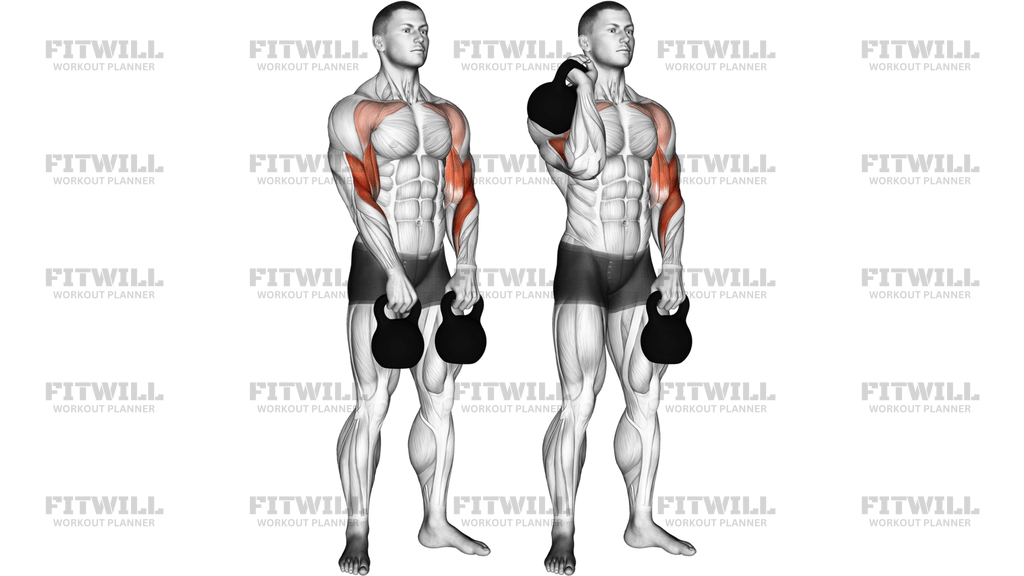
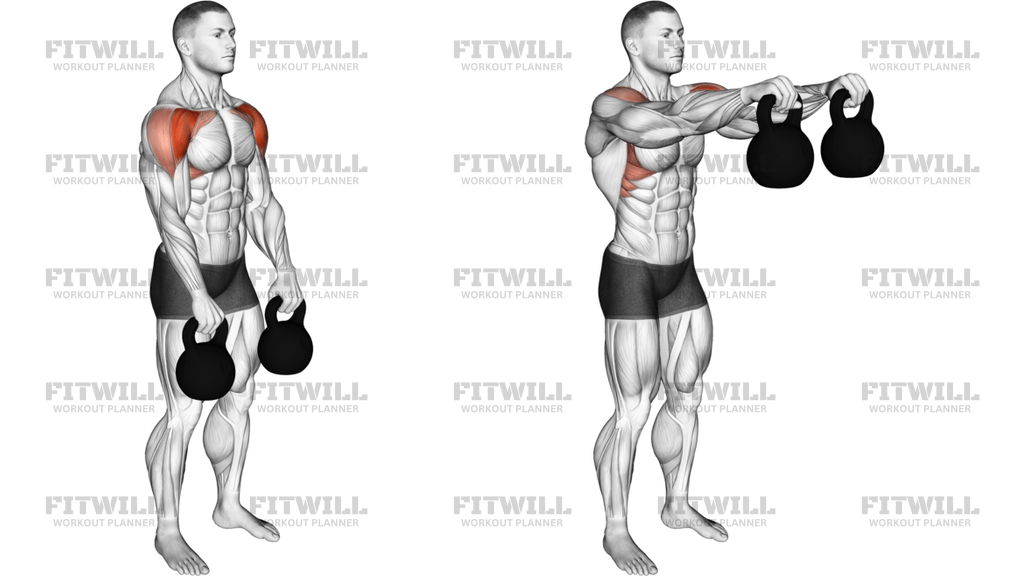
Kettlebell Front Raise is a strict shoulder accessory movement built around lifting both bells forward while the torso stays quiet. Holding one kettlebell in each hand, you raise the load in a smooth arc to about shoulder height, then lower it with control. It is useful when you want to strengthen the front of the shoulders without relying on pressing, and it also teaches you how to keep the ribs, neck, and upper back from taking over.
The main work comes from the front shoulders, with the upper chest, forearms, traps, and core helping stabilize the load. Because kettlebells hang below the handle, the exercise demands more grip control and shoulder stability than a very light raise. That makes the setup important: stand tall with feet about hip-width apart, soften the knees, keep the bells in front of the thighs, and let the shoulders stay down instead of creeping toward the ears.
Start each repetition by bracing lightly and lifting both bells forward in a controlled arc. Keep a slight bend in the elbows and stop when the hands reach shoulder height rather than chasing extra range that turns the rep into a shrug or a lean-back. At the top, the bells should feel organized, not thrown upward. Lower them along the same path until they return near the thighs, and breathe out as you raise the bells and inhale on the way down.
Kettlebell Front Raise works well as accessory work after pressing, as part of a shoulder-focused session, or in a lighter upper-body circuit when you want tension without heavy joint stress. It can help lifters build front-delt endurance for overhead work, but it is not a replacement for compound shoulder exercises. The best sets look repeatable from rep to rep, with no body swing, no rushing, and no loss of posture as fatigue builds.
The most common mistakes are using too much load, swinging the bells from the hips, and letting the lower back arch to fake extra height. If the torso rocks or the shoulders pinch, shorten the range and reduce the weight. Keep the neck long, ribs stacked over the pelvis, and the movement slow enough that each rep looks nearly identical from start to finish.
[ Workout Log & Planner ]
Put your next workout in Fitwill
Keep your plan and training log ready when you are.


Instructions
- Stand with your feet about hip-width apart and hold one kettlebell in each hand in front of your thighs, letting the bells hang straight down.
- Soften your knees, stack your ribs over your pelvis, and keep your chest tall without leaning back.
- Set your shoulders down away from your ears and keep a slight bend in both elbows before the first rep.
- Brace lightly through your midsection and look straight ahead so the torso stays quiet.
- Raise both kettlebells forward in a smooth arc until your hands reach shoulder height.
- Pause briefly at the top without shrugging, swinging, or letting the lower back arch.
- Lower the kettlebells along the same path under control until they return near the thighs.
- Inhale as the bells come down, exhale as you lift, and reset your posture before the next rep.
- Stop the set if you have to swing the bells or if your shoulders start to pinch.
Tips & Tricks
- Use lighter kettlebells than you would for pressing; front raises get sloppy fast when the load is too heavy.
- Keep the bells close to your body line on the way up so the raise stays on the front delts instead of turning into a swing.
- Stop at shoulder height; going higher usually recruits more upper traps and encourages shrugging.
- Lead with the elbows slightly bent instead of locking the arms straight, which helps keep the shoulders comfortable.
- Keep the wrists neutral so the handles do not fold back and turn the set into a grip fight.
- Lower the bells for at least two seconds to keep tension on the shoulders and reduce momentum.
- If one bell rises faster than the other, slow the rep down and match both sides before adding load.
- If your lower back arches, reduce the range and squeeze your glutes to keep the ribcage stacked.
- If the shoulders feel pinchy, shorten the top range slightly and keep the bells in front of the shoulder line.
Frequently Asked Questions
What muscles does Kettlebell Front Raise work?
It mainly trains the front shoulders, with the upper chest, forearms, traps, and core helping stabilize the movement.
Is Kettlebell Front Raise good for beginners?
Yes, if the load is light and the lift stays strict. Beginners should keep the range to shoulder height and avoid any swing from the hips.
Should I lift both kettlebells together or one at a time?
The version shown is done with both kettlebells at the same time. That keeps the rep symmetrical and makes it easier to compare left and right control.
How high should I raise the kettlebells?
Raise them to about shoulder height. Going higher usually adds trap shrugging and makes the movement less useful for the front delts.
Why do my shoulders shrug during Kettlebell Front Raise?
Usually the load is too heavy or the bells are traveling too far in front of the body. Reduce the weight and keep the shoulders down as the bells rise.
Can I swing the bells a little to get them up?
No. If the bells need momentum, the front shoulders are no longer doing the work. Use a lighter load and keep every rep controlled.
What if my grip gives out before my shoulders?
That usually means the kettlebells are too heavy for this movement. Drop the load and keep the wrists neutral so the handles do not roll in your hands.
Where does Kettlebell Front Raise fit in a workout?
It works best as accessory work after presses or in a shoulder-focused isolation block. It is not a replacement for heavier compound shoulder exercises.