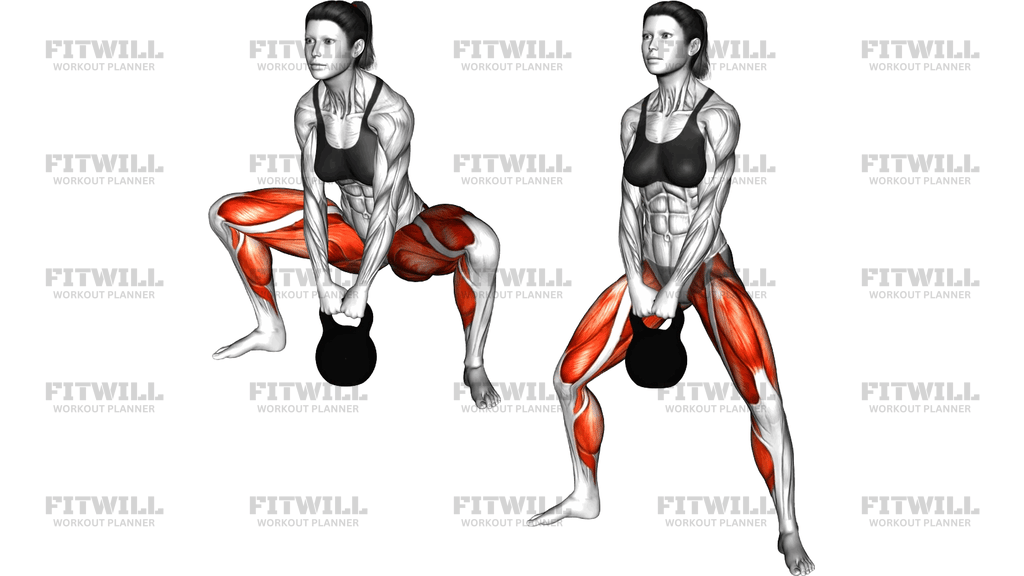
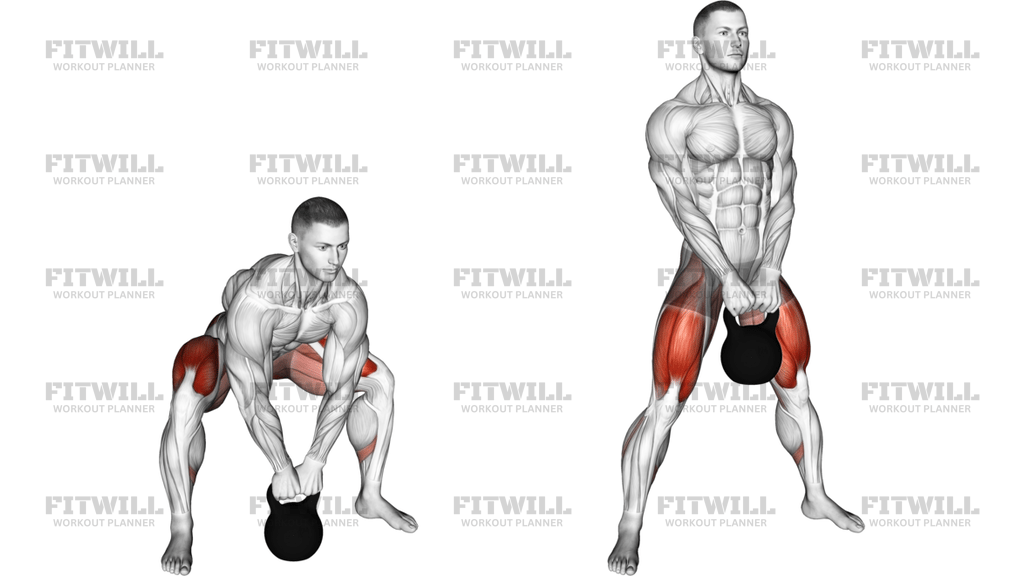
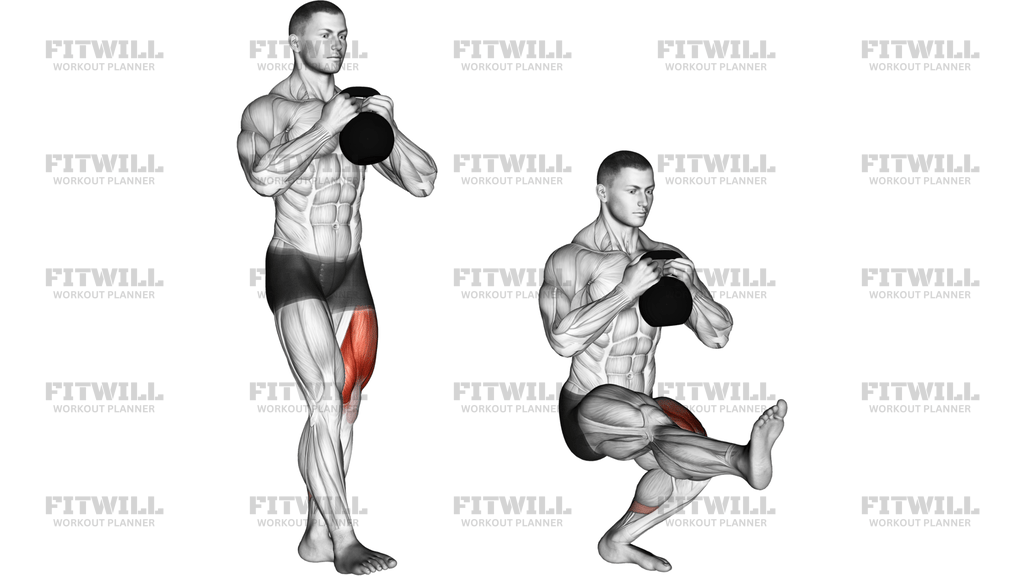
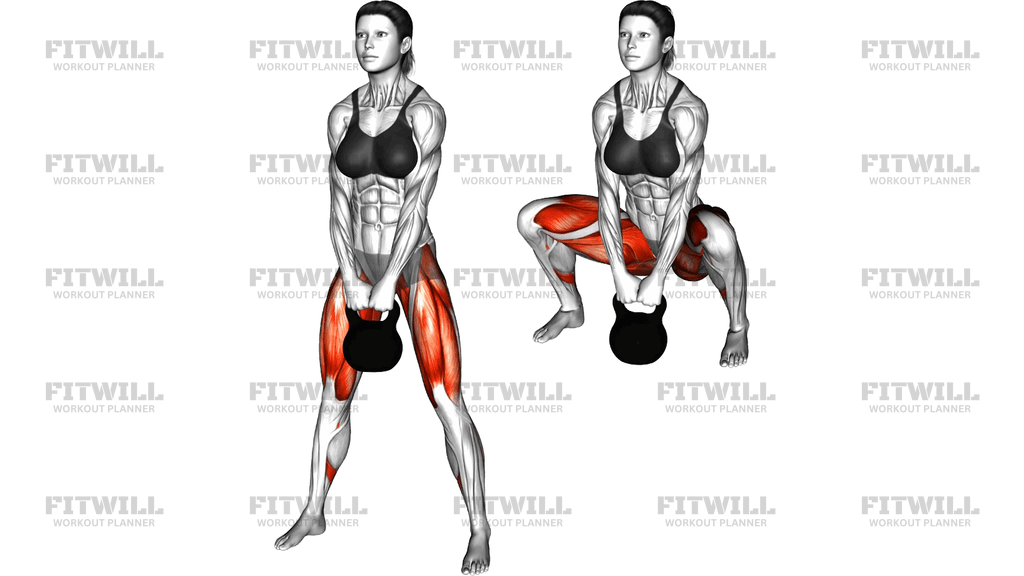
Kettlebell Double Rack Squat
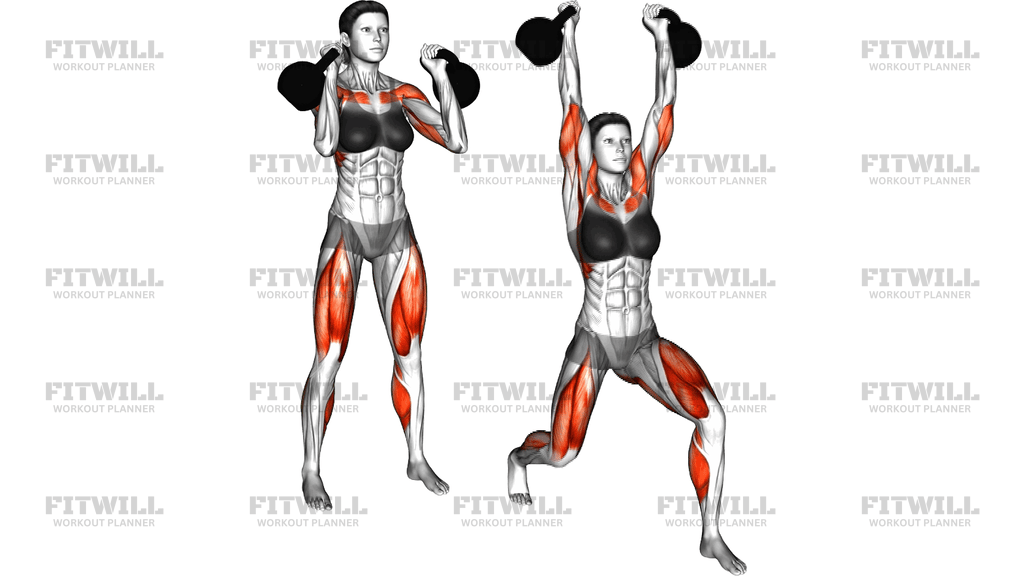
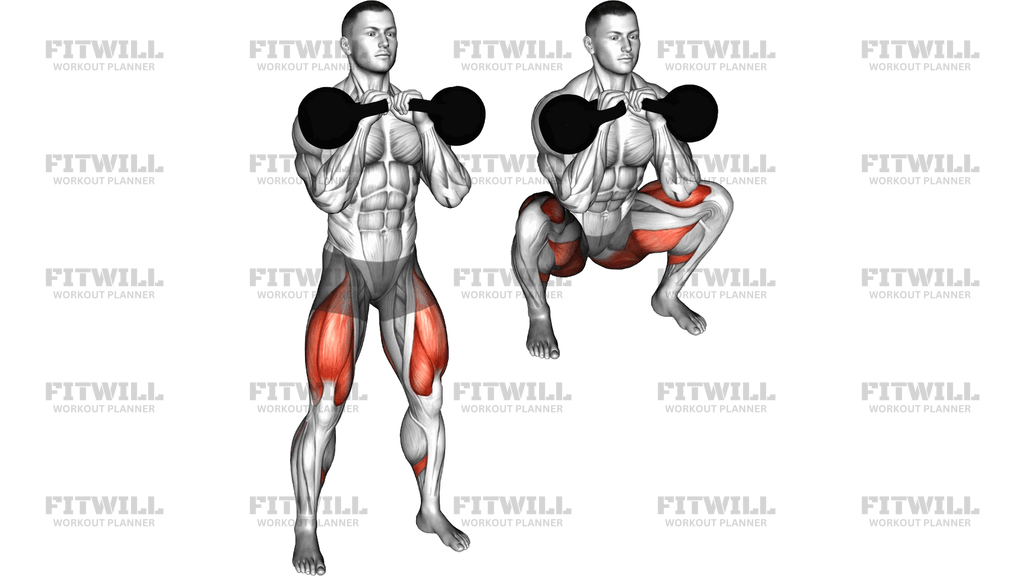
The Kettlebell Double Rack Squat is a front-loaded squat variation performed with a kettlebell in each hand, held in the rack position at chest height. Because the load sits directly on top of your forearms and against your torso rather than hanging at your sides or across your back, the weight stays close to your midline and challenges your legs through the full squat while demanding serious trunk stability and upper back endurance.
This movement suits intermediate lifters who already own a solid bodyweight or goblet squat and want to load the pattern with two bells. It is a staple in kettlebell strength work, general lower body hypertrophy programs, and conditioning circuits, since the rack position lets you handle meaningfully more weight than a single goblet squat while keeping the barbell out of the equation entirely.
The primary work comes from the quads and glutes, which extend the hips and knees as you drive out of the hole. The adductors assist heavily, especially at depth where the knees track outward over the feet. Holding two bells in the rack turns the front delts, upper back, traps, and forearms into isometric stabilizers for the entire set, and the midsection works continuously to keep you from folding forward under the front load.
Setup quality determines everything here. The bells should rest on the outside of your forearms with wrists neutral, elbows tucked close to the ribs, and the handles gripped just firmly enough to keep the bells from rolling. If the bells sit too far forward or the elbows flare out, the load pulls your chest down and the squat turns into a good morning. Feet roughly shoulder-width or slightly wider, toes turned out a comfortable amount, give the knees a clear track.
To execute well, brace your trunk, sit down between your hips rather than straight back, and descend until your thighs are at least parallel or as deep as your mobility allows while your torso stays upright. Keep both knees traveling over the toes, then drive the floor away and stand tall without letting the bells drift forward. Exhale on the way up, reset your breath at the top, and keep each rep deliberate.
A practical safety point: the rack position fatigues faster than the legs do for many lifters. If your grip or upper back gives out before your legs, end the set or strip to one bell rather than grinding a rep with a collapsing torso. Missed squats with two racked bells are far harder to bail safely than with a single kettlebell.
[ Workout Log & Planner ]
Put your next workout in Fitwill
Keep your plan and training log ready when you are.


Instructions
- Clean two kettlebells to the rack position, letting each bell rest on the outside of its forearm with your wrists straight and elbows tucked against your ribs.
- Set your feet about shoulder-width apart or slightly wider, toes turned out 15 to 30 degrees, and grip the handles firmly enough that the bells cannot shift.
- Draw your shoulder blades down and back slightly so your upper back supports the bells instead of your neck, and keep your chest tall.
- Take a breath into your belly and brace your core as if preparing for a light punch to the stomach.
- Push your hips back slightly and bend your knees to descend, sitting down between your hips while keeping your torso upright and the bells stacked over your chest.
- Let your knees track outward over your toes and lower until your thighs reach parallel or your deepest controlled depth.
- Drive through your whole foot to stand, pushing the floor away and squeezing your glutes at the top without hyperextending your lower back.
- Exhale as you rise, then take a fresh breath and re-brace at the top before starting the next rep.
- After your final rep, re-grip the handles and lower the bells to the floor with a hinge, or clean them down one at a time rather than dropping them.
Tips & Tricks
- If the bells roll toward your chest during the set, you are gripping too loosely and letting the handles rotate; squeeze the handles and keep the bell faces resting on your forearms.
- Elbows drifting away from the ribs is the most common fault in this lift and usually causes the chest to pitch forward — actively pull your elbows in before every descent.
- Your wrists should stay neutral. If they bend backward under load, the bells are sitting on the wrong part of the forearm, which will strain the wrists long before the legs fatigue.
- Do not let the squat turn shallow as the set progresses; the rack position gets uncomfortable before the legs actually fail, so film a rep or count depth cues like thighs below parallel.
- If your heels lift at the bottom, widen your stance slightly and spend time on ankle mobility rather than forcing depth with a rounded lower back.
- Choose a bell size you can clean comfortably for the first rep — the clean itself is part of the setup, and a sloppy clean into the rack puts you behind on every rep that follows.
- Keep your gaze forward or slightly up; looking down at your knees tends to collapse the chest under a front load.
- Match your bell weights exactly. Uneven bells create a lateral tilt that your obliques and lower back pay for over a long set.
- If two bells exceed your rack endurance, use the same position with one kettlebell on your weaker side for a few weeks before progressing back to doubles.
Frequently Asked Questions
What muscles does the Kettlebell Double Rack Squat work?
The quads and glutes do the main work of lowering and raising your body, with strong help from the adductors at the bottom of the squat. Holding two bells in the rack also trains the upper back, front shoulders, forearms, and core isometrically for the duration of the set.
Is the Kettlebell Double Rack Squat suitable for beginners?
It can be, but most lifters should first be comfortable with goblet squats and bodyweight squats at full depth. Once you can hold an upright torso and control your knees, start with light matching bells and build from there.
How does the Kettlebell Double Rack Squat differ from a goblet squat?
The double rack position lets you load much heavier weight and places the load on your forearms and torso instead of in your hands, which shifts more demand onto your upper back and trunk stability. It is the natural progression once a goblet squat feels limited by arm strength rather than legs.
Why do my wrists hurt in the rack position during this squat?
Bent wrists usually mean the bells are resting on the wrong part of the forearm or your elbows have drifted outward. Re-cleanup the bells so they sit on the outside of your forearms, keep your wrists stacked in line with your forearms, and tuck your elbows against your ribs.
How deep should I squat with two kettlebells in the rack?
Aim for thighs at parallel or slightly below as long as your heels stay down and your lower back holds its shape. Depth you cannot control with an upright torso costs more than it pays.
What should I do if my grip fails before my legs during the Kettlebell Double Rack Squat?
That is a signal to end the set, since a slipping bell in the rack is a safety problem. Grip the handles firmly, and if it keeps happening, reduce the weight or switch to a single-bell version while your rack endurance catches up.
Can I substitute the Kettlebell Double Rack Squat with dumbbells?
You can hold dumbbells at your shoulders in a similar front-loaded position, but the kettlebell rack sits the weight on your forearms, which is more stable and lets you breathe and brace better. Dumbbells work in a pinch but fatigue the shoulders sooner.
How should I breathe during this exercise?
Inhale and brace at the top before each descent, hold that brace through the bottom, and exhale as you drive up. For heavier sets, take a fresh breath and re-brace at the top of every rep rather than rushing through continuous breathing.
How do I safely finish a set of the Kettlebell Double Rack Squat?
Do not drop two racked bells from chest height. Hinge forward slightly and lower them to the floor with control, or bring them down one at a time, keeping your back flat as you set them down.
Why do my knees cave inward at the bottom of the squat?
Knee valgus under fatigue is common in front-loaded squats and often traces back to weak glutes or simply too much weight. Cue your knees outward over your little toes on every descent, and drop the load if you cannot hold that line for all reps.