Dumbbell Gorilla Row
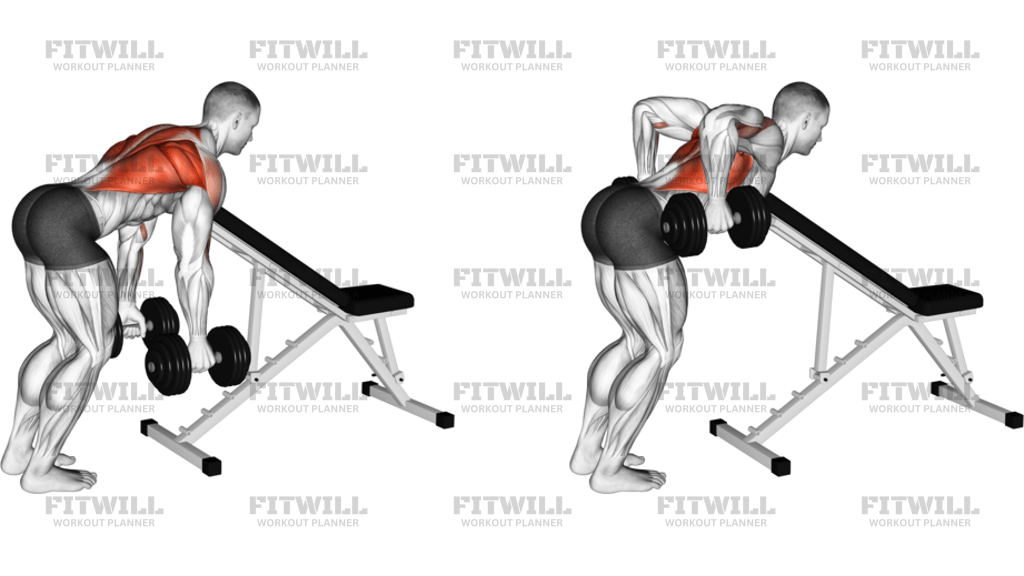
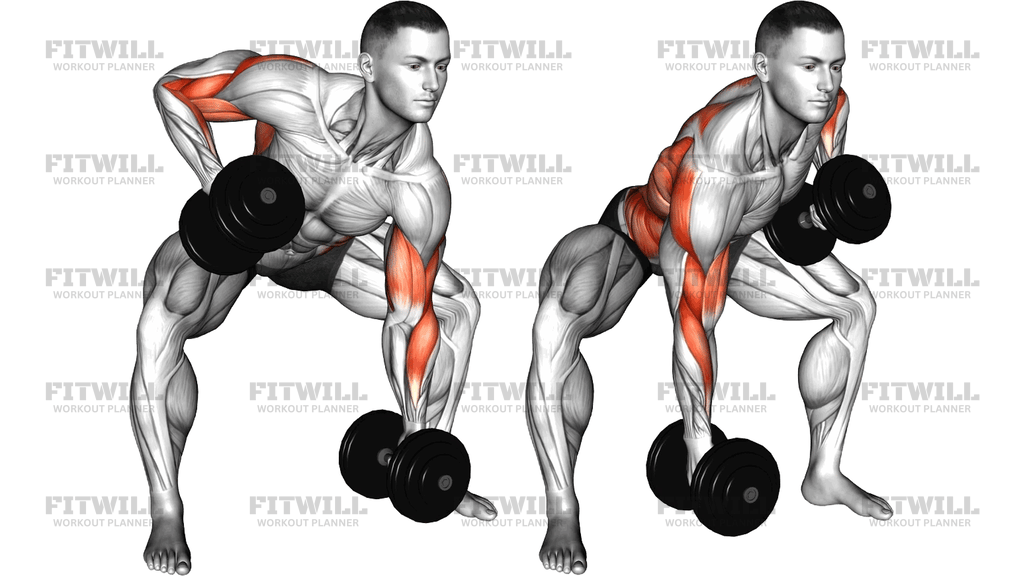
The Dumbbell Gorilla Row is a bent-over row variation performed from a wide, straddled stance with a dumbbell on each side of your feet. Instead of standing upright or supporting yourself on a bench, you sit back into a deep hip hinge, brace your torso, and row one dumbbell at a time toward your hip. The name comes from the crouched, wide-legged position your body holds throughout the set, which looks similar to a gorilla leaning over its knuckles.
This exercise is a favorite among lifters who want a heavy back stimulus without a bench or barbell setup. Because both dumbbells are on the floor between reps, you can reset your grip and breathe between each side, which makes it easier to handle heavier loads than a strict single-arm row while still training each side of your back independently. Powerlifters often use it as a low-fatigue way to build back thickness that supports deadlift strength, and general lifters use it to fill out the lats, traps, and upper back without needing much equipment.
The primary work goes to the lats and upper back as you pull, with the rear shoulders and biceps assisting, and your forearms and grip working hard to hold both dumbbells. The deep bent-over position also forces your lower back, glutes, and hamstrings to work isometrically for the entire set, which is one of the reasons the position itself matters so much. You are not just training the pull; you are training the ability to hold a strong hinge under load.
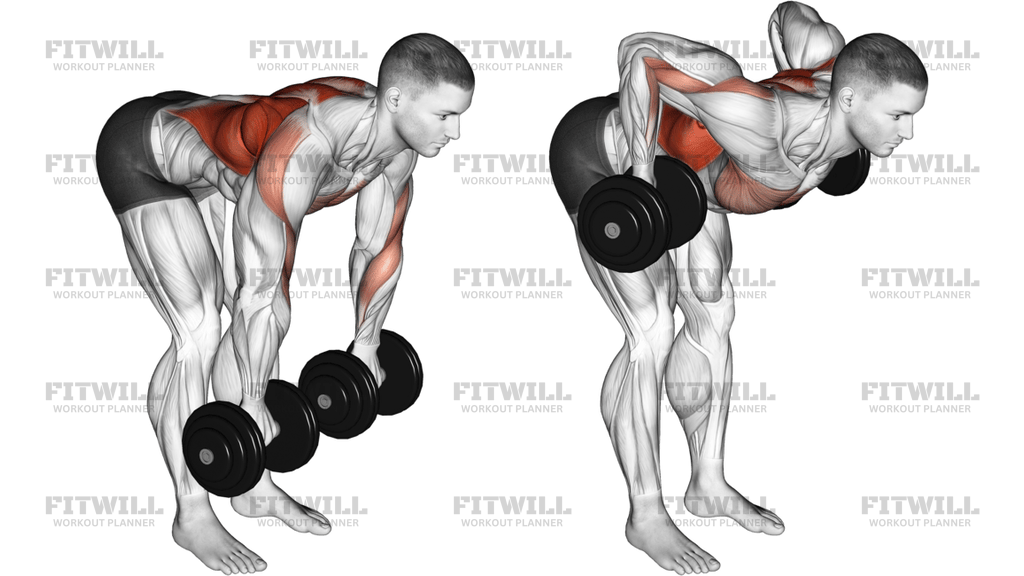
Setup is what separates a good gorilla row from a sloppy one. Your feet should be wide, roughly one and a half to two times shoulder width, with the toes angled slightly outward and the dumbbells placed directly under your shoulders on either side of your feet. Your torso needs to come down to somewhere between 15 and 30 degrees above parallel. If you stand too tall, the exercise turns into a shallow row that lets momentum take over; if your back rounds, you lose the safe hinge position and put unnecessary stress on your spine.
To execute it well, brace your core before every rep, pull the dumbbell toward your lower ribcage rather than your chest, and keep your shoulders square to the floor instead of twisting toward the working side. Lower the dumbbell back to the floor under control, then row the other side. Alternating keeps both sides of your back working evenly and keeps tension on the hinge position for the duration of the set.
A few practical points go a long way. Start lighter than you think you need until your hinge and brace feel solid, keep your hips high enough that your lower back can stay neutral, and treat any twisting or bouncing as a signal to reduce the weight. When performed with attention to position, the Dumbbell Gorilla Row is one of the most efficient two-dumbbell back exercises you can program.
[ Workout Log & Planner ]
Put your next workout in Fitwill
Keep your plan and training log ready when you are.


Instructions
- Place two dumbbells on the floor about shoulder-width apart, roughly in line with your toes.
- Set your feet wide, one and a half to two times shoulder width, with your toes turned slightly outward so the dumbbells sit on the inside of each foot.
- Push your hips back and bend your knees until your torso is angled between 15 and 30 degrees above parallel, and take one dumbbell in each hand with a neutral grip.
- Keep your back flat and your neck in line with your spine, then brace your core as if you were about to take a light punch to the stomach.
- Without letting your hips rise or drop, pull the right dumbbell up toward your lower ribcage, keeping your elbow close to your body and your shoulder square to the floor.
- Pull until your elbow passes your torso and the dumbbell is at hip height, squeezing your lat and upper back at the top.
- Lower the dumbbell back to the floor under control, letting the head of the dumbbell touch down lightly rather than dropping it.
- Row the left dumbbell in the same way, completing one repetition on each side to finish the set's rep pattern.
- Exhale as you pull each dumbbell up and inhale as you lower it, keeping your breath steady without losing your brace.
- After your final rep, set both dumbbells fully on the floor, stand up by driving through your hips, and rest before your next set.
Tips & Tricks
- If your lower back rounds at the bottom of the hinge, raise your hips slightly and bend your knees a bit more; a neutral spine is worth more than a deeper torso angle.
- The most common mistake is letting the torso rotate toward the dumbbell you are pulling. Keep your chest pointing at the floor and let the elbow travel back instead of dragging the shoulder around.
- Rowing the dumbbell toward your chest turns this into a trap-dominant row. Aim for your hip and lower ribcage to bias the lats, which is the intent of the movement.
- Because both dumbbells reset on the floor every rep, use that touch-down as a checkpoint: if your grip is failing or your hips are creeping up, pause one breath in the hinge before continuing.
- Use hexagonal or flat-sided dumbbells if you have them. Round dumbbells will roll inward toward your ankles when you set them down.
- Do not bounce the dumbbell off the floor to start the next rep. Dead-stop each rep to keep the tension on your back instead of your joints.
- Your knees should stay flexed the whole time. Locking them out to raise your torso turns the position into a hamstring stretch and loads your lower back at a mechanical disadvantage.
- If your grip gives out before your back does, try lifting straps on your heaviest sets, or knock the weight down until your forearms catch up.
- Keep the weight split evenly between your midfoot and heels. Shifting onto your toes is a sign the dumbbells are too heavy or your hinge is too shallow.
- Treat this like a heavy row, not a high-speed flail. Two to three seconds per rep with a firm top squeeze beats double-speed swinging for building the back.
Frequently Asked Questions
What muscles does the Dumbbell Gorilla Row work?
The lats and upper back, including the traps and rhomboids, do the main pulling work, with the rear shoulders and biceps assisting. Your lower back, glutes, hamstrings, and forearms also work hard isometrically to hold the wide bent-over stance.
Why are the feet positioned so wide in the Dumbbell Gorilla Row?
The wide stance creates space for both dumbbells to hang between and beside your legs and gives you a stable base for the deep hinge. It also lets you keep your hips back and your torso low without the dumbbells hitting your thighs.
Is the Dumbbell Gorilla Row good for beginners?
Yes, but beginners should start with light dumbbells and focus on the hinge and bracing before loading it. Since each dumbbell resets on the floor every rep, it is actually easier to control than many continuous bent-over row variations.
How does the Dumbbell Gorilla Row differ from a regular bent-over row?
A regular bent-over row usually uses a narrower stance and pulls both dumbbells at once without resting between reps. The gorilla row uses a wide straddled stance, a deeper hinge, and an alternating pattern where the non-working dumbbell touches the floor between reps.
Should I row the dumbbells one at a time or both together?
One at a time is the standard execution and lets you handle heavier weights with better control and less strain on your lower back. Rowing both simultaneously is possible, but it makes holding a strong hinge for long sets much harder.
My lower back gets tired before my back does. What should I change?
Raise your hips slightly, make sure your knees stay bent, and cut the weight so you can keep a neutral spine for the whole set. A fatigued lower back during this exercise is usually a hinge-position problem, not a weakness problem.
How heavy should I go on the Dumbbell Gorilla Row?
Pick a weight you can row to hip height without twisting your torso or jerking from the floor. Because the dumbbells dead-stop between reps, this lift allows heavier loads than a strict standing row, but only advance the weight once your form holds at a pause at the top.
Can I use kettlebells instead of dumbbells?
Yes, kettlebells are a very common substitute and often sit more stably on the floor thanks to their flat bases. The setup and rowing path stay exactly the same.
How many reps and sets should I do?
Sets of 8 to 12 rows per side work well for muscle building, while 5 to 6 heavy reps per side suits strength work. Because the hinge position is demanding, keep total sets to around 3 to 4 and rest before your back position breaks down.
Is it safe to do the Dumbbell Gorilla Row if I have lower back concerns?
The deep hinge places continuous demand on the lower back, so anyone with an existing back issue should get clearance from a healthcare professional first. If cleared, start with lighter dumbbells, a slightly higher torso angle, and strict attention to keeping the spine neutral.