Back Bend Over Bench Stretch
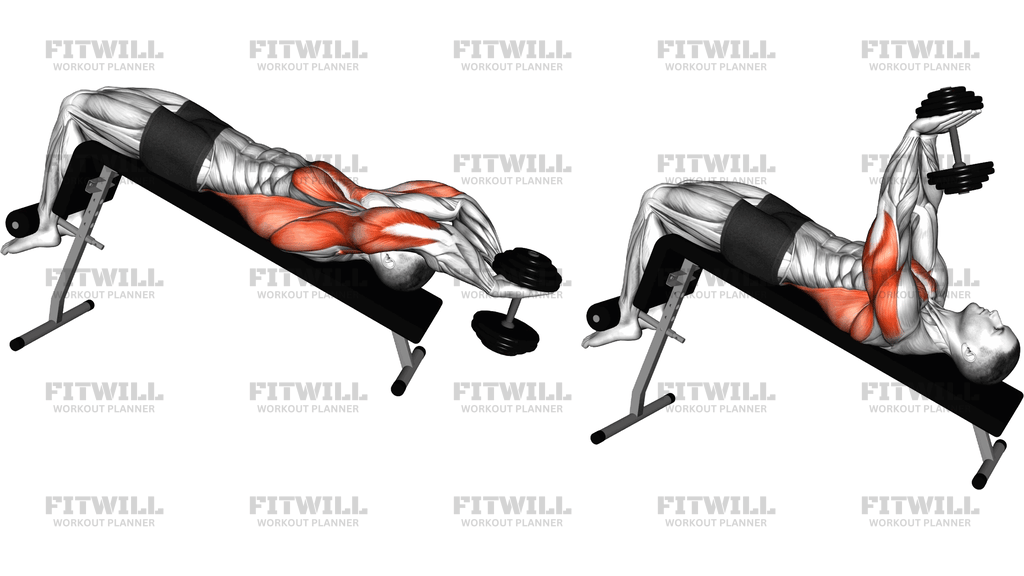
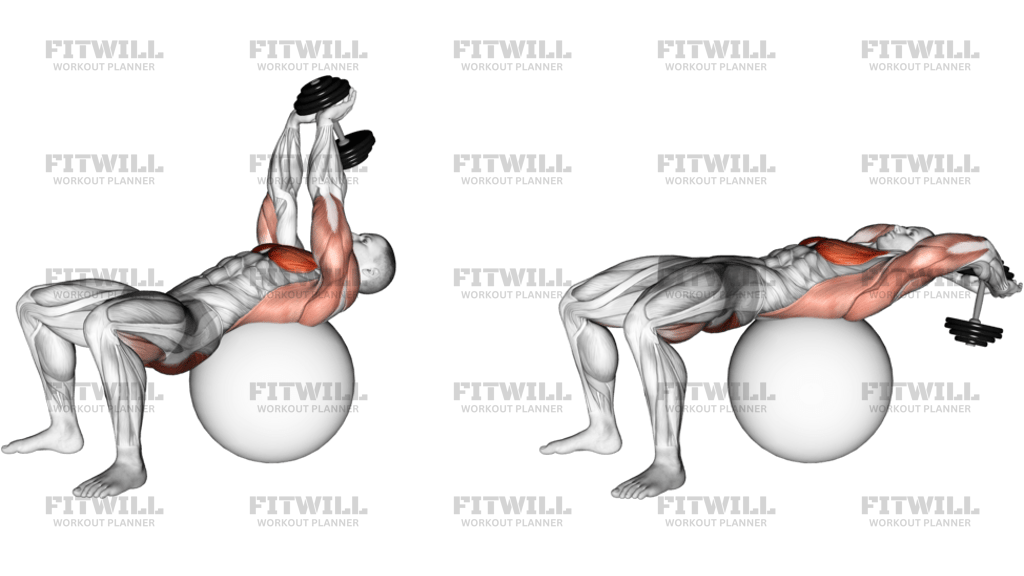
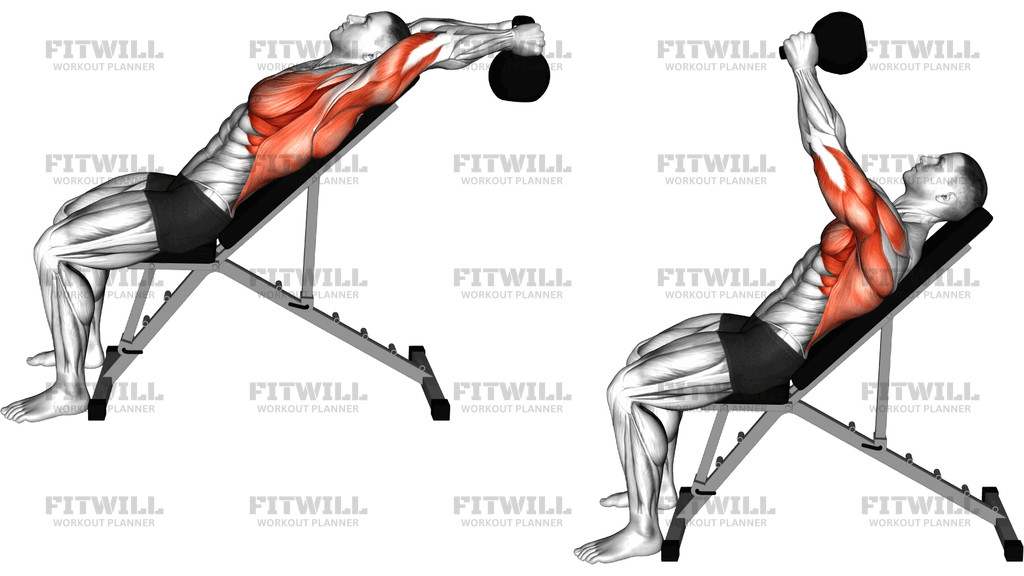
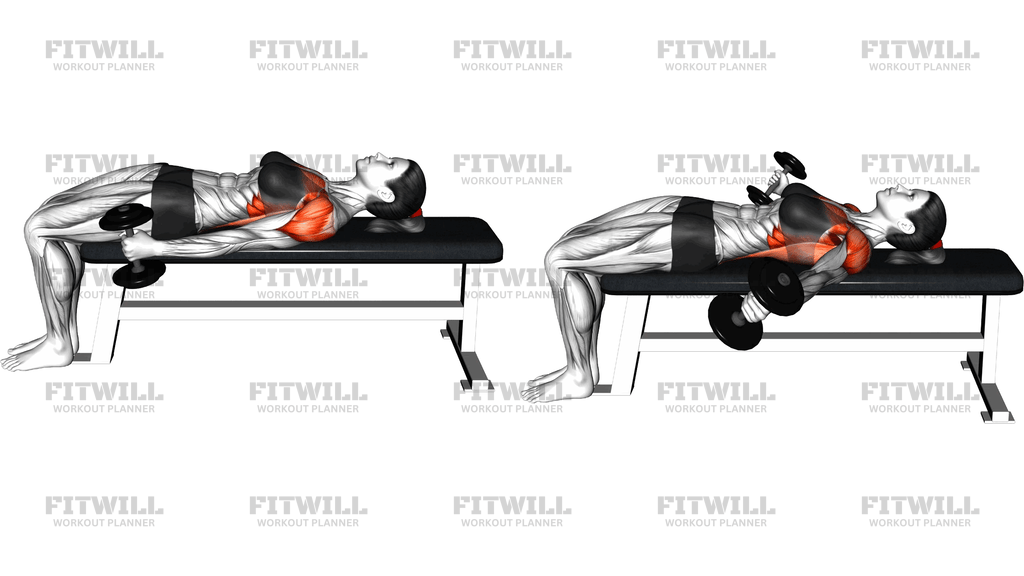
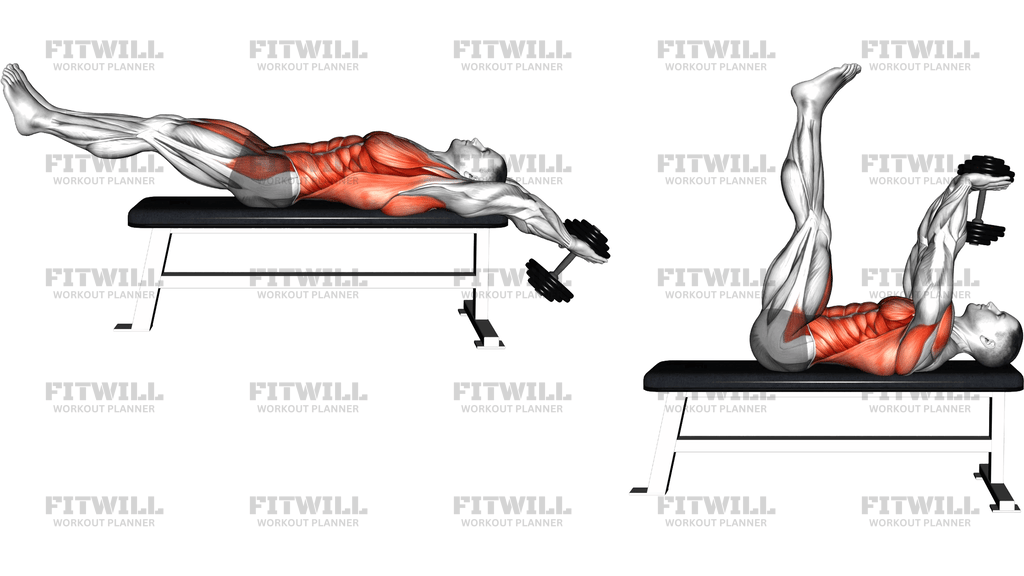
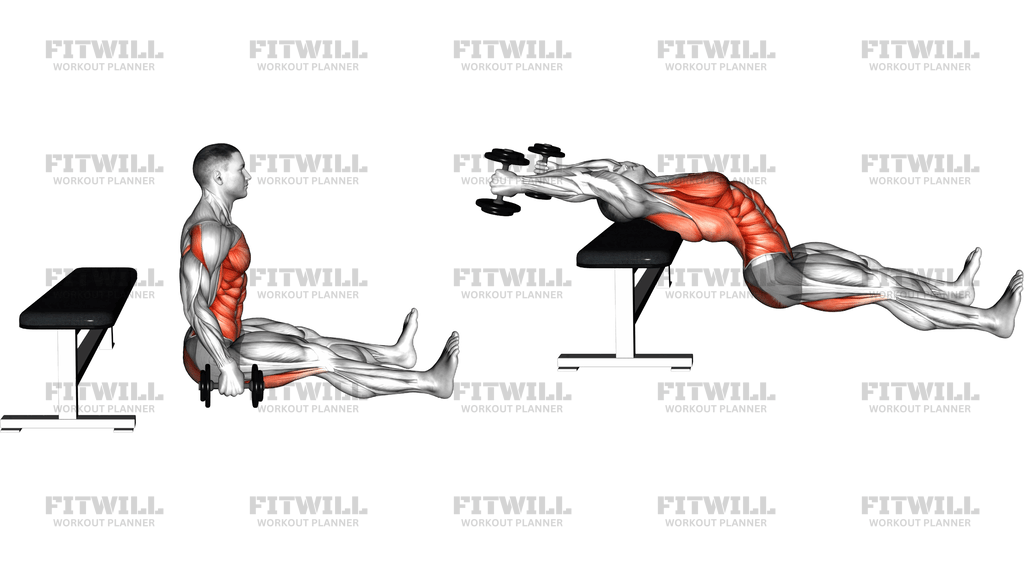
The Back Bend Over Bench Stretch is a loaded stretch in which you drape your upper back across a flat bench, lower your hips toward the floor, and reach a pair of light dumbbells back over your head. The result is a long, full-body arch that opens the chest and lats, lengthens the abdominal wall, and stretches the hip flexors and thigh muscles down the front of the body. Because the dumbbells add a gentle traction pull through the arms, the stretch feels deeper and more complete than an unsupported back bend.
This movement is popular with lifters who press and pull heavy. Bench pressers use it to restore shoulder extension and open the pecs after heavy pressing days, while pull-up and row enthusiasts appreciate the way it lengthens the lats, which often get tight and shortened from frequent pulling. It is also a useful drill for anyone who sits for long hours, since the exact positions that sitting shortens — hip extension, shoulder flexion, and spinal extension — are all trained here at once.
Setup matters more than depth. The bench should contact your upper back only, around the level of your shoulder blades, so that your head, mid back, and hips hang free. If the bench sits too low on your back, you lose the arch; too high and your neck does the work instead. Legs are extended straight in front of you with the hips dropped toward the floor, which anchors the pelvis and lets the stretch travel through the front of the hips and thighs as well as the torso.
To execute it well, keep the dumbbells light — this is a stretch, not a press. Let your arms drift back over your head slowly, elbows softly extended, and breathe steadily into your belly as the ribcage lifts. The arch should feel broad and comfortable across the chest and front of the shoulders, never pinched in the lower back or neck. Hold for twenty to forty seconds, then bring your arms back overhead-to-front before sitting up.
A few practical cautions keep this safe. If you feel tingling in your arms, sharp pain in the spine, or dizziness from the head-low position, come out of the stretch and shorten the range. People with lower back sensitivity should reduce the hip drop by bending the knees slightly, and anyone new to loaded stretching should try the same position without dumbbells first to learn where their comfortable range ends.
[ Workout Log & Planner ]
Put your next workout in Fitwill
Keep your plan and training log ready when you are.


Instructions
- Place a flat bench in open space and sit on the floor in front of it with your legs extended straight ahead.
- Pick up a light dumbbell in each hand and rest them on your thighs while you position yourself.
- Walk your hips forward and lower your upper back onto the bench so the padded edge sits across your shoulder blades, with your head and hips hanging off either side.
- Let your hips sink toward the floor until your torso forms a gentle arch over the bench and your legs stay straight out in front with heels on the ground.
- Brace lightly through the trunk, then raise both dumbbells straight up over your chest with arms extended.
- Slowly lower the dumbbells back over your head toward the floor, letting the weight gently pull your shoulders into deeper extension as your ribcage lifts.
- Stop at the point where you feel a strong but comfortable stretch across the chest, lats, and front of the hips, and hold while breathing slowly and deeply.
- Exhale as you raise the dumbbells back up over your chest to release the load.
- Set the dumbbells down on the floor beside you, push up off the bench with your elbows, and sit upright before standing.
Tips & Tricks
- Start with no weight for your first session. Learn where the bench contacts your back and where your hips settle before adding even light dumbbells.
- If the arch concentrates in your lower back instead of your chest, think about tucking the pelvis slightly and reaching the dumbbells farther overhead — the stretch should spread toward the armpits.
- Tingling or numbness in the hands means the shoulder is extended past its comfortable range; shorten the reach by bending the elbows a little.
- Keep the dumbbells light — two to five kilograms is plenty. Heavy weights turn a relaxation stretch into a strength demand and change the whole feel.
- Bending the knees reduces the pull on the hip flexors and front of the thighs. Use it if you feel the stretch only as a straining sensation at the hip.
- Exhale slowly during the hold rather than holding your breath; each exhale usually lets the ribcage drop a little deeper into the arch.
- Do not let the head hang and rotate. Look straight up at the ceiling and keep the neck neutral to avoid strain.
- Two or three holds of twenty to thirty seconds at the end of a pressing or pulling workout works better than one long, forced stretch.
- If the bench edge digs into your shoulder blades, add a folded towel over the pad for comfort.
Frequently Asked Questions
Which muscles does the Back Bend Over Bench Stretch target?
It primarily lengthens the lats and chest, with the abdominal wall, hip flexors, and front of the thighs also stretched in the arched position. The shoulders get a controlled extension stretch as the arms reach overhead.
Why hold dumbbells during this stretch instead of doing it empty-handed?
The light weights add a mild traction pull through the arms, which helps the shoulders settle into extension and makes the lat and chest stretch feel more complete. The load should stay light enough that it never feels like an effort to hold.
Where exactly should the bench contact my back?
Across the upper back at roughly the shoulder blades. That placement leaves the head, mid back, and hips free to drop, which is what creates the arch.
Is the Back Bend Over Bench Stretch suitable for beginners?
Yes, as long as they start without dumbbells and use a modest hip drop. Beginners should prioritize comfortable breathing over range and only add light weights once the position feels easy to hold.
My lower back feels pinched instead of my chest stretching — what am I doing wrong?
The pelvis is likely tilting too far forward as the hips drop. Bend the knees slightly, reduce the hip drop, and focus on reaching the dumbbells overhead so the extension spreads into the upper body.
How long should I hold each rep of this stretch?
Twenty to forty seconds per hold, repeated two or three times. Breathe slowly throughout and let the range deepen gently with each exhale rather than forcing the dumbbells lower.
When is the best time to use this stretch in a workout?
It works well at the end of bench press, overhead press, or pull-up sessions, when the chest and lats are warm. It can also be used on its own during a flexibility session.
Can I substitute anything if I do not have dumbbells available?
Yes — perform the same back bend over the bench with empty hands and simply reach the arms overhead. You lose the traction pull, but the chest, hip flexor, and spinal extension stretch remains largely the same.
Who should be careful with this stretch?
Anyone with lower back issues, shoulder impingement history, or sensitivity to a head-below-heart position should use a reduced range and come out of the hold at the first sign of tingling, dizziness, or sharp pain.