Dumbbell Palm Rotational Bent-Over Row
Dumbbell Palm Rotational Bent-Over Row is a bent-over rowing exercise that combines a hip hinge with an active hand rotation at the top of the pull. It is used to train the upper back while also challenging the lats, biceps, rear shoulders, and the muscles that keep the torso fixed in a strong hinged position. The setup matters because the spine, pelvis, and shoulder blades all need to stay organized while the arms do the work.
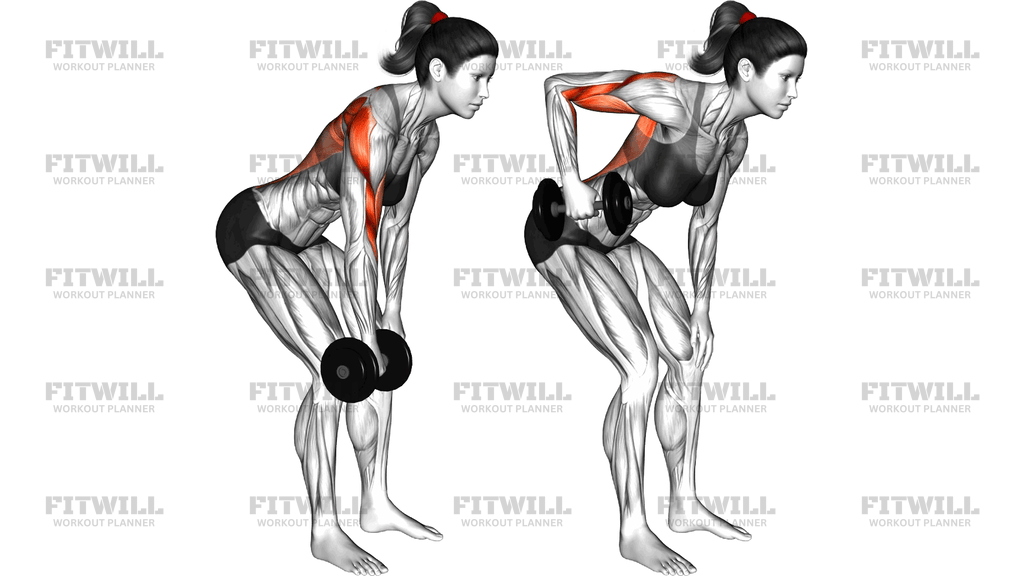
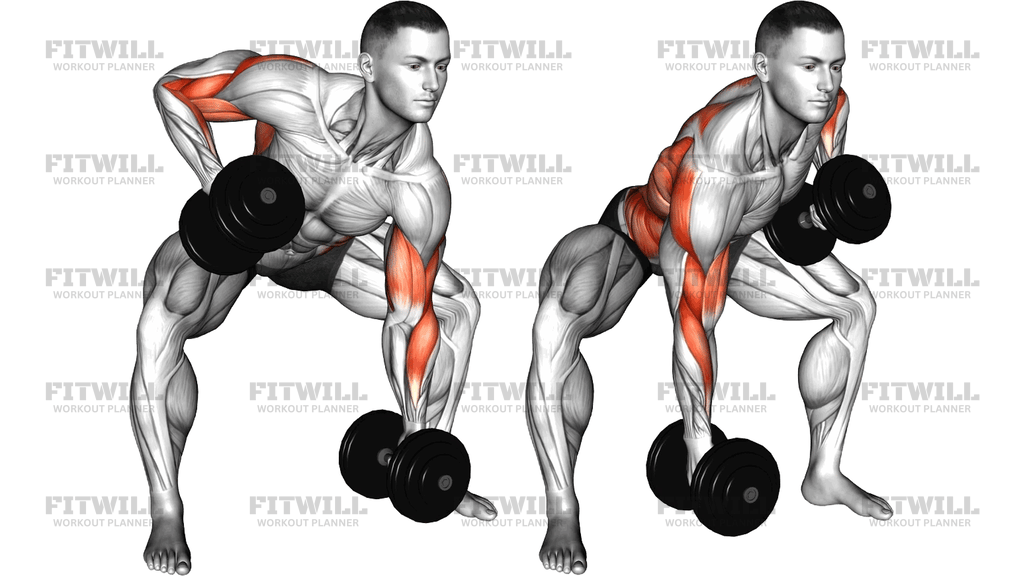
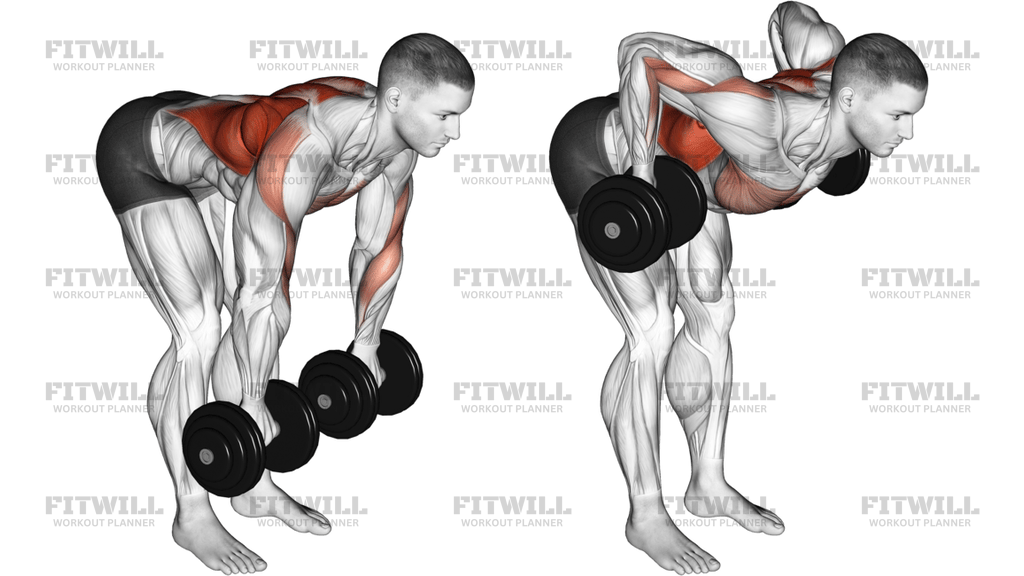
The image shows a deep forward hinge with the torso close to parallel to the floor, knees softly bent, and the dumbbells hanging under the shoulders. That position lets you row without turning the movement into a shrug or a swing. The rotation component adds a little extra shoulder and forearm work, so the rep should still feel smooth and deliberate rather than rushed or forced.
At the start of each rep, keep the chest long, neck neutral, and back flat. Pull the dumbbells toward the lower ribs or the sides of the waist while letting the palms rotate naturally with the row instead of yanking the wrists. The elbows should travel back close to the body, and the shoulder blades should move together without letting the low back round or the torso pop upward.
This is a useful accessory movement when you want back thickness, scapular control, and cleaner pulling mechanics without a chest-supported bench or machine. It also works well in hypertrophy sessions, pulling supersets, or warmups for heavier rows and deadlift variations. Because the hinge position asks a lot from the lower back and hamstrings, the exercise rewards moderate loads, steady breathing, and a strict range that you can repeat rep after rep.
[ Workout Log & Planner ]
Put your next workout in Fitwill
Keep your plan and training log ready when you are.


Instructions
- Stand with your feet about hip-width apart and hinge forward from the hips until your torso is close to parallel with the floor.
- Hold a dumbbell in each hand under your shoulders with a neutral grip, palms facing in, and keep a soft bend in your knees.
- Brace your trunk, set your neck in line with your spine, and let the dumbbells hang fully before you start the first pull.
- Pull both elbows back toward your hips or lower ribs while keeping the upper arms close to your sides.
- Let the palms rotate naturally as the dumbbells travel upward so the hands finish in the strongest top position without twisting your torso.
- Squeeze your shoulder blades together briefly at the top while keeping your chest pointed down and your low back still.
- Lower the dumbbells slowly back to the hang, reversing the rotation under control until the arms are straight again.
- Breathe out as you row, inhale on the way down, and reset the hinge before the next rep.
- Repeat for the planned number of reps without letting the torso rise or the weights swing.
Tips & Tricks
- Keep the hinge fixed; if your torso keeps rising each rep, the load is probably too heavy.
- Let the rotation come from the shoulder and forearm, not from twisting the ribcage.
- Aim the row toward the lower ribs or waist, not straight up toward the chest.
- Keep the dumbbells close to the body so the lats and mid-back stay involved instead of the traps taking over.
- Use a grip that lets the wrists stay straight through the rotation instead of bending back.
- If the low back feels more stressed than the upper back, shorten the range and reduce the load.
- Pause briefly at the top only if you can keep the neck relaxed and the torso still.
- Choose a weight that lets you control the lowering phase as the palms rotate back to the start.
Frequently Asked Questions
What muscle does Dumbbell Palm Rotational Bent Over Row target most?
The main emphasis is the upper back, especially the traps and rhomboids, with the lats, rear shoulders, and biceps assisting.
Can beginners perform this exercise?
Yes, but beginners should start light and learn the hip hinge and palm rotation before increasing load.
Where should the dumbbells travel on each row?
Pull them toward the lower ribs or the sides of the waist, keeping the elbows close rather than flaring them out.
How much should the palms rotate?
Rotate naturally as you row, but stop before the torso starts twisting or the wrists lose a neutral line.
What is the biggest form mistake with this row?
Letting the chest pop up and turning the movement into a standing shrug instead of a strict bent-over pull.
Should my lower back work during the set?
It should work isometrically to hold the hinge, but it should not become the main mover or feel like the limiting muscle.
Is this better done one arm at a time or with both dumbbells together?
This version is shown as a two-dumbbell bent-over row, which makes it easier to keep the torso square and control the rotation evenly.
What should I do if my grip or wrists start to feel awkward?
Reduce the load and keep the wrists straighter through the pull so the rotation stays smooth instead of forced.