Lever Stack Seated Lat Pulldown
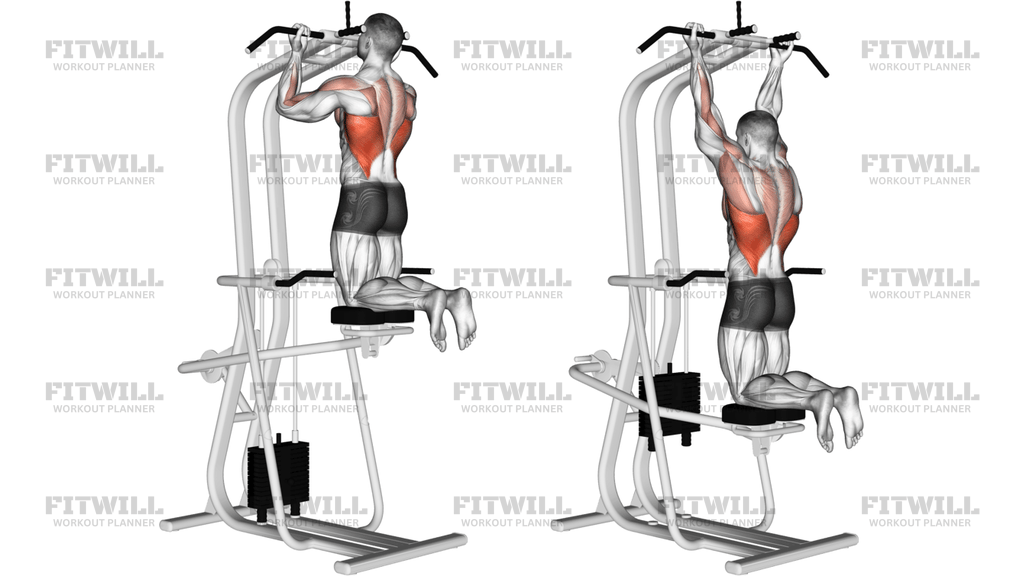
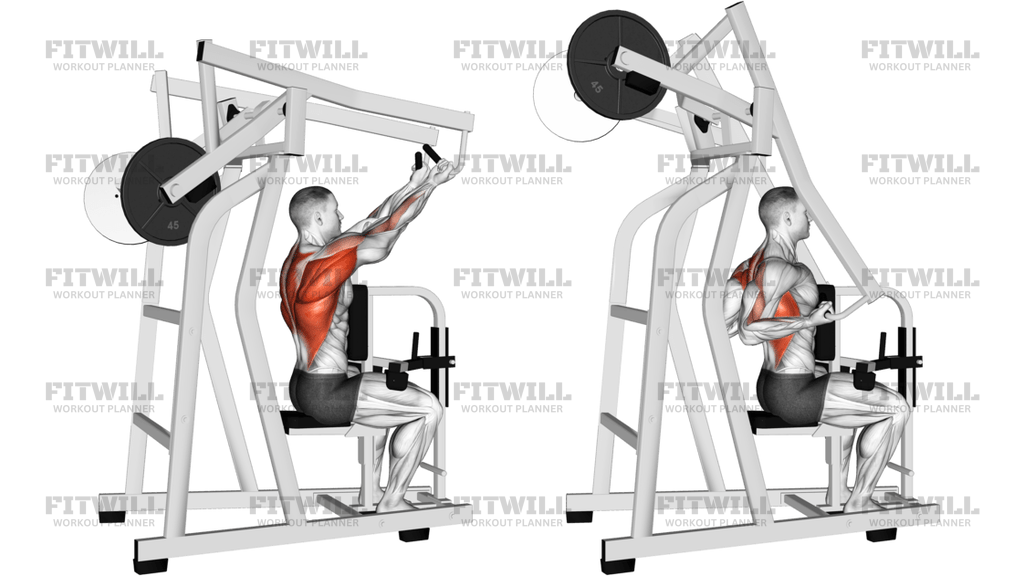
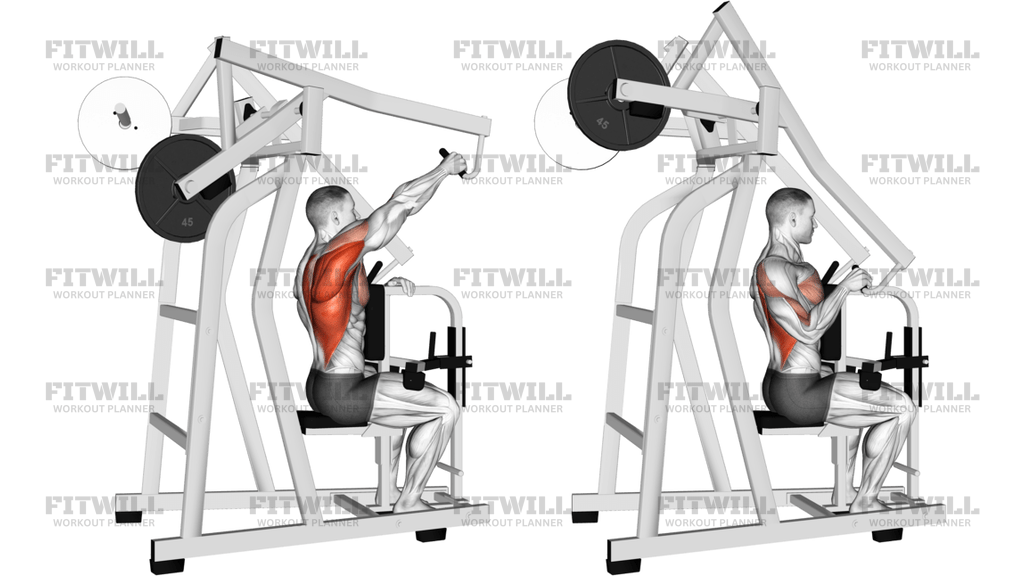
The Lever Stack Seated Lat Pulldown is a plate-loaded machine exercise that trains the lats through a downward pulling arc while you sit braced against a fixed seat and pad. Unlike a cable pulldown, the resistance comes from a lever arm on a weight stack, so the movement path is fixed and the resistance feels smooth and consistent from the first inch to the last. You start with your arms overhead gripping the machine's handles and pull them down until your elbows drive past your ribs, then control the weight back up to a full overhead stretch.
This is one of the most accessible ways to build a wide, strong back. Because the machine stabilizes your torso and locks the arc of the pull, you can focus entirely on driving your elbows down and feeling your lats work instead of worrying about balance or body sway. That makes it a solid choice for beginners learning what a lat contraction feels like, and equally useful for experienced lifters who want heavy, fatigue-free back volume without the lower back and grip demands of free-weight rows or pull-ups.
The primary work is done by the latissimus dorsi, with strong assistance from the teres major, rhomboids, mid and lower traps, and the rear shoulders as the shoulder blades pull down and together. The biceps and forearms handle the gripping and elbow flexion, which is why many people mistakenly feel this only in their arms when they first start. Adjusting the seat height and thigh pad matters more than most lifters realize: if your hips are not pinned and your torso angle is consistent, the pull turns into a leaning row and the lats lose tension at the top.
In practice, this exercise fits well as a main back builder on machine-based or hypertrophy-focused programs, as a warm-up or feeder before weighted pull-ups, or as a finisher to accumulate volume after heavy rows. The fixed path also makes it a reliable option for anyone returning from time off who wants to rebuild pulling strength with less coordination demand.
To get the most from it, keep your chest tall, ribs down, and let the elbows lead the pull rather than the hands. Pull to the point where your upper arms are roughly parallel to your torso or slightly behind it, pause briefly, and lower under control until you feel a full stretch through the lats at the top. Avoid turning this into a maximal-effort heave with your torso flopping backward; the weight stack should move because your elbows came down, not because your body dropped under it. Done with that discipline, the Lever Stack Seated Lat Pulldown delivers dependable back training with a very low learning curve.
[ Workout Log & Planner ]
Put your next workout in Fitwill
Keep your plan and training log ready when you are.


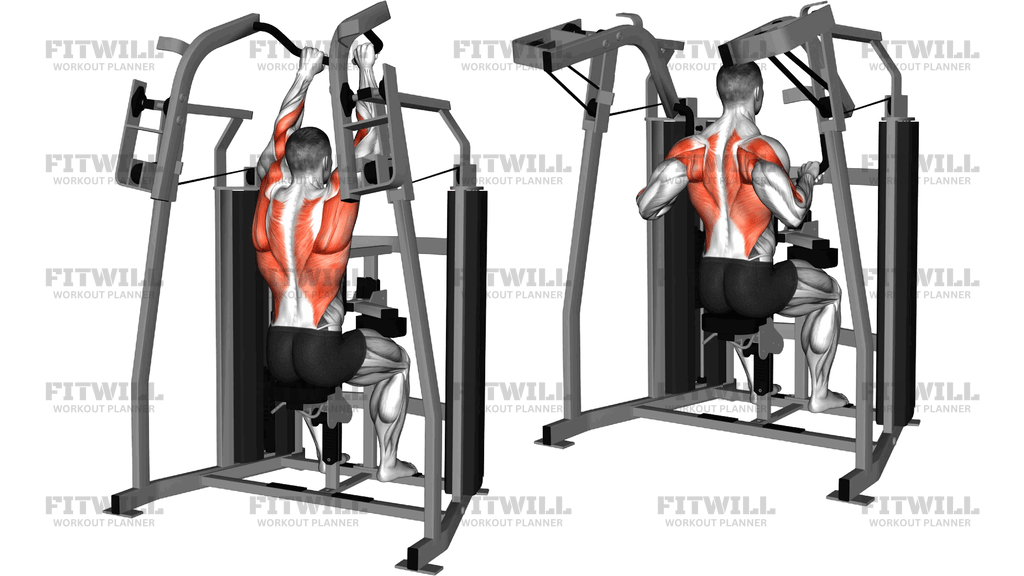
Instructions
- Adjust the seat so that when you sit down, your feet are flat on the floor and your knees fit snugly under the thigh pads with your hips fully supported.
- Grip the machine's handles with a firm, roughly shoulder-width to slightly wider grip and sit with your back against the pad, arms extended overhead.
- Pin your thighs under the pads and brace your trunk so your torso stays upright and will not rock backward during the pull.
- Start each rep from a full overhead stretch with the weight stack loaded, and take a breath in at the top.
- Pull the handles down by driving your elbows toward your hips, keeping your chest tall as your upper arms come down alongside your ribs.
- Continue until your hands reach about upper-chest or collarbone height and your elbows are at or slightly behind your torso line.
- Squeeze your shoulder blades down and together at the bottom for a brief pause before reversing the movement.
- Lower the handles in a controlled manner until your arms are fully extended overhead and the lats are stretched again.
- Exhale as you pull down and inhale as the weight returns overhead, keeping the breathing rhythm steady rep to rep.
- Complete your set, let the stack settle fully, release the handles, and stand up only once the weight is at rest.
Tips & Tricks
- Think about pulling with your elbows, not your hands. If your forearms burn out before your back does, lighten the load and lighten your grip pressure.
- Do not lean back excessively as the handles come down. A small, consistent torso angle is fine, but tipping backward turns the pulldown into a row and shortens the lat's range.
- Let the arms travel all the way overhead at the top of each rep. Cutting the stretch short is one of the most common ways lifters stall progress on this machine.
- Set the thigh pad snugly before you load weight. If your hips lift off the seat at the top of the stretch, the pad is too loose or the seat is too high.
- Keep your shoulders down away from your ears as you pull. Shrugging at the start shifts work to the upper traps and away from the lats.
- Use a controlled two- to three-second lowering phase. The stack on a lever machine moves quickly if you let go of tension, and momentum at the bottom steals work from the lats.
- Match your seat setup every session. Mark or note the seat height so your pulling angle and strength progress stay comparable week to week.
- If your elbows flare widely out to the sides, your grip may be too wide. Narrow it slightly so the elbows track down toward your hips in line with the lats' fibers.
Frequently Asked Questions
What muscles does the Lever Stack Seated Lat Pulldown work?
The latissimus dorsi is the primary mover, supported by the teres major, rhomboids, mid and lower traps, and rear shoulders. The biceps and forearms assist with gripping and elbow flexion throughout the pull.
Is the Lever Stack Seated Lat Pulldown good for beginners?
Yes. The fixed lever path and supported seat remove most balance and coordination demands, so beginners can concentrate on learning to pull with the lats. Start light and prioritize the full stretch at the top.
How is this different from a cable lat pulldown?
A lever stack machine moves the handles along a fixed arc with the resistance driven by the weight stack through the lever arm, while a cable allows slightly more freedom in the path. The lever version is easier to standardize and keeps the pulling angle identical every rep.
Why do I feel this exercise mostly in my biceps?
That usually means your hands are doing the pulling instead of your elbows. Lighten the weight, relax your grip slightly, and cue driving your elbows down toward your hips so the lats take over.
How high should the seat be set for the Lever Stack Seated Lat Pulldown?
Set it so your feet rest flat on the floor, your knees sit securely under the thigh pads, and your arms can reach the handles overhead without shrugging. If your hips rise off the seat at the top of each rep, lower the seat or tighten the pad.
Can this machine replace pull-ups in my program?
It trains the same fundamental downward pulling pattern and can build similar lat strength, which is why it is often used as a stepping stone toward pull-ups. It lacks the core and grip demands of hanging work, so combining both when possible is ideal.
How much should I lean back while pulling down?
Only a small, consistent lean of a few degrees. Large backward tilts turn the movement into a row, reduce the stretch on the lats, and make your progress harder to track.
What is the most common mistake on this machine?
Using momentum from the torso rather than controlled elbow drive, often with a grip that is too wide. Fix it by pinning your thighs, keeping the chest tall, and choosing a load you can lower slowly for every rep.
Is the Lever Stack Seated Lat Pulldown safe for the shoulders?
For most people, yes, because the seat and pads stabilize the body and the arc is controlled. Avoid pulling far behind the neck, keep the shoulders from shrugging, and stop if you feel any pinching at the top of the stretch.
How many reps and sets should I use?
It works well in the 8 to 15 rep range for 3 to 4 sets for muscle growth, with heavier 5 to 8 rep work also possible given the machine's stability. Control the lowering phase rather than chasing maximum load.