Kettlebell Arnold Press
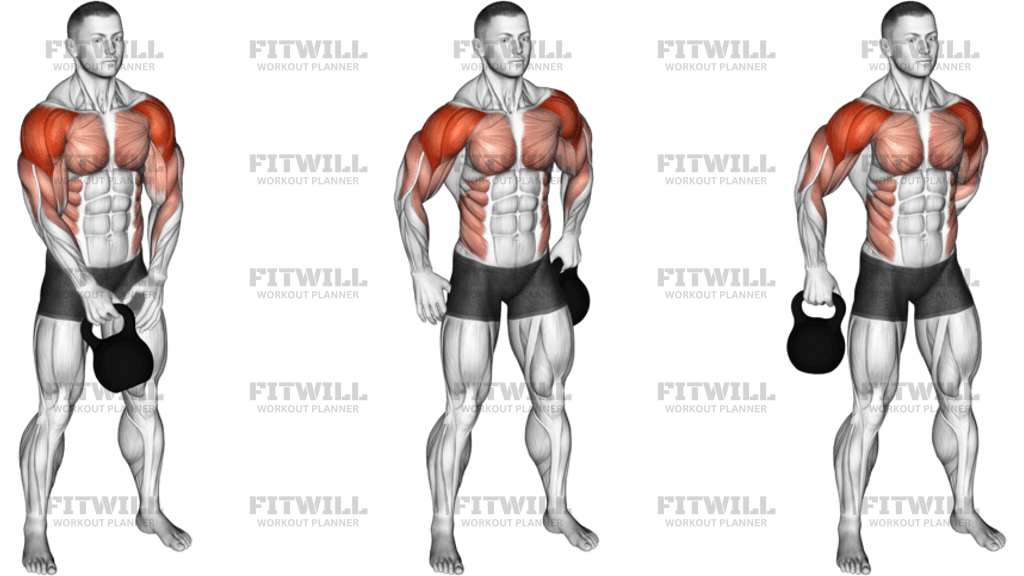
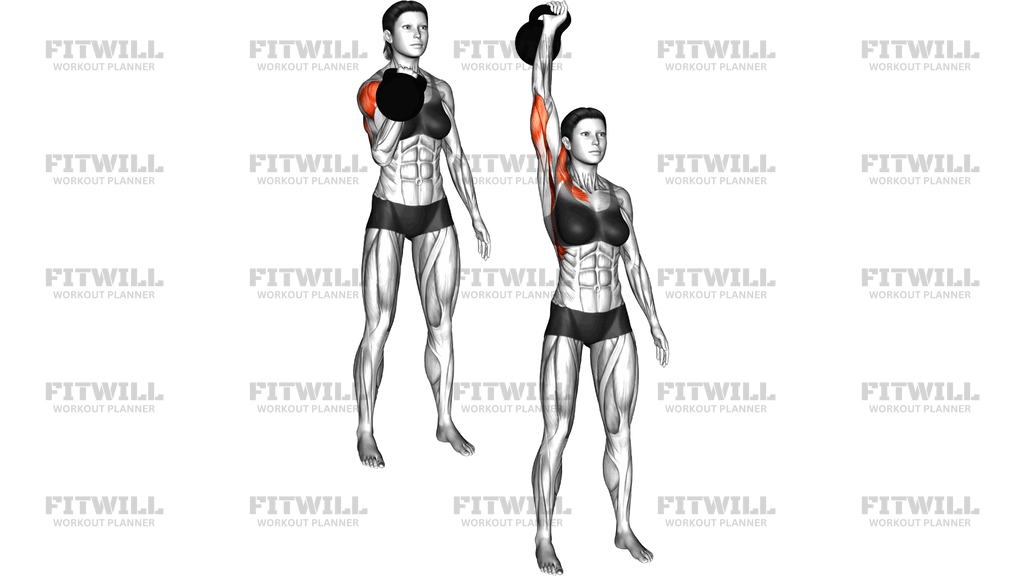
The Kettlebell Arnold Press is a single-arm overhead press that adds the signature Arnold rotation to kettlebell training. You start with the kettlebell in the rack position at your shoulder, then press it overhead while rotating your wrist so your palm faces forward at the top. On the way down, the rotation reverses, bringing the kettlebell back to the rack with your palm facing your body. This turning motion is what separates it from a standard press and gives the front delts a longer, more complete range of work.
Because you work one side at a time, the movement challenges more than just the pressing muscles. Your core has to brace against the offset load, and the standing stance means your legs, glutes, and lower back all contribute to keeping your torso upright. The rotation itself also recruits the rotator cuff and upper back in a way a straight-line press does not, which makes it a useful accessory movement for shoulder health as well as shoulder size.
This exercise suits lifters who already feel comfortable holding a kettlebell in the rack position and pressing overhead. It is popular in kettlebell circuits, general strength programs, and bodybuilding-style shoulder days where the goal is to hit the front delts from a slightly different angle. It can be done bilaterally with two kettlebells for advanced lifters, but the single-arm version shown here is the safest and most practical way to learn the rotation.
Setup matters more here than in most presses. The kettlebell should rest against your forearm with your elbow tucked down and slightly in front of your ribs, not flared out to the side. Your feet stay about hip-width apart, weight spread evenly, and your ribs stacked over your pelvis. If you start with the bell drifting away from your body or your elbow pointing outward, the rotation at the top becomes harder to control and your lower back tends to compensate by arching.
To execute it well, think of the press and the turn happening together as one smooth action: as the kettlebell travels up, your wrist rotates until your knuckles point back and your palm faces forward at lockout. Pause briefly overhead with your bicep near your ear, then reverse the rotation on the descent so the bell settles back into the rack. Keep the weight moderate at first; the rotation demands more wrist and shoulder control than a regular press, and form tends to break down before strength does.
A few practical safety points: choose a kettlebell you can press for clean reps without leaning back, keep your neck relaxed rather than craning under the bell, and stop the set if your shoulder pinches or your wrist feels unstable during the turn. The kettlebell sits outside your wrist rather than on it, so the handle should rest diagonally across the back of your hand, not bent back onto your forearm.
[ Workout Log & Planner ]
Put your next workout in Fitwill
Keep your plan and training log ready when you are.


Instructions
- Stand with your feet about hip-width apart and clean a kettlebell into the rack position on one side, letting the bell rest against the outside of your forearm with your elbow tucked close to your ribs.
- Grip the handle so your palm faces your body and your wrist stays straight, with the handle lying diagonally across the back of your hand rather than bent backward onto your forearm.
- Brace your core and squeeze the glutes on your working side to lock your ribs down over your pelvis before you press.
- Press the kettlebell up and slightly out to the side, rotating your wrist as it rises so your palm turns from facing inward to facing forward.
- At the top, lock your arm out overhead with your bicep close to your ear and your palm facing forward; hold for a brief moment without shrugging the bell higher.
- Reverse the motion by rotating your wrist back as you lower, letting the kettlebell travel down along the same arc it came up.
- Finish the descent by settling the bell back into the rack position, elbow down and close to your body, ready for the next rep.
- Exhale as you press overhead and inhale as you lower the kettlebell back to the rack.
- Complete all reps on one side, then re-grip and switch the kettlebell to the other arm, resetting your stance and brace before starting the second set.
Tips & Tricks
- If the bell tries to pull you sideways at the top, the weight is likely too heavy for the rotation; drop down a size and master the turn before loading up.
- Keep the kettlebell in contact with your forearm during the rack and early press. If it hangs away from your body, your grip is too vertical and your wrist will pay for it.
- Avoid leaning back to finish the press. If your lower back arches as you press, squeeze your glutes harder and think about pressing your ribs down instead of chasing height.
- Do not let your elbow flare straight out to the side at the start. A slight forward tuck keeps the rotation smooth and protects the shoulder capsule.
- Time the rotation with the press rather than turning first and then pressing. Turning too early puts the bell in front of your shoulder and strains the wrist.
- Your standing arm is not idle; let it hang relaxed and use it for balance rather than swinging or resting on your thigh.
- If your shoulder clicks or pinches during the turn, reduce the rotation range slightly and work within a pain-free arc before progressing.
- Breathe in a steady press-lower rhythm instead of holding your breath through multiple reps, especially as the set gets hard.
- Film yourself from the side once in a while; the most common fault, arching back at lockout, is hard to feel but easy to see.
Frequently Asked Questions
Which muscles does the Kettlebell Arnold Press work?
The front shoulders do most of the pressing, with the side shoulders and triceps assisting through the lockout. The rotation brings the rotator cuff and upper back into play, and your core works to keep you upright under the single-sided load.
How is the Kettlebell Arnold Press different from a regular kettlebell overhead press?
In a regular press your palm stays facing forward or stays neutral the whole time. The Arnold version rotates the wrist during the press, so the palm faces your body at the rack and faces forward at the top, giving the front delts a longer working range.
Can beginners do the Kettlebell Arnold Press?
Beginners should first get comfortable with the standard kettlebell press and holding the rack position, then add the rotation with a light bell. If the turn feels shaky at the top, practice it seated without weight to groove the wrist motion first.
Why should I press one arm at a time instead of using two kettlebells?
The single-arm version lets you focus on the rotation, keeps the load manageable, and adds an anti-lean challenge for your core. Two-bell Arnold presses are possible but demand much more wrist and shoulder control, so they are better saved for later.
Should the kettlebell rest on my wrist during the rack position?
No. The bell should sit against the outside of your forearm with the handle lying diagonally across the back of your hand. If the handle bends back onto your wrist, your grip angle is off and pressing will be uncomfortable.
What is the most common mistake with this exercise?
Leaning back and arching the lower back to get the bell overhead, usually because the weight is too heavy for the rotation. Another frequent fault is turning the wrist too early, which pushes the bell forward of the shoulder instead of letting it travel straight up.
Can I do the Kettlebell Arnold Press with dumbbells instead?
Yes, the dumbbell Arnold Press is the classic version and follows the same rotation. The kettlebell adds a rack-position challenge because the mass sits lower on your forearm, which asks more from your wrist and core.
How many sets and reps should I use?
For strength and control, 3 to 4 sets of 5 to 8 reps per arm works well. For muscular endurance in a circuit, go lighter and aim for 10 to 15 reps per side, keeping the rotation crisp on every rep.
Is it safe if my shoulder pinches when I rotate at the top?
Stop the set if you feel pinching. Reduce the weight, limit the rotation to a pain-free range, and make sure your elbow starts tucked rather than flared. Persistent discomfort during the turn is a sign to regress to a neutral-grip press.
Where should the Kettlebell Arnold Press fit in my workout?
Place it after your main heavy pressing work as an accessory for the front delts, or use it as a primary press in a kettlebell-focused session. Either way, do it while your shoulders are fresh enough to control the rotation with good technique.