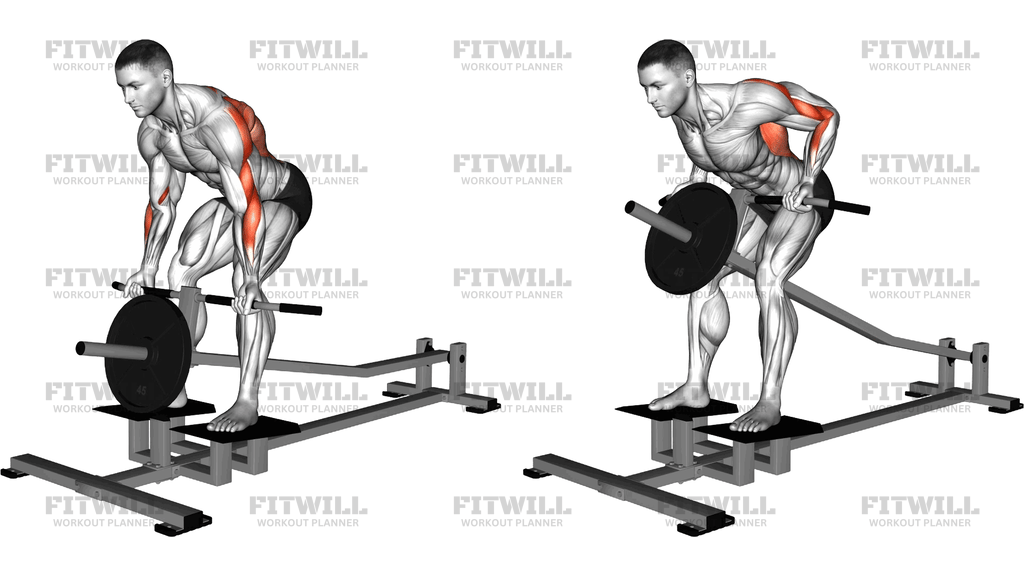
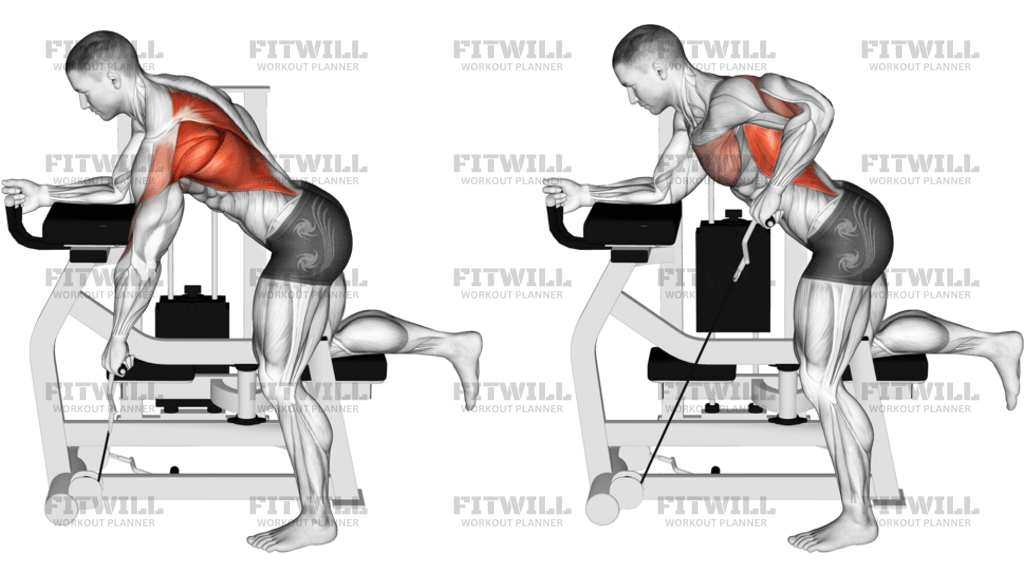
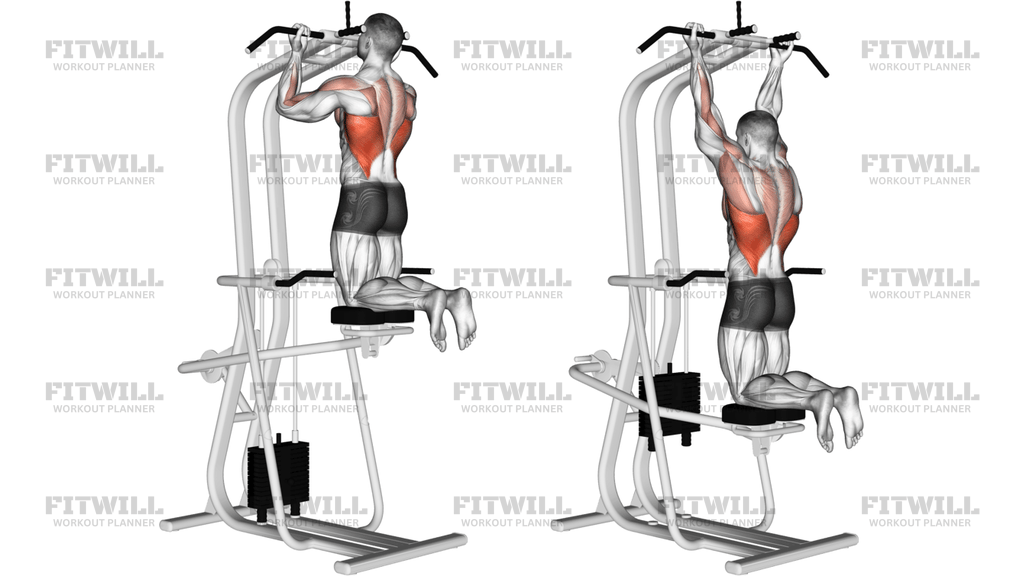
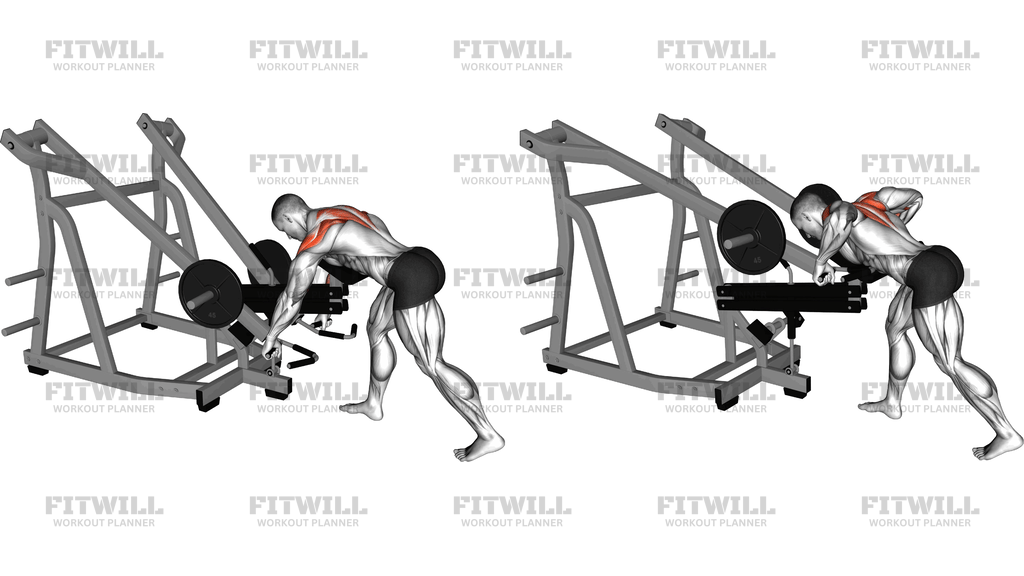
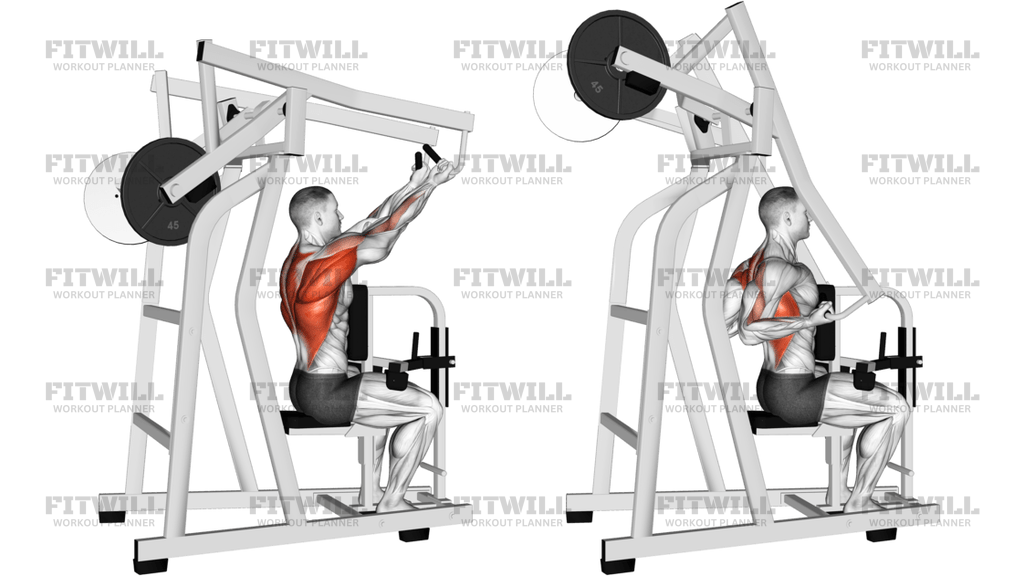
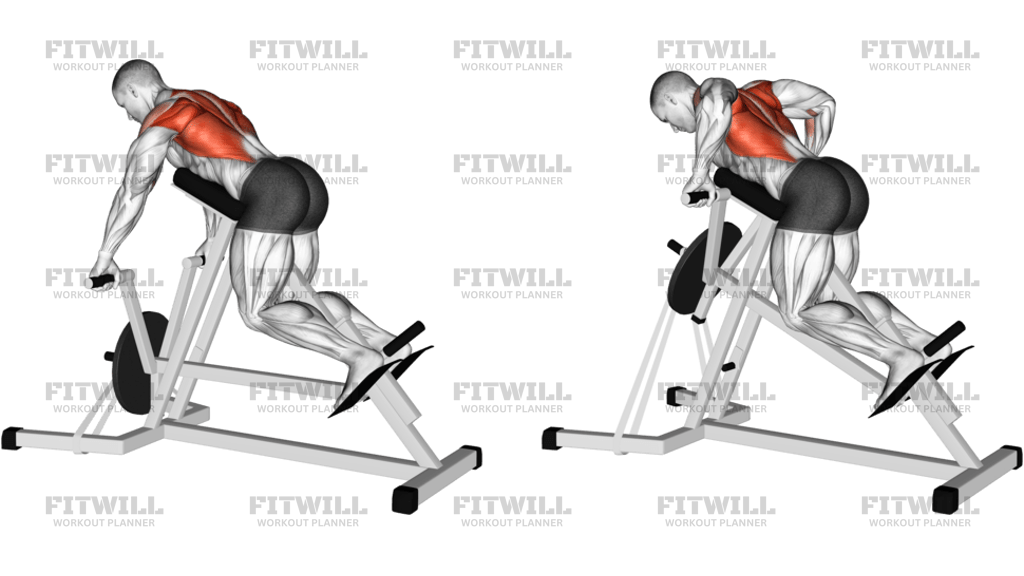
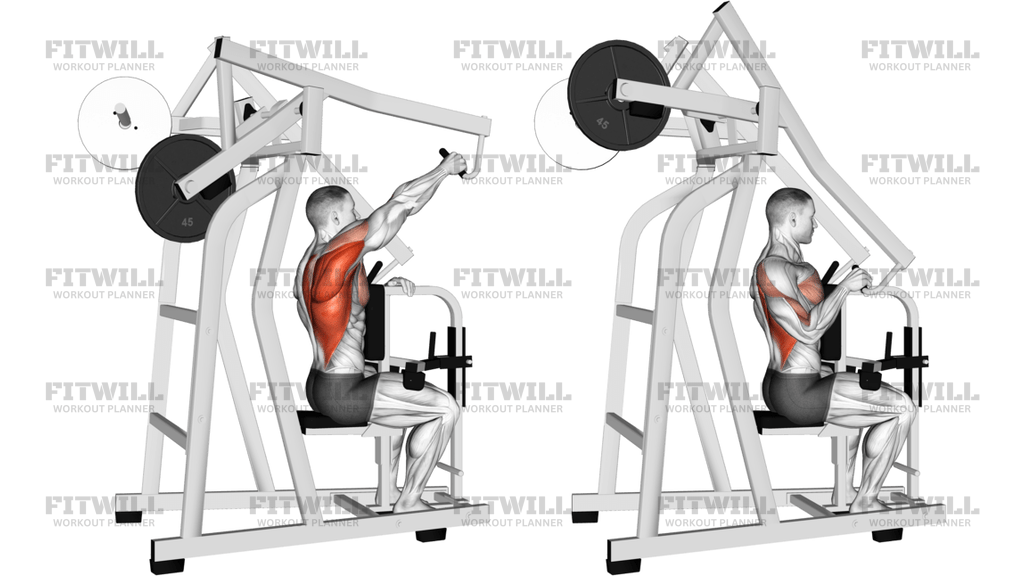
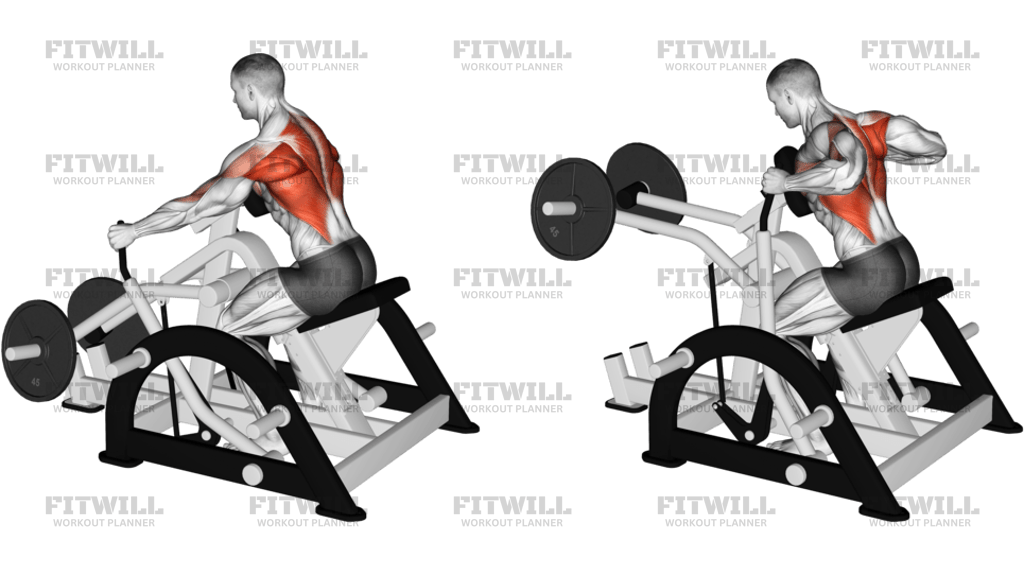
Lever Lying T Bar Row
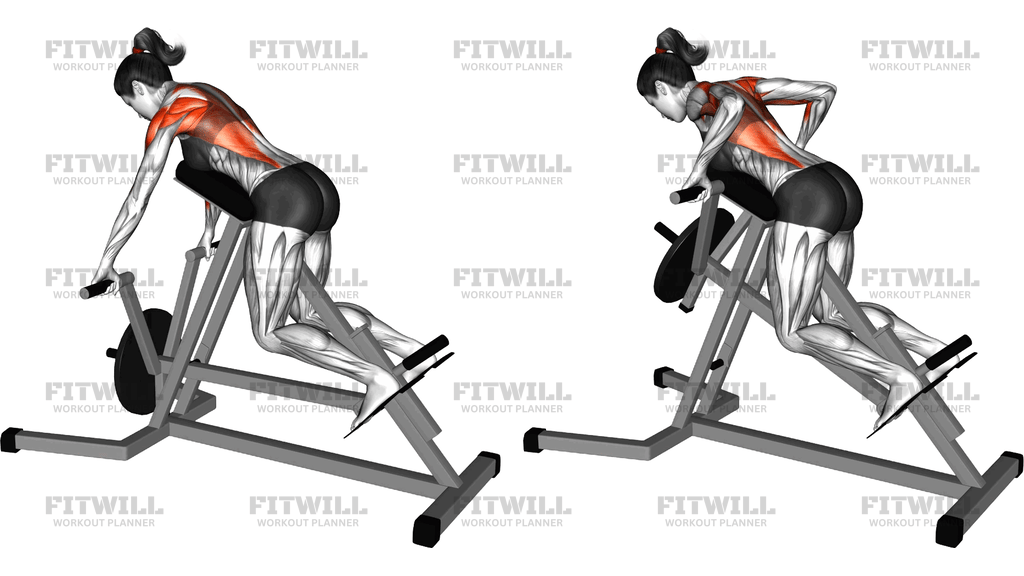
The Lever Lying T Bar Row is a chest-supported row performed on a plate-loaded leverage machine. You position yourself face down on the angled pad with your chest in contact with the support, brace your feet against the rear platform, and pull the handles up toward your sides from a hanging position beneath your shoulders. Because the machine fixes the path of the T-bar handle and your torso is fully supported, the movement isolates the pulling muscles of the back without demanding the trunk stability that a free-weight T-bar row requires.
This exercise primarily builds the lats, rhomboids, and mid-traps, with strong involvement from the rear shoulders and biceps as the handle travels from arm's length up to your ribs. The chest pad removes momentum from the equation: when your torso cannot swing or hyperextend, the back muscles have to do the work, which makes this a very honest way to train horizontal pulling strength.
It is especially useful for people who struggle to keep a neutral spine during bent-over rowing, for lifters recovering from lower back fatigue who still want heavy rowing volume, and for anyone whose free-weight rows turn into half-deadlifts once the weight gets challenging. It also fits well as a secondary back movement after deadlifts or pull-ups, where you can push the upper back hard without stacking more load on the spine.
Setup quality determines everything here. The pad height should place your chest firmly against the support with your arms hanging straight down toward the handles, and your feet should be securely planted so your hips stay pressed into the pad throughout the set. If the pad sits too low or too high, the pulling angle changes and your shoulders or lower back take on stress they were not meant to handle.
To execute it well, pull the handles back toward your lower ribs while keeping your elbows fairly close to your body, squeeze the shoulder blades together at the top without shrugging, and lower the weight under control until your arms are fully extended. Let the shoulders reach slightly forward at the bottom for a full stretch, then start the next rep from there. The leverage arm and plate loading make it easy to make small jumps in resistance, which suits both beginners learning the rowing pattern and advanced lifters chasing volume.
The main practical cautions are simple: never bounce the weight off the bottom by jerking your chest off the pad, and do not let the plates crash down between reps. Keep each rep smooth, keep your chest in contact with the pad from start to finish, and choose a load you can lower slowly. If your wrists bend backward or your elbows flare wide at the top, the weight is probably too heavy for your current rowing strength.
[ Workout Log & Planner ]
Put your next workout in Fitwill
Keep your plan and training log ready when you are.


Instructions
- Set the chest pad so that when you lean onto the machine, your upper chest and sternum rest firmly on the pad and your arms can hang straight down toward the handles.
- Place your feet on the rear foot platform with your knees slightly bent, then press your hips and chest into the pad so your torso is fully supported before gripping anything.
- Take a firm overhand grip on the T-bar handles, one in each hand, with your hands roughly under your shoulders and your arms hanging fully extended.
- Brace your abdominal muscles and keep the back of your neck long, with your gaze down toward the floor so your head stays in line with your spine.
- Pull the handles up and back toward your lower ribs, driving your elbows close to your body rather than flaring them out wide.
- At the top of the pull, squeeze your shoulder blades together and pause briefly, keeping your chest glued to the pad.
- Lower the handles slowly until your arms are fully extended and your shoulders reach slightly forward at the bottom, without letting the weights drop.
- Exhale as you pull the weight up, and inhale as you lower it back to the starting stretch.
- Complete all repetitions with continuous tension, then release the handles only after the final rep is fully lowered and the weight stack or plates are at rest.
Tips & Tricks
- If your chest pops off the pad at the start of each rep, the load is too heavy or you are yanking from the bottom — drop the weight and initiate each pull by moving the shoulder blades first.
- Keep the elbow path close to your ribs; pulling with wide, flared elbows shifts work away from the lats and toward the shoulder joints.
- Avoid shrugging at the top of the rep. If your shoulders climb toward your ears, consciously pull the elbows down and back instead of lifting the hands.
- Let the shoulders protract slightly at full extension to get a complete lat stretch, but do not let the plates slam the bottom position.
- Grip the handles with your wrists stacked straight over your forearms; bent-back wrists usually mean you are pulling with the hands instead of the elbows.
- Because the leverage arm moves fast once the plates start falling, spend two to three seconds on every lowering phase — this is where most of the upper back growth stimulus hides on this machine.
- Check the pad height before adding weight: if your shoulders feel pinched at the stretch or your lower back arches hard, adjust the pad so the handles sit level with your mid-chest at full hang.
- Keep a slight bend in the knees and your feet pressed flat on the platform so your hips stay anchored and do not slide up the pad during heavy reps.
- If your biceps fatigue before your back, cue yourself to lead each pull with the elbows, imagining the hands as hooks.
Frequently Asked Questions
Which muscles does the Lever Lying T Bar Row work hardest?
The lats do most of the primary pulling work, supported heavily by the rhomboids and mid-traps as the shoulder blades retract. The rear shoulders and biceps assist throughout, and the erector spinae work lightly to hold your posture against the pad.
How is the Lever Lying T Bar Row different from a regular bent-over T-bar row?
Your chest is fully supported on the pad, which removes your lower back and legs from the balance equation. That means the upper back gets loaded directly and you cannot use body english to move a weight that is too heavy.
Is this exercise suitable for beginners?
Yes, and it is actually one of the friendliest rowing variations to learn because the machine controls the path and supports the torso. Start light, learn to pull with the elbows, and only add plates once the movement feels smooth.
Should my elbows point out wide or stay tucked during the pull?
Keep them relatively close to your body and pull the handles toward your lower ribs to emphasize the lats. A wider elbow flare turns the movement more into a rear-shoulder and upper-trap exercise, which is fine but changes the focus.
Why does my lower back still get sore on a chest-supported row machine?
The most common cause is lifting the chest off the pad to cheat the weight up, which throws the load onto the lumbar spine. Reduce the weight, keep your sternum in contact with the pad for every rep, and make sure the pad is not set so low that you are lifting against it.
Can I replace the Lever Lying T Bar Row with dumbbell rows?
Yes. A chest-supported dumbbell row on an incline bench is the closest substitute because it keeps the torso supported. One-arm dumbbell rows and seated cable rows also work if a leverage row machine is not available.
How heavy should I go on this machine?
Choose a load you can pull all the way to your ribs and lower under control for your target rep range. Because the leverage arm accelerates quickly on the way down, loads that feel fine on the pull often get sloppy on the lowering phase, so err slightly lighter.
How many sets and reps should I do?
For general back development, 3 to 4 sets of 8 to 12 reps works well, or 10 to 15 reps with a controlled tempo if you are using it as a secondary movement after heavier pulling like deadlifts or pull-ups.
Do I need to keep my chest on the pad the entire set?
Yes. Contact between your chest and the pad is what makes this exercise valuable — it locks out momentum and protects your lower back. If you cannot maintain contact, the set is over or the weight is too heavy.
Is it safe to do this exercise every back workout?
It is a low-stress movement for the spine, so it can appear frequently in a training week. Just monitor how your elbows and shoulders feel over time, since repeated heavy horizontal pulling can irritate those joints if recovery is neglected.