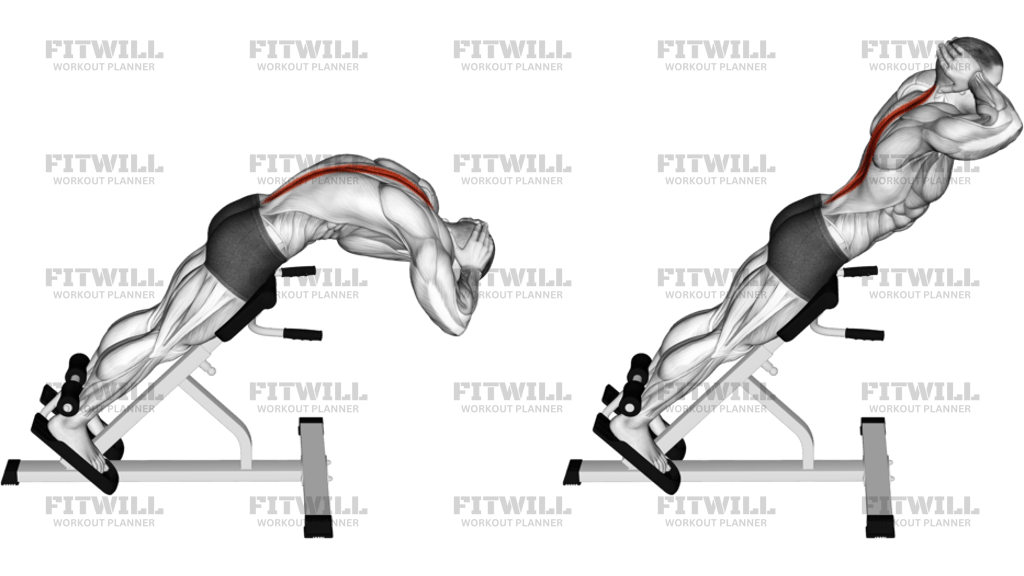
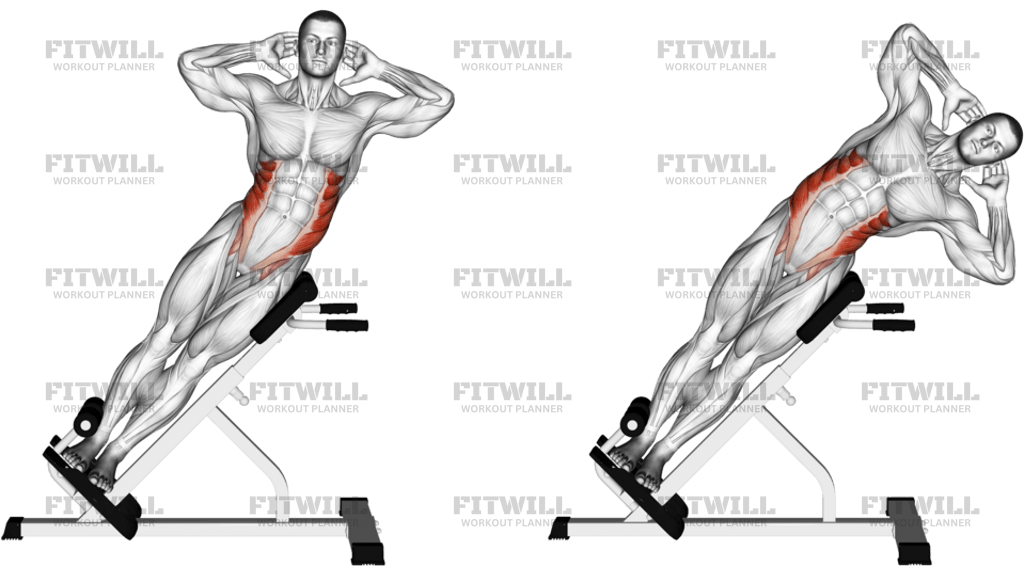
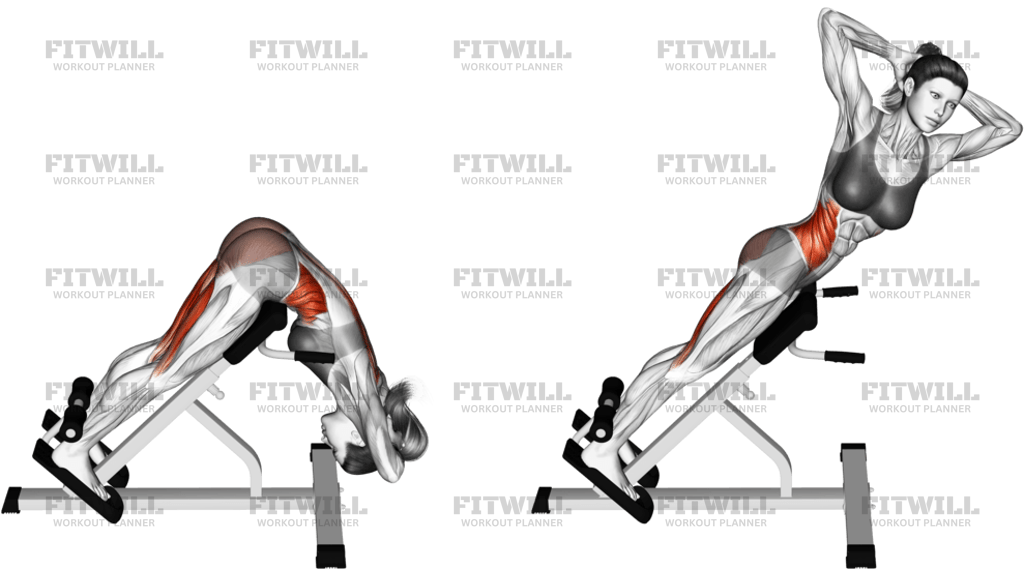
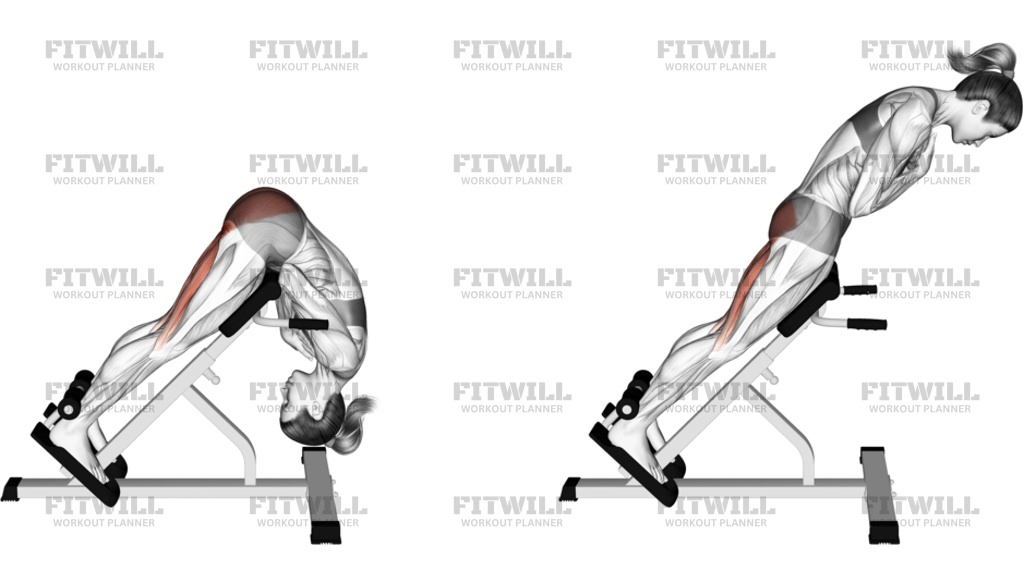
Weighted Plate Hyperextension (Version 2)
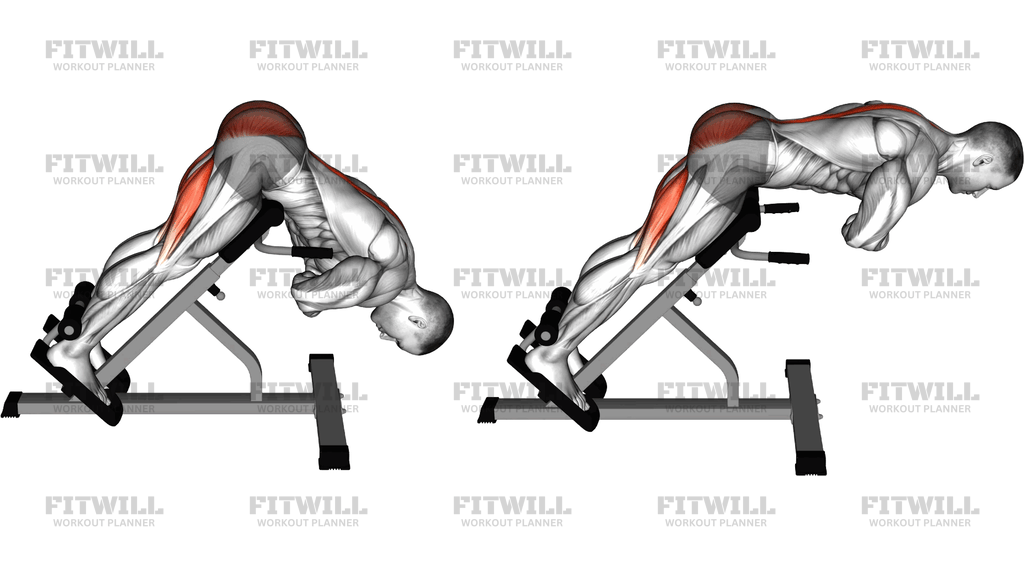
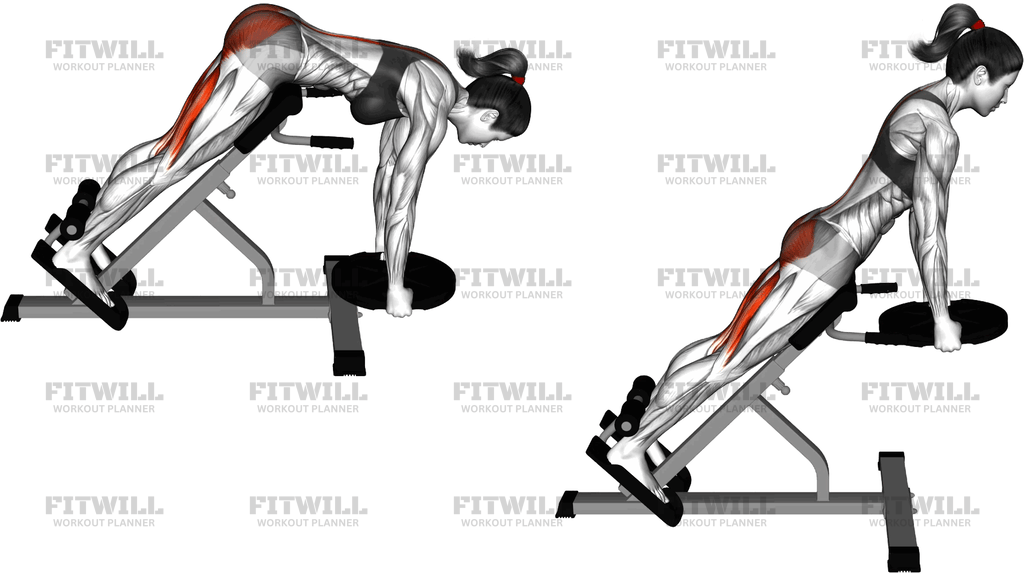
Weighted Plate Hyperextension (Version 2) is a loaded back extension performed on a Roman chair or 45-degree hyperextension bench. Your ankles are hooked under the foot pads, your thighs rest against the top pad, and you hold a weight plate against your chest with both hands as you hinge up from a bent-forward position until your body forms a straight line from head to heels. Because the plate rides right against your torso, the load stays close to the hinge point of the hips, which makes the movement feel stable and controlled even with meaningful weight.
The main work comes from the posterior chain. The glutes and hamstrings drive the hip extension, while the erector spinae along the lower back work hard to control and stabilize the spine through the arc. Holding the plate also quietly trains the grip, forearms, and upper back, since your arms must keep the plate pinned to your chest for every rep without letting it drift or pull you forward.
This version suits lifters who have already mastered bodyweight hyperextensions and want progressive overload without needing a barbell or setup changes. It is a common choice for building a more resilient lower back, adding size and strength to the glutes and hamstrings, and supporting big lifts like squats and deadlifts. Because the effort is concentrated at the hips and spine, it fits well as an accessory movement on lower body or pull days rather than as the main lift.
Setup details matter more here than they do on most machine work. Position the top pad so it sits just below your hip crease: too high and your thighs cannot fully hinge, too low and your lower back takes on positioning work it should not. The foot pad height should let you keep a slight bend in the knees while your heels stay locked down. Once those two contact points are right, the plate position against your chest is what keeps the load path predictable.
Execution should feel like one smooth hinge, not a sit-up. Lower yourself under control until you feel a mild stretch through the hamstrings, then squeeze the glutes to rise until your ears, shoulders, hips, and ankles line up. Going a little past parallel at the bottom is fine for experienced lifters, but avoid snapping into a deep drop or hyperextending hard at the top. Breathe in on the way down, exhale as you drive up, and reset your brace before each rep so the added plate never nudges you into rounding.
If you are new to the movement, earn it first: spend a few weeks on unweighted reps, then add a light plate and keep the range honest. Stop the set the moment you feel your lower back rounding or your tempo getting sloppy, since fatigue at the end of a hyperextension set tends to show up as jerking rather than clean hinging.
[ Workout Log & Planner ]
Put your next workout in Fitwill
Keep your plan and training log ready when you are.


Instructions
- Set the top pad of the Roman chair just below your hip crease and adjust the foot plate so your ankles hook securely under the pads with a slight bend in the knees.
- Hold a weight plate flat against your chest with both hands, fingers spread around the edge, and press it in so it cannot slide during the set.
- Drape your thighs over the top pad, cross your ankles or place them firmly on the foot plate, and let your torso hang forward over the bench.
- Brace your core, tuck your chin slightly, and keep your shoulders pulled back so the plate stays glued to your sternum.
- Inhale, then lower your torso by hinging at the hips until you feel a light stretch through the hamstrings, keeping the spine long rather than rounded.
- Exhale and drive your hips into the pad, squeezing the glutes to raise your torso until your head, shoulders, hips, and heels form a straight line.
- Pause briefly at the top without leaning back past neutral or throwing the chest upward.
- Lower slowly under the same control, resisting the plate's pull on the way down instead of free-falling.
- Breathe steadily throughout, resetting your brace at the bottom of each rep.
- Finish the set by standing up first, then setting the plate down on the bench or floor rather than dropping it.
Tips & Tricks
- If the plate wants to slide down your chest as you descend, squeeze it harder against your sternum with your forearms rather than letting your wrists carry it alone.
- Rounding the lower back at the bottom is the most common fault once weight is added; cut the range a few degrees shallower instead of chasing depth with a rounded spine.
- Jerking the torso up with a chest thrust usually means the plate is too heavy; the glutes, not a bounce, should finish every rep.
- A pad set across your stomach instead of at the hip crease will choke your hip hinge and turn the rep into a strain on the lower back, so recheck pad height before adding load.
- Keep a slight knee bend throughout; locking the knees out completely shifts tension off the hamstrings and onto the knee joint at the bottom.
- Start with a light plate (5-10 lb / 2.5-5 kg) for your first weighted sessions and only progress once every rep looks identical to your bodyweight reps.
- If your grip fatigues before your posterior chain does, the plate is drifting away from your chest; pin it with crossed forearms so the forearms, not the fingers, take the load.
- Avoid holding your breath through the descent, which is easy to do when a plate is pressed to your chest; exhale on the drive up to keep the brace manageable.
- Do not turn the top of the rep into a back arch contest; stopping at a neutral straight line keeps the work on the glutes and hamstrings where it belongs.
Frequently Asked Questions
Which muscles does the Weighted Plate Hyperextension work?
The glutes and hamstrings do the primary hip extension work, while the erector spinae of the lower back stabilize and control the spine. Holding the plate also lightly challenges the forearms, grip, and upper back.
How is the Weighted Plate Hyperextension different from a bodyweight back extension?
Holding a plate against your chest adds direct resistance to the same hinge pattern, letting you progress beyond what bodyweight reps can provide. The load stays close to your torso, so the movement pattern itself stays nearly identical.
Where exactly should I hold the plate during the exercise?
Press the plate flat against your upper chest or sternum with both hands and keep it there for the whole set. Letting it slide toward your stomach changes your balance and can pull your spine out of position.
Is the Weighted Plate Hyperextension safe for beginners?
Beginners should build up with unweighted hyperextensions first, since the loaded version demands solid hinge control and bracing. Once 15-20 clean bodyweight reps feel easy, start with a very light plate.
How far down should I lower my torso on each rep?
Lower until you feel a mild stretch through the hamstrings while keeping a long, neutral spine. With a plate on your chest, going dramatically past parallel offers little benefit and increases the rounding risk.
Should I hyperextend or arch hard at the top of the movement?
No, finish when your head, shoulders, hips, and heels line up in a straight line. Squeezing the glutes to reach neutral is enough; forcefully arching the lower back under load adds stress without extra muscle work.
What should I do if my lower back feels strained instead of my glutes?
Check that the pad sits below your hip crease, reduce the plate weight, and focus on driving the hips into the pad rather than lifting with the chest. If discomfort persists, return to bodyweight reps and rebuild the pattern.
What can I use instead of a plate if my gym has none available?
A dumbbell held in the same chest position works well, and a kettlebell hugged to the chest is another common substitute. All three load the same hinge; the plate simply sits flattest against the torso.
How many reps and sets of the Weighted Plate Hyperextension should I do?
Because it is an accessory movement, 2-4 sets of 8-15 controlled reps works well for most lifters. Keep the tempo smooth, and stop the set when your form changes rather than pushing to a hard grind.