Dumbbell Lying Neutral Grip Row On Rack
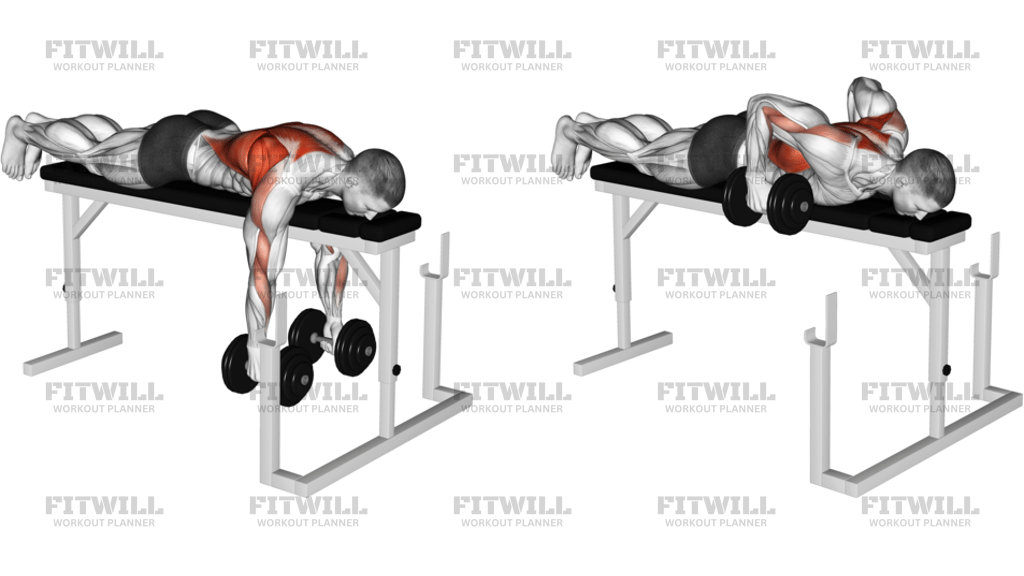
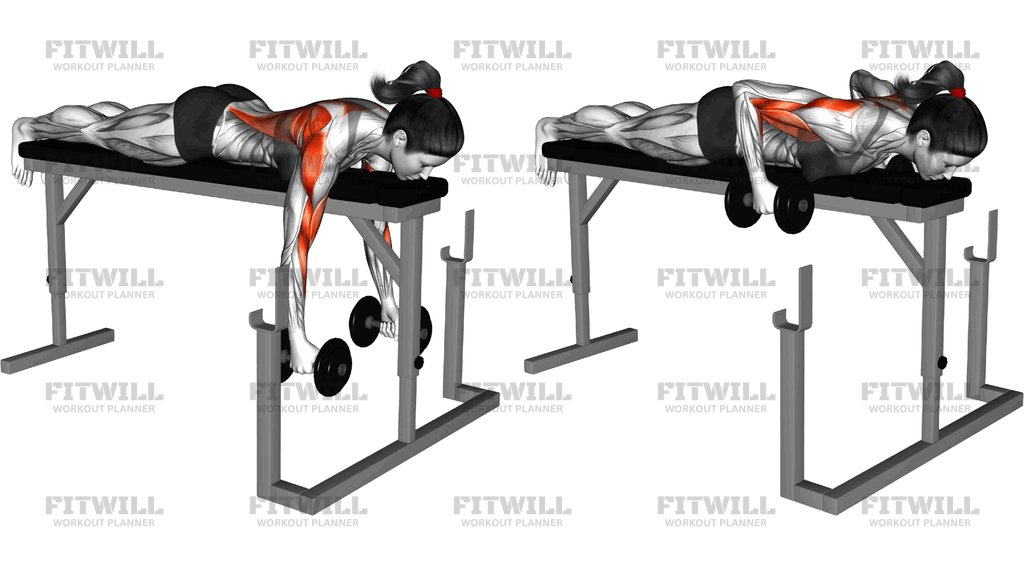
The Dumbbell Lying Neutral Grip Row On Rack is a rowing variation performed face down on a flat bench positioned over or beside a rack, with a dumbbell held in each hand using a neutral, palms-facing grip. Because your torso is fully supported by the bench, your lower back and hips never have to hold you in a bent-over position, which lets you concentrate entirely on pulling the weights up toward your ribs. The neutral grip places your hands so the palms face each other, a position many lifters find more comfortable on the shoulders than a pronated grip.
This exercise is a strong choice for anyone who wants a thorough upper back and lat workout without the lower back fatigue that comes from unsupported bent-over rows. It suits beginners learning to row with a stable torso, intermediate lifters chasing volume on pulling day, and anyone coming back from lower back issues who still needs horizontal pulling in their program.
The main work is done by the lats as they drive the elbows down and back, supported heavily by the rhomboids and mid traps as the shoulder blades retract. The rear delts assist at the top of the pull, the biceps bend the elbows, and the forearms work to hold onto the dumbbells. Keeping the chest in contact with the bench prevents momentum from taking over, which is exactly what makes this version so honest about how much weight you can actually control.
Setup matters more here than in most rows. The bench should sit so your head and chest are supported and your arms hang freely toward the floor without the dumbbells touching the ground at full extension. If the bench is too high or positioned too far back, your range gets cut short or your shoulders get pulled forward at the bottom. Take a moment to position yourself so the dumbbells can travel a clean vertical path directly under your shoulders.
To perform it well, pull your elbows up and back toward your hips, letting the shoulder blades squeeze together at the top, then lower the dumbbells under control until your arms are fully extended. Avoid yanking the weights or lifting your chest off the pad to gain extra height. If your torso pops up, the weight is too heavy.
A practical safety point: since you are lying face down with weights in hand, set the dumbbells within easy reach before you lie down, and have a partner hand them to you if they are heavy. Keep your neck neutral by resting your forehead lightly toward the pad rather than craning upward.
[ Workout Log & Planner ]
Put your next workout in Fitwill
Keep your plan and training log ready when you are.


Instructions
- Set a flat bench so that when you lie face down, your head and chest are supported and your arms can hang straight down toward the floor without the dumbbells hitting the ground.
- Place a dumbbell on each side of the bench within arm's reach, then lie face down with your chest and abdomen on the pad, legs extended behind you, and feet relaxed off the end of the bench.
- Grip both dumbbells with a neutral grip, palms facing each other, and let your arms hang fully extended under your shoulders.
- Lightly brace your abdominal muscles and rest your forehead toward the pad so your neck stays in line with your spine.
- Exhale and pull both dumbbells up by driving your elbows toward your hips, keeping them close to your sides rather than flaring them wide.
- At the top, squeeze your shoulder blades together so the dumbbells end up near your lower ribs, and hold for a brief pause.
- Inhale and lower the dumbbells slowly until your arms are fully extended again, feeling a gentle stretch across your upper back before the next rep.
- Keep your chest in contact with the bench throughout every rep; if it lifts, stop and reduce the weight.
- Complete your set, then carefully sit up and set the dumbbells on the floor before standing.
Tips & Tricks
- A common mistake is turning this into a shrug by pulling only with the upper traps. Focus on driving the elbows toward your hips so the lats and rhomboids do the work instead of your shoulders creeping up to your ears.
- If your chest lifts off the pad at the top of each rep, the dumbbells are too heavy. The bench contact is what keeps this row strict, so honor it.
- Check your head position: looking up mid-set arches your neck and tightens your upper traps. Keep your forehead hovering just above or resting lightly against the pad.
- Keep the elbows around 30 to 45 degrees from your torso. Fully flaring them to 90 degrees shifts the emphasis toward the rear delts and takes tension off the lats the neutral grip is meant to target.
- Lower the dumbbells all the way down each rep. Half reps from the top cut off the stretched position where the lats and mid back get most of their benefit.
- Grip the dumbbells as far back into the fingers as you can comfortably manage. A death grip on the handles fatigues your forearms before your back is done.
- If the dumbbells touch the floor at the bottom of the stretch, reposition the bench higher or use a slightly elevated setup so your arms can hang freely.
- Squeeze your glutes lightly to keep your legs from swinging. Idle leg movement usually means the core has gone quiet and momentum is leaking into the pull.
Frequently Asked Questions
Which muscles does the Dumbbell Lying Neutral Grip Row On Rack work?
The lats are the primary movers, with strong assistance from the rhomboids, mid traps, and rear delts. The biceps and forearms handle the elbow bending and grip demands.
Why use a neutral grip instead of an overhand grip for this row?
With palms facing each other, the shoulders sit in a more natural position and the elbows stay close to the body, which many lifters find easier on the shoulder joints while keeping the lats heavily involved.
Is the Dumbbell Lying Neutral Grip Row On Rack good for beginners?
Yes. The bench supports your entire torso, so beginners can learn the rowing pattern without worrying about keeping a bent-over position stable. Start light and focus on feeling the shoulder blades retract.
What is the most common mistake with this exercise?
Lifting the chest off the bench to raise the dumbbells higher. This shifts work away from the upper back and turns the set into a momentum-driven pull, so drop the weight if it happens.
How should I get the dumbbells into position since I am lying face down?
Set both dumbbells on the floor or on rack hooks within arm's reach before you lie down, or have a partner hand them to you once you are set. Never twist sideways with a heavy dumbbell while lying on the bench.
How does this compare to a regular bent-over dumbbell row?
The supported position removes the lower back and hip demands of the bent-over row, so you can fatigue your upper back without your spinal erectors giving out first. The trade-off is less core involvement.
How heavy should I go on the Dumbbell Lying Neutral Grip Row On Rack?
Choose a weight you can pull to your ribs with your chest staying glued to the pad and a controlled two-second lowering phase. If your torso moves or your elbows swing, the dumbbells are too heavy.
Can I substitute this exercise if I do not have a bench over a rack?
A standard flat bench works if you can position it so your arms hang clear of the floor. Incline bench dumbbell rows or chest-supported machine rows are reasonable alternatives that keep the torso supported.
How many sets and reps should I do?
Two to four sets of 8 to 15 reps fits most goals. The supported setup makes this a good candidate for moderate-to-high volume since fatigue shows up in your back rather than your posture.