Dumbbell Hammer Grip Incline Bench Two Arm Row
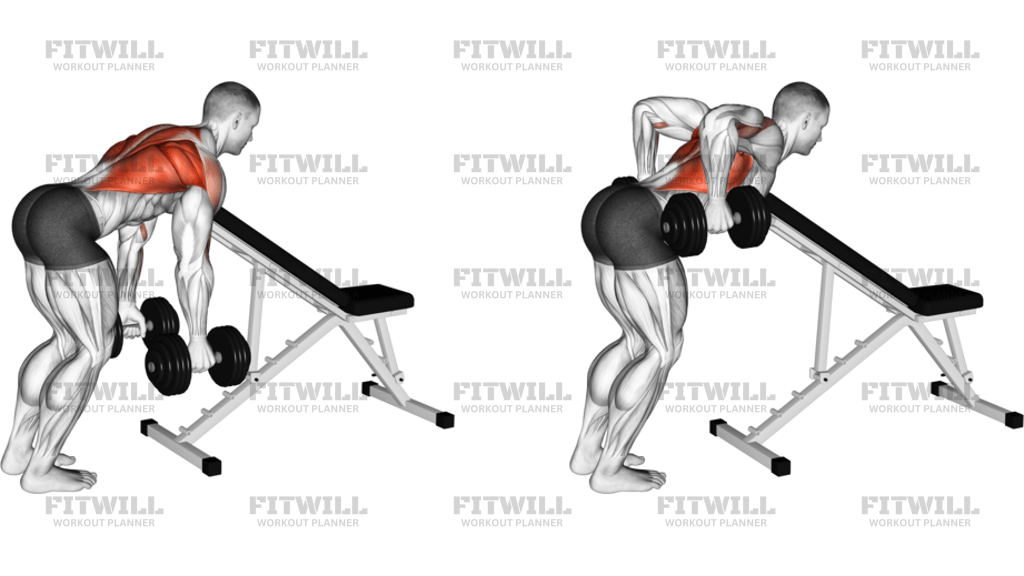
Dumbbell Hammer Grip Incline Bench Two Arm Row is a chest-supported rowing exercise that uses an incline bench and two dumbbells to train the back with a neutral grip. The setup matters because the bench removes most of the body swing that can turn a row into a shrug or a hip drive. With your chest supported, the lats, upper back, rear shoulders, biceps, and forearms can do the work while your torso stays quiet.
The hammer grip changes the line of pull compared with a pronated row. Palms facing each other usually feels friendlier on the shoulders and wrists, and it often makes it easier to pull the elbows closer to the ribs. That makes Dumbbell Hammer Grip Incline Bench Two Arm Row useful for lifters who want strict upper-back work, better lat engagement, or a rowing variation that reduces cheating.
A good bench angle is usually moderate rather than very steep, because the goal is to let the dumbbells hang freely while your chest stays glued to the pad. Once you are set, pull the weights in a smooth arc toward your lower ribs or upper waist, then lower them until the arms are long again without losing control of the shoulder blades. The movement should feel powerful but clean, not explosive or jerky.
Because the torso is supported, this row is often useful in back-focused strength sessions, accessory blocks after a big press or hinge lift, and hypertrophy work when you want to limit lower-back fatigue. It is also a practical option for people who struggle to keep a flat back during bent-over rows. The safer version of hard work here comes from strict setup, a stable bench, and a load you can lower slowly without letting the shoulders roll forward.
If the dumbbells drift toward your chest instead of your ribs, or if your elbows flare wide and your traps take over, the set usually becomes more of an upper-back shrug than a lat row. Keep the neck long, keep the chest on the bench, and finish each rep by squeezing the shoulder blades without losing the neutral grip. Dumbbell Hammer Grip Incline Bench Two Arm Row should feel controlled from the first pull to the last lowering phase.
[ Workout Log & Planner ]
Put your next workout in Fitwill
Keep your plan and training log ready when you are.


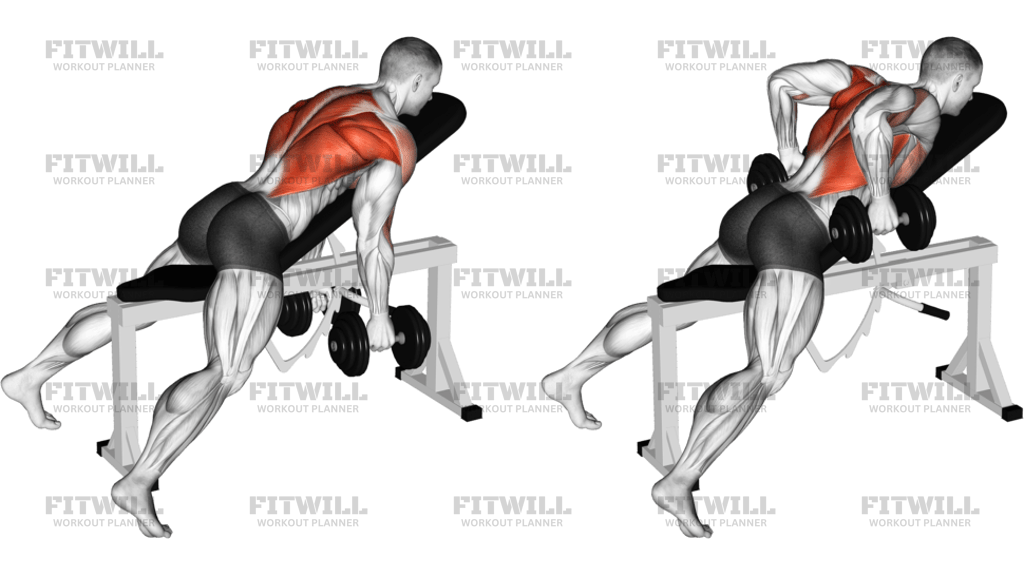
Instructions
- Set an incline bench to a moderate angle and place two dumbbells on the floor or at the sides of the bench.
- Lie chest-down on the bench with your sternum and upper abdomen supported, feet planted wide for balance.
- Reach down and hold the dumbbells with a neutral hammer grip, palms facing each other and arms hanging straight under your shoulders.
- Set your shoulder blades down and back lightly so the chest stays in contact with the pad before the first rep.
- Exhale, brace your midsection, and row both dumbbells up in a smooth arc toward your lower ribs or upper waist.
- Keep your elbows close to your body and stop the pull when the upper arms are in line with your torso or slightly behind it.
- Pause briefly at the top and squeeze the back without shrugging your shoulders toward your ears.
- Lower the dumbbells slowly until your arms are long again and your shoulders stay controlled instead of reaching forward.
- Repeat for the planned reps, then lower both weights to the floor or bench sides before standing up.
Tips & Tricks
- A moderate bench angle usually works better than a steep one because it lets the dumbbells travel toward the ribs instead of turning the movement into a rear-delt shrug.
- If your chest lifts off the bench, the load is too heavy or the row is too aggressive; keep the sternum pinned to the pad.
- Think about driving the elbows back and slightly down, not just lifting the hands.
- Keep the wrists stacked over the dumbbells so the neutral grip stays strong instead of bending back at the wrist.
- Let the shoulder blades glide forward at the bottom, but do not lose control or collapse into the front of the shoulders.
- Use a lighter weight if the dumbbells start touching the bench or drifting wide away from the torso.
- A brief squeeze at the top helps the lats and mid-back work without needing to swing the body.
- If your neck tightens up, look down at the bench and keep the head in line with the spine rather than craning forward.
- Straps can help if grip fails before your back does, especially on higher-rep sets.
- Stop the set when the pull turns into a shrug or the lowering phase gets noisy and uncontrolled.
Frequently Asked Questions
What muscles does Dumbbell Hammer Grip Incline Bench Two Arm Row train most?
It primarily targets the lats, with the rhomboids, mid traps, rear delts, biceps, and forearms helping on every rep.
Why use a hammer grip on Dumbbell Hammer Grip Incline Bench Two Arm Row?
The neutral grip usually feels easier on the shoulders and wrists while helping you keep the elbows tucked and the pull directed toward the ribs.
How steep should the incline bench be for this row?
A moderate incline is usually best. Too steep and the movement turns into more of a shrug; too flat and the dumbbells may hit the floor or force a less comfortable arm path.
Should my chest stay on the bench the whole time?
Yes. The chest support is what makes Dumbbell Hammer Grip Incline Bench Two Arm Row strict, so keep contact with the pad instead of lifting into the pull.
Where should I pull the dumbbells on each rep?
Pull toward the lower ribs or upper waist. If you pull too high toward the chest, the elbows flare and the upper traps tend to take over.
Can beginners do Dumbbell Hammer Grip Incline Bench Two Arm Row?
Yes. The bench support makes it easier to learn than a free bent-over row, especially if you start light and practice the top squeeze without shrugging.
What if my shoulders feel crowded at the bottom?
Shorten the range slightly and keep the shoulders from dumping forward. You want a controlled stretch, not a hard tug in the front of the joint.
Is this better than a bent-over dumbbell row?
It is better when you want to remove lower-back fatigue and make the back do the work more cleanly. A bent-over row is still useful if you also want more trunk demand.