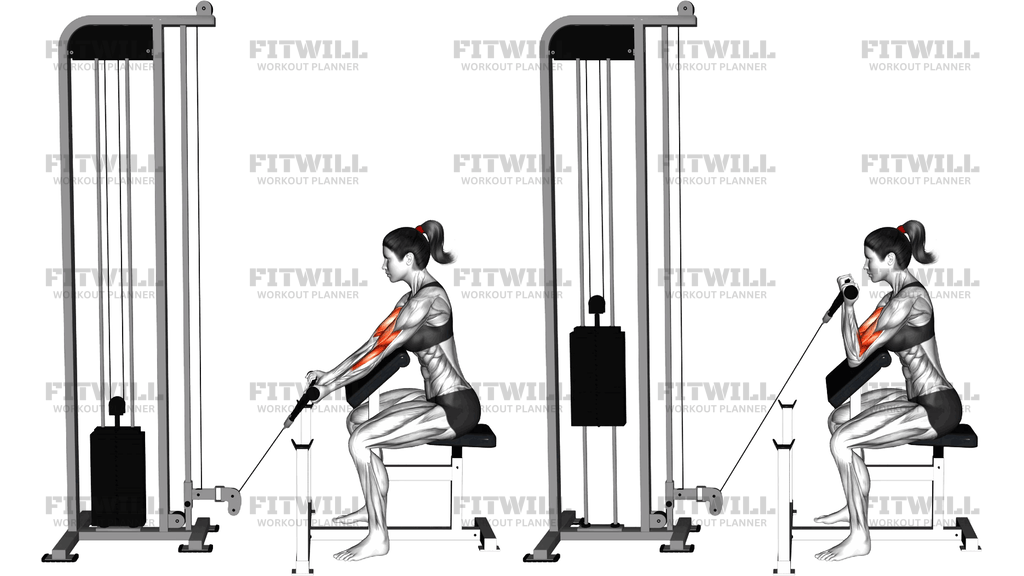
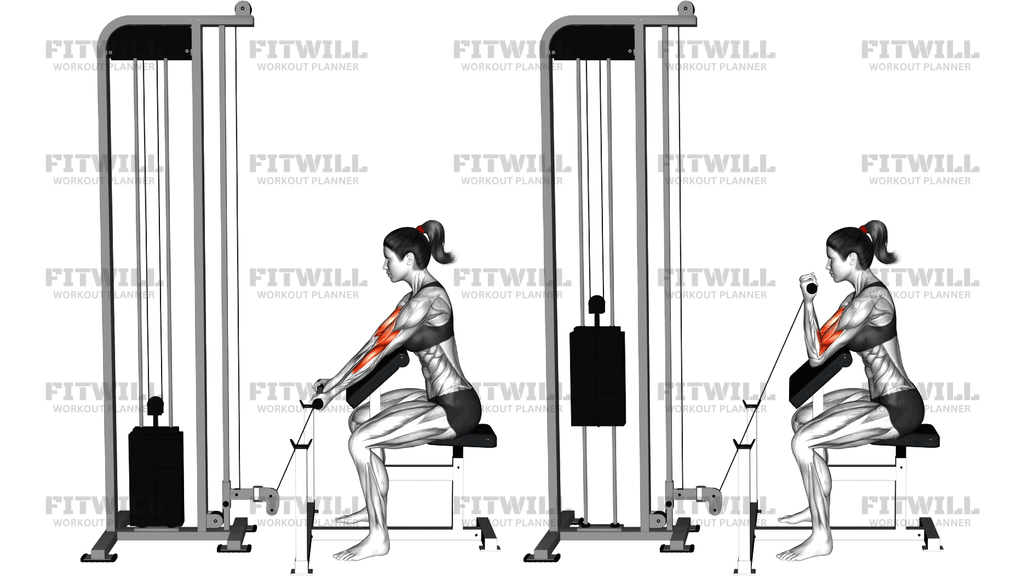
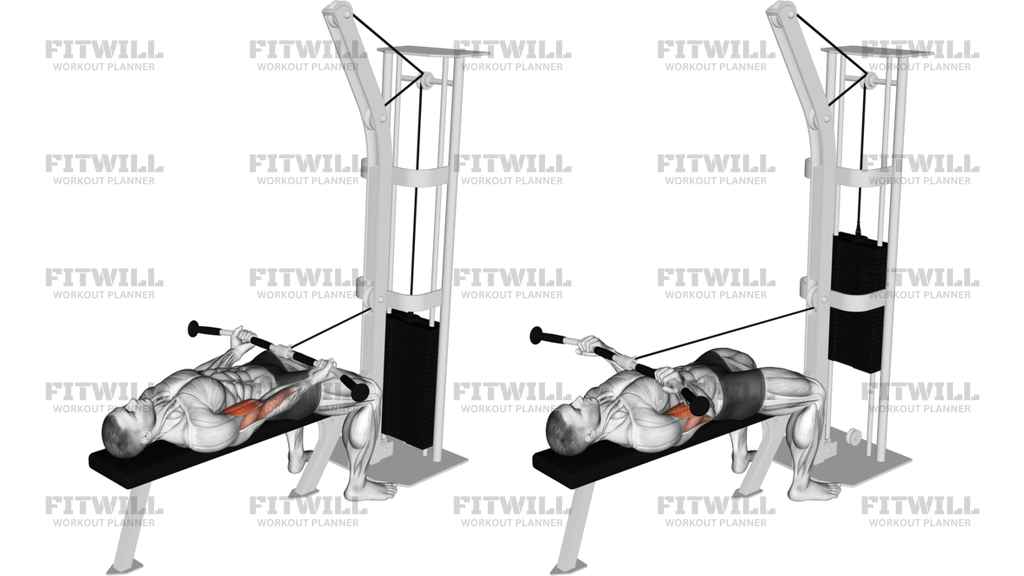
Cable Drag Curl
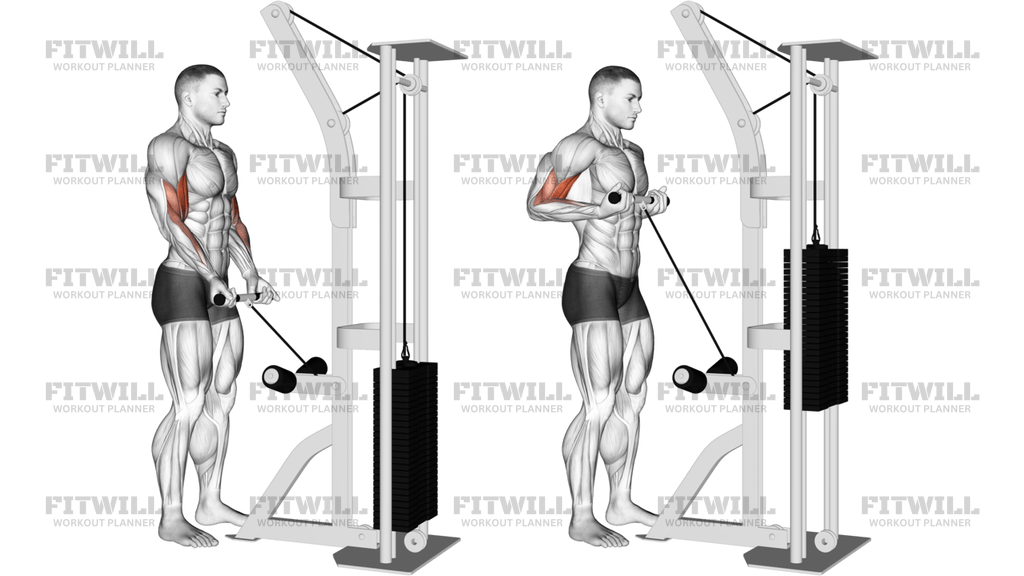
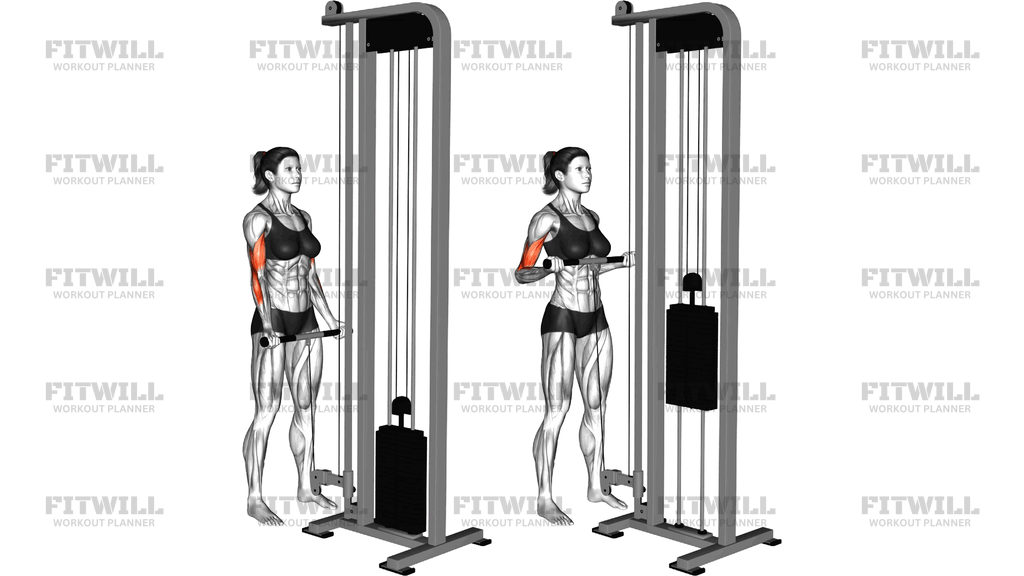
The Cable Drag Curl is a biceps curl variation performed on a cable machine with a straight bar attached to the low pulley. Unlike a standard curl, you stand facing the machine and let the bar travel in contact with your torso, deliberately pulling your elbows back behind your body as you lift. The bar appears to "drag" up the front of your body, which is where the exercise gets its name. This path places the elbows well behind the torso, shifting the emphasis onto the long head of the biceps and building a fuller, higher peak contraction.
Because the cable provides continuous tension through the entire range of motion, this exercise is especially effective for people who have only felt their biceps working at the bottom half of a dumbbell curl. The vertical cable angle also means the resistance pulls straight down at all times, so there is no momentum to hide behind. Lifters who struggle to feel their biceps during regular curls, or whose shoulders tend to swing forward on heavy barbell curls, often find that the Cable Drag Curl forces honest, isolated work.
The setup matters more here than in most arm exercises. Standing close to the machine with the bar held against your thighs is what makes the dragging path possible. If you step too far back, the cable pulls you forward and the bar drifts away from your body, and the movement becomes an ordinary curl with poor leverage. A slightly staggered stance, one foot a little forward, gives you a stable base and keeps the bar tracking in a straight line up your torso.
To perform it well, keep your chest tall, core braced, and elbows tight to your sides as you curl. As the bar rises past your waist, allow your elbows to travel backward behind your body rather than staying pinned in one spot. This rearward elbow travel is the defining feature of the drag curl and what separates it from every other curl variation. At the top, your forearms should be nearly vertical with the bar pressed against your upper abdomen or lower chest, squeezing hard.
This exercise works well as a strict finishing movement for arm days, typically done for moderate reps with a light-to-moderate weight. The biceps are a small muscle group, and the drag curl's restricted path means the load is carried almost entirely by the biceps, brachialis, and brachioradialis. Start conservative with the weight; this is a movement where ten clean repetitions teach you more about biceps contraction than twenty sloppy ones ever will.
[ Workout Log & Planner ]
Put your next workout in Fitwill
Keep your plan and training log ready when you are.


Instructions
- Attach a straight bar to the low pulley of a cable machine and select a light-to-moderate weight on the stack.
- Stand facing the machine, close enough that the bar can rest against the front of your thighs with your arms fully extended, and take an overhand-free supinated grip, palms facing away from you, hands about shoulder width apart.
- Stagger your stance slightly with one foot forward and keep a soft bend in both knees so the cable tension doesn't pull you off balance.
- Draw your shoulders back and down, brace your core, and keep your chest tall before starting the lift.
- Curl the bar up by driving your elbows backward behind your body, letting the bar drag along the surface of your torso the entire way.
- Continue until the bar reaches your upper abdomen or lower chest and your forearms are close to vertical, then squeeze the biceps hard for a moment.
- Lower the bar slowly along the same path, allowing your elbows to return forward to your sides until your arms are fully extended and the biceps are stretched.
- Exhale as you curl the bar up and inhale as you lower it back down under control.
- Complete all repetitions without letting the bar leave contact with your torso, then release the bar and rest before the next set.
Tips & Tricks
- If the bar drifts away from your body mid-rep, you are either standing too far from the machine or trying to lift too much weight; step in closer or drop a plate.
- Do not keep your elbows frozen at your sides. The whole point of the drag curl is that the elbows travel backward behind the torso as you lift, which changes the line of pull onto the biceps long head.
- A common mistake is turning this into a shrug. If your shoulders rise toward your ears at the top, the weight is too heavy and your traps are stealing the work.
- Keep your wrists straight and neutral rather than letting them curl inward. Bent wrists shorten the biceps contraction and shift stress to the forearm flexors.
- Pause for one full second with the bar pressed against your upper abdomen. That squeeze is where the peak contraction lives, and rushing past it wastes the movement.
- On the way down, resist the temptation to let the cable snap your arms straight. A slow two- to three-second lowering phase keeps tension on the biceps through the stretch.
- If you feel it more in your front shoulders than your arms, check that you are not leaning your chest back as you curl; your torso angle should barely change from start to finish.
- Use a full supinated grip with your little fingers as close to the cable as comfortable, since this slightly favors the biceps over the brachioradialis compared with a narrower or neutral grip.
- Because there is no rest at the top or bottom on a cable, expect the set to feel harder than the same weight in a barbell curl. Take shorter sets and longer rests rather than grinding bad reps.
Frequently Asked Questions
What muscles does the Cable Drag Curl work?
The primary muscles are the biceps brachii, with the biceps long head taking on extra work because the elbows travel behind the body. The brachialis and brachioradialis assist, and the forearms work to hold the bar.
Why does the bar have to stay in contact with my body during the Cable Drag Curl?
The dragging contact is what forces the elbows backward and creates the unique vertical line of pull. If the bar leaves your torso, the exercise turns into a standard curl and you lose the long-head emphasis that makes it valuable.
Is the Cable Drag Curl good for beginners?
Yes, as long as the weight is kept light. The cable path guides the bar and makes cheating difficult, which actually helps beginners learn what a real biceps contraction feels like before moving to free-weight curls.
How is the Cable Drag Curl different from a regular cable curl?
In a regular cable curl the elbows stay at your sides and the bar arcs forward and up. In the drag curl the elbows move behind you and the bar travels straight up your body, changing the resistance angle onto the biceps.
Can I do the Cable Drag Curl with a barbell instead of a cable?
Yes, the classic drag curl uses a barbell, but you lose the constant vertical tension the cable provides. The cable version keeps the biceps loaded even at the very top, which is why many lifters prefer it.
How many reps and sets should I use for the Cable Drag Curl?
Because the strict path limits how much weight you can handle, three to four sets of 10 to 15 controlled repetitions works well. It is usually best placed at the end of an arm or upper-body workout.
Why do I feel the Cable Drag Curl in my shoulders?
That usually means you are leaning your torso back or shrugging as the bar rises, letting the front shoulders assist. Keep your chest tall, shoulders pulled down, and reduce the weight until you feel it only in the arms.
Is it safe for my elbows or wrists?
The cable path is generally joint-friendly because the resistance stays vertical and there is no ballistic loading. Keep your wrists straight, avoid locking out violently at the bottom, and stop if you feel sharp joint pain rather than muscle fatigue.
Can I use an EZ bar or rope attachment for this movement?
An EZ bar can work if a straight bar is unavailable and feels easier on the wrists. A rope is a poor fit because the dragging contact between a rigid bar and your torso is central to the exercise.