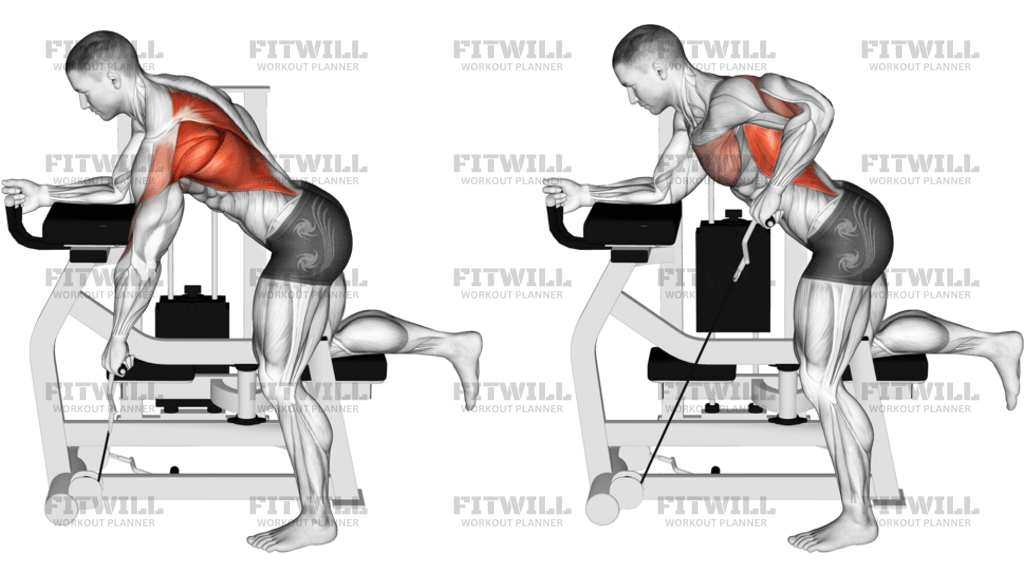
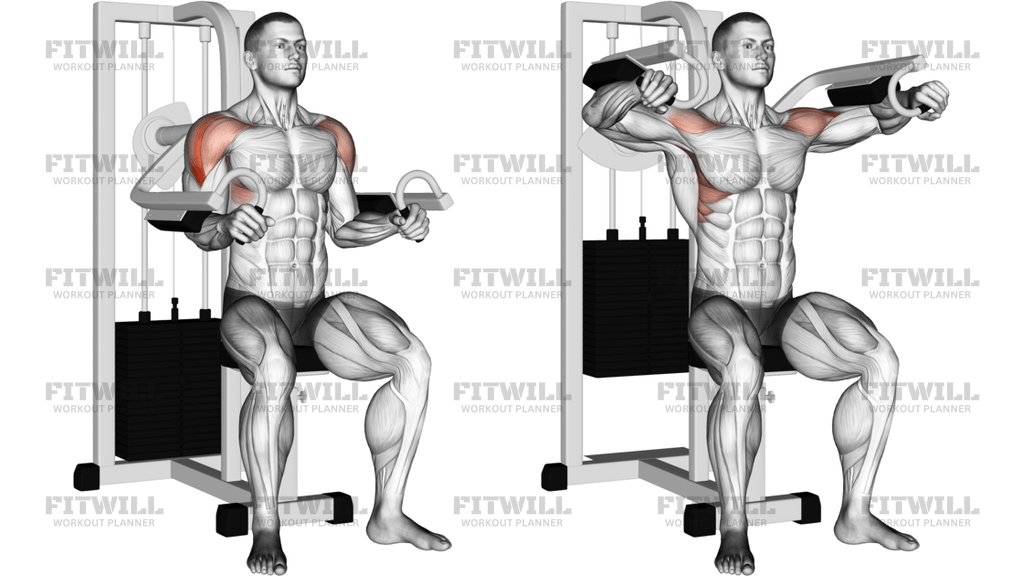
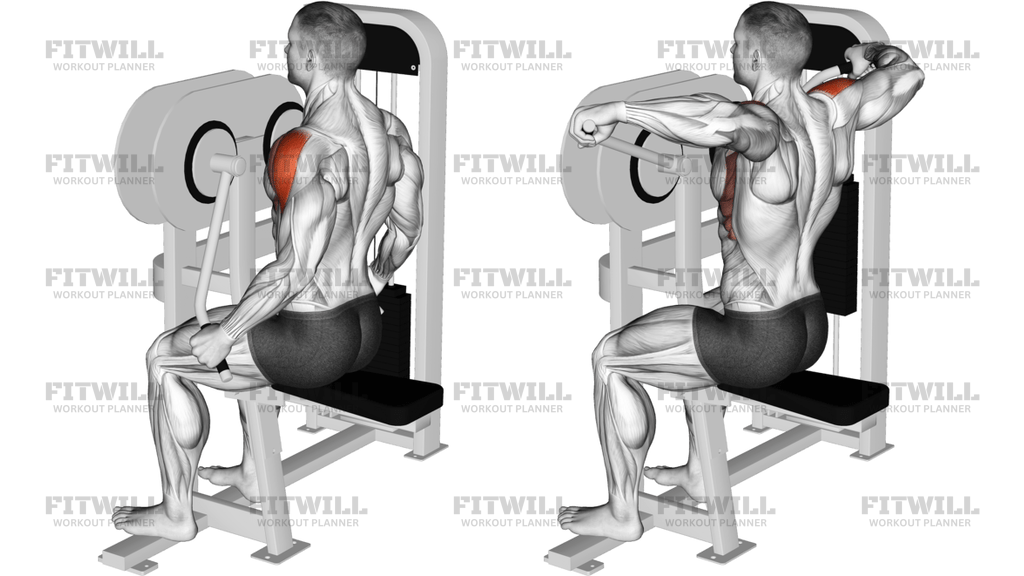
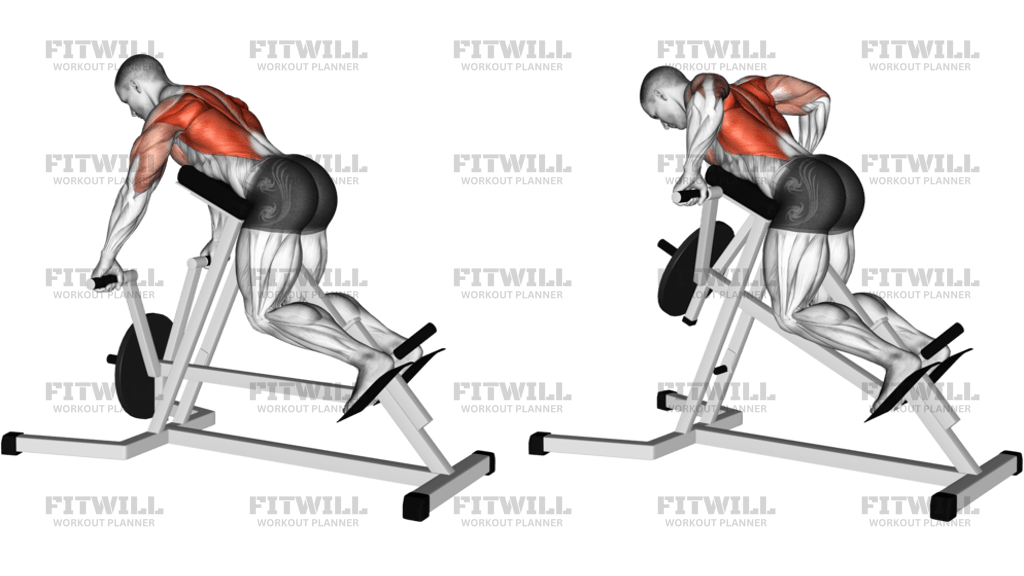
Lever Gripless Shrug
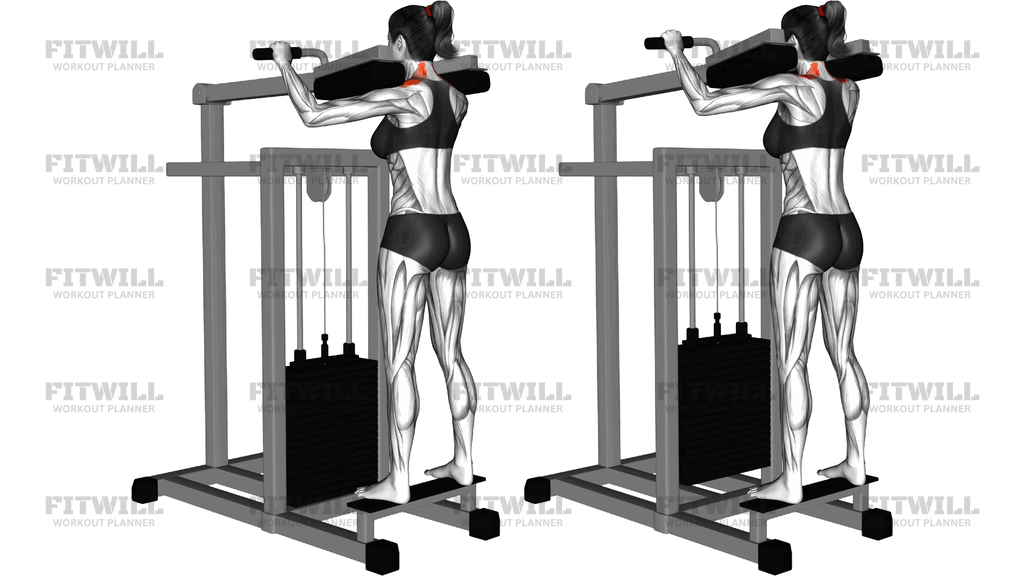
The Lever Gripless Shrug is a machine-based shrug performed on a standing leverage station where the load travels through padded shoulder pads rather than through your hands. You stand on the machine's foot platform, position the pads across the top of your trapezius, and drive your shoulders straight up toward your ears. Your hands only rest on the fixed handles for balance, which is exactly what makes this version "gripless" — the forearms and grip contribute nothing to the lift, and the traps do all of the work.
This setup is especially useful for people whose grip gives out before their traps do. With heavy dumbbells or a loaded barbell, the forearms often fatigue first, cutting the set short and limiting trap development. Because the Lever Gripless Shrug removes the grip from the equation, you can load the upper trapezius directly and focus entirely on the quality of each repetition. It also suits lifters with wrist, elbow, or hand discomfort who want to train shrugs without holding a heavy implement.
The primary muscle at work is the upper trapezius, with the levator scapulae and mid-trapezius assisting as the shoulder girdle rises. The padded yoke spreads the load evenly across both shoulders, which keeps the movement symmetrical and discourages the side-to-side shifting you sometimes see with one-arm dumbbell shrugs. A small highlight of stress also reaches the muscles at the base of the neck, so controlled range and sensible loading matter here.
Setup is what separates a good machine shrug from a sloppy one. Adjust or position yourself so the pads sit squarely on the tops of the shoulders, not on the neck itself and not so low that you have to lean under them. Feet stay flat and hip-width on the platform, knees soft but not bent into a squat, and the torso upright. Because the machine moves on a fixed lever path, your only job is to keep your body steady and let the shoulders travel vertically.
To execute well, exhale as you shrug straight up, pause briefly at the top with the shoulders close to the ears, then lower the weight under control until you feel a mild stretch across the top of the shoulders. Avoid rolling the shoulders, bouncing from the knees, or craning the head forward — the path should be a clean vertical shrug. Two to four sets of eight to fifteen repetitions works well, and this exercise pairs neatly with rowing or pulling work that targets the rest of the upper back.
[ Workout Log & Planner ]
Put your next workout in Fitwill
Keep your plan and training log ready when you are.


Instructions
- Stand on the machine's foot platform with your feet hip-width apart and facing forward, then step your body underneath the padded yoke so the pads rest on the tops of your trapezius, not on your neck.
- Place one or both hands lightly on the machine's fixed handles purely for balance, keeping your arms relaxed and your elbows simply hanging at your sides.
- Set your posture tall: chest open, torso upright, knees soft but not bent, and feet fully flat on the platform.
- Brace your abdominal muscles and keep your head level with your eyes forward, avoiding any forward jut of the chin.
- Exhale and shrug your shoulders straight up toward your ears as high as you can, letting the pads and lever arm rise with them while your hands stay loose on the handles.
- Pause for a beat at the top of the shrug and squeeze the upper trapezius without rolling your shoulders backward or forward.
- Inhale and lower the weight slowly and under control until your shoulders drop back down and you feel a mild stretch across the tops of the shoulders.
- Do not let the weight crash down; keep tension on the traps through the entire lowering phase.
- Complete your repetitions, then step carefully out from under the pads before adjusting the weight stack or releasing the machine.
- Keep your heels planted throughout; if you find yourself rising onto your toes, the load is likely too heavy.
Tips & Tricks
- The most common fault on this machine is using the handles as pulling handles — bend nothing at the elbow and let your arms stay dead weight so the shoulders, not the arms, move the pads.
- Watch for a shoulder roll at the top of the rep; a straight vertical shrug loads the upper trapezius far better than a backward circle and spares the neck.
- If the pads press into your neck instead of the tops of your shoulders, adjust your stance on the platform or reposition before starting — a set begun with poor pad placement only gets worse as fatigue builds.
- Resist the urge to dip at the knees and bounce the weight up; the fixed lever path makes cheating obvious, and momentum only robs the traps of work.
- Keep your chin level and your head neutral. Pushing the head forward or sideways into the pads shifts stress toward the muscles at the base of the neck instead of the traps.
- Pause for a full second at the top of each shrug. Because the machine supports the load, the top position is the safest place to emphasize the contraction.
- Lower the pads under control to a slight stretch rather than letting them slam against the stop; the descent builds as much trap tension as the shrug itself.
- Start lighter than you think you need. Machine shrugs feel easy at first, but the padded yoke sits close to the cervical spine, so jump weight up gradually.
- Because your grip never works here, treat this machine as a way to push your traps past where dumbbell or barbell shrugs usually fail, then finish with a lighter free-weight shrug if you also want grip involvement.
Frequently Asked Questions
What muscles does the Lever Gripless Shrug work?
The upper trapezius does the bulk of the work, with the levator scapulae and middle trapezius assisting as the shoulder girdle lifts. Because the load rides on shoulder pads rather than in your hands, the forearms and grip stay uninvolved.
Why is it called a gripless shrug if there are handles on the machine?
The handles are fixed to the frame and are there only for balance. All of the resistance travels through the padded yoke on your shoulders, so your hands never grip, hold, or move any weight.
Is the Lever Gripless Shrug good for beginners?
Yes. The fixed lever path and padded shoulder position make it one of the easiest shrug variations to learn, since you only need to master a straight up-and-down shoulder movement without balancing a barbell or dumbbells.
How high should I shrug on this machine?
Shrug as high as your natural range allows, roughly bringing the tops of your shoulders toward your ears, and pause briefly at the top. If you feel pinching or discomfort near the base of the skull, reduce the height slightly and keep the movement smooth.
Should my arms bend during the Lever Gripless Shrug?
No. Your hands rest on the handles for stability only, so keep your elbows soft and your arms passive. Bending the elbows or pulling on the handles means the arms are stealing work from the traps.
What is the most common mistake on this machine?
Rolling the shoulders or bouncing from the knees to move the pads. Both habits shift tension away from the upper trapezius and turn a precise trap exercise into a sloppy momentum movement.
Can I use the Lever Gripless Shrug if my grip fails on dumbbell shrugs?
That is one of its best uses. Since the load is carried on the shoulder pads, you can keep training your traps to a true failure point without your forearms ending the set first.
What can I substitute if my gym has no leverage shrug machine?
A barbell, dumbbell, or trap bar shrug trains the same area, though your grip will fatigue sooner. A Smith machine shrug with the bar behind or in front of the thighs is the closest fixed-path alternative.
How should I breathe during the Lever Gripless Shrug?
Exhale as you shrug the pads upward and inhale as you lower them back down. Keep the breathing steady and continuous rather than holding your breath through the whole set.
Is it safe to use heavy weight on this exercise?
The machine supports the load on your shoulders, so heavy sets are common, but increase weight in small jumps. Because the pads sit near your neck and upper spine, keep every repetition controlled and stop if you feel anything more than muscular effort.