Kettlebell Walking Lunge
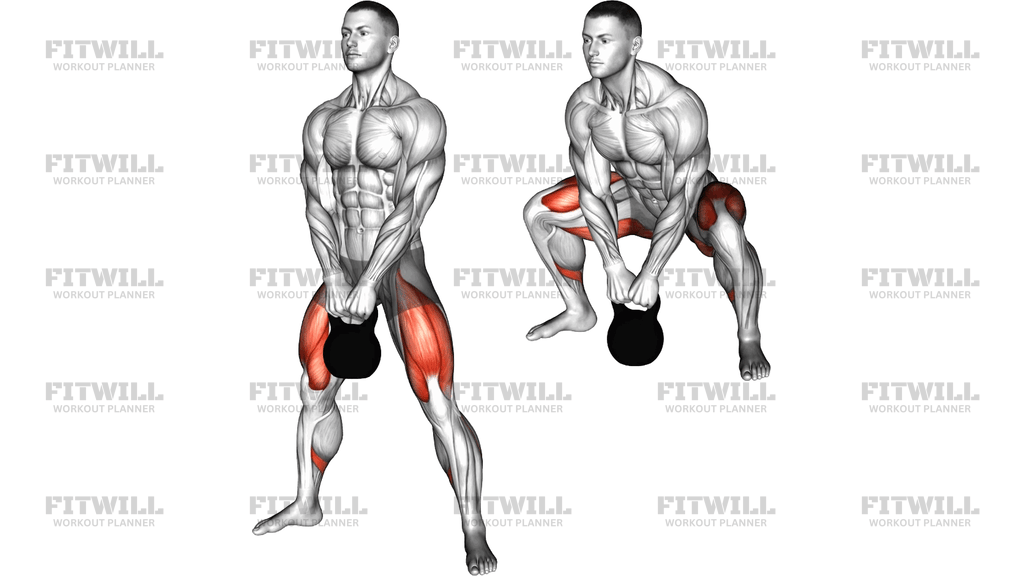
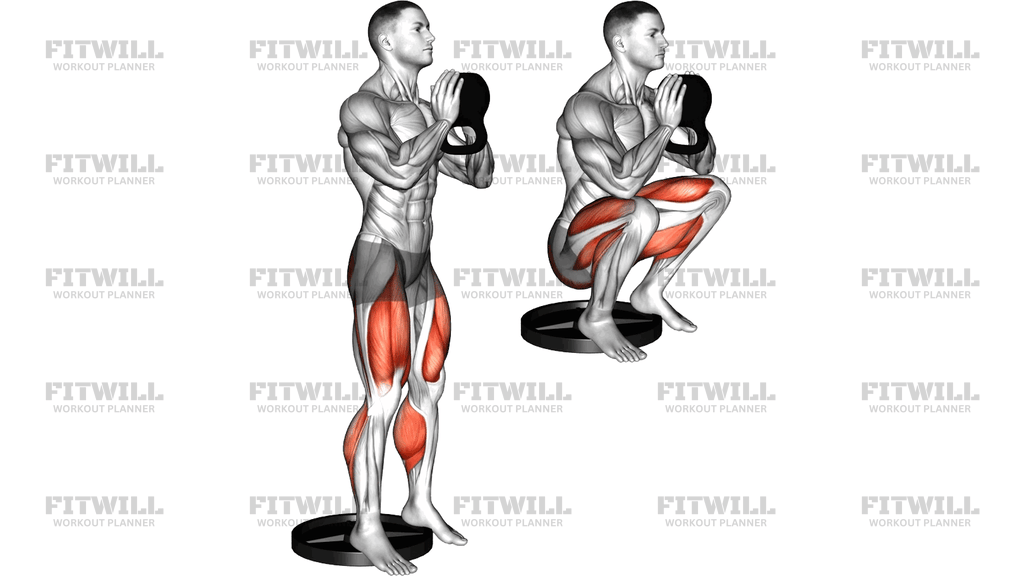
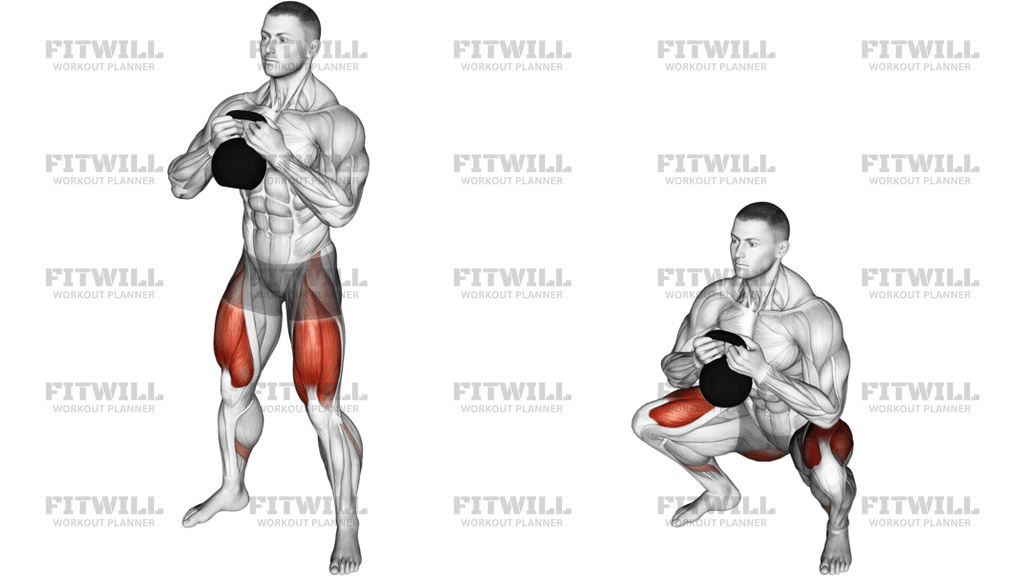
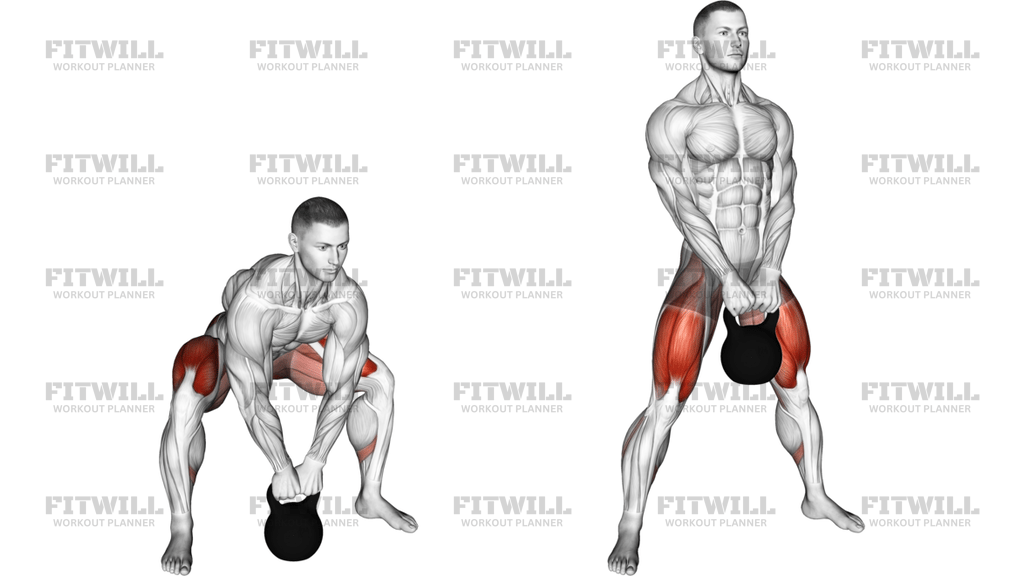
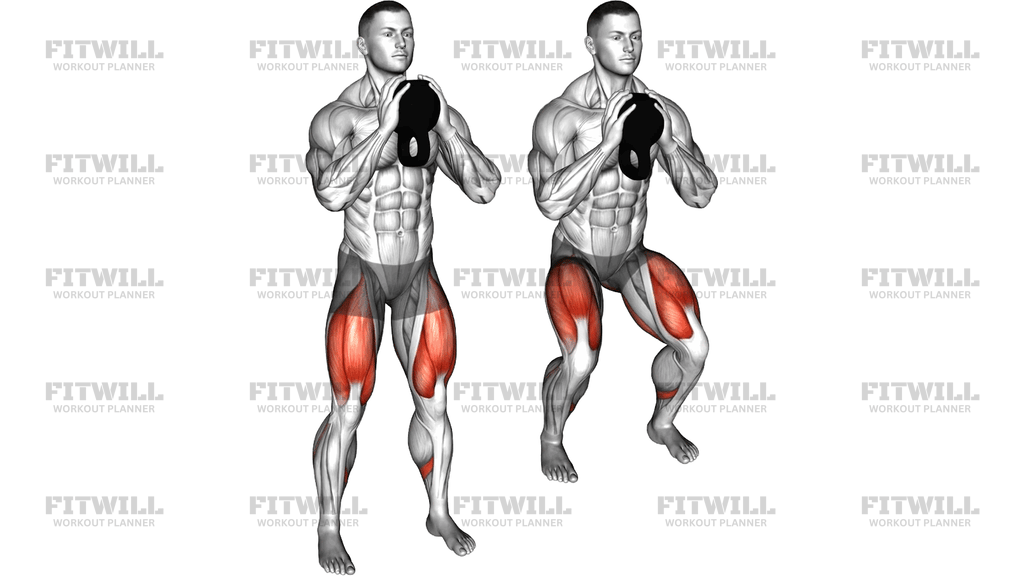
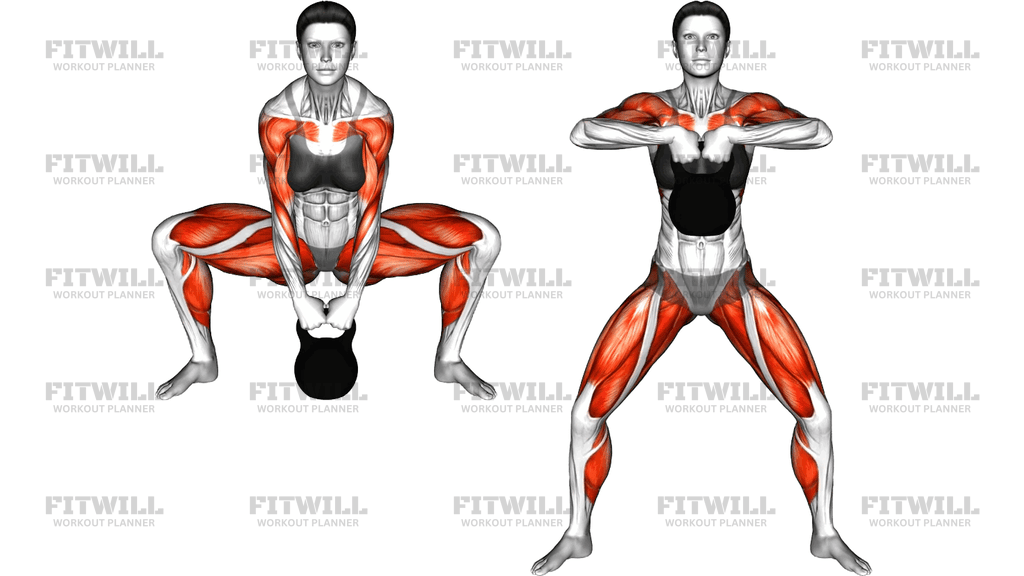
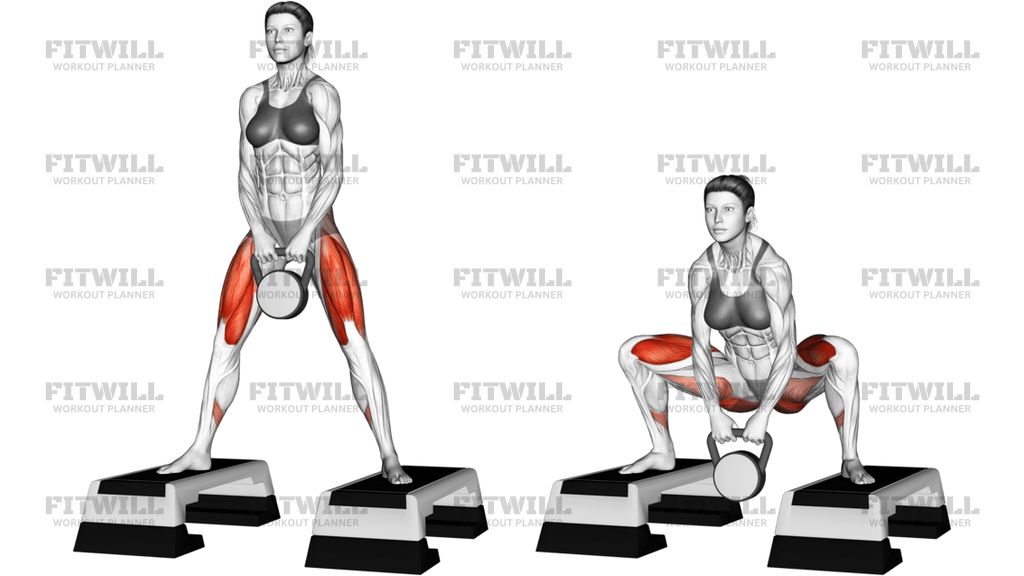
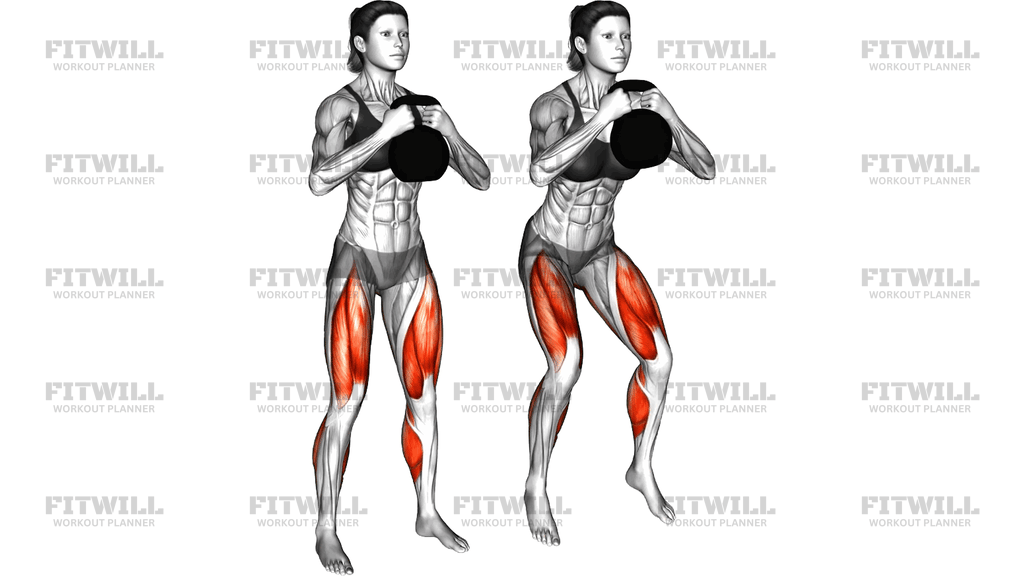
The Kettlebell Walking Lunge is a loaded, traveling single-leg exercise where you hold a kettlebell in each hand at your sides and step forward into a lunge, then keep walking by bringing the rear leg through into the next step. Unlike a stationary split squat, every rep begins with a fresh step, so you cover ground while alternating the lead leg. The image shows the two key positions clearly: a tall standing start with the kettlebells hanging by the hips, and the bottom of the lunge with the front knee bent roughly ninety degrees, the rear heel lifted, and the torso upright but slightly leaned over the front shin.
This movement earns its place in most programs because it trains the quads, glutes, and hamstrings in a split stance while also demanding balance, hip stability, and trunk control under load. The double kettlebell setup keeps the weight low and close to the body, which lets you go heavier on your legs without the spinal compression of a barbell back squat or the shoulder and upper-back demands of a front-loaded carry. That makes it a practical choice for lifters who want strong legs without heavy axial loading.
The setup matters more than most people think. Holding the kettlebells at the sides with a relaxed but secure grip keeps your center of gravity low and centered, which is what allows an upright torso through the whole step. If the load drifts forward, pulls your shoulders down unevenly, or swings as you step, the lunge path changes and your balance becomes the limiting factor instead of your legs.
Execution is straightforward but deserves precision: step forward far enough that both knees can bend together, lower under control until the rear knee hovers just above the floor, drive through the front foot to stand, and bring the trailing leg through into the next step on the opposite side. The forward-drive phase is where the glutes and quads do most of the work, so treat the push back up as deliberately as the lowering phase.
You will see the Kettlebell Walking Lunge used as a primary lower-body builder in moderate rep ranges, as a finisher for leg endurance, and as an athletic exercise for single-leg strength and gait-related stability. Start with a weight you can control for ten clean steps per leg, and only progress the load once your torso stays quiet and your knees track cleanly over the toes on every rep.
[ Workout Log & Planner ]
Put your next workout in Fitwill
Keep your plan and training log ready when you are.


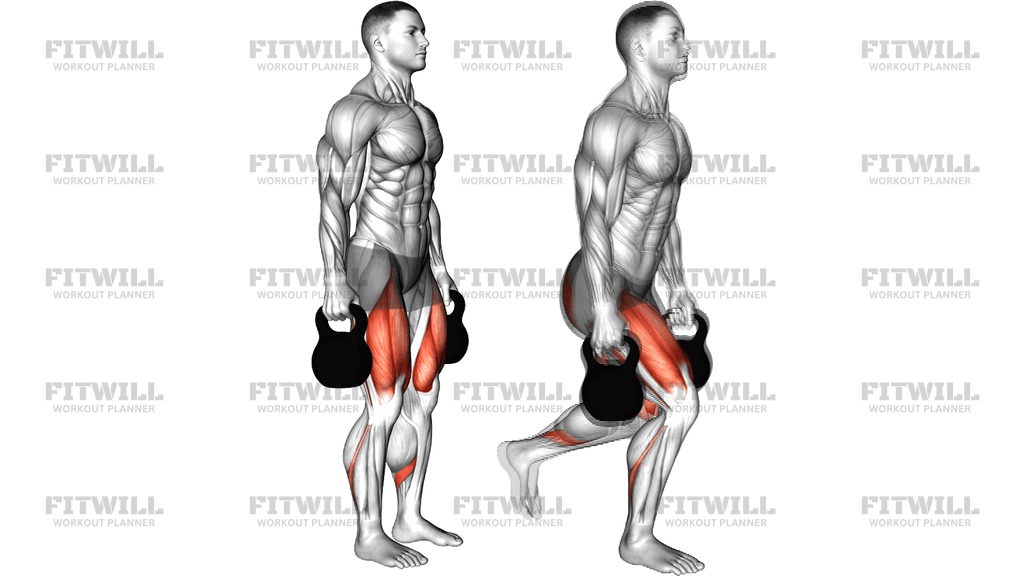
Instructions
- Stand tall with a kettlebell in each hand, arms fully extended at your sides, feet hip-width apart, and the handles resting against your fingers rather than the middle of the palm.
- Pull your shoulders back and down, lift your chest, and set your gaze on a point straight ahead at eye level so your head stays neutral through every step.
- Brace your core as if bracing for a light punch, and take a breath to create steady pressure through the trunk before you move.
- Step forward with your right foot, long enough that both knees can bend to about ninety degrees at the same time without the front heel lifting.
- Lower your hips straight down until your left knee hovers just above the floor and your front shin stays roughly vertical, letting the torso lean slightly forward but not collapse.
- Drive through the heel and midfoot of the front leg to stand up, exhaling as you rise, and bring the rear leg forward through to meet the lead foot.
- Immediately step forward with the left foot to begin the next rep, keeping the kettlebells quiet and close to your hips as you travel.
- Continue alternating legs for the set distance or rep count, then set both kettlebells down with a flat back before shaking out your hands and resting.
Tips & Tricks
- If your front knee caves inward as you descend, think about spreading the floor with your front foot and tracking the knee over the second toe.
- Short steps are the most common error in this exercise, forcing the front knee past the toes and turning the rep into a quad-dominant grind; take a longer stride and drop straight down instead of lunging forward onto the knee.
- Keep the kettlebells from swinging by squeezing the handles firmly and letting the arms act like straps, not pendulums; a swinging bell pulls your shoulders out of position on every step.
- Do not let the rear knee slam into the floor. The light hover just above the ground protects the joint and keeps tension on the working leg.
- If you feel your torso pitch forward and the kettlebells drift toward your thighs, the load is likely too heavy for your grip or balance; reduce the weight before your walking pattern degrades.
- Push the floor away through the front heel to emphasize the glutes; pushing off the back toe only shifts work to the rear leg's calf and hip flexors.
- Breathe in at the top before each step and exhale on the drive up, rather than holding your breath for an entire traveling set.
- For a tighter midsection response, keep the ribs stacked over the pelvis instead of arching the lower back to stay tall under load.
- On your first few sessions, practice the walking pattern with no load or one light kettlebell so the step length and rhythm are automatic before both hands are loaded.
Frequently Asked Questions
Which muscles does the Kettlebell Walking Lunge work hardest?
The quadriceps and glutes do the majority of the work, with the hamstrings and calves assisting through the descent and drive up. The core and grip stay active the entire time because you are stabilizing and carrying load on every step.
Should I hold one kettlebell or two for the Kettlebell Walking Lunge?
Two kettlebells, one in each hand, keep your body symmetrical and let you load the legs heavily, which is the standard setup. Holding a single kettlebell on one side is a useful variation when you specifically want to challenge obliques and anti-lateral-flexion strength.
Is the Kettlebell Walking Lunge good for beginners?
Yes, as long as the weight is modest and the step length is honest. Beginners benefit from starting with bodyweight walking lunges or a single light kettlebell until their balance and knee tracking are consistent under load.
How far forward should my step be in the Kettlebell Walking Lunge?
Long enough that both knees can bend to about ninety degrees at the same time with the front shin close to vertical. A step that is too short pushes the front knee far past the toes and overloads the joint.
Why do my forearms and hands fatigue before my legs?
Grip is a common limiting factor in this exercise because you are carrying the kettlebells for the whole set. Choke up on the handles so they rest near the fingers, or use slightly lighter bells while your grip catches up to your legs.
Can I substitute the Kettlebell Walking Lunge with dumbbells?
Yes, holding a dumbbell in each hand at your sides is a nearly identical movement. Kettlebells are often more comfortable because the handle sits lower relative to the bell and loads the hand close to the hip line.
How many steps should I do per set?
Eight to twelve steps per leg works well for strength and muscle, while longer traveling sets of twenty or more steps per leg build endurance. Stop the set when your torso starts pitching forward or your steps shorten noticeably.
Is it safe for my knees to do the Kettlebell Walking Lunge?
When performed with a controlled descent, a long enough stride, and a knee that tracks over the toes, it is a well-tolerated exercise for most people. If you have a current knee issue, reduce the depth and load first and progress gradually.
What is the difference between the Kettlebell Walking Lunge and a stationary lunge?
The walking version alternates legs every rep and covers distance, which adds a gait and balance element and spreads fatigue across both legs. A stationary lunge keeps you in one spot, which makes it easier to focus on a single leg but less dynamic.