Kettlebell Elevanted Goblet Squat
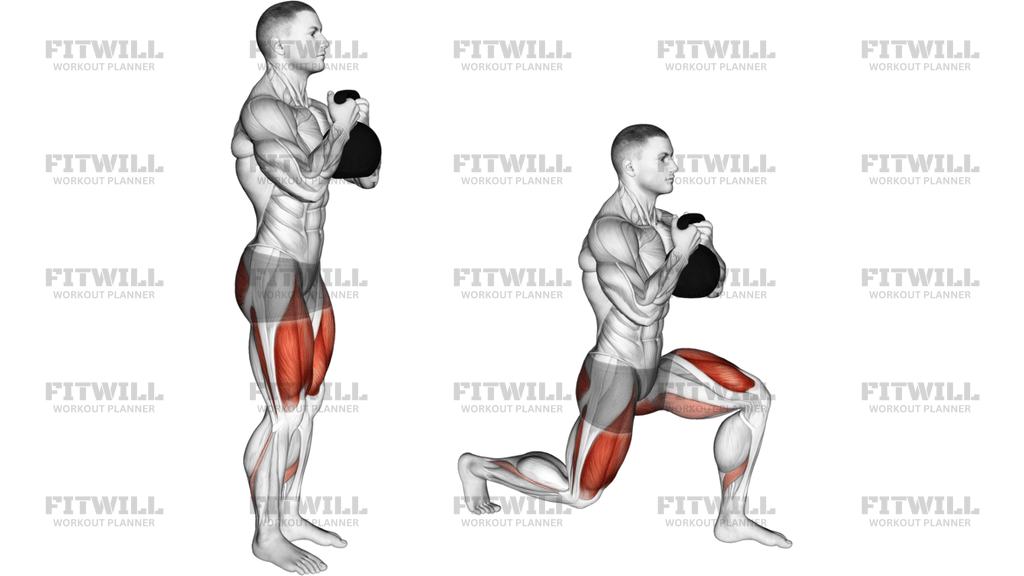
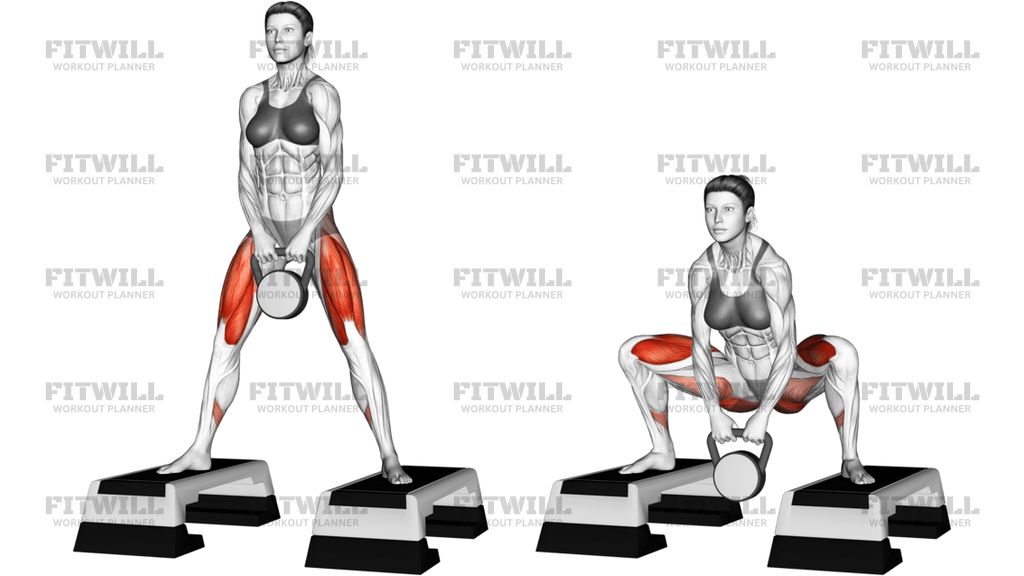
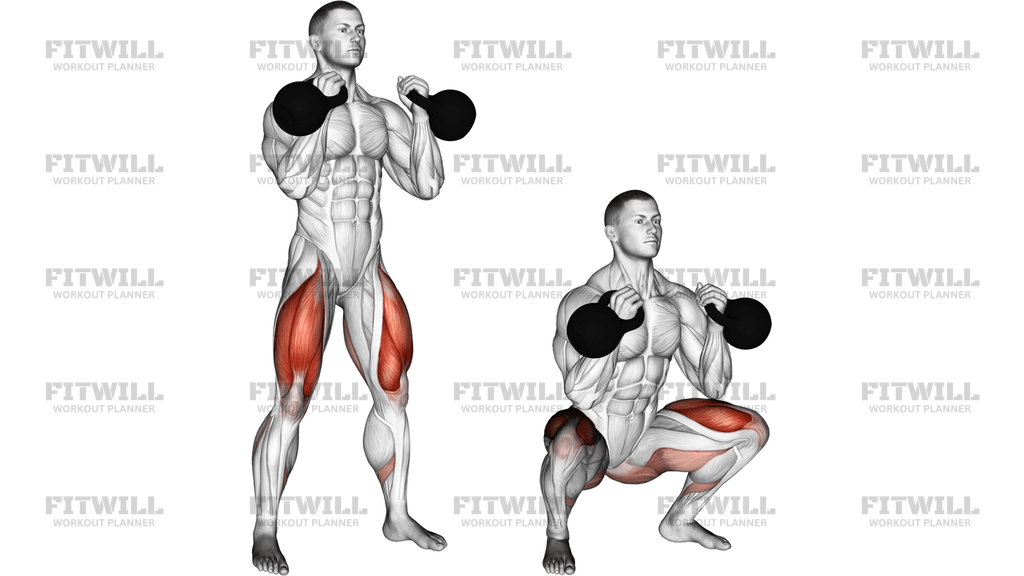
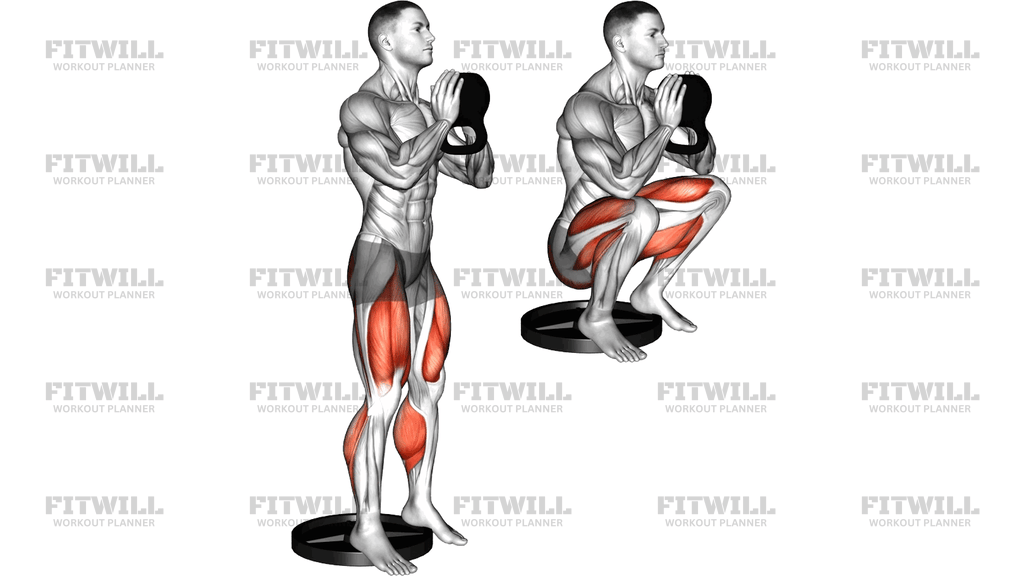
Kettlebell Elevated Goblet Squat is a heel-elevated squat performed with the kettlebell held in front of the chest. Raising the heels shifts the body into a more upright squat pattern and makes it easier to keep the torso tall while the knees travel forward. That makes the exercise especially useful when you want a squat that is honest, controlled, and centered on the thighs rather than a hip-dominant hinge.
The main training effect comes from the thighs, especially the quads, with the glutes, adductors, calves, and core helping stabilize the bottom position and keep the torso stacked. The goblet hold also acts as a counterbalance, which helps you stay centered over the midfoot instead of folding forward. If the heels are too low or unstable, the squat usually turns into a shifted, awkward rep with the hips shooting back and the chest collapsing.
Setup matters more here than in a standard bodyweight squat. The heels should be elevated on a small wedge, plate, or other stable surface, the feet should stay planted and slightly turned out, and the kettlebell should sit close to the sternum with the elbows pointing down. Once you brace, the descent should feel like sitting straight down between the legs, not reaching back for a chair. The knees can travel forward as long as they stay aligned with the toes and the arches do not cave inward.
The best reps are smooth on the way down, brief at the bottom, and driven up through the whole foot as you stand. Keep the kettlebell close so it does not pull the shoulders forward, and exhale as you pass the hardest part of the ascent. The heel lift should make the squat cleaner, not sloppier, so stop the set if you lose balance, shift to the toes, or need to round the lower back to get deeper.
Use this movement as a quad-focused squat variation, a mobility-friendly lower-body builder, or a controlled accessory lift when you want more upright mechanics than a flat-footed goblet squat. It is a good option for lifters who need a little help from heel elevation to achieve depth with good posture, but the load should stay moderate enough that every rep looks identical.
[ Workout Log & Planner ]
Put your next workout in Fitwill
Keep your plan and training log ready when you are.


Instructions
- Place your heels on a stable raised surface such as small plates, a wedge, or a slant board, then stand with your feet about hip-width apart and turned slightly out.
- Hold the kettlebell by the horns at chest height with your elbows pointing down and your forearms close to your torso.
- Stack your ribs over your pelvis, tighten your midsection, and keep your chest tall before you start the descent.
- Sit straight down between your heels, letting your knees travel forward in line with your toes while keeping your heels elevated and stable.
- Lower until your thighs reach a controlled depth that you can own without rounding your lower back or losing foot pressure.
- Pause briefly in the bottom position, keep the kettlebell close to your chest, and stay balanced over the middle of your foot.
- Drive the floor away to stand up, pushing through the whole foot and keeping the knees tracking over the toes.
- Exhale as you pass the sticking point, finish tall with the hips and knees extended, then reset before the next repetition.
Tips & Tricks
- Use a heel elevation that is just high enough to help you stay upright; overly tall plates can make balance and knee tracking worse.
- Keep the kettlebell tight to your chest so it acts as a counterbalance instead of pulling your shoulders forward.
- Let the knees travel forward, but keep them lined up with the second or third toe so the arches do not collapse.
- If your torso starts tipping forward, shorten the depth slightly rather than forcing another inch of range.
- A slow two- to three-second descent makes it easier to control the bottom position and keeps the rep honest.
- Keep pressure across the whole foot even though the heels are elevated; do not rock onto the toes at the bottom.
- Choose a load that lets you pause in the hole without losing brace or shifting side to side.
- If the kettlebell drifts away from your chest, the squat usually becomes harder on the lower back and less stable.
Frequently Asked Questions
What muscles does the Kettlebell Elevated Goblet Squat work?
It mainly targets the thighs, especially the quads, while the glutes, adductors, calves, and core help stabilize the squat.
Can beginners perform this exercise?
Yes. The goblet hold and heel elevation can make the squat easier to learn, as long as the load stays light enough to keep the torso upright.
Why are the heels elevated?
Elevating the heels helps you stay more upright, makes depth easier for many lifters, and shifts more tension into the thighs.
How low should I squat in this version?
Descend only as far as you can keep your spine neutral, your heels stable on the platform, and your knees tracking cleanly over the toes.
What is the biggest form mistake to avoid?
Letting the knees cave inward or letting the kettlebell drift away from the chest usually breaks the balance and turns the rep into a forward fold.
Do I need special equipment for the heel lift?
No. Small plates, a slant board, or another stable raised surface can work as long as both heels stay level and secure.
Is this different from a regular goblet squat?
Yes. The elevated heels usually let you stay more upright and get more knee travel, which changes the emphasis toward the thighs.
How should I breathe during the set?
Take a breath and brace before each rep, hold pressure through the descent, then exhale as you drive up past the hardest part.