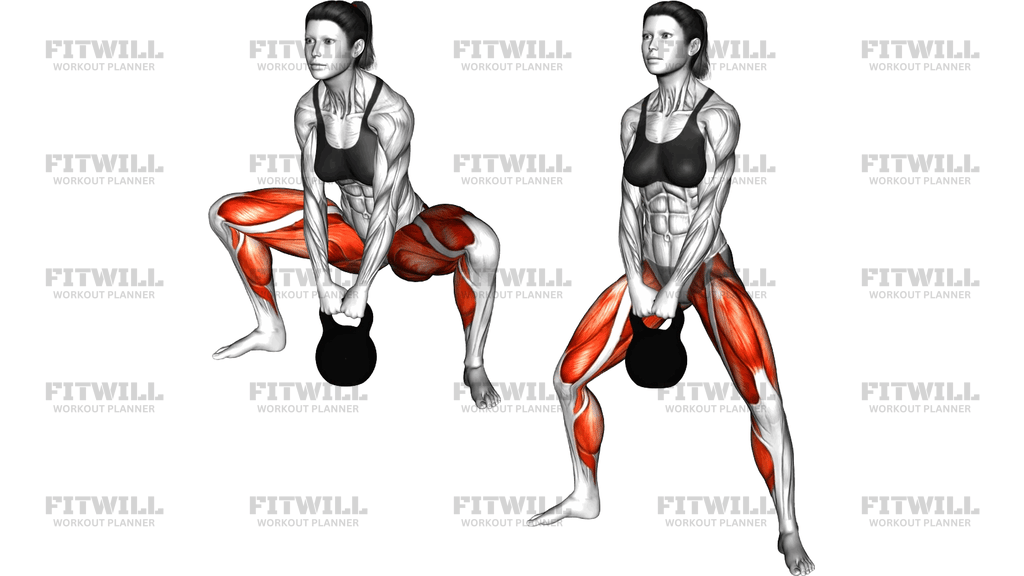
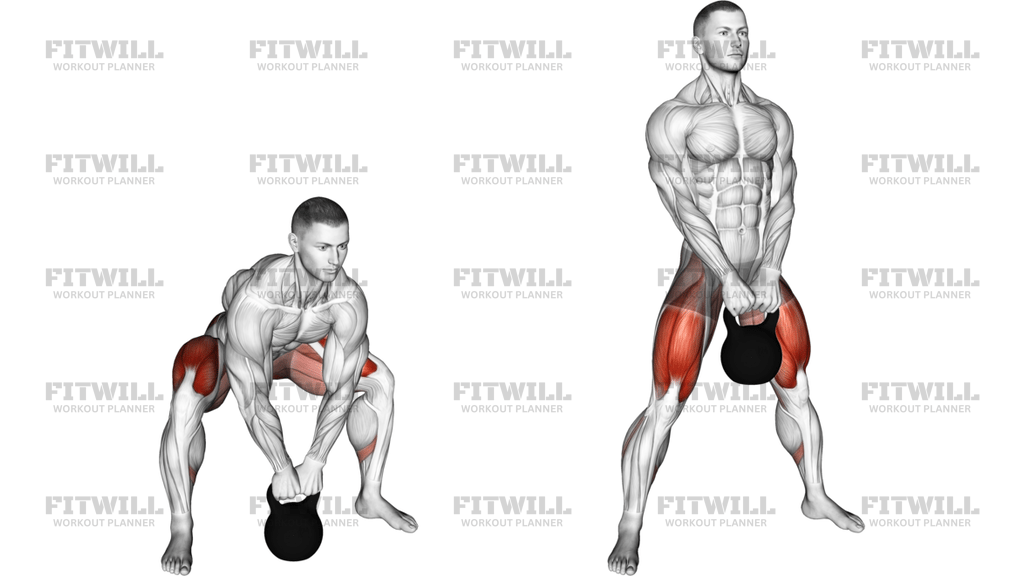
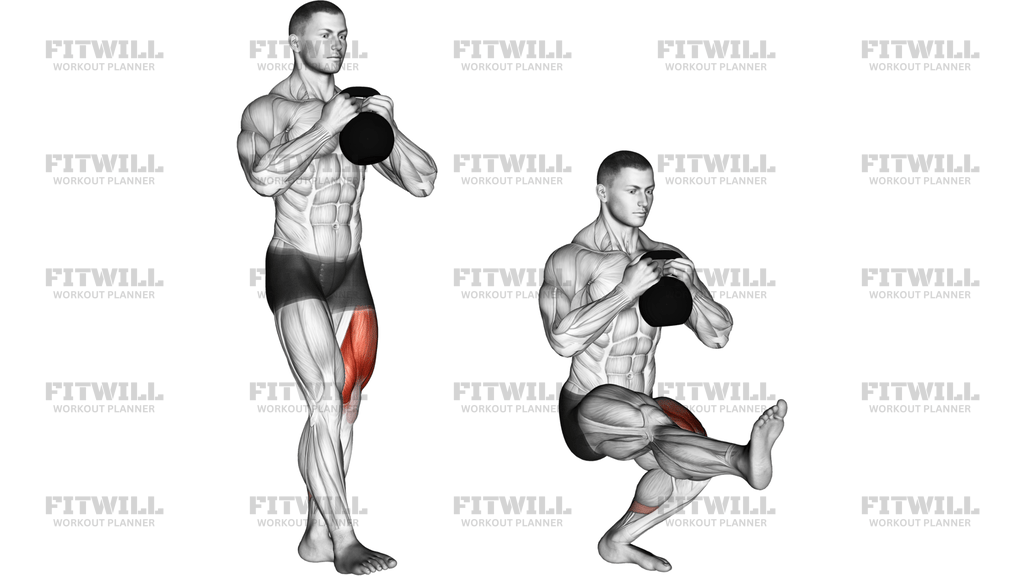
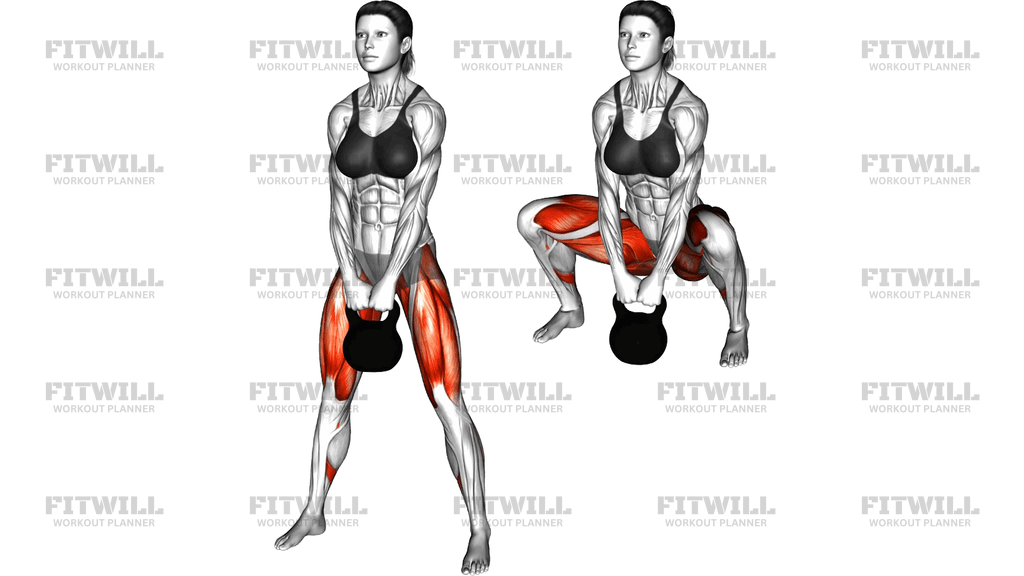
Kettlebell Goblet Pulse Squat
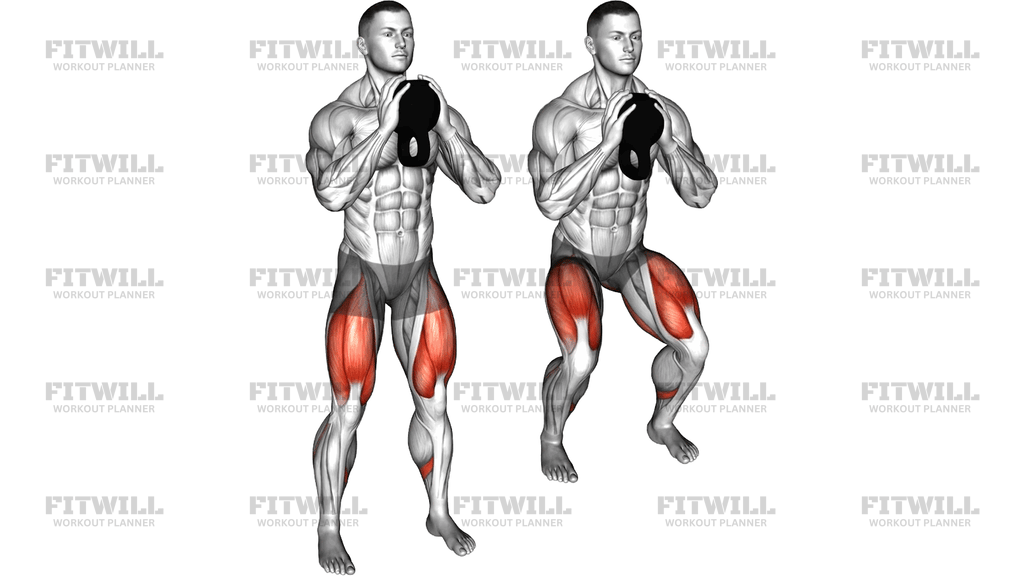
The Kettlebell Goblet Pulse Squat takes the classic goblet squat and adds a small, controlled pulsing motion in the bottom position. Instead of descending, touching depth, and standing straight back up, you lower into your squat and then perform short up-and-down pulses of just a few inches before finally driving to a full stand. That constant tension under load is what makes this variation feel so much harder than a standard goblet squat, even with a lighter kettlebell.
The setup is simple and self-correcting, which is why this movement works so well for beginners learning to squat and for experienced lifters looking for a burnout finisher. Holding the kettlebell by the horns at chest height counterbalances your torso, letting you sit straight down between your feet with an upright chest. The front-loaded position also means your quads, glutes, and inner thighs do most of the work, while your core stays braced the entire set to keep the weight from pulling you forward.
Muscularly, the pulses target the quadriceps heavily, especially around the hardest part of the range where the thigh approaches parallel. Your glutes and adductors assist throughout, and the midsection works overtime to keep your ribs stacked over your hips while a weight sits against your sternum. Because the pulses remove the momentum and elastic rebound you get from a full pause-and-rebound squat, the muscles never get a chance to relax.
To get the most out of it, keep the kettlebell glued to your chest, elbows tucked down rather than flared wide, and your feet planted firmly with knees tracking over your toes. The pulses should be small, smooth, and quiet — if you are bouncing hard or losing depth between pulses, the set becomes a sloppy quarter squat with extra wear on the knees. Think of it as maintaining one deep squat position and gently moving within a few inches of it.
This exercise fits well as an accessory after your main leg work, as part of a kettlebell circuit, or as a stand-alone home training movement when you only have one bell. Start with a lighter weight than your usual goblet squat load, because time under tension climbs fast. Stop the set as soon as your chest starts to lean forward or your heels want to lift; depth and position matter more than squeezing out extra reps.
[ Workout Log & Planner ]
Put your next workout in Fitwill
Keep your plan and training log ready when you are.


Instructions
- Stand with your feet roughly shoulder-width apart, toes turned out slightly, and grip a kettlebell by the horns with both hands.
- Pull the kettlebell up to your chest so it rests against your sternum, elbows pointing down and tucked close to your ribs.
- Set your stance by screwing your feet into the floor and bracing your core as if about to take a light punch to the stomach.
- Inhale, then push your hips back and bend your knees to lower until your thighs are at or just below parallel.
- From that deep position, pulse by rising a few inches and lowering back down, keeping tension in your quads and glutes the whole time.
- Complete your planned number of pulses without standing up fully or letting your hips rise above parallel between them.
- Exhale as you drive through your whole foot to stand all the way up, squeezing your glutes at the top.
- Keep the kettlebell pressed to your chest and your chest tall for the entire set; the weight should never drift away from your body.
- Reset your brace and stance at the top, take a breath, and begin the next rep.
- Set the kettlebell down by hinging at the hips with a flat back once the set is finished.
Tips & Tricks
- Pick a lighter kettlebell than you would use for regular goblet squats — the pulse time under tension makes the same weight feel noticeably heavier by the end of the set.
- If your elbows flare out and the bell starts sliding down your chest, actively pull the handles toward you; this keeps your lats engaged and the weight stable.
- Bouncing aggressively between pulses is the most common mistake — it turns a controlled quad-builder into a knee-jarring quarter squat. Aim for smooth, quiet pulses of three to four inches.
- If your heels lift at the bottom, widen your stance a touch or turn your toes out slightly more; a slightly wider base also lets you sit deeper between pulses.
- Watch that your hips do not creep upward during the pulses while your chest stays down — that turn it into a good morning pattern. Rise and lower as one unit.
- Keep your gaze forward or slightly up rather than looking down at the floor, which helps prevent your upper back from rounding over the kettlebell.
- Breathing matters more here than in a normal squat: take a breath at the top, brace, and exhale in short breaths through the pulses if your set is long.
- If your knees cave inward as fatigue builds, think about spreading the floor with your feet — this cues the glutes to keep the knees tracking over the toes.
- Finish each set while your position is still clean; the moment depth or chest height degrades, extra pulses add little and cost you form.
Frequently Asked Questions
What muscles does the Kettlebell Goblet Pulse Squat work?
The quadriceps do the bulk of the work, especially during the pulses near the bottom of the squat. Your glutes, adductors, and hamstrings assist, and your core stays active to hold the kettlebell steady at chest height.
How is the Kettlebell Goblet Pulse Squat different from a regular goblet squat?
Instead of standing straight back up from each rep, you stay in the deep position and perform small up-and-down pulses before finishing the stand. This keeps constant tension on the thighs and removes the brief rest you get at the top of a normal squat.
How deep should I squat for the pulses?
Lower to a depth where your thighs are at or just below parallel, then pulse within a few inches of that position. If you cannot hold depth with a neutral spine, squat slightly higher and keep the pulses there.
Is the Kettlebell Goblet Pulse Squat good for beginners?
Yes, and the goblet hold actually helps beginners because the front-loaded kettlebell encourages an upright torso and a natural squat path. Just use a light bell and keep the pulses small and controlled.
How heavy should the kettlebell be?
Choose a weight noticeably lighter than your regular goblet squat load, since the continuous tension makes the same weight far more demanding. A bell you could goblet squat for 15 easy reps is a reasonable starting point.
Why do my calves and feet feel this exercise so much?
Holding a deep squat with pulses keeps constant load on your ankle stabilizers and calves as they control your balance. If this becomes uncomfortable, check that your whole foot stays planted and your heels are not lifting.
Can I do the Kettlebell Goblet Pulse Squat if I have knee discomfort with normal squats?
The sustained bottom-position tension can bother sensitive knees, so if squatting deep already causes discomfort, limit the depth and range of the pulses or stick to standard goblet squats and consult a professional before continuing.
Where should I put this exercise in my workout?
It works best as an accessory or finisher after your main lower-body lifts, or as a high-rep station in a kettlebell circuit. Doing it fresh before heavy squats would only fatigue your quads prematurely.
Can I substitute a dumbbell if I don't have a kettlebell?
Yes. Hold a single dumbbell vertically against your chest by one end, or hold two dumbbells at your shoulders — the squat and pulse pattern stays exactly the same.
How many pulses should I do per rep?
A common approach is three to five pulses per rep for sets of 6 to 10 total reps, or one continuous set of pulses in the hold for time. Whichever you choose, stop when your chest drops forward or your depth shortens.