Kettlebell Two Arm Clean
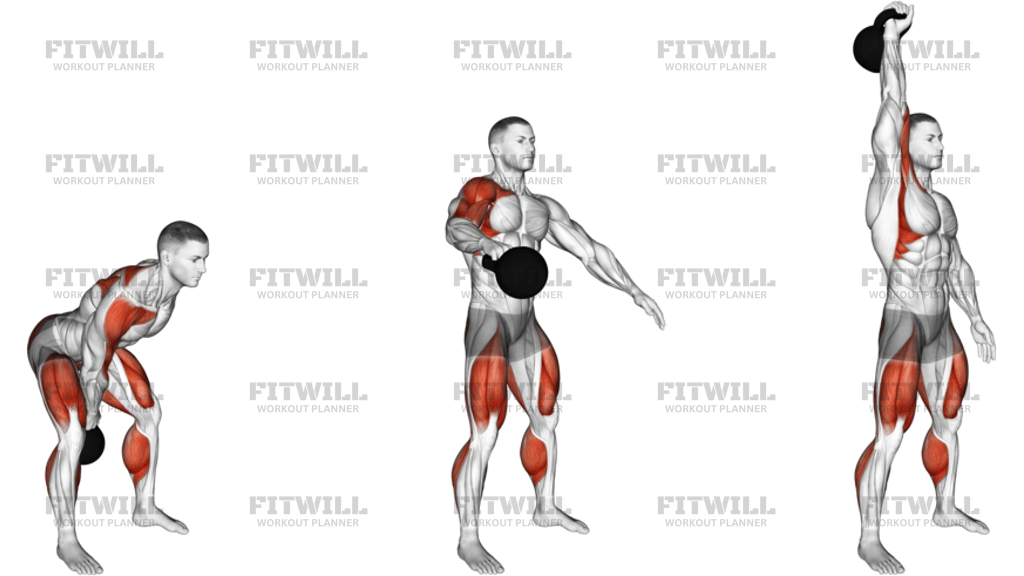
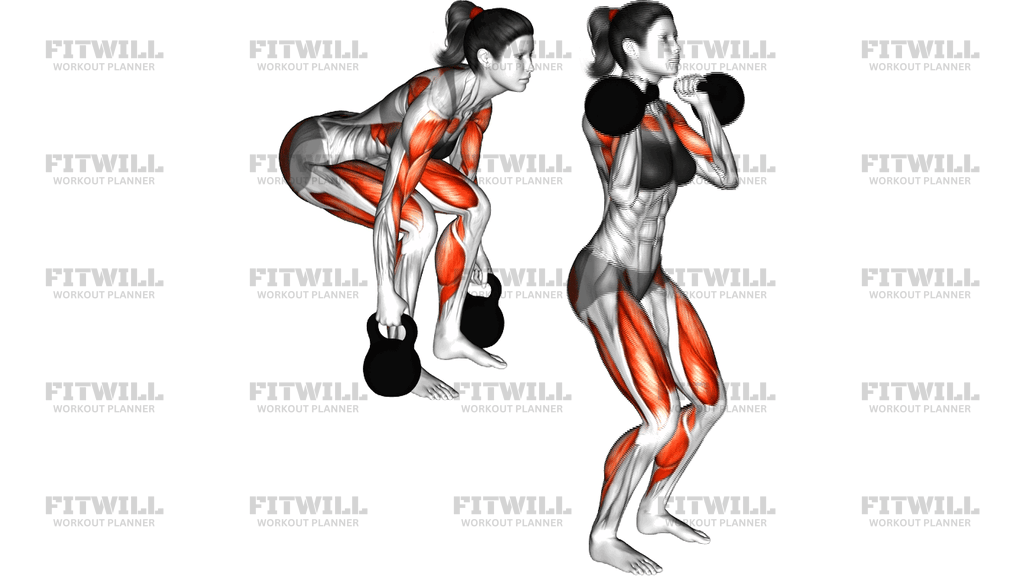
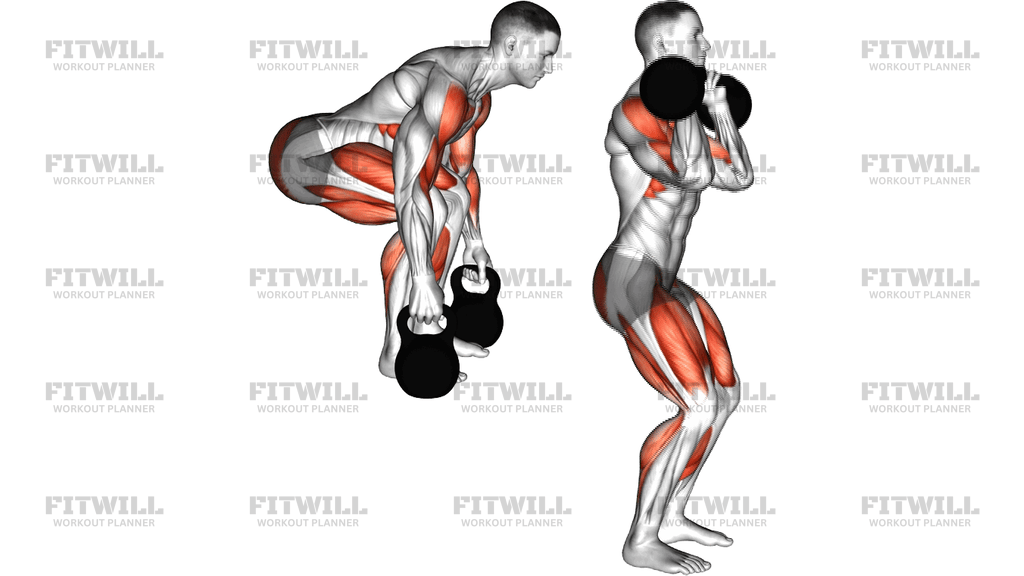
The Kettlebell Two Arm Clean is a double-kettlebell version of the classic clean, taking two bells from the floor or from a hang between your legs up to the rack position at your shoulders in one crisp, hip-driven movement. Instead of lifting each kettlebell separately, you drive through your hips and guide both bells up at the same time, catching them on the backs of your forearms with your elbows tucked in and the handles resting diagonally across your palms. Done well, it looks and feels like one smooth pulse of power rather than two separate pulls.
This lift is a favorite among kettlebell lifters because it is the gateway to every double-bell press, front squat, and push press. If you want to press two kettlebells overhead or squat them in the rack, you need a clean that gets them there safely and without wasting energy. It also stands on its own as a conditioning tool: strung together for reps, double cleans hammer your posterior chain, elevate your heart rate quickly, and build the timing that carries over to swings and snatches.
The main work comes from your glutes and hamstrings, which snap your hips forward to launch the bells, along with your quads as you stand tall into the catch. Your upper back and traps control the bells as they float up and rotate around your hands, while your forearms, grip, and core handle the landing. Because you are cleaning two bells at once, the demand on your midline and upper back is noticeably higher than with a single-bell clean.
Setup matters more here than in most lifts. Two kettlebells swinging between your legs mean double the collision risk if the path is sloppy. Your stance should be slightly wider than shoulder width with your toes turned out a touch, giving both bells room to pass cleanly between your thighs. Keep your weight centered over your midfoot, hinge at the hips rather than squatting down, and set your shoulders back so the lats stay engaged before you even start the pull.
The key skill is the turnover. Rather than muscling the bells up with your arms or flipping them over your fists, you let each kettlebell roll around the outside of your wrist as your elbow drops down and in, so the bell lands softly on your forearm in the rack. Punch your elbows down to your ribs, keep your wrists neutral, and let your hips absorb the weight. A loud, slapping catch is a sign the bells are traveling too far away from your body.
For safety, start lighter than you think you need to. The double clean doubles the load on your grip, wrists, and lower back compared to a one-arm clean, and fatigue shows up first as a rounded hinge or a lazy turnover. Practice the movement with one bell or even two light bells until the catch is quiet and consistent, and always keep the bells tracking close to your legs on the way down so they never swing wide and yank your shoulders forward.
[ Workout Log & Planner ]
Put your next workout in Fitwill
Keep your plan and training log ready when you are.


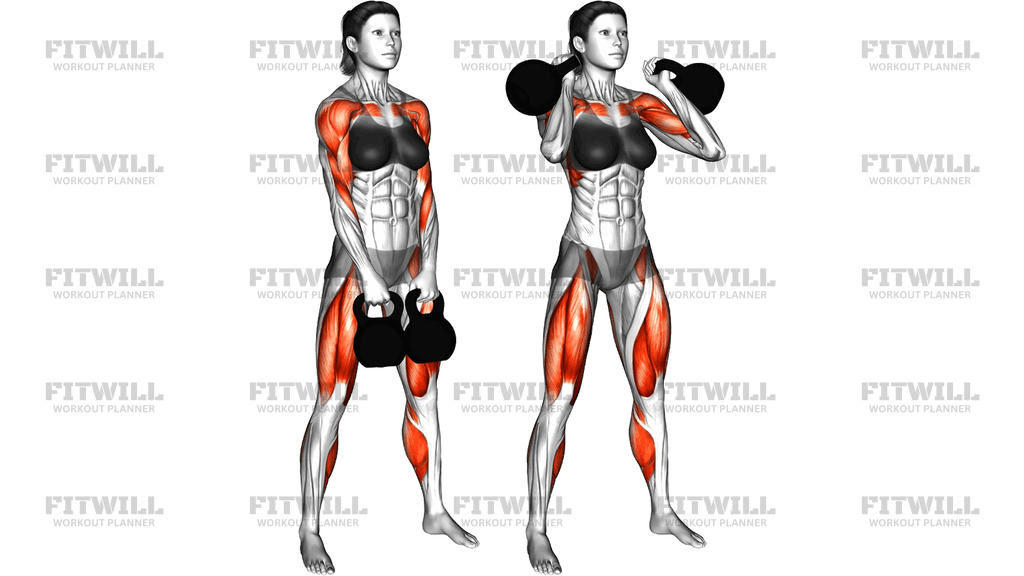
Instructions
- Place two kettlebells on the floor between your feet, set about shoulder-width apart with toes turned slightly out.
- Hinge at your hips and bend your knees to grip both handles with your arms straight, shoulders pulled back and down, and your spine in a long neutral line.
- Hike the bells back between your legs like a football snap, keeping your weight over your midfoot and your shins nearly vertical.
- Exhale and brace your core as you snap your hips forward and stand up tall, letting the momentum float both kettlebells up in front of your chest.
- As the bells rise, keep your elbows close to your body and let each kettlebell roll around the outside of your wrist rather than flipping over your fist.
- Drop your elbows down and in to catch both bells on the backs of your forearms in the rack position, wrists neutral and handles resting diagonally across your palms.
- Pause briefly in the rack with elbows tucked to your ribs, chest tall, and knees soft but not locked.
- Breathe in at the top, then unlock your elbows and guide both bells down close to your body, hinging at the hips to absorb them into the back swing.
- Continue into your next rep from the back swing, or set the kettlebells down quietly behind your heels to finish the set.
Tips & Tricks
- If the kettlebells slap your forearms on the catch, your elbows are drifting out and away. Keep them tracking down along your ribs and let the bells rotate around the wrists instead.
- A rounded lower back on the hike is the most common breakdown with two bells. Push your hips back and chest forward until you feel your hamstrings load before pulling.
- Do not squat the bells up. The double clean is a hinge-driven lift, so the power comes from a hip snap, not from arm curls or a leg press pattern.
- Keep the bells from colliding between your legs by angling your elbows slightly outward on the downswing so each bell tracks along the outside of its own thigh.
- If your grip gives out before your hips do, switch to a lighter pair and prioritize crisp hip extension, or finish sets with one-arm cleans.
- Breathe sharply out on the drive up and inhale at the rack. Holding your breath for multiple double cleans builds pressure fast and exhausts you early.
- Re-tension your lats and set your shoulders back before every first rep from the floor; dead-start double cleans with loose shoulders strain the upper back.
- Practice the rack hold separately for 15 to 30 seconds so the catch position feels comfortable before adding volume to the full clean.
- Keep your reps in the rack of your technique. Once the bells start landing late or wide, set them down rather than grinding out sloppy reps.
Frequently Asked Questions
Which muscles does the Kettlebell Two Arm Clean work the most?
The glutes and hamstrings produce the main hip drive, with your quads assisting as you stand into the catch. Your traps, upper back, shoulders, forearms, and core work to control and absorb both kettlebells in the rack.
Is the Kettlebell Two Arm Clean suitable for beginners?
Beginners should learn the one-arm clean and the double-bell swing first. Once your hinge and rack position are solid, start the two-arm version with light bells and low reps before adding load.
How heavy should the kettlebells be for the Kettlebell Two Arm Clean?
Choose a pair you could comfortably press once, since the clean is usually a stepping stone to presses and squats. Technique quality matters far more than bell size, and the catch should be quiet, not a slam.
Why do the kettlebells bang on my forearms during the Kettlebell Two Arm Clean?
A loud bang means the bells are flipping over your fists instead of rolling around your wrists, usually because your elbows flare out or the bells drift away from your body. Keep your elbows close and pull the bells in as you turn them over.
What is the correct rack position at the top of the Kettlebell Two Arm Clean?
The bells rest on the backs of your forearms with handles diagonal across your palms, elbows tucked down to your ribs, wrists straight, and shoulders relaxed rather than shrugged up to your ears.
Can I use dumbbells instead of kettlebells for this movement?
Dumbbells can work for a power clean pattern, but the catch is much harder because the weight sits on top of your wrists instead of resting on your forearms. If kettlebells are unavailable, dumbbell cleans are a reasonable substitute, just expect a less comfortable rack.
How is the Kettlebell Two Arm Clean different from a double kettlebell swing?
The swing ends with straight arms in front of your chest, while the clean brings the bells all the way into the rack at your shoulders. The clean also requires the turnover skill and places more demand on your upper back, elbows, and wrists.
How many reps of the Kettlebell Two Arm Clean should I do?
For technique practice, sets of 3 to 5 reps work well. For conditioning, longer sets of 10 to 20 reps or timed intervals are common, but stop the set when your hinge or catch starts to degrade.
Is it safe to clean two kettlebells if I have lower back discomfort?
The hip hinge load is significant with double bells, so clear any existing back issue with a qualified professional first. Keep the load light, maintain a neutral spine on every hike and catch, and never round your back to reach the handles.