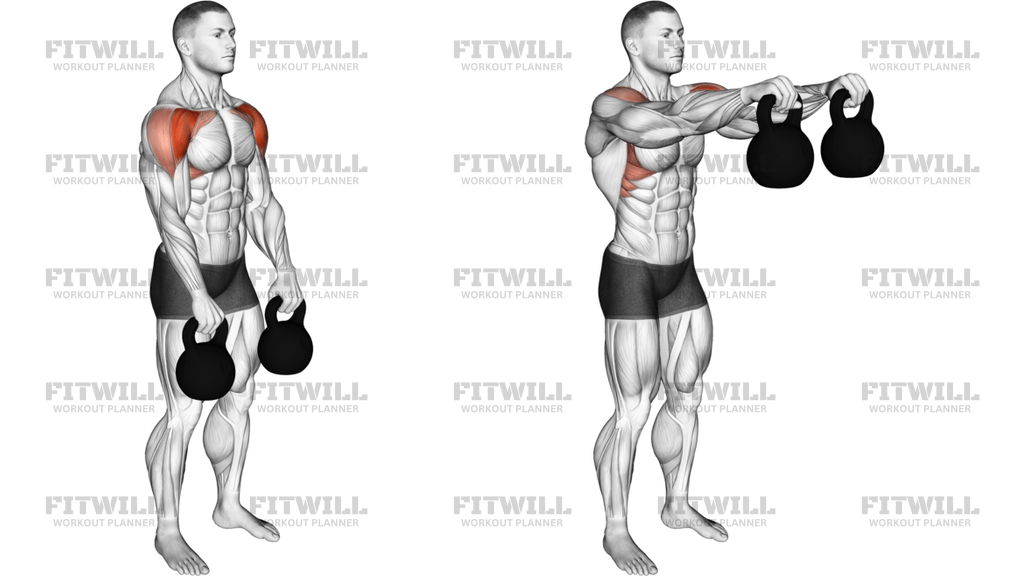
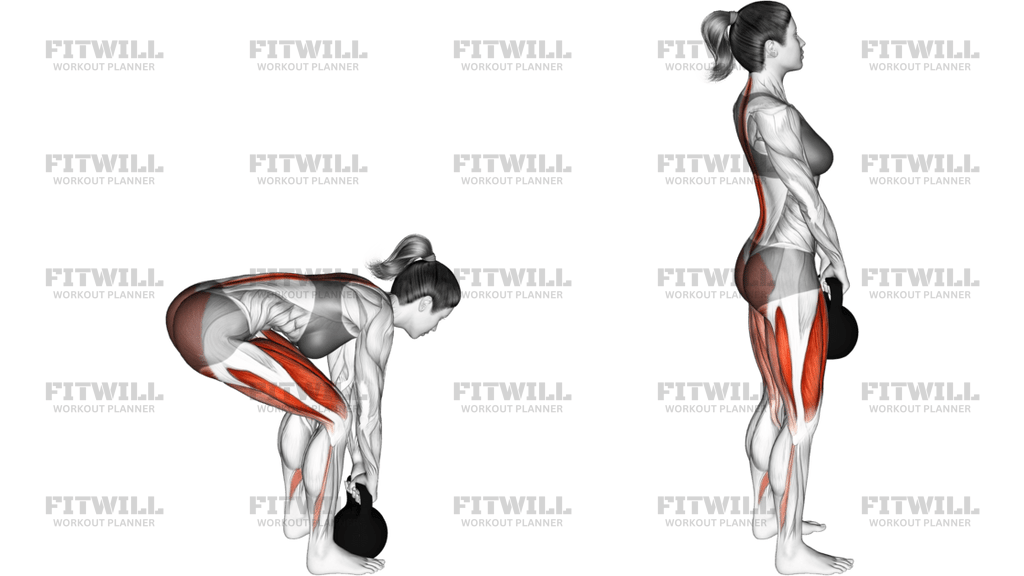
Kettlebell Two Arm Military Press
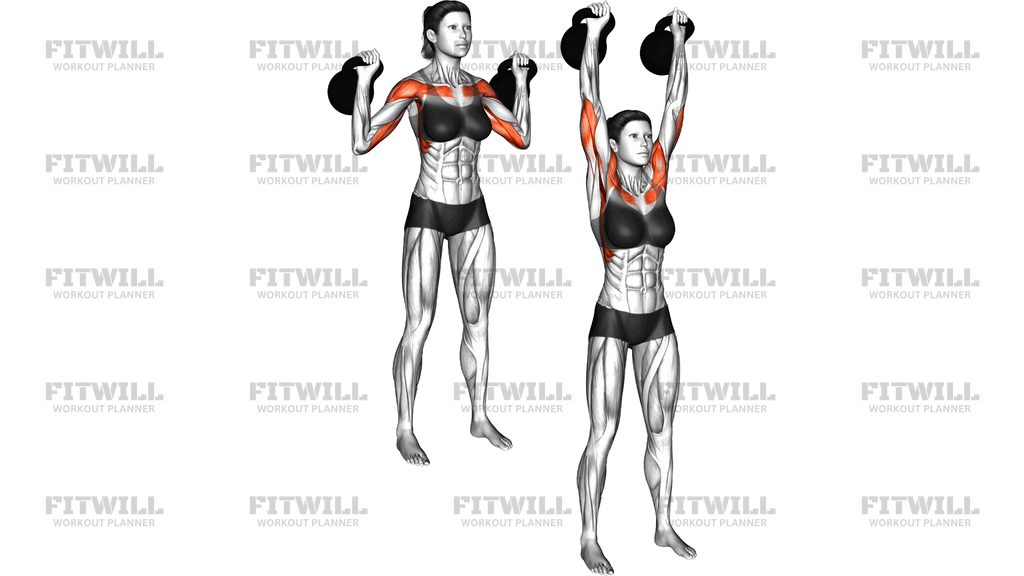
The Kettlebell Two Arm Military Press is a strict overhead press performed with a kettlebell in each hand, pressing both bells from shoulder height to full lockout at the same time. Unlike a push press, there is no leg drive involved — the movement comes entirely from the shoulders and arms while the torso stays upright and braced. The kettlebell's offset handle and displaced load make the press slightly more demanding on grip and stabilization than the equivalent dumbbell version.
This lift is a staple for anyone building overhead pressing strength: general strength trainees, combat athletes, and kettlebell practitioners all benefit from it. It primarily develops the front and side shoulders, with heavy involvement from the triceps to finish each lockout and the upper traps to support and stabilize the bells overhead. Because you are standing and holding two separate weights, your core, upper back, and forearms work continuously to keep your ribs down, your spine neutral, and the bells from drifting.
Setup matters more here than in most pressing variations. A clean rack position — bells resting on the forearms close to the body, elbows tucked near the ribs — lets you start each rep from a supported position instead of fighting the weight before the press even begins. A stance about hip-width apart with weight spread evenly across the feet gives you a stable base and keeps you from leaning back as the load travels overhead.
To execute well, brace your midsection, squeeze the handles, and press both bells up and slightly back so they finish over the base of your neck rather than out in front of your face. Lock the elbows out fully with the biceps near the ears, then lower under control back to the rack without letting the bells crash onto your shoulders. Exhale through the sticking point on the way up and inhale at the rack between reps.
In practice, this exercise works well as a primary strength lift for moderate rep sets, as a volume builder for shoulder development, or as a technical drill for lifters progressing toward heavier kettlebell pressing work. Common-sense safety points: choose weights you can clean into position comfortably, keep your lower back from arching as fatigue sets in, and stop the set if you cannot maintain a locked-out, stable finish position overhead.
[ Workout Log & Planner ]
Put your next workout in Fitwill
Keep your plan and training log ready when you are.


Instructions
- Stand with your feet about hip-width apart and clean a kettlebell into each hand so both bells rest on the outside of your forearms at shoulder height, elbows tucked close to your ribs.
- Set your grip with fingers wrapped around the handles and wrists straight, keeping the bells snug against your body rather than hanging away from the shoulders.
- Brace your core, pull your ribs down, and squeeze your glutes slightly so your torso is rigid and upright before the press begins.
- Inhale at the rack position, then press both kettlebells upward at the same time, driving the elbows forward and up as the bells travel.
- As the bells rise, lean your head back just enough to let them pass, then push them slightly back so they finish balanced directly over your shoulders and mid-foot.
- Lock out fully at the top with straight elbows, biceps close to the ears, and hold for a brief moment with the shoulders active rather than shrugged.
- Exhale as you press through the hardest point of the lift, keeping the breath steady and never holding it for multiple reps in a row.
- Lower both bells under control back to the rack position, letting the forearms absorb them at the shoulders instead of letting them drop.
- Pause for a breath at the rack, re-brace, and reset your grip before starting the next repetition.
- After your final rep, lower the kettlebells to the floor with a controlled hinge rather than dropping them from waist height.
Tips & Tricks
- If the bells want to drift forward at the top, cue yourself to finish the press with the kettlebells stacked over your ears and hips, not over your chin.
- A common mistake is flaring the elbows straight out to the sides from the rack, which strains the shoulders — keep the elbows relatively close to the body for the first third of the press.
- Avoid leaning your torso backward to help the weight up; if your lower back arches or your hips shift forward, the weight is too heavy for a strict press.
- Keep your wrists neutral and knuckles facing up. Bent-back wrists under load are one of the fastest ways to develop forearm and wrist discomfort in this lift.
- Let the kettlebells rest on your forearms at the rack instead of holding them mid-air with your shoulders — you will get noticeably more reps per set.
- Do not rush the lowering phase; a controlled two-second descent keeps the bells from slamming your shoulders and maintains tension in the pressing muscles.
- If one arm locks out before the other, slow the rep down and match the timing of both hands, since uneven pressing reveals a side-to-side strength difference worth addressing.
- Clean the bells one at a time if cleaning two at once is sloppy — a chaotic clean wastes energy you need for the pressing sets.
- Chalk or a dry towel on your hands helps when sweat makes smooth kettlebell handles slippery during higher-rep sets.
Frequently Asked Questions
Which muscles does the Kettlebell Two Arm Military Press work the most?
The front shoulders are the primary movers, with strong support from the side shoulders and triceps. The upper traps, upper back, core, and forearms work isometrically to stabilize the two separate bells throughout the press.
Is the Kettlebell Two Arm Military Press suitable for beginners?
Yes, as long as the weight is modest and the rack position is learned first. Beginners should start lighter than they think they need, since stabilizing two kettlebells is harder than pressing a single balanced bar or machine handle.
How is this different from a dumbbell overhead press?
The kettlebell's weight sits below and behind the handle, so the load pulls differently on your wrist and forearm and demands more stabilization. The rack position at the shoulder is also unique to kettlebells and lets you rest the bells on your forearms between reps.
Why do the kettlebells need to finish slightly behind my head at lockout?
With the bells stacked over the shoulders and mid-foot, the weight transfers down through your skeleton instead of pulling forward on your front delts and lower back. Pressing them out in front of your face creates leverage that strains the shoulders and forces an arched spine.
What is the most common mistake in the Kettlebell Two Arm Military Press?
Turning it into a push press by dipping the legs and using momentum to drive the bells up. If your heels lift or your knees bend on every rep, reduce the weight so the shoulders and arms do the actual pressing.
How should I breathe during this exercise?
Inhale and brace at the rack position, exhale as you press through the hardest portion of the lift, and inhale again as the bells come down. Avoid holding your breath for multiple repetitions, especially as the set gets hard.
What can I substitute if I don't have two kettlebells?
A two-arm dumbbell military press is the closest replacement, or a barbell overhead press if you want a single fixed bar path. Both train the same overhead pressing pattern, though you lose the kettlebell rack position and its extra stabilization demand.
My wrists ache when pressing kettlebells overhead — what should I change?
Check that your wrists are straight and the handle sits across the heel of your palm rather than mid-palm, and make sure the bell rests on your forearm at the rack. Bent wrists under load are the usual culprit, not the weight itself.
How heavy should the kettlebells be for this exercise?
Choose a pair you can clean into the rack position smoothly and press for clean, locked-out reps without arching your back. For most people this is significantly lighter than what they can leg-press or row, so build up gradually.
Is it safe to drop the kettlebells after the last rep?
No — hinge down and set them on the floor under control. Dropping two loaded bells from waist height risks damaging the equipment, the floor, or your feet, and the controlled lower doubles as extra triceps and shoulder work.