Dumbbell Push Press
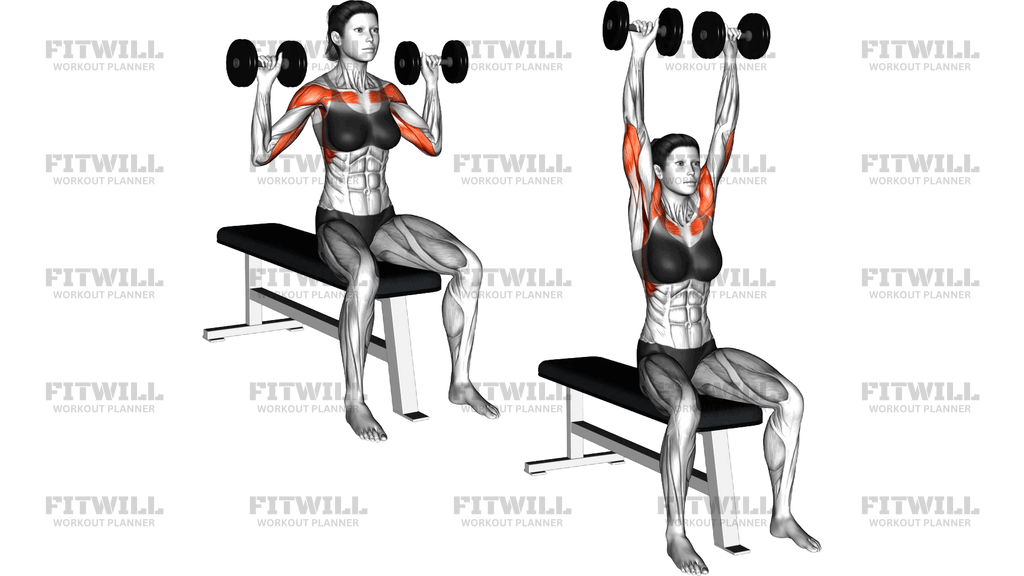
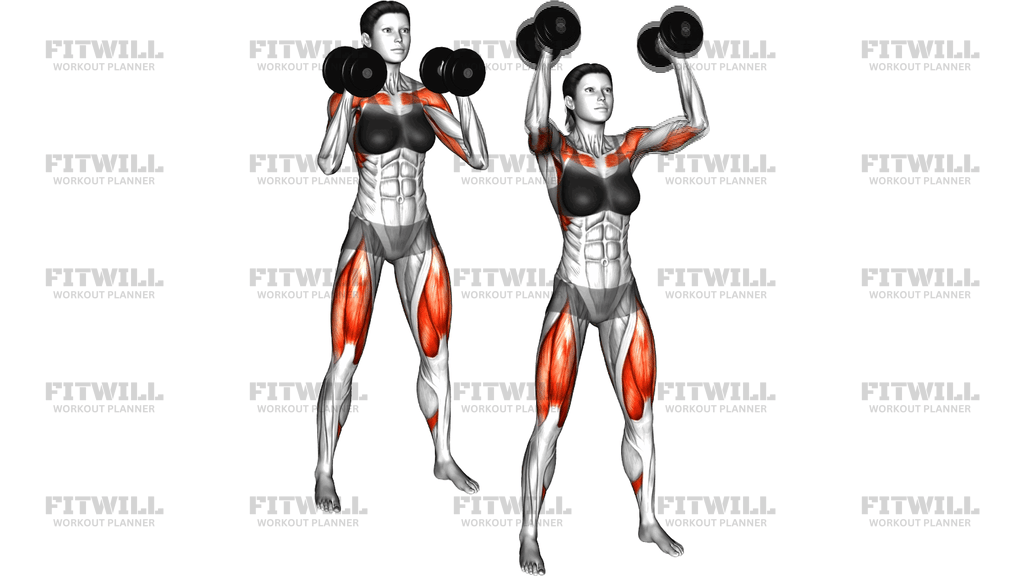
The Dumbbell Push Press is an overhead press that borrows a page from weightlifting: instead of pressing the dumbbells up with shoulder strength alone, you use a short, controlled dip of the knees and a forceful leg drive to help launch the weights overhead. You hold a dumbbell in each hand at shoulder height, dip a few inches by bending the knees and hips, then explosively straighten your legs and extend the dumbbells straight up as your hips and knees lock out. The legs start the lift, the shoulders and triceps finish it.
That leg drive is what separates the push press from a strict press, and it is also what makes it so useful. Because the contribution from the legs lets you handle heavier dumbbells than you could press strictly, the movement builds serious pressing power while still challenging the front and side shoulders and the triceps through the top half of the range. The dip itself loads the quads and glutes, and holding a heavy pair of dumbbells overhead demands a braced trunk from ribs to pelvis.
The Dumbbell Push Press suits lifters who want to develop overhead strength and power without a barbell, and it transfers well to sport actions where force travels from the ground through the hips to the hands, like throwing, sprinting, or contact sports. It is also a practical next step for people who have stalled on strict dumbbell presses: the momentum from the leg drive lets you overload the movement, and the shoulders still work hard to control and complete the lockout.
Setup matters more than it looks like it would. The dumbbells should rest on the fronts of your shoulders with wrists stacked over elbows, and your feet should stay flat and planted at about hip width. If the dumbbells drift behind your head during the dip or your heels lift as you drive, the force leaks out and the shoulders end up pressing from a disadvantaged angle. Keeping the torso relatively upright through the dip, then finishing with the dumbbells directly over the midfoot, keeps the whole chain aligned.
Executed well, each rep follows a simple rhythm: dip, drive, press, and lower the dumbbells back to the shoulders under control before starting the next rep. Breathe in at the top or before the dip, brace the trunk, and exhale as you drive and press. Because this is a power movement, most people get the most out of crisp, quality reps with moderate to heavy dumbbells rather than grinding out slow, sloppy ones. Leave a rep or two in the tank, and stop the set the moment your lockout starts drifting forward or backward.
[ Workout Log & Planner ]
Put your next workout in Fitwill
Keep your plan and training log ready when you are.


Instructions
- Stand with your feet about hip width apart, toes pointing forward or turned slightly out, and hold a dumbbell in each hand at shoulder height.
- Rest the inner heads of the dumbbells on the fronts of your shoulders with your palms facing forward or slightly inward, elbows tucked in front of the ribcage rather than flared wide.
- Pull your ribs down, squeeze your glutes lightly, and brace your trunk as if preparing to absorb a light push to the stomach.
- Take a breath into your belly, then dip by bending your knees and hips a few inches, keeping your torso upright, heels flat, and the dumbbells in contact with your shoulders.
- Reverse the dip explosively by driving the floor away and snapping your hips and knees to a full stand, keeping the dumbbells stacked over your elbows as you rise.
- As the leg drive reaches its peak, press the dumbbells straight up and finish with your arms locked overhead, biceps close to your ears and the weights stacked over your midfoot.
- Pause briefly at the top, then lower the dumbbells under control back to the fronts of your shoulders, bending the elbows and letting the weights settle before the next rep.
- Exhale as you drive and press, then reset your brace at the shoulders before each additional repetition.
- Keep your feet planted for the entire set; do not step, hop, or let your heels rise during the drive.
- At the end of the set, lower the dumbbells to the floor with a hinge at the hips rather than rounding forward under fatigue.
Tips & Tricks
- Keep the dip shallow, roughly the depth you would use for a quarter squat. A deep dip turns the rep into a squat-and-press and lets the dumbbells drift off the shoulders, which forces you to re-position mid-lift.
- If the dumbbells swing out in front of you as you drive, your elbows have probably dropped too low during the dip. Keep them just in front of the torso so the weights stay stacked over the wrists.
- Think of the leg drive as a punch upward, not a jump. If your feet leave the floor, you are spending force on air instead of on the dumbbells.
- Finish each press with the dumbbells directly over your ears or slightly behind them. Locking out with the weights in front of the head loads the shoulder joint instead of the skeleton.
- Do not let the lower back arch as you press. If your ribs flare and your hips push forward at the top, tighten the glutes and pull the ribs down before your next rep.
- The push press rewards timing, not grinding. If you find yourself pausing between the drive and the press, drop the weight slightly and relearn the smooth dip-drive-press rhythm.
- Start each set by rehearsing one or two reps with a light pair of dumbbells to reestablish the dip depth and timing before moving to your working weight.
- Avoid twisting the torso to help a stalling arm. If one dumbbell rotates or drifts sideways at lockout, that side has run out of strength and the set should end.
- Because the movement is fast, control belongs on the way down. Lower the dumbbells deliberately to the shoulders instead of dropping them into the catch, which spares the elbows and keeps the next dip clean.
Frequently Asked Questions
What muscles does the Dumbbell Push Press work?
The front and side shoulders and the triceps do most of the finishing work overhead, while the quads and glutes power the dip and drive. The trunk works isometrically to keep the spine steady as force transfers from the legs to the arms.
How is the Dumbbell Push Press different from a strict Dumbbell Shoulder Press?
The strict press relies on the shoulders and triceps alone, while the push press starts with a short knee and hip dip so the legs contribute force. This lets you use heavier dumbbells and makes the lift faster and more explosive.
How deep should the dip be before driving up?
Only a few inches, roughly a quarter squat. Going deeper wastes time and lets the dumbbells fall away from the shoulders, which makes the timing of the drive much harder.
Can beginners do the Dumbbell Push Press?
Yes, but it is smart to learn the strict dumbbell shoulder press and a bodyweight quarter squat first. Starting with light dumbbells lets a beginner practice the dip-drive-press timing before adding meaningful load.
Why do my heels lift off the floor when I drive the dumbbells up?
That usually means the dip was too deep or the weight is coming forward onto the toes. Reset with your weight over midfoot, shorten the dip, and focus on pushing the floor away through your whole foot.
Should my palms face forward or inward during the Dumbbell Push Press?
Either works. A neutral or slightly inward palm position is often more comfortable for the shoulder and keeps the dumbbells sitting naturally on the fronts of the shoulders, so choose the grip that lets your wrists stay stacked over your elbows.
How heavy should the dumbbells be for this exercise?
Use a weight you could strictly press for only a handful of clean reps, since the leg drive is meant to let you overload slightly beyond that. If your form breaks at lockout or the dumbbells drift behind your head, the set is too heavy.
What can I substitute if I do not have dumbbells?
A barbell push press follows the same dip and drive pattern and allows even heavier loading, while a kettlebell push press works well for unilateral setups. Both keep the same leg-to-overhead force transfer.
How many reps should I do on the Dumbbell Push Press?
Because it is a power movement, lower rep sets of roughly three to eight with crisp technique work best. Long, grinding sets tend to turn into slow shoulder presses and lose the explosive intent that makes this lift valuable.
Is it safe to arch the lower back to help press the dumbbells overhead?
A small amount of natural extension at lockout is normal, but deliberately leaning back to finish a rep places the load on the spine instead of the shoulders and triceps. If you need to arch to complete a press, end the set and reduce the weight.