Barbell Zercher Carry
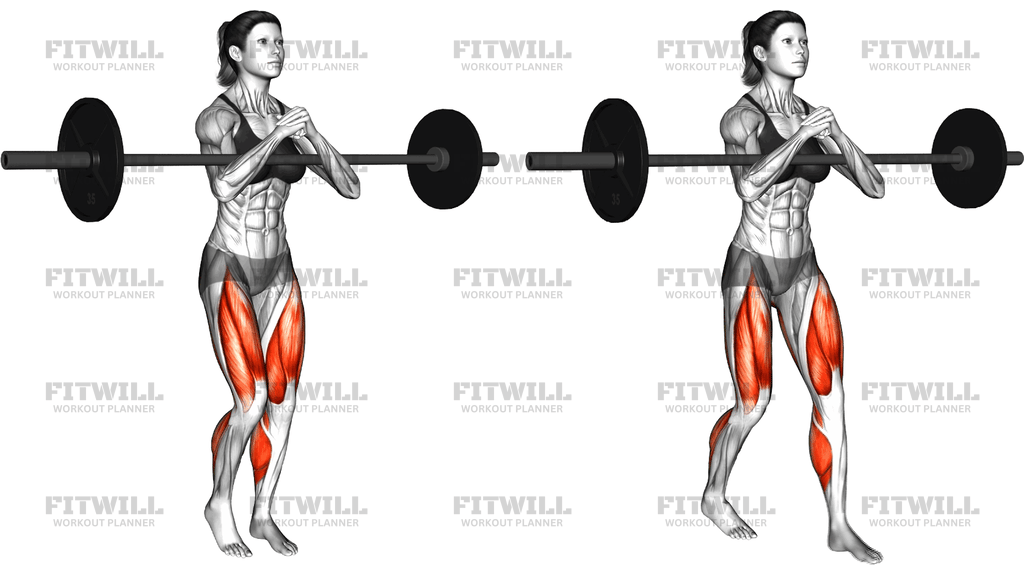
The Barbell Zercher Carry is a loaded carry in which you hold a barbell in the crooks of your elbows rather than in your hands or on your back. The bar sits in the crease of each elbow with your hands clasped together in front of your chest, and you walk with it for a set distance or time. The position looks awkward the first time you try it, and that awkwardness is exactly why it works: the load sits far forward of your midline, forcing your entire trunk to fight to stay upright while your legs move you down the floor.
This exercise is one of the most demanding loaded carries you can do. Because the bar presses into the forearms and the weight pulls you forward, your quads, glutes, and hamstrings have to drive each step while your abs, obliques, and lower back brace hard to keep your ribs stacked over your pelvis. Your upper back, biceps, and forearms work isometrically to keep the bar from sliding or rolling out of the elbow creases. Very few exercises ask the legs and trunk to cooperate under load in quite this way.
The Barbell Zercher Carry suits lifters who already have some training experience, particularly strength athletes, strongman competitors, grapplers, and anyone who wants to build trunk strength that transfers to squats, deadlifts, and real-world lifting. It is also a useful tool for people whose grip gives out before their body does on farmer's carries, since the bar rests in the elbows rather than the hands. That said, it is not usually the right first carry for a complete beginner, because the setup requires enough mobility and bracing skill to keep the bar secure.
Setup matters more here than with most carries. A pad or thick sleeves make the elbow position tolerable, the bar should sit at roughly mid-torso height before you lift it out of the rack, and your elbows belong directly under the bar rather than letting it drift toward your wrists. A sloppy setup shows up immediately as the bar sliding, rolling, or digging into one arm more than the other. Take the time to lift the bar out cleanly, set it in both elbow creases, and stand tall before you take your first step.
Execution is deliberately simple: brace hard, walk with short controlled steps, keep your chest up and eyes forward, and stop the set when your torso starts to lean or the bar starts to slip. Pick a distance of 20 to 40 feet or a time of 20 to 40 seconds per set, and return the bar to the rack or set it down on a bench rather than dropping it. Because the load compresses the torso from the front, breathe steadily on the move instead of holding your breath for the entire set, and treat the bar's contact with your forearms as a signal to keep tension, not to grit through pain.
[ Workout Log & Planner ]
Put your next workout in Fitwill
Keep your plan and training log ready when you are.


Instructions
- Set a barbell in a rack at roughly hip to mid-torso height and load it evenly. Fit a bar pad or wrap a towel around the bar where it will contact your elbows.
- Stand facing the bar with feet hip-width apart, bend your elbows fully, and slide the bar into the crease of both elbows so it rests in the crooks, not against your wrists.
- Clasp your hands together in front of your chest to lock the bar in place, then drive through your legs and stand up to lift the bar out of the rack.
- Take a step back from the rack, set your feet at hip width, and take a deep breath into your belly before bracing your abs and squeezing your glutes.
- Keep your chest tall, ribs down, and eyes forward. Do not let the weight pull your shoulders forward or your lower back into an arch.
- Walk forward with short, deliberate steps, keeping your hips level and minimizing side-to-side sway. Each step should feel planted, not rushed.
- Continue for your target distance, usually 20 to 40 feet, or for 20 to 40 seconds while breathing shallowly and steadily behind the brace.
- When you finish the set, stop with feet together, walk back to the rack, and set the bar back onto the hooks or lower it gently onto a bench. Never drop the bar from the elbows.
- Reset your grip on the bar and your brace before starting the next set, and reposition the pad if it has shifted.
Tips & Tricks
- If the bar digs into your forearms or rolls toward your wrists, your elbows are not bent enough. Lift the bar slightly and re-seat it deeper into the elbow creases before continuing.
- Leaning back as you walk is a sign the load is too heavy or your brace has faded. Reduce the weight and rebuild the set with your ribs stacked over your hips.
- Short steps beat long strides in this exercise. Long steps make the bar bounce in the elbow creases and pull your torso forward with every stride.
- Warm up your elbow flexors and forearms first. The bar sits on soft tissue, and cold, tight arms make the position far more uncomfortable than it needs to be.
- If your elbows cannot tolerate the bare knurling, use a bar pad or folded towel every set, not just when it starts to hurt. Discomfort in the arms changes how you brace.
- Start lighter than you think you need. The Zercher position multiplies the challenge of any given load compared with a farmer's or suitcase carry.
- Keep your hands clasped rather than gripping the bar. If your hands start wrestling with the bar mid-set, your elbows have let it drift out of position.
- Stop the set when form breaks, not when the timer ends. A torso lean or a slipping bar is the signal to rack the weight.
- Turn deliberately at the end of the walking path. Quick pivots under a front-loaded bar are where most balance mistakes happen.
Frequently Asked Questions
Which muscles does the Barbell Zercher Carry work the most?
The quads and glutes drive each step while the abs, obliques, and lower back brace against the front-loaded bar. Your biceps, forearms, and upper back also work hard to hold the bar in the elbow creases.
Why hold the bar in the elbows instead of the hands?
The Zercher position removes the grip from the equation and places the load directly in front of your torso, which forces your trunk and legs to work together under compression. It also loads the body more anteriorly than a farmer's carry, making the core demand much higher.
Is the Barbell Zercher Carry suitable for beginners?
Beginners can learn it, but usually with an empty or lightly loaded bar and short distances until the elbow position and brace feel natural. Most people are better off mastering farmer's carries first, then adding the Zercher variation.
How far or how long should I walk?
Start with 20 to 30 feet or about 20 seconds per set for 3 to 4 sets. Increase distance or load gradually once you can complete every set without your torso leaning or the bar shifting.
The bar hurts my forearms. Is that normal?
Some pressure on the forearms is part of the exercise, but sharp pain is not. Use a bar pad or wrapped towel, make sure the bar sits in the elbow creases rather than on bone, and reduce the load if the discomfort changes how you walk.
What is the most common mistake in this exercise?
Letting the bar slide toward the wrists and the chest collapse forward as fatigue builds. Both usually mean the set has gone on too long or the weight is too heavy, so rack the bar and reset.
Can I substitute another exercise if I do not have a barbell?
A heavy sandbag hugged in the crooks of the arms or a kettlebell held in the Zercher position replicates the front-loaded carry well. A dumbbell held at the chest is a gentler option, though it places less demand on the elbows and trunk.
Should I breathe or hold my breath while walking?
Take a deep breath and brace before you start, then breathe shallowly and steadily behind that brace as you walk. Holding your breath for an entire set spikes pressure and usually causes the brace to collapse late in the distance.
How do I finish a set safely?
Walk back to the rack, set the bar back onto the hooks at the height you lifted it from, or lower it gently onto a bench. Dropping the bar from the elbows risks injury to your arms and damages the plates and floor.