Dumbbell External Rotation
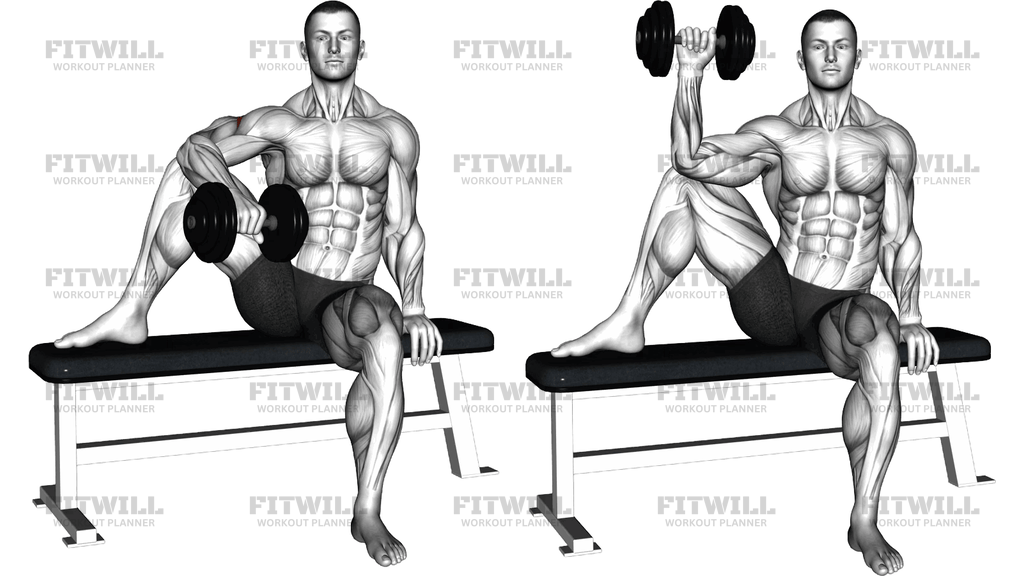
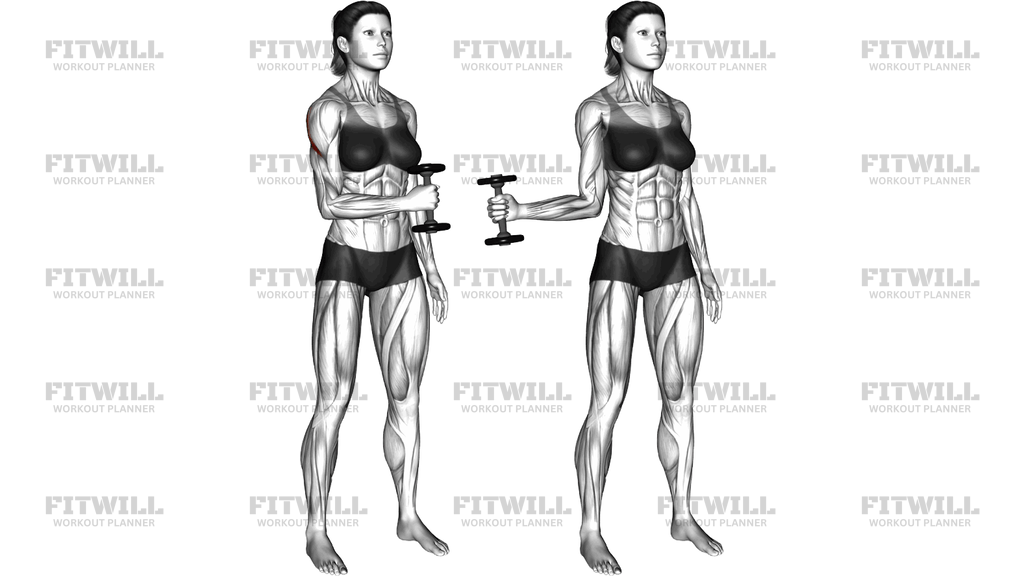
The Dumbbell External Rotation is a small, focused isolation exercise for the rotator cuff, the group of muscles that stabilizes the shoulder joint. Standing upright with a light dumbbell in one hand, you bend your elbow to 90 degrees, pin your upper arm against your side, and rotate your forearm outward from in front of your stomach to beside your body. The movement happens entirely at the shoulder joint, and the range is short, which is exactly how it should be.
This is one of the most useful accessory exercises you can do for shoulder health. It directly trains the external rotators, mainly the infraspinatus and teres minor, which are usually far weaker than the larger pressing muscles around the shoulder. People who bench press, press overhead, or do a lot of pushing work often develop an imbalance where the internal rotators dominate. The Dumbbell External Rotation helps restore balance, which supports smoother shoulder mechanics and can reduce the risk of irritation during heavier training.
The setup matters more here than in almost any other isolation exercise. Because the load is light, it is easy to cheat by swinging the forearm, flaring the elbow away from your ribs, or leaning your torso into the rotation. Keeping the upper arm glued to your side and the elbow at a fixed 90-degree angle ensures the rotation comes from the shoulder itself rather than from momentum or body English. A towel tucked between your elbow and ribs is a simple way to hold yourself honest.
To execute it well, stand tall with your feet about hip-width apart, brace your core lightly, and keep your wrist neutral and stacked over your elbow. Rotate the dumbbell outward in a smooth arc until your forearm points out to the side or you reach the end of your comfortable range, pause briefly, then lower it back with the same control. The tempo should feel almost slow-motion; most people need only 1 to 5 pounds per hand.
You will see this movement used in warm-ups before pressing days, in rehabilitation-style programs after shoulder setbacks, and as a finishing exercise on arm or shoulder days. It pairs naturally with an internal rotation variation or with band work to cover both directions of rotation. Because the dumbbell version is done standing, it also asks your core and posture to hold you steady, which is a small bonus but not the main point.
Treat this as a precision exercise rather than a strength display. If you have to swing, shrug, or shift your torso to lift the weight, the dumbbell is too heavy. Light, strict reps with a full pause at the top do far more for the rotator cuff than heavy, loose ones, and pushing the weight up too quickly is the most common way people aggravate the shoulder with this otherwise gentle drill.
[ Workout Log & Planner ]
Put your next workout in Fitwill
Keep your plan and training log ready when you are.


Instructions
- Stand upright with your feet about hip-width apart and hold a light dumbbell in one hand with a neutral grip, your thumb pointing up.
- Bend your elbow to 90 degrees and pin your upper arm firmly against your ribs so your forearm starts across the front of your stomach.
- Rest your free hand lightly on your hip or a stable surface, roll your shoulders back and down, and brace your core to stop your torso from twisting.
- Keeping the elbow glued to your side and bent at 90 degrees, rotate your forearm outward in a smooth arc, letting the dumbbell travel from in front of your body to out beside you.
- Stop when your forearm points out to the side or you reach the end of your pain-free range, and hold that end position for a brief pause.
- Slowly rotate the dumbbell back to the starting position in front of your stomach, resisting gravity on the way down rather than letting it drop.
- Exhale as you rotate outward and inhale as you return to the start.
- Complete all reps on one side, then switch the dumbbell to the other hand and repeat, keeping both sides even.
- Between sets, shake out your arm and check that your elbow position and tempo stayed strict before starting the next set.
Tips & Tricks
- Tuck a small rolled towel between your upper arm and ribs. If the towel falls during the set, your elbow is drifting away from your body and the shoulder is no longer doing the rotating.
- Choose a weight light enough that you could pause for two full seconds at the end of each rotation. If the dumbbell flops backward at the top, go lighter.
- Watch for the shrug tell: if your shoulder rises toward your ear as you rotate, you are compensating with your upper traps instead of the rotator cuff. Reset your shoulder blade down before each rep.
- Keep your wrist straight and stacked over your elbow. Letting the wrist bend back turns this into a forearm exercise and puts the load in the wrong place.
- Control the lowering half as much as the lift. The eccentric rotation is where most of the useful work happens, so never let gravity yank the dumbbell back to the start.
- Do not chase range. Rotating a few degrees past where your torso starts twisting or your shoulder rolls forward is counterproductive; a shorter, cleaner arc beats a longer, sloppy one.
- If you feel a pinching sensation at the front of the shoulder, check that your elbow has not crept forward. Re-anchor it against your side before continuing.
- Place this exercise early in your session as a warm-up with very light weight, or at the end when your pressing muscles are already fatigued and the cuff has to do the work.
- Alternate sides between sets rather than doing all reps back-to-back on one arm, so your non-working side does not accumulate unnecessary tension while you wait.
Frequently Asked Questions
Which muscles does the Dumbbell External Rotation work?
It primarily targets the external rotators of the rotator cuff, especially the infraspinatus and teres minor, with support from the rear deltoid and upper back stabilizers. These are small muscles, so the exercise is done with light weight and strict form.
Why is my elbow kept bent at 90 degrees and pinned to my side?
That position removes momentum and forces the rotation to happen at the shoulder joint, where the rotator cuff works. If the elbow drifts away from your ribs, your torso and larger shoulder muscles take over and the targeted muscles stop doing the job.
How heavy should the dumbbell be for the Dumbbell External Rotation?
Far lighter than you would expect, often 1 to 5 pounds even for strong lifters. If you cannot pause briefly at the end of each rotation without swinging, the weight is too heavy for this movement.
Can beginners do the Dumbbell External Rotation?
Yes, and it is actually a great first shoulder exercise because the light load makes it easy to learn control. Beginners should focus entirely on keeping the elbow still and the tempo slow before adding any weight.
Should I do the Dumbbell External Rotation before or after pressing exercises?
Doing a couple of light sets before bench pressing or overhead pressing warms up the cuff and primes shoulder stability. You can also do heavier-feeling, still-light sets at the end of a session as dedicated rotator cuff work.
What is the most common mistake with this exercise?
Using too much weight and compensating by swinging the forearm, shrugging the shoulder, or twisting the torso. All three shift work away from the rotator cuff, so reset with a lighter dumbbell and re-anchor your elbow against your side.
Can I use a resistance band instead of a dumbbell?
Yes, a band anchored at elbow height provides similar external rotation resistance with slightly different tension at the top. The dumbbell version is convenient because you need no anchor point, and gravity keeps constant tension through the lowering phase.
Is the Dumbbell External Rotation safe if my shoulder hurts?
The movement is generally gentle, but pain is a signal to stop and reassess rather than push through. Reduce the weight, shorten the range to an arc that feels comfortable, and consult a qualified professional if discomfort persists.
How many sets and reps should I do?
Two to three sets of 10 to 15 controlled reps per arm works well for most people. Because the rotator cuff responds to quality rather than load, prioritize strict tempo over adding reps or weight each week.
Should I train both arms in the Dumbbell External Rotation even if only one shoulder feels weak?
Yes, train both sides with equal volume. Matching the weaker side's reps on the stronger side prevents imbalances from widening rather than closing.