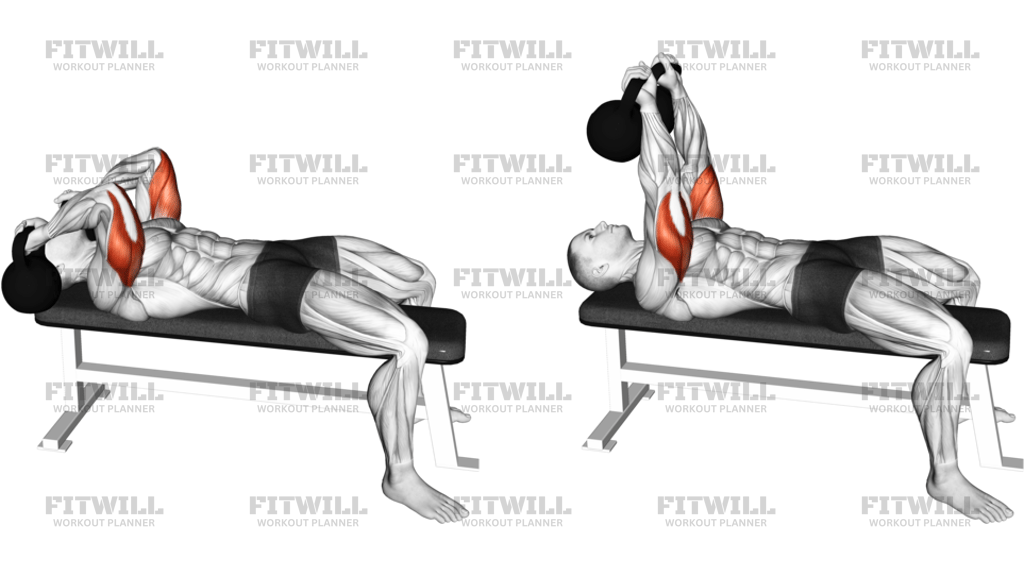
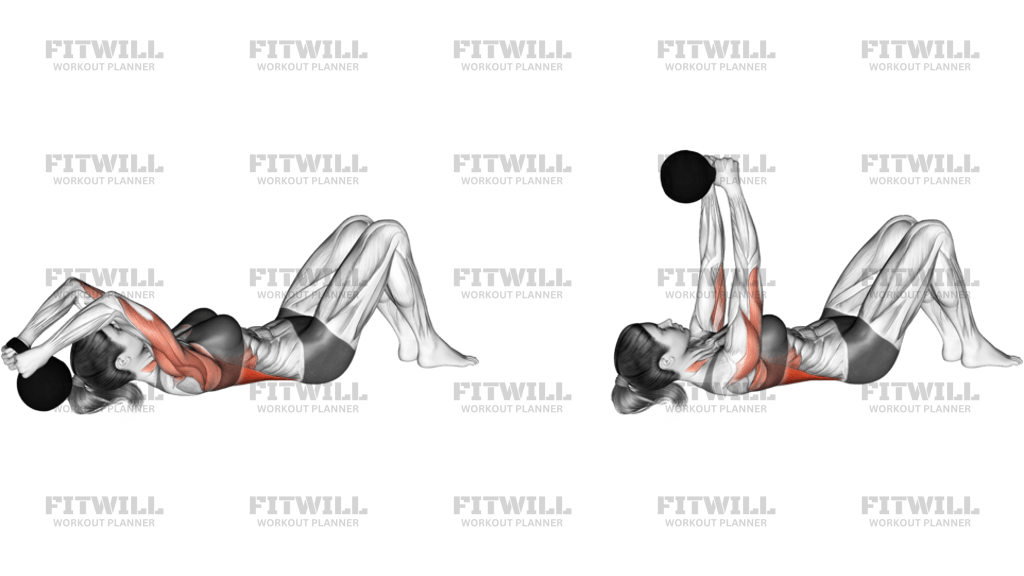
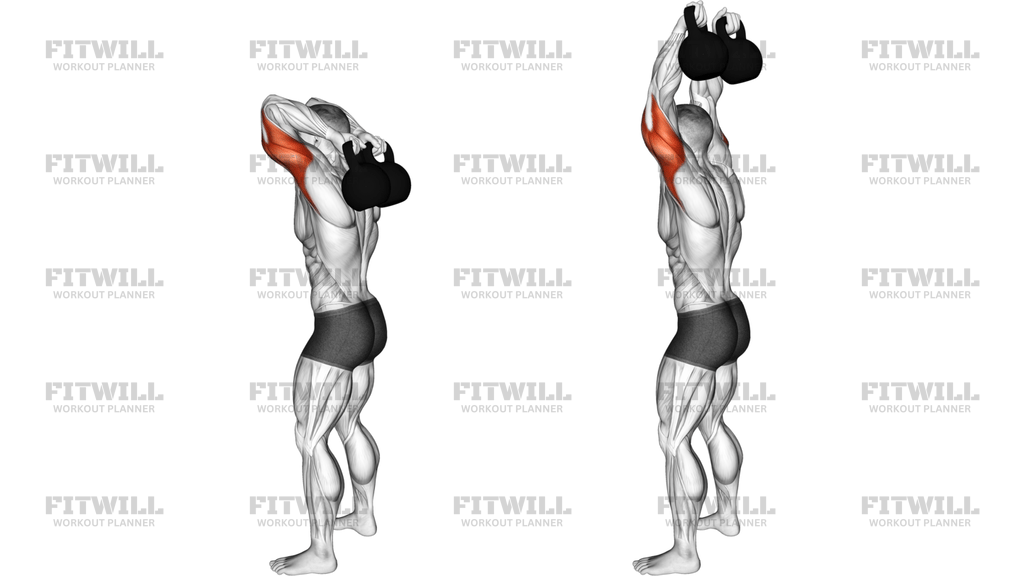
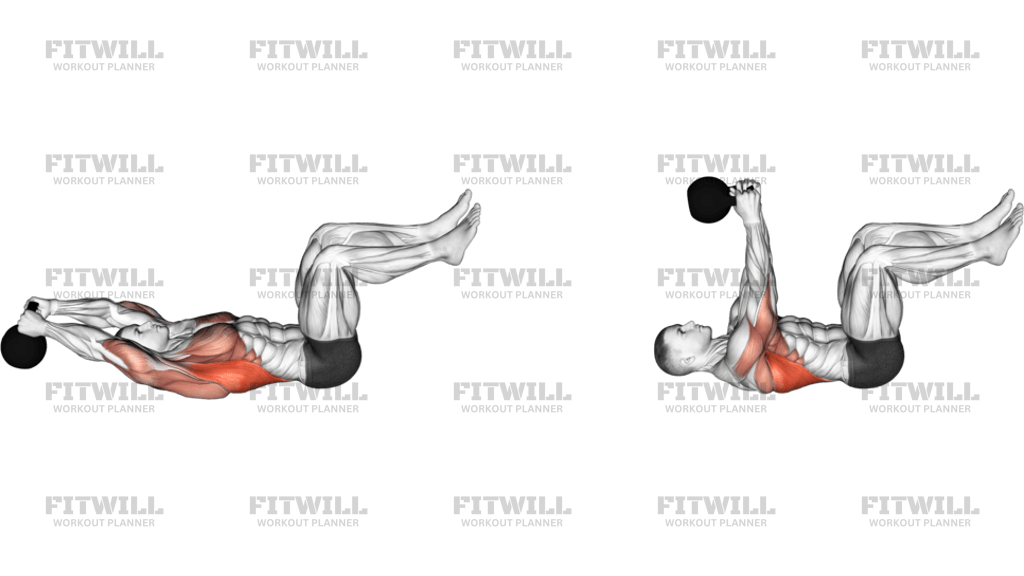
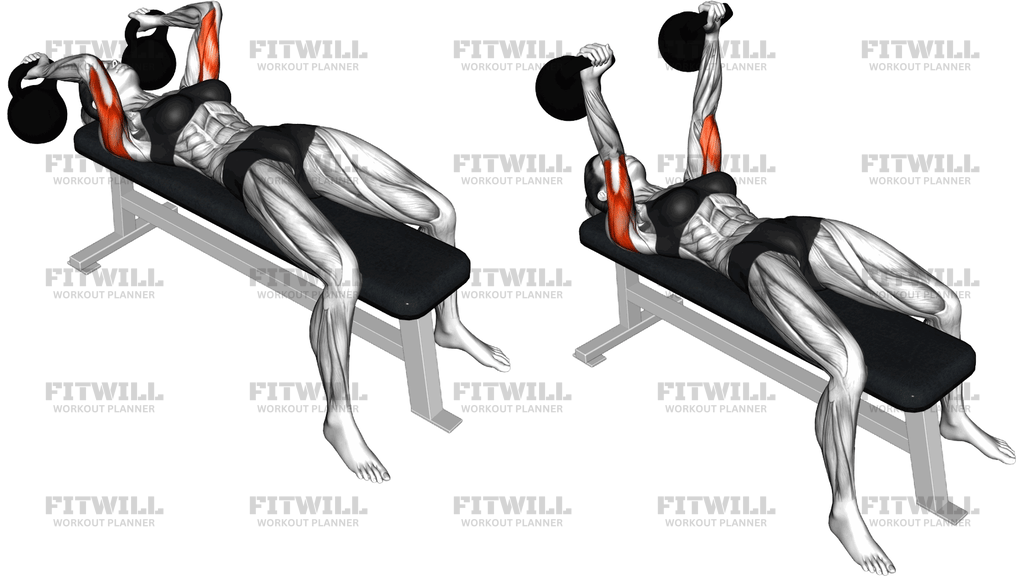
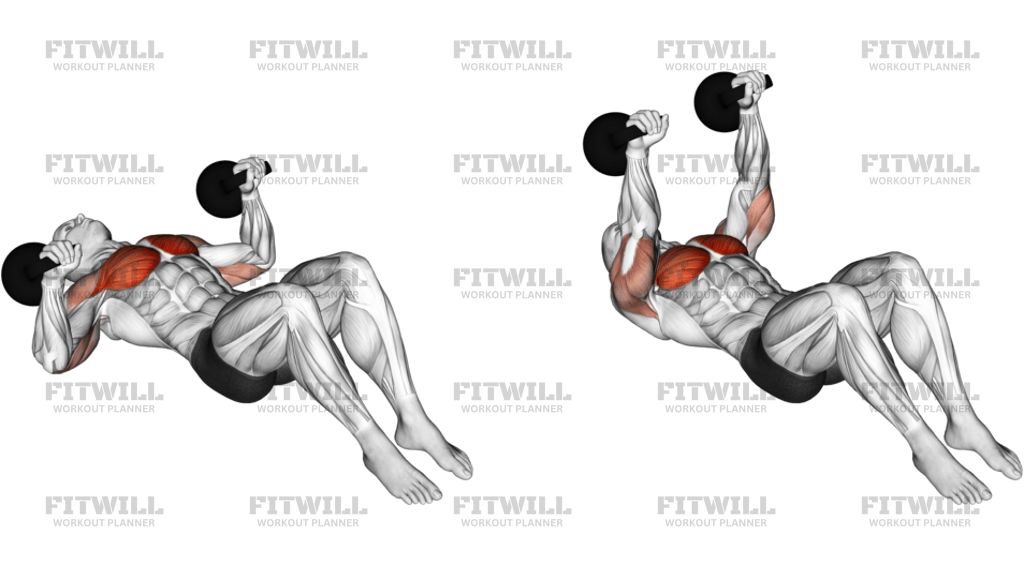
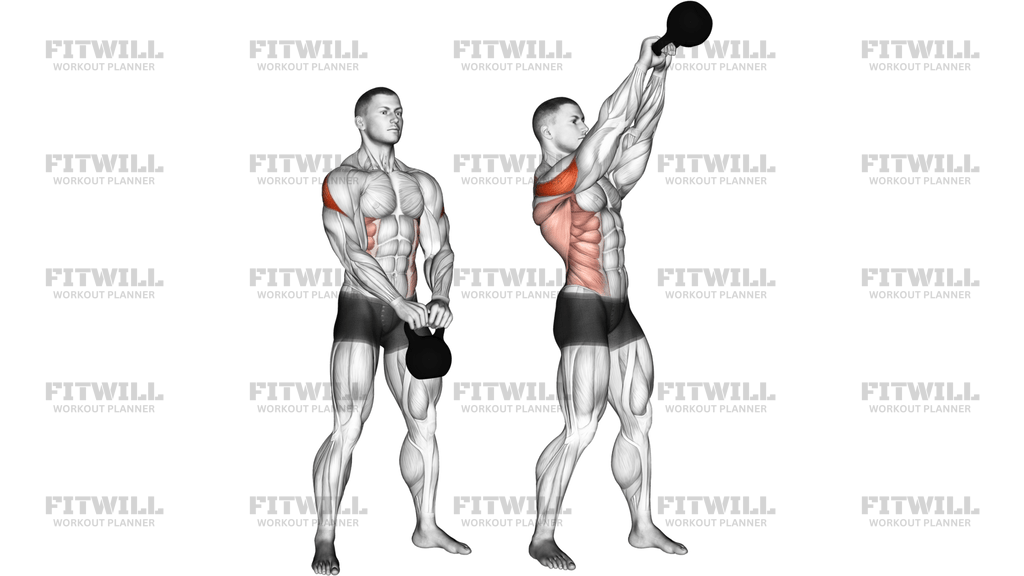
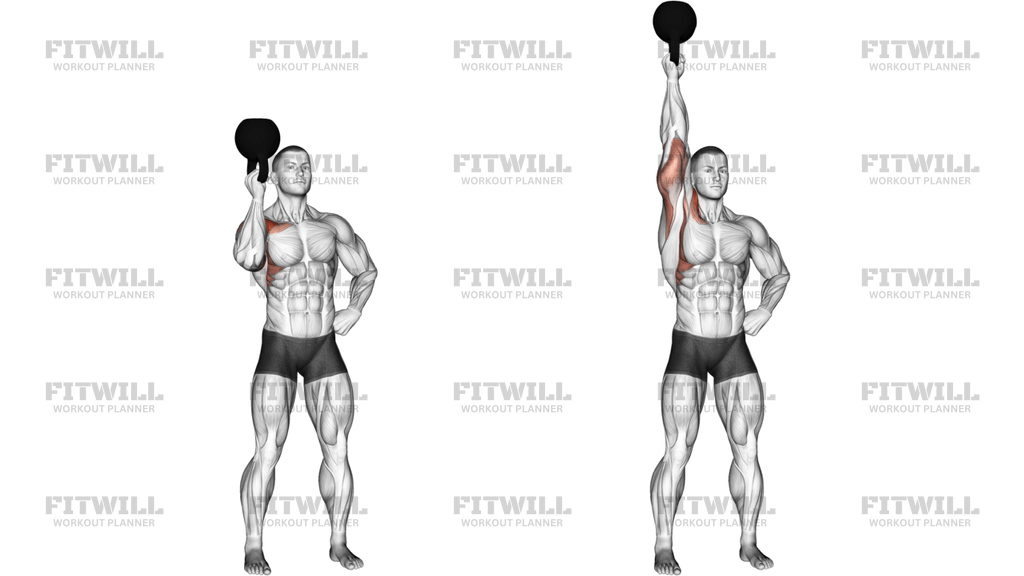
Kettlebell Overhead Triceps Extension
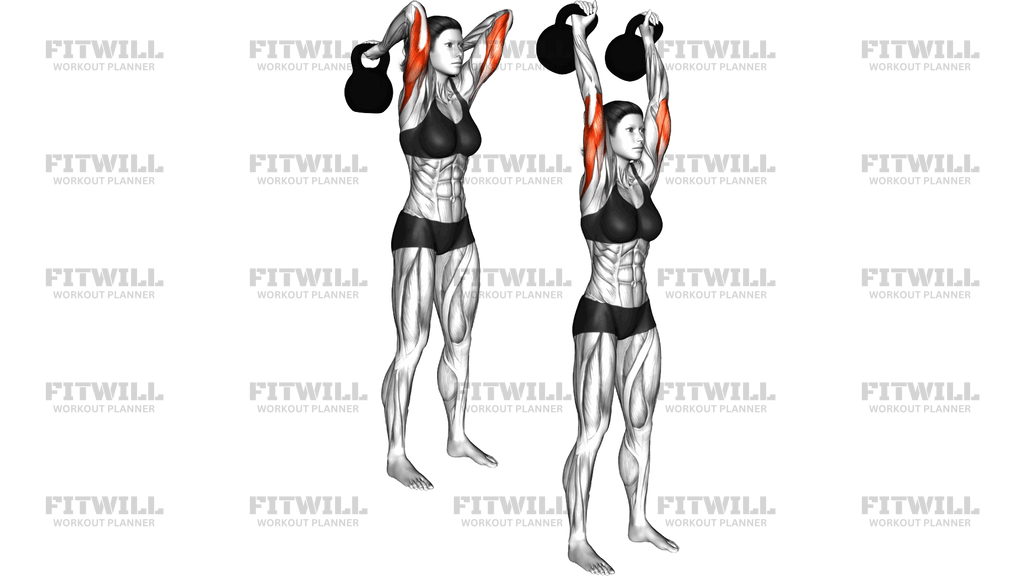
The Kettlebell Overhead Triceps Extension is a standing movement where you press one or two kettlebells overhead and lower them behind your head by bending at the elbows, then extend back up to the lockout. Because the weight sits above your center of mass and travels behind your head, the triceps are loaded through a long range, especially at the bottom where the muscle is stretched. The standing position also asks your shoulders, upper back, and trunk to hold you steady while your arms do the work.
This exercise is a solid choice for anyone who wants bigger, stronger upper arms without needing a bench or cable station. It is particularly useful for targeting the long head of the triceps, which only gets fully stretched when the shoulder is flexed overhead as it is here. Lifters who already do pressing movements like overhead presses and push-ups will find this fills the extension gap that presses leave behind.
Setup matters more here than in most arm exercises. With the kettlebell or kettlebells held overhead, a soft trunk or flared rib cage shifts the load onto your lower back and lets the shoulders drift forward. Feet planted about hip-width apart, ribs stacked over the pelvis, and elbows pointing forward rather than out to the sides keep the movement in the arms and off the spine.
Execution comes down to controlling the descent. Bend only at the elbows and let the kettlebell travel down behind your head until you feel a clear stretch along the back of the upper arm, then drive the elbows up toward the ceiling to return to full lockout. The kettlebell's offset center of mass pulls the weight slightly outward at the bottom, so a firm, neutral grip and deliberate tempo keep the path tidy.
In practice, this movement slots into arm-focused days, as a finishing exercise after heavy presses, or as the main triceps movement in minimal-equipment home training since a single kettlebell is enough. If holding two kettlebells overhead feels unstable, start with one held in both hands and progress from there. Stop short of the bottom position if you feel pinching at the shoulder or strain in the neck, and always lower the kettlebell back to your chest or shoulders rather than dropping it once the set ends.
[ Workout Log & Planner ]
Put your next workout in Fitwill
Keep your plan and training log ready when you are.


Instructions
- Stand with your feet about hip-width apart and grip a kettlebell in each hand by the handle, or hold a single kettlebell with both hands if you are still building overhead control.
- Clean or press the kettlebells up to the starting position: arms fully extended overhead, wrists neutral, and the handles resting across your palms rather than hanging from your fingers.
- Set your stance and brace before you move: squeeze your glutes lightly, draw your ribs down over your pelvis, and take a steady breath into your belly to lock your trunk upright.
- Point your elbows forward so they track roughly under your wrists, and keep your upper arms close to your ears instead of flaring out to the sides.
- Inhale, then bend only at the elbows and lower the kettlebells behind your head in a smooth arc until you feel a solid stretch along the back of your upper arms.
- Pause briefly at the bottom without letting your elbows drift outward or your lower back arch to absorb the weight.
- Exhale and extend your elbows, driving the kettlebells straight back up until your arms reach full lockout overhead with your biceps near your ears.
- Keep your head neutral throughout; look forward, not up, so your neck stays long and out of the movement.
- Complete all reps in one continuous overhead set, then bring the kettlebells down to shoulder height with control before racking or setting them on the floor.
Tips & Tricks
- The most common mistake is turning this into an overhead press by letting the elbows drift wide and the shoulders take over. Check your elbow position at the bottom of every rep; they should point forward and stay roughly shoulder-width or narrower.
- If your lower back arches as the kettlebells descend, the weight is too heavy or your brace has collapsed. Squeeze your glutes and exhale as you press back up, or drop to a lighter bell before your spine pays for it.
- Do not chase depth at the expense of shoulder comfort. Going to a full stretch behind the head is the goal, but stopping an inch short is fine if that is where your current shoulder mobility ends.
- Grip the handle so the kettlebell body rests against the back of your forearm at lockout. Letting the bell rotate or hang loose at the bottom makes the arc unpredictable at the exact point where the stretch is deepest.
- Use a slower lowering phase, around two to three seconds down, rather than bouncing out of the stretched position. The long head of the triceps benefits most from the loaded stretch, so rushing it cuts the value of the whole rep.
- Keep your neck relaxed and your gaze forward. Craning up to watch the kettlebells behind you tightens the upper traps and shortens the path your elbows can travel.
- If two kettlebells feel wobbly overhead, regress to one bell held in both hands around the horn. Build timing and stability there before splitting the load between two arms.
- Warm up your shoulders with a few overhead reaches or light presses first. Going straight into a deep overhead stretch with cold shoulders is where most discomfort with this exercise starts.
Frequently Asked Questions
Which muscles does the Kettlebell Overhead Triceps Extension work?
The triceps are the primary muscle, with strong involvement of the long head because the shoulder is flexed overhead during the extension. Your front shoulders, upper traps, and core also work to hold the weight steady overhead.
Why perform the extension overhead instead of with the arms at the sides?
The long head of the triceps crosses the shoulder joint, so it only reaches a full stretch when the upper arm is overhead. This position loads the triceps through a longer range than pushdowns or kickbacks, which keep the upper arm down.
Is the Kettlebell Overhead Triceps Extension suitable for beginners?
Yes, provided you start with a light kettlebell held in both hands and keep the range to what your shoulders allow. Beginners should prioritize a stable trunk and forward-pointing elbows before adding load or depth.
Should I use one kettlebell or two?
One kettlebell held with both hands is the better starting point because it lets you learn the path with less stability demand. Two kettlebells doubles the load and requires each arm to work independently, which is a good progression but harder to control.
My elbows flare out at the bottom of the rep. How do I fix that?
Flared elbows usually mean the weight is too heavy or your grip has loosened. Reduce the load, grip the handle firmly with wrists neutral, and cue yourself to keep your upper arms vertical and close to your ears as you lower.
I feel the movement in my lower back instead of my triceps. What is going wrong?
Your ribs are likely flaring and your lower back is arching to handle the load overhead. Brace your trunk before each rep, squeeze your glutes, and if the arch persists, use a lighter kettlebell so you can stay stacked.
Can I do this exercise if overhead pressing bothers my shoulders?
Proceed carefully, since the deep behind-the-head position demands decent shoulder mobility. Limit the range to before any pinching sensation, and consider substitutions like lying triceps extensions or cable pushdowns that keep the shoulder in a friendlier position.
How many sets and reps work best for the Kettlebell Overhead Triceps Extension?
Two to four sets of 8 to 15 reps suits most goals, staying light enough that your trunk does not break down before your arms fatigue. Because the overhead position is demanding on stability, err toward more reps with less weight.
What can I use if I do not have a kettlebell?
A single dumbbell held in both hands works well for the same overhead path. Resistance bands anchored behind you are another option, though the resistance curve differs since bands are easiest at the stretched position.
How should I lower the kettlebells when the set is finished?
Never drop them from overhead. Bend your elbows and bring the kettlebells down under control to shoulder or chest height, then set them on the floor with a flat back.