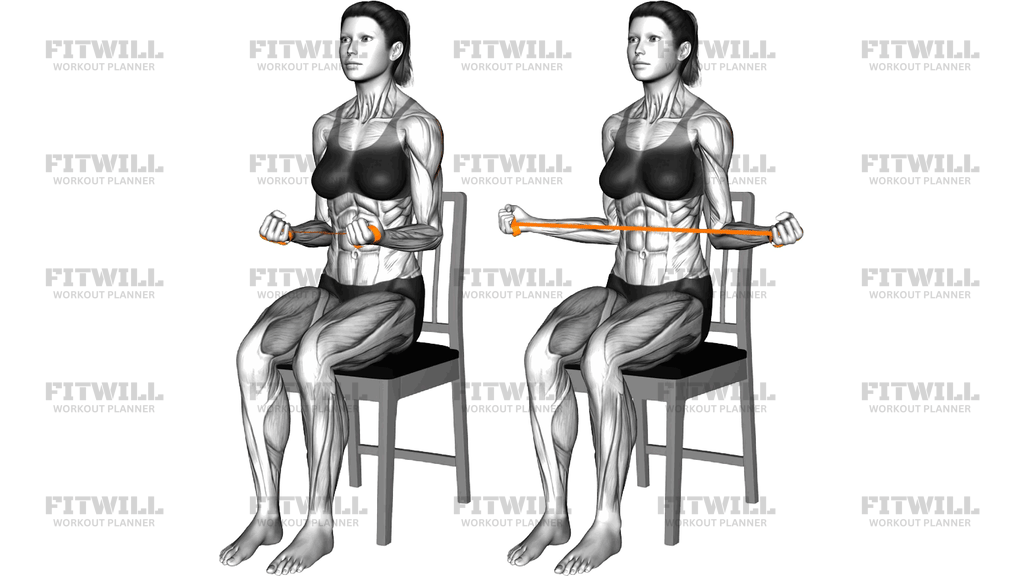
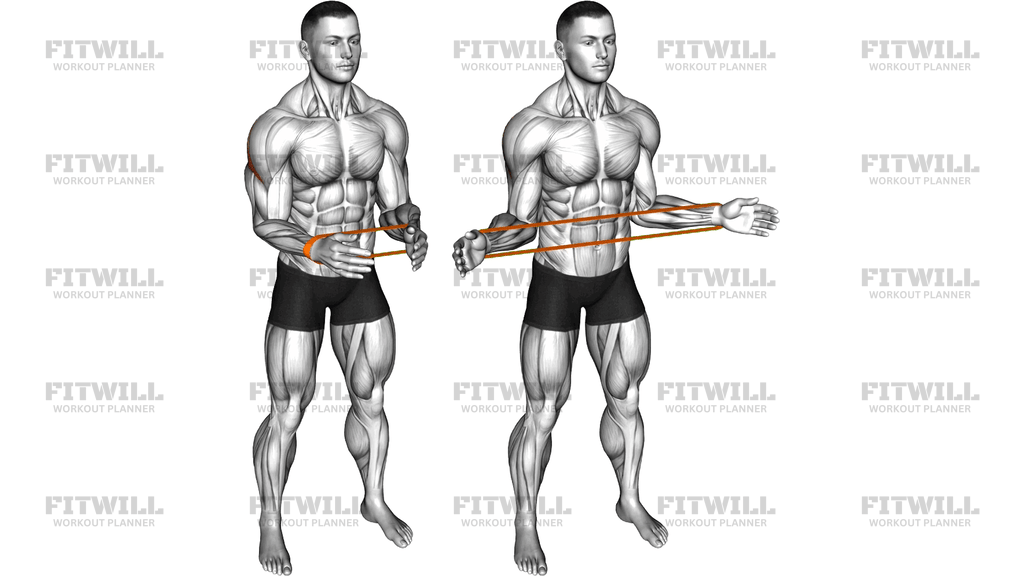
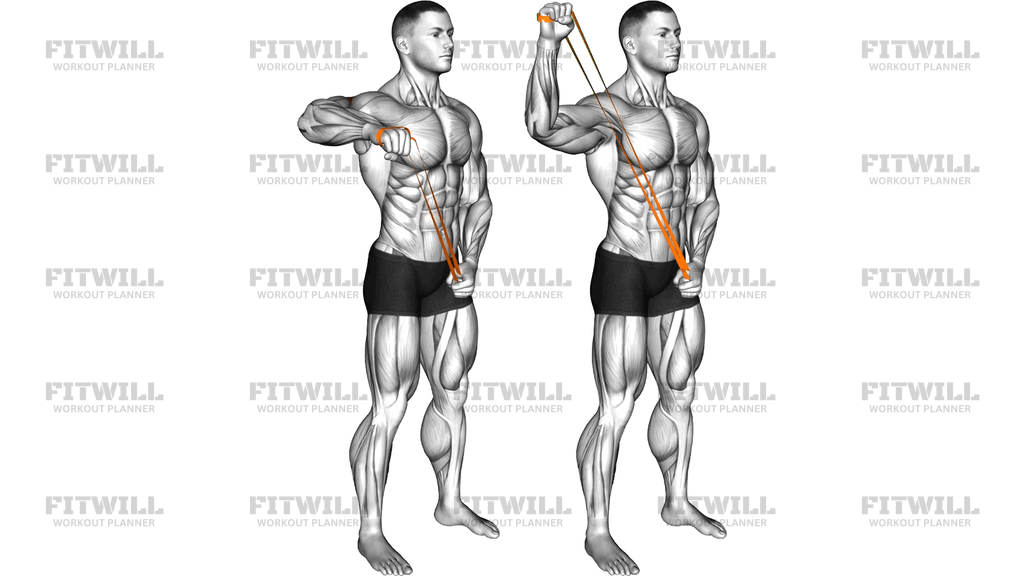
Resistance Band Standing Shoulder Internal Rotati
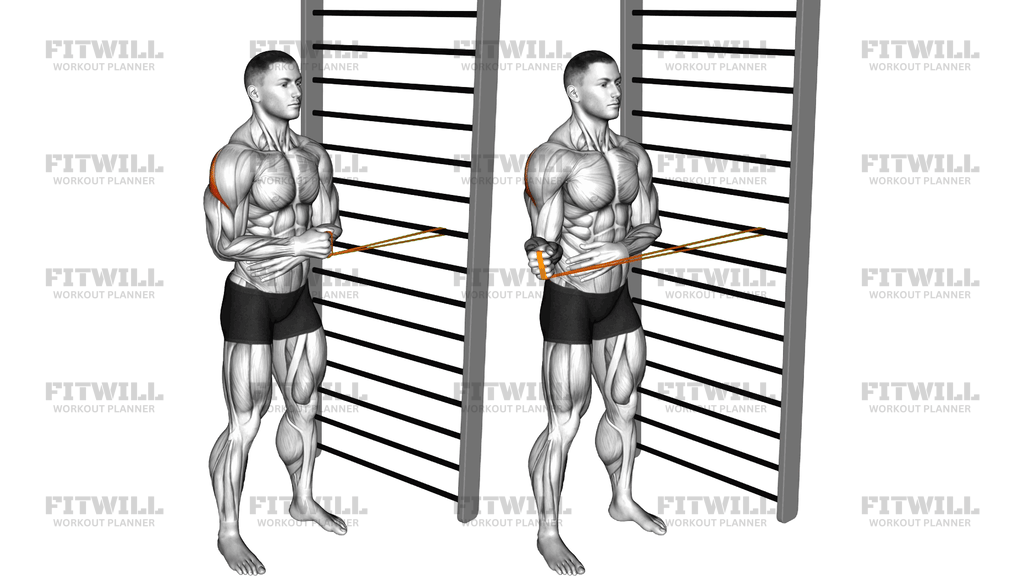
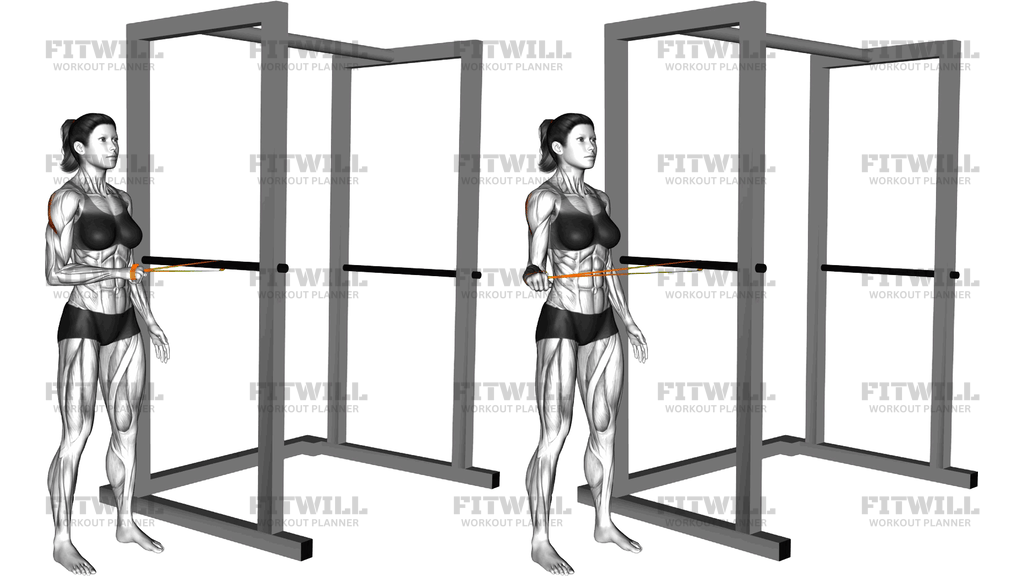
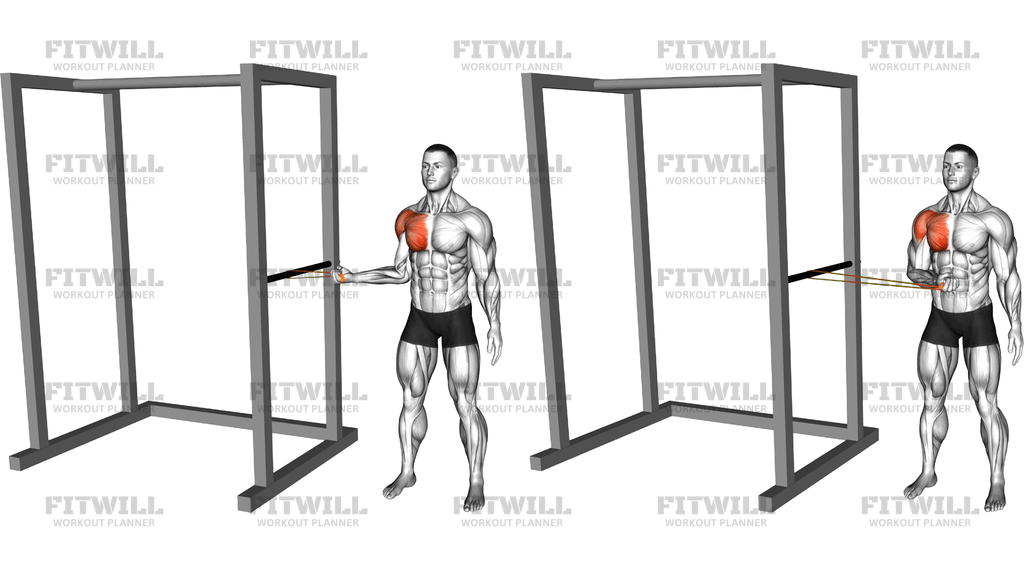
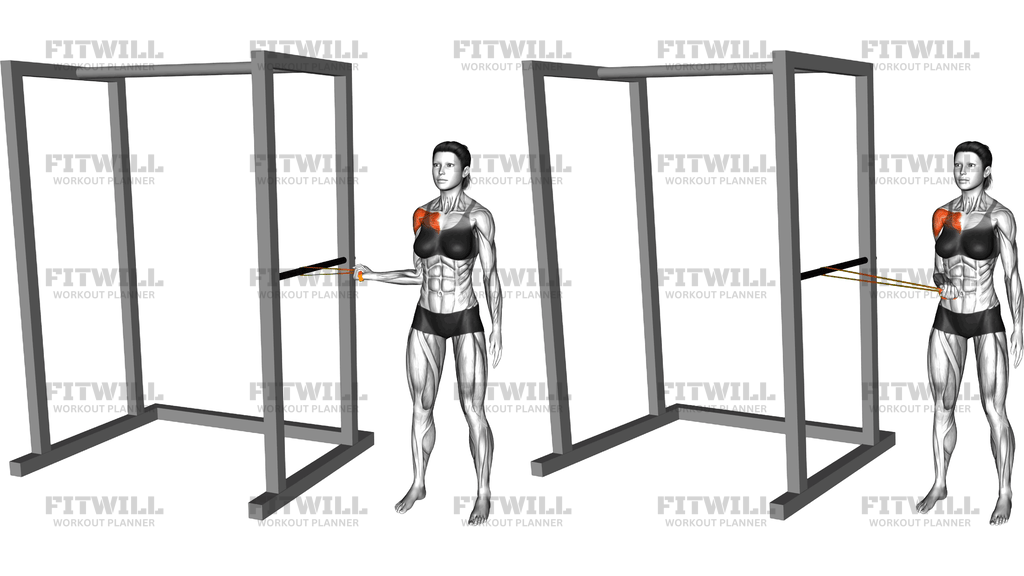
Resistance Band Standing Shoulder Internal Rotation is a single-arm isolation exercise that trains the rotator cuff muscles responsible for rotating the upper arm inward toward the midline of the body. You anchor a resistance band at roughly elbow height, stand side-on to the anchor point, and pull the band across your body by rotating at the shoulder while keeping the elbow bent and pinned to your side. Because the band provides tension that pulls the arm back out toward the anchor, the working shoulder has to stay engaged through the entire range rather than only at the hardest point.
The main muscle at work here is the subscapularis, the largest of the four rotator cuff muscles, with support from the pectoralis major and the front of the shoulder. These are the tissues that generate internal rotation in daily actions like reaching into a back pocket, tucking in a shirt, or pulling a door toward you. Strengthening them in a controlled, low-load way is a common recommendation in rehab and prehab settings, and this standing band version is one of the simplest ways to load the pattern without heavy equipment.
Setup matters more than load in this movement. Stand far enough from the anchor that there is no slack at the start, and position yourself so the band pulls straight out to the side of your working arm. Keep your elbow bent to about 90 degrees and pressed lightly against your ribs throughout — once the elbow drifts away from the body, the shoulder joint angle changes and the rotator cuff is no longer doing the work you intended. A small towel rolled between your elbow and torso is a handy feedback trick: if the towel drops, your elbow moved.
Execution should be slow and deliberate. Rotate your forearm and hand across the front of your body until the movement naturally stops, pause briefly, then resist the band on the way back out to the starting position. The return is where many people rush, and the eccentric control is where much of the benefit lives. Keep your wrist neutral, your shoulders level, and your torso still — twisting your trunk to add range defeats the purpose of the exercise.
This exercise fits well into shoulder warm-ups, rotator cuff routines, and return-to-training programs after the shoulder has been cleared for loading. Because the resistance is light and adjustable simply by changing your distance from the anchor, it suits beginners as well as experienced lifters who want targeted cuff work alongside pressing and pulling. Two to three sets of twelve to twenty slow reps per side is a typical dose. Stop short of any position that causes pinching or sharp discomfort, and progress by increasing band tension gradually rather than adding speed or extra range.
[ Workout Log & Planner ]
Put your next workout in Fitwill
Keep your plan and training log ready when you are.


Instructions
- Anchor a resistance band at approximately elbow height to a rack or other stable point, and check that the attachment will not slip.
- Stand side-on to the anchor with the band in your far hand, far enough away that the band is taut before you start moving.
- Bend your working elbow to 90 degrees and press it lightly against your side, letting the band pull your forearm out to the side as the starting position.
- Keep your wrist straight and your grip relaxed — just enough to hold the band without squeezing.
- Exhale and rotate your forearm across the front of your body, pulling the band toward your midline while your elbow stays glued to your ribs.
- Pause for a second at the finish, when your hand has crossed toward your stomach or opposite side and you cannot rotate further without your torso twisting.
- Inhale and slowly let the band rotate your arm back out to the starting position, taking two to three seconds to resist the pull.
- Complete all reps on one side, then switch stance and hand to train the other arm.
- Between sets, step toward the anchor to release tension on the band before letting go of the handle.
Tips & Tricks
- Slide a rolled towel between your elbow and ribs — if it falls during a set, your elbow is drifting away from your body and the shoulder angle has changed.
- Adjust tension with your feet, not your arm: stepping slightly farther from the anchor increases resistance at both ends of the rep without changing your form.
- If you feel the movement in your chest or front shoulder instead of deep in the shoulder joint, you are probably letting the elbow flare — reset it against your ribs before continuing.
- Do not twist your torso to gain extra range; the rep should end where rotation alone stops, not where your spine takes over.
- Keep the working-side shoulder relaxed and down — shrugging as the band pulls back is a common sign the load is too heavy or fatigue has set in.
- Control the return portion of each rep; letting the band snap your arm back out is the most common mistake and removes most of the training effect.
- Start with a light band even if you train pressing movements heavily, since the rotator cuff responds better to higher reps at moderate tension.
- Check the anchor point before every set — a band slipping off a rack upright mid-rep can jerk the shoulder into an uncontrolled position.
Frequently Asked Questions
Which muscles does Resistance Band Standing Shoulder Internal Rotation work?
The primary mover is the subscapularis, one of the four rotator cuff muscles, with assistance from the pectoralis major and the anterior deltoid. The forearm and grip work lightly to hold the band.
How high should I anchor the band for this exercise?
Roughly elbow height is ideal, so the band pulls straight out from your bent elbow without dragging your arm up or down. If the anchor is much higher or lower, the resistance direction no longer matches the rotation path.
Why does my elbow keep leaving my side during the set?
This usually means the band tension is too high, so the arm cheats by abduction to find leverage. Reduce the tension or shorten the range, and use a towel against your ribs as a physical reminder.
Is this exercise suitable for beginners?
Yes — the standing band setup is easy to learn, loads the shoulder gently, and lets you scale resistance instantly by moving your feet. It is often one of the first ways people train the rotator cuff in a controlled manner.
Can I do Resistance Band Standing Shoulder Internal Rotation without an anchor point?
You need something secure to loop the band around, such as a squat rack upright, a sturdy pole, or a door anchor. Without an anchor the resistance cannot pull outward, which is essential to the movement.
How many reps and sets should I use?
Two to three sets of twelve to twenty slow, controlled reps per side works well. Because this targets a small stabilizing muscle group, prioritize tempo and control over heavy tension.
What is the difference between internal and external rotation exercises?
Internal rotation pulls the forearm across the front of your body toward the midline, while external rotation swings it away from the midline. Most shoulder programs include both to balance the cuff, and this exercise covers the internal side.
Should I train both arms even if only one shoulder bothers me?
Generally yes, training both sides keeps development even, but start on the comfortable side and stay well within pain-free range. If a shoulder is currently painful, get clearance from a qualified professional before loading it.
Can I use a cable machine instead of a resistance band?
Yes, a cable set at elbow height with a single handle is a direct substitute. The band version is easier to set up anywhere, while the cable provides a slightly more constant resistance curve.