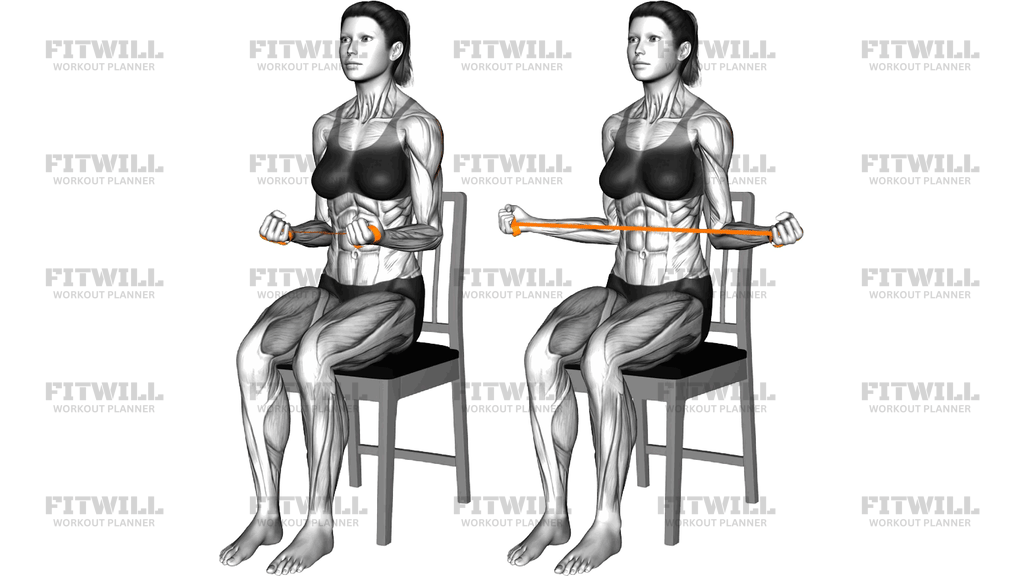
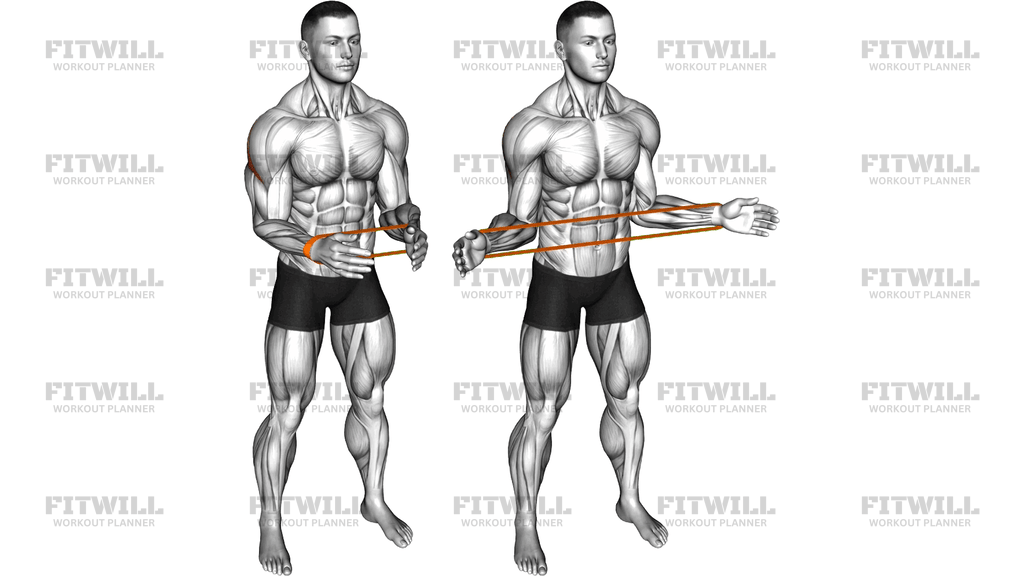
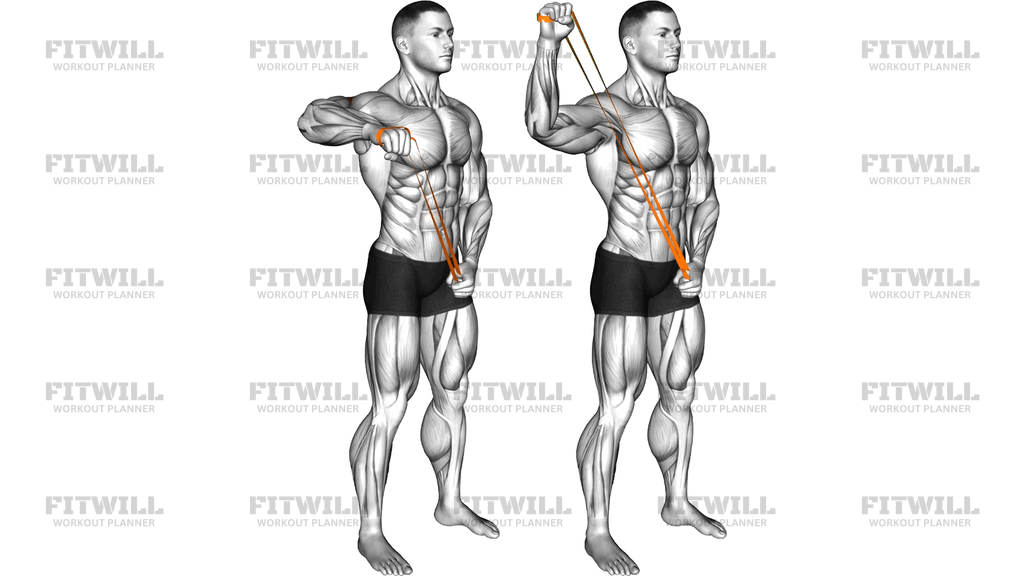
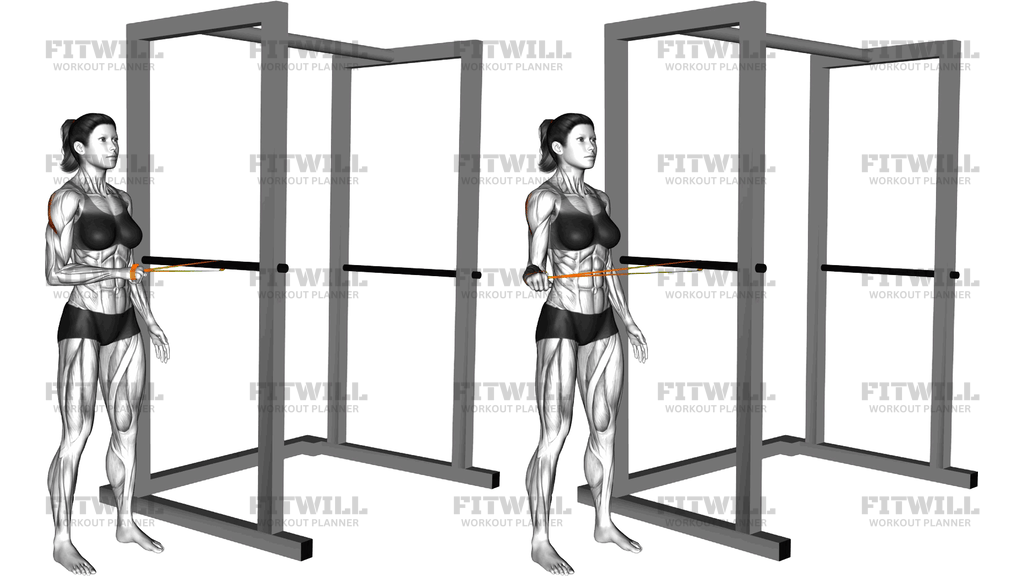
Resistance Band Standing Shoulder External Rotatio
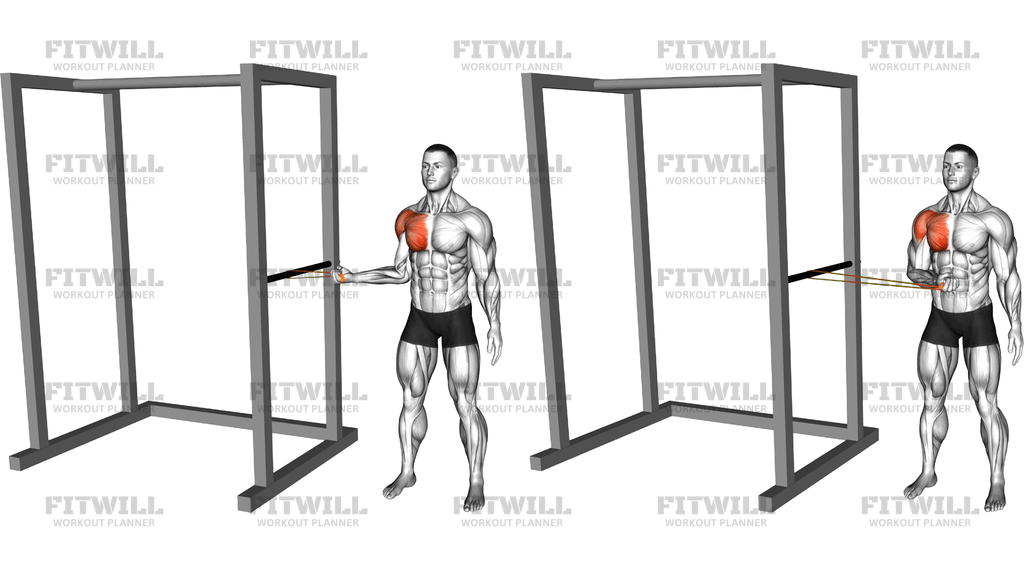
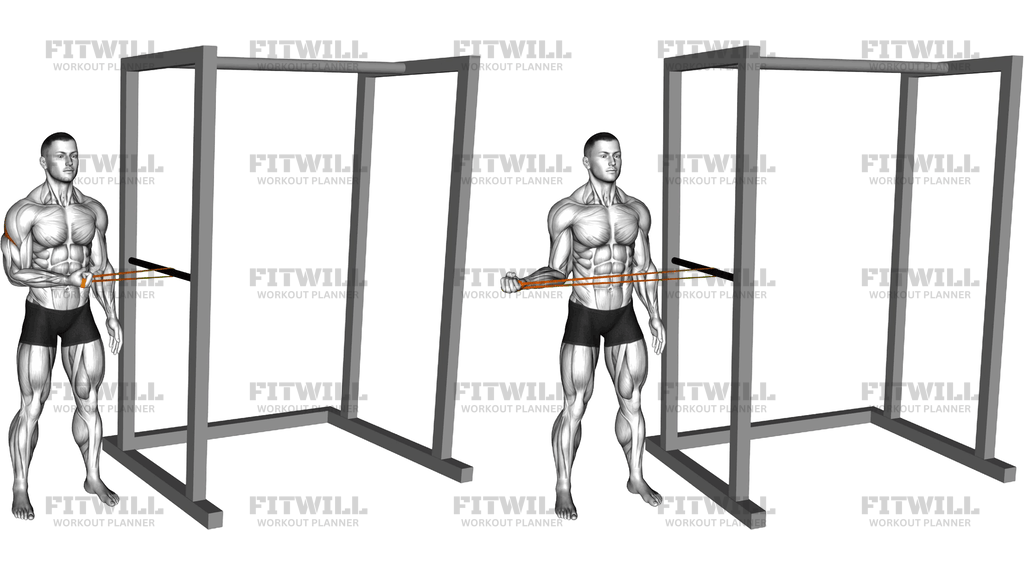
The Resistance Band Standing Shoulder External Rotation is a targeted rotator cuff exercise that strengthens the small muscles responsible for rotating your upper arm outward. You stand side-on to a band anchored at roughly waist height, hold the end with the arm nearest the anchor, elbow bent to 90 degrees and pinned against your ribs, then rotate your forearm away from your body against the band's pull. Because the load is light and the range is short, this is a precision movement rather than a strength showcase.
This exercise earns its place in almost every sensible shoulder program. It is a staple for people rehabbing or prehabbing the rotator cuff, overhead athletes who need durable shoulders for throwing or pressing, and anyone whose bench press or pull-up numbers have stalled because the small stabilizing muscles lag behind the big prime movers. Strong external rotators help keep the head of the humerus centered in the shoulder socket during heavy pressing, which is a large part of long-term shoulder health.
The setup matters more here than in most exercises. Anchoring the band at waist height keeps the resistance line horizontal, so the tension pulls your forearm inward across your body throughout the set. Your elbow must stay glued to your side; the moment it drifts forward or flares out, the movement shifts away from the rotator cuff and toward larger muscles, and the band wins the argument. Standing tall with a braced core and a still torso ensures your shoulder does the rotating, not your spine.
Execution is deliberately slow. Start with your forearm rotated across your stomach, then pull the band by rotating your upper arm outward until your forearm points away from your torso or as far as your shoulder comfortably allows. Pause briefly at the end range, then lower the forearm back across your body under control, resisting the band the whole way in. The return is where most people rush, and it is where a good chunk of the benefit lives.
Keep the weight light. External rotation is one of the few exercises where a resistance band often outperforms free weights, because the tension stays smooth and consistent through the exact range where the rotator cuff is weakest. Two to three sets of 12 to 20 controlled reps per side is a typical dose, either as part of a warm-up before pressing or as focused accessory work.
Treat any sharp pinch in the shoulder as a signal to shorten the range or reduce band tension rather than push through. If your shoulder is healthy, this movement is one of the best low-risk, high-return investments you can make in it.
[ Workout Log & Planner ]
Put your next workout in Fitwill
Keep your plan and training log ready when you are.


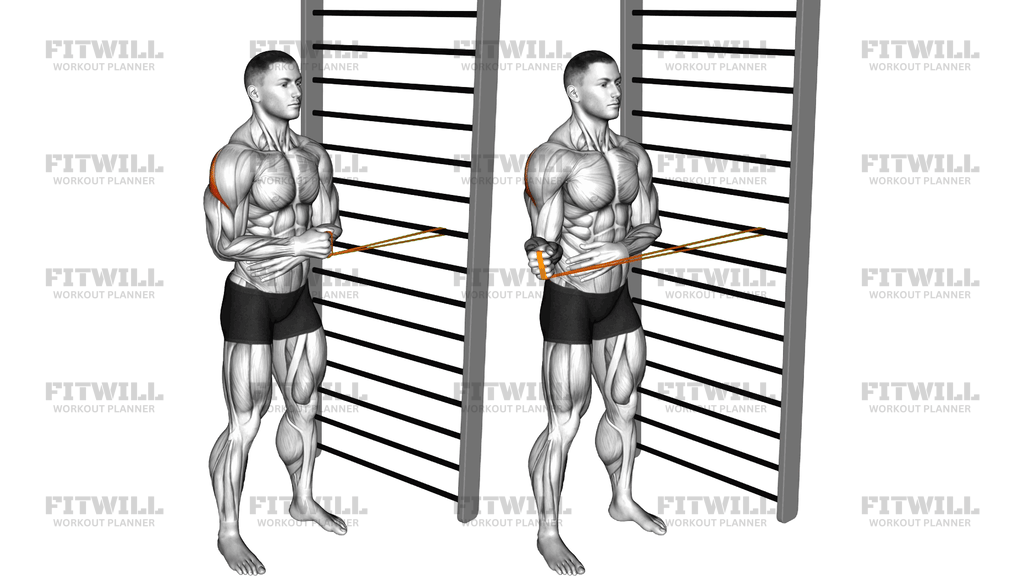
Instructions
- Anchor a resistance band at approximately waist height to a stable rack, rail, or door attachment.
- Stand with your left side facing the anchor if training the left arm, and grip the band's end with your left hand; mirror this for the right side.
- Step sideways until the band has steady tension with your forearm rotated across your stomach and the band pulling it inward.
- Bend your elbow to 90 degrees and press it firmly against the side of your ribs; keep a soft knee bend and a braced torso.
- Exhale and rotate your forearm outward and away from your body, pivoting at the shoulder while the elbow stays locked in place against your ribs.
- Stop when your forearm has rotated out as far as your range comfortably allows, or until the forearm is roughly perpendicular to your torso, and hold for a beat.
- Inhale and slowly let the band rotate your forearm back across your body, taking two to three seconds to return to the start.
- Complete all reps on one side, then switch sides so the band pulls across the opposite arm.
- Between sets, step toward the anchor or release the handle to take tension off the shoulder before resting.
Tips & Tricks
- Tuck a small rolled towel between your elbow and ribs; if it drops during the set, your elbow is drifting, which is the most common fault in this exercise.
- If the band's tension changes sharply through the range, adjust your distance from the anchor so the resistance is challenging but even from start to finish.
- Rotate from the shoulder, not the wrist. Flipping your hand at the end is a sign the band is too heavy and your rotator cuff is passing the job to your forearm.
- Keep your torso square to the front. Leaning back or twisting your spine to finish the rep usually means the band tension is beyond your current external rotation strength.
- A slight, static elbow bend is fine, but do not let the elbow extend and straighten as you pull; the arm angle at the elbow should stay around 90 degrees throughout.
- Train your weaker or stiffer side first and match the reps with your stronger side rather than doing more reps on the good arm.
- If you feel a pinch at the top of the movement, stop a few degrees short of your maximum range and build up gradually; full range is not required for the rotator cuff to benefit.
- Use this as a warm-up with a light band for 15 to 20 smooth reps before pressing days, or as focused work with 12 to 15 slower reps at the end of a session.
Frequently Asked Questions
What muscles does the Resistance Band Standing Shoulder External Rotation work?
It primarily targets the rotator cuff, especially the infraspinatus and teres minor, which rotate the upper arm outward. The rear deltoids and upper back muscles assist while your core stabilizes your torso against the band's pull.
Why should my elbow stay pinned to my ribs during this exercise?
The elbow position fixes the rotation at the shoulder joint, which is what forces the rotator cuff to do the work. If the elbow drifts forward or flares out, larger muscles take over and the shoulder joint itself gets pulled out of a stable position.
How high should I anchor the band?
Anchor it at roughly waist or hip height so the resistance line stays horizontal and matches the height of your working forearm. An anchor that is too high or too low changes the pull direction and makes the exercise harder to control.
Is the Resistance Band Standing Shoulder External Rotation good for beginners?
Yes, and it is one of the best first shoulder exercises to learn because the band provides smooth, light resistance and the range of motion is short. Beginners should start with the lightest band available and prioritize slow, quiet control over tension.
How heavy should the band be for external rotation?
Lighter than you expect. The rotator cuff muscles are small, so a band that lets you complete 12 to 20 strict reps with a perfectly still elbow is the right starting point; if your torso twists or your wrist flips to finish reps, downsize the band.
Can I do this exercise before bench pressing or overhead pressing?
Absolutely. Two or three light sets of 15 to 20 reps per side as a warm-up wake up the rotator cuff and help stabilize the shoulder before heavy pressing. Save heavier band tension for after your main lifts if you want to train it as accessory work.
What is the most common mistake in the Resistance Band Standing Shoulder External Rotation?
Rushing the return. Letting the band snap your forearm back across your body skips the eccentric portion of the rep, where much of the rotator cuff strengthening happens. Take two to three seconds to rotate back in on every rep.
What can I use if I do not have a resistance band?
A cable machine set at waist height with a single handle is the closest substitute and works the same way. A very light dumbbell performed lying on your side, known as a side-lying external rotation, is another option, though it loses the band's constant tension.
Should I feel this exercise anywhere besides my shoulder?
You may feel mild tension in the back of the shoulder and between the shoulder blades, which is normal. If you feel strain in your neck, wrist, or lower back, check that your torso is upright, your grip is relaxed, and the band tension is not excessive.
Is it safe if my shoulder hurts during the movement?
A working muscle burn is fine, but a sharp or pinching pain is not. Stop, reduce the band tension, and work within a shorter, pain-free range; if the discomfort persists across sessions, get the shoulder assessed before continuing.