Resistance Band Standing External Rotation
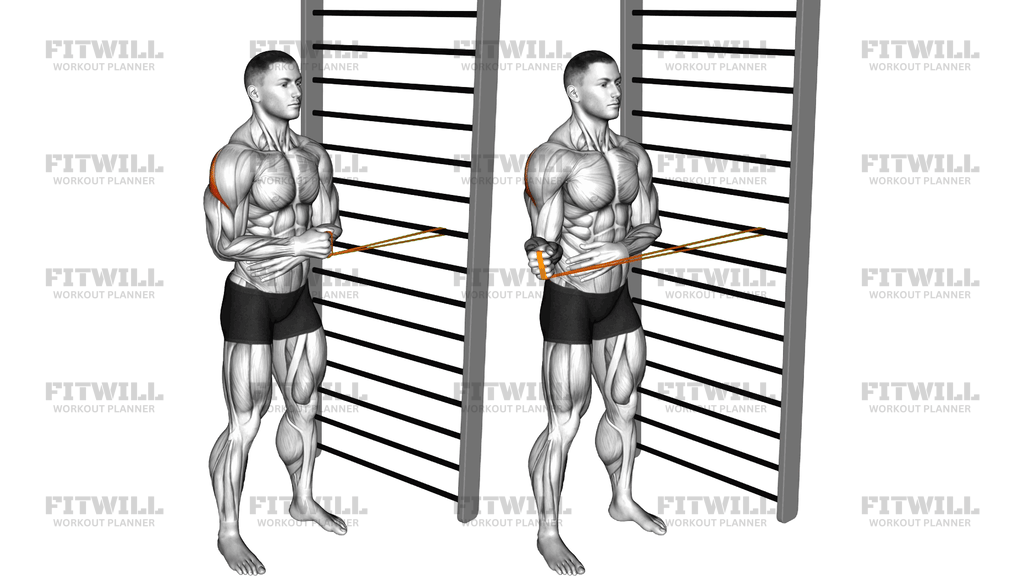
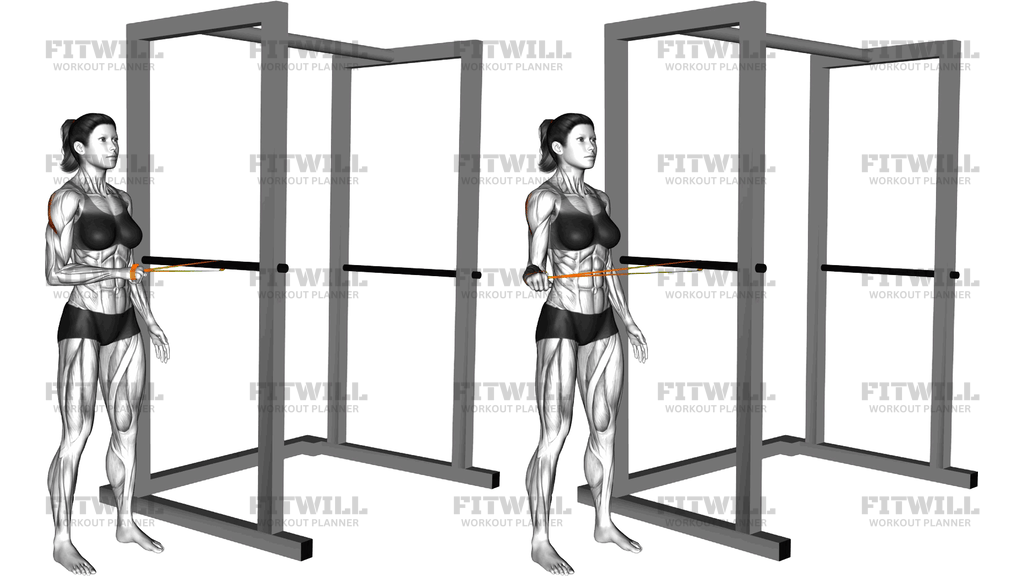
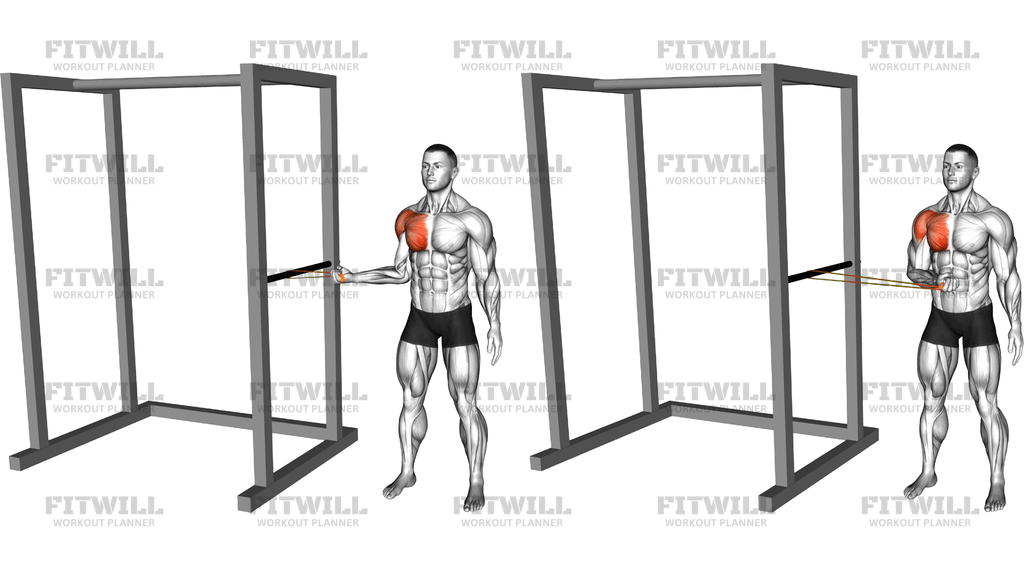
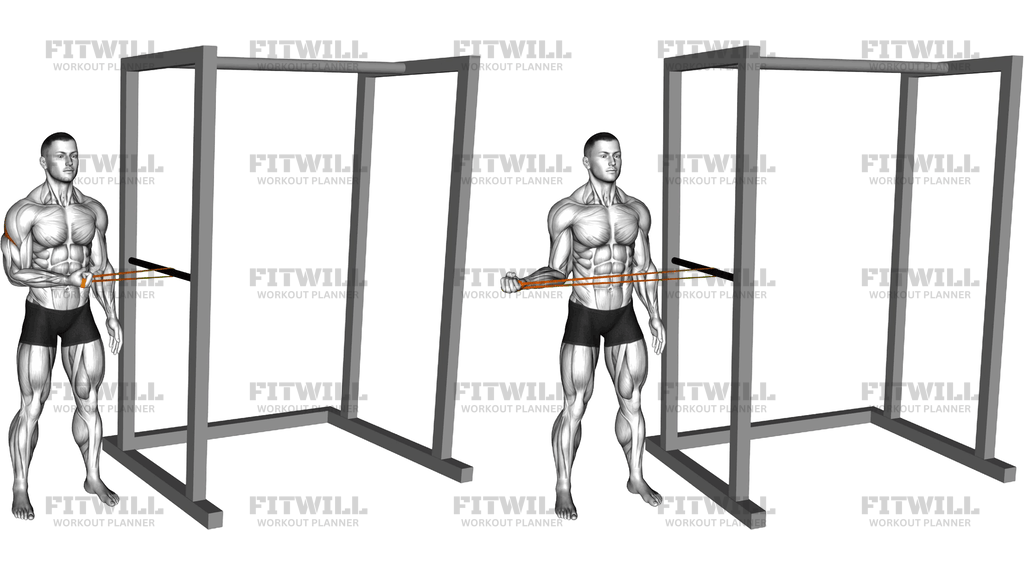
Resistance Band Standing External Rotation is a targeted rotator cuff exercise performed standing with a light loop band anchored across the body by the non-working hand. The working arm stays pinned against your side with the elbow bent to roughly 90 degrees, and you rotate the forearm outward against the band's pull, sweeping the hand away from your midline until the forearm points out to the side. It is one of the simplest and most reliable ways to load the small muscles that steer and stabilize the shoulder joint.
The muscles doing the work are the infraspinatus and teres minor, the two main external rotators of the rotator cuff, with support from the rear deltoid and the muscles of the upper back that keep the shoulder blade from drifting forward. Because the resistance is light and the range is short, this is a control exercise, not a strength showcase. The goal is a smooth, deliberate rotation with the elbow glued to your torso.
This movement shows up most often in shoulder warm-ups, rehab-style programming, and prehab routines for people who press, pull, throw, or swim a lot. Lifters who bench or overhead press heavily benefit from balancing all that internal rotation work, and desk workers often find that weak external rotators contribute to shoulders that sit rolled forward. It is also a common choice for athletes returning from shoulder irritation once a professional has cleared them for resisted rotation.
Setup matters more here than in most band exercises. If the band tension is too heavy, you will see it immediately: the elbow lifts away from the ribs, the shoulder shrugs, and the torso starts twisting to finish the rep. Anchor the band with the opposite hand at the height of your navel, keep the wrist of the working arm neutral, and stand tall with your feet about hip-width apart. A slightly staggered stance can help you stay stable if you tend to sway.
Execute the rep by rotating from the shoulder joint only. The forearm travels like a windshield wiper from across your stomach to out beside you, while the upper arm stays quiet against your side. Pause briefly at the end range, then take two to three seconds to return so the band never snaps your hand back to the start. Breathe steadily, exhaling as you rotate out and inhaling on the way back.
Keep the load honest. Most people do best with a very light band, higher repetitions in the twelve to twenty range, and strict form on both sides. If one shoulder rotates noticeably further than the other, work to the range of the tighter side and let it catch up rather than forcing symmetric distance.
Stay out of pain. A mild working sensation in the back of the shoulder is normal, but sharp pinching at the front of the shoulder means the elbow has drifted or the range is too aggressive for the moment. Shrink the range, lighten the band, and keep the movement smooth.
[ Workout Log & Planner ]
Put your next workout in Fitwill
Keep your plan and training log ready when you are.


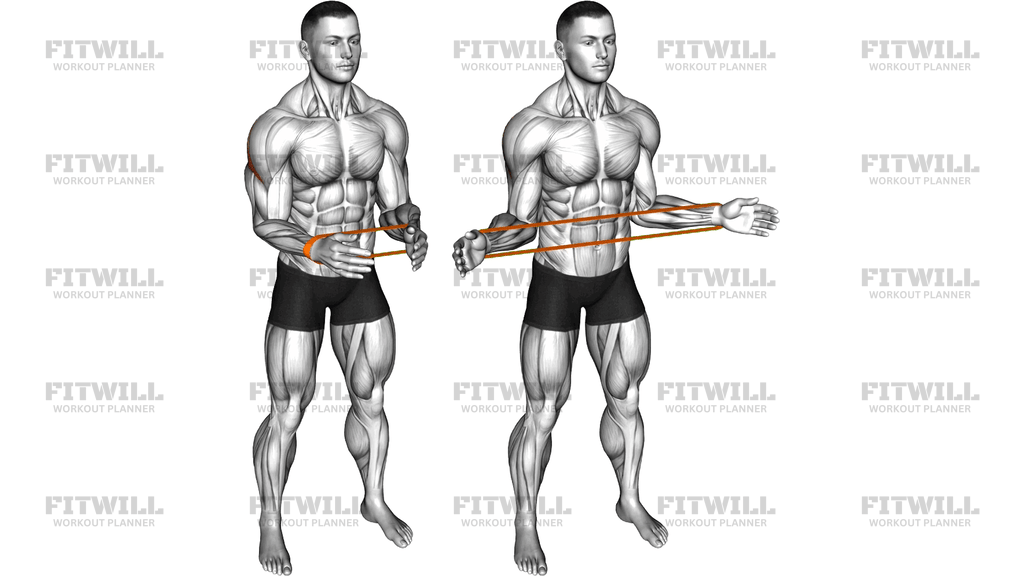
Instructions
- Stand tall with your feet hip-width apart and hold a light loop resistance band in both hands.
- Loop the band around the wrist or hand of your working arm, then anchor the opposite end by pressing it against the front of your opposite hip with your non-working hand so the band runs across your body with light tension.
- Bend the working elbow to 90 degrees and pin it against your side, forearm starting across your stomach and palm facing in toward your body.
- Brace your core, pull your shoulder blade gently back and down, and keep your shoulders level so the working side does not shrug.
- Exhale and rotate your forearm outward away from your body, keeping the elbow fixed to your ribs, until your forearm points out to the side at roughly 90 degrees from your torso.
- Pause for one to two seconds at the end range without letting your elbow drift forward or your torso twist.
- Inhale and return slowly over two to three seconds, controlling the band as it pulls your forearm back across your stomach.
- Complete all repetitions on one side, then re-anchor the band in your other hand and repeat on the opposite arm.
- Between sets, stand up and gently shake out your arms and shoulders before starting the next set.
Tips & Tricks
- The most common fault is the elbow peeling away from the ribs as you rotate, which turns a rotator cuff exercise into a general arm swing. Tuck a small towel between your elbow and waist and keep it there for the whole set.
- If the band drags your hand back to the start on the return, the lowering is too fast. Count two to three seconds down so you control the band instead of the band controlling you.
- Shrugging the working shoulder usually means the band is too heavy or you are reaching for extra range. Drop to a lighter band and rotate only as far as the elbow stays quiet.
- Wrist collapse is subtle but common. Keep the wrist in line with the forearm, as if the hand were an extension of the arm, rather than letting the band bend it backward.
- Avoid twisting your torso toward the working side to squeeze out a longer range. Face forward the entire time; the rotation should happen at the shoulder joint alone.
- On the non-working side, keep that hand pressing the band firmly into your hip. If the anchor slips, tension changes mid-set and the rep gets uneven.
- Start with your forearm slightly across your belly rather than straight down. This gives you a few degrees of loaded internal rotation to rotate out of, which keeps constant tension on the band.
- Do not chase height with the hand. The forearm finishes out to the side, roughly level with your elbow, not cranked up toward the ceiling.
- If you feel a pinch at the front of the shoulder, back off about ten degrees of range and slow the tempo. The pain-free window usually expands within a couple of weeks of consistent, light work.
- Because the rotator cuff responds well to frequency, two or three short sets per side before upper body sessions is often more valuable than one heavy, exhausting set.
Frequently Asked Questions
What muscles does the Resistance Band Standing External Rotation work?
It primarily targets the infraspinatus and teres minor of the rotator cuff, which externally rotate the shoulder. The rear deltoid and upper back muscles assist and help keep the shoulder blade stable.
Why does my elbow keep lifting off my side during the Resistance Band Standing External Rotation?
That almost always means the band is too heavy or you are rotating past your available range. Lighten the band and stop the rotation where your elbow can stay pinned, even if that is only partway out.
How far should my forearm rotate in the Resistance Band Standing External Rotation?
Aim for the forearm to end up out to the side at roughly 90 degrees from your torso, level with your elbow. If you cannot get there without shrugging or twisting, work within your current range.
Is the Resistance Band Standing External Rotation good for beginners?
Yes, it is one of the most beginner-friendly shoulder exercises because the setup is simple and the load is light. Beginners should focus on slow tempo and keeping the elbow fixed rather than adding resistance.
How many reps and sets should I do of the Resistance Band Standing External Rotation?
Two to three sets of twelve to twenty controlled reps per side works well for most people. The rotator cuff benefits from higher reps with light resistance rather than heavy effort.
Should I do the Resistance Band Standing External Rotation before or after my workout?
It works best as part of your warm-up before pressing, pulling, or overhead work, when the cuff is fresh to stabilize the shoulder. Doing it fresh also makes it easier to keep the form strict.
Can I do the Resistance Band Standing External Rotation if one shoulder is weaker than the other?
Yes, train each arm separately and match the reps and range to your weaker side. The single-arm setup with the band anchored by the opposite hand makes it easy to address imbalances without compensating.
What can I use if I do not have a resistance band for the Resistance Band Standing External Rotation?
A cable machine with a single handle set at waist height is the closest substitute, using the same elbow-pinned rotation. A very light dumbbell lying on your side is another option, though the standing band version keeps constant tension through the range.
Is it normal to feel the Resistance Band Standing External Rotation in the front of my shoulder?
A working feeling should sit in the back of the shoulder, not the front. Front-of-shoulder pinching usually means the elbow drifted forward or the range is too large, so shorten the arc and reset the elbow against your ribs.
How do I choose the right band tension for the Resistance Band Standing External Rotation?
Pick a band light enough that you can complete all reps with the elbow glued to your side and no torso twist. If your form breaks down before rep twelve, go lighter rather than pushing through.