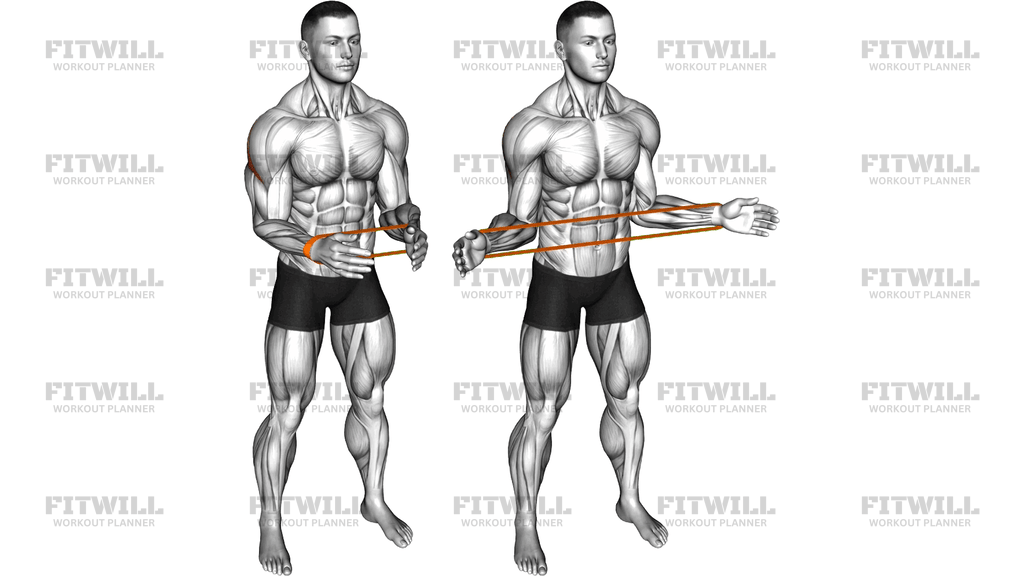
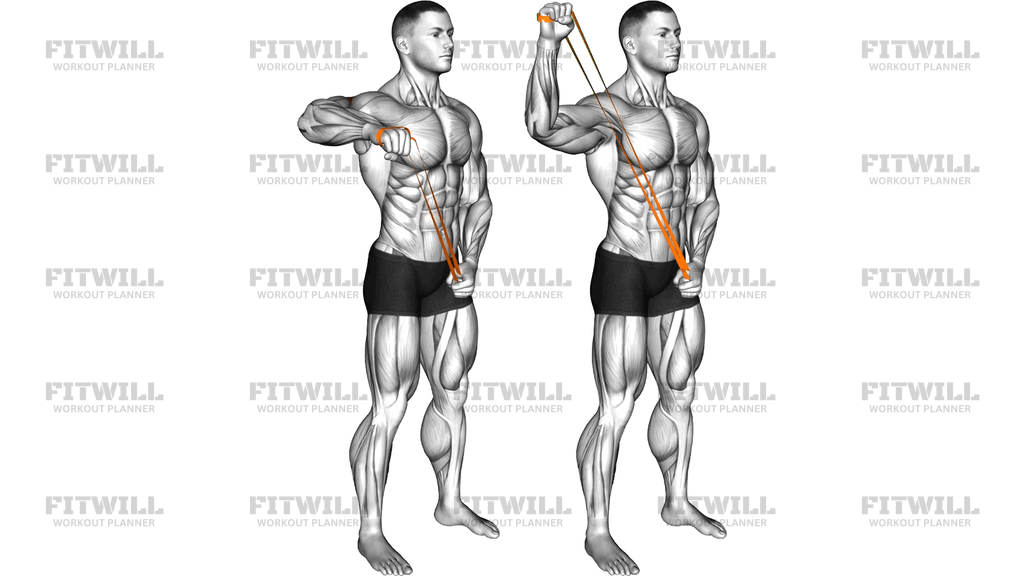
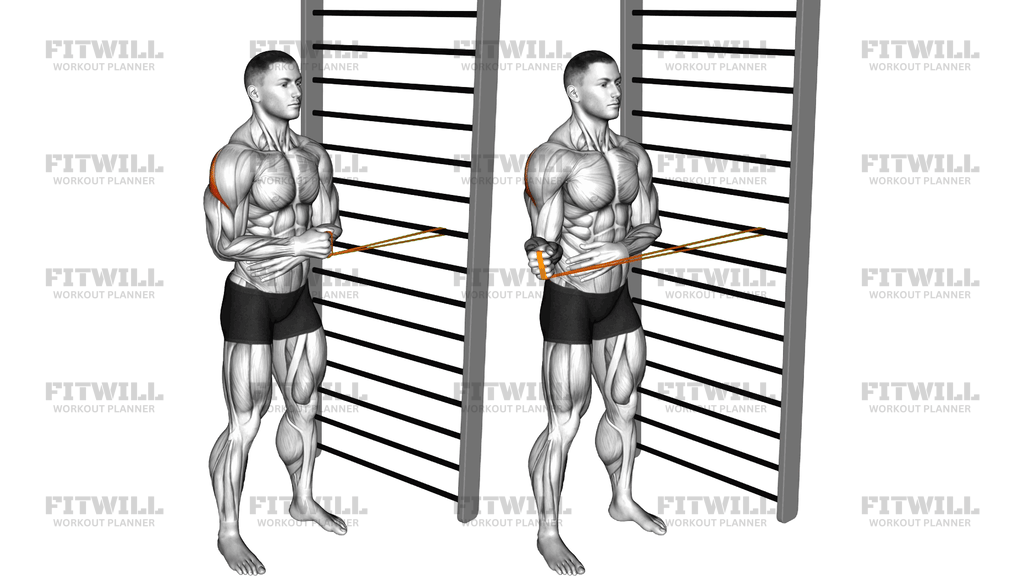
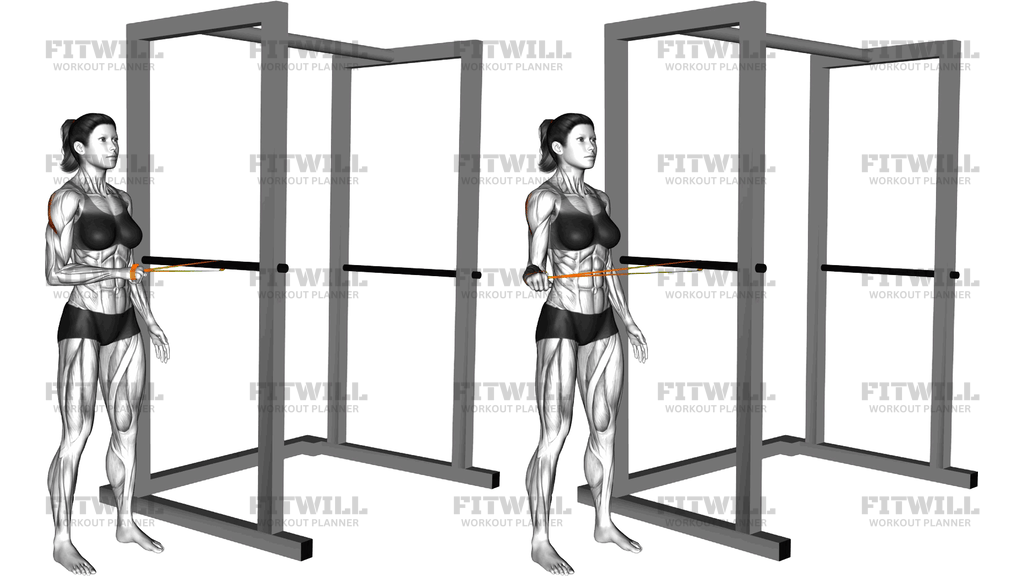
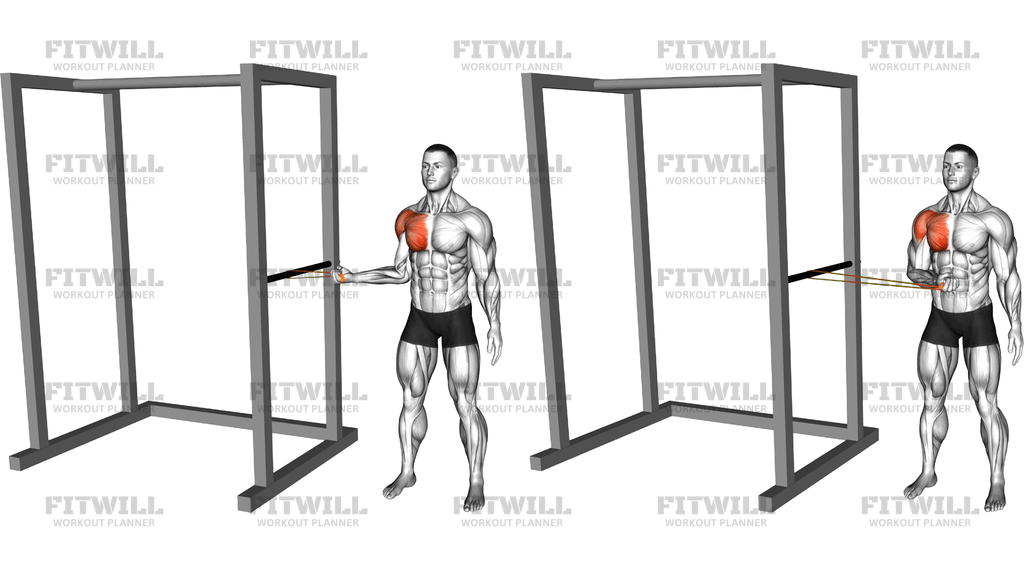
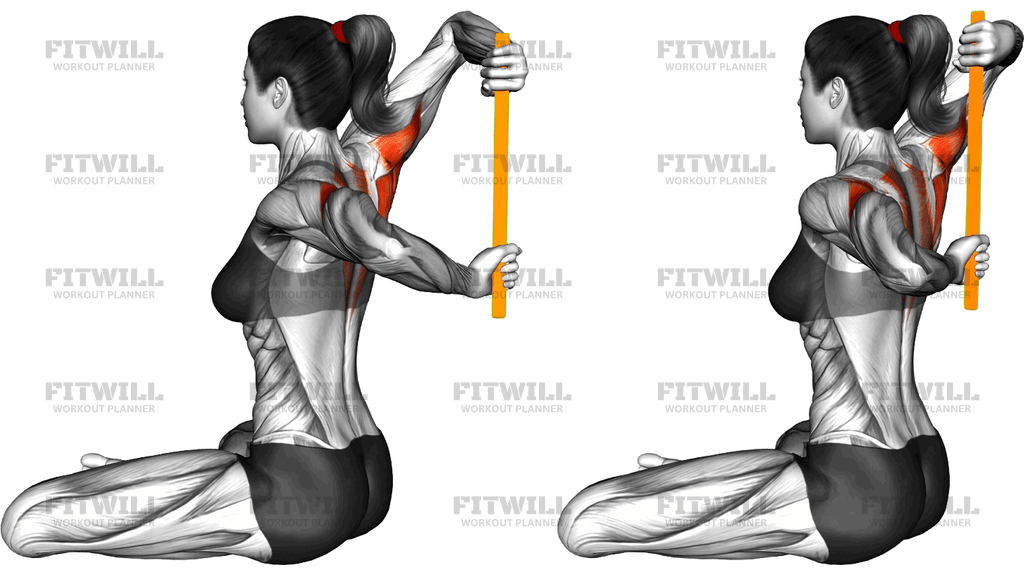
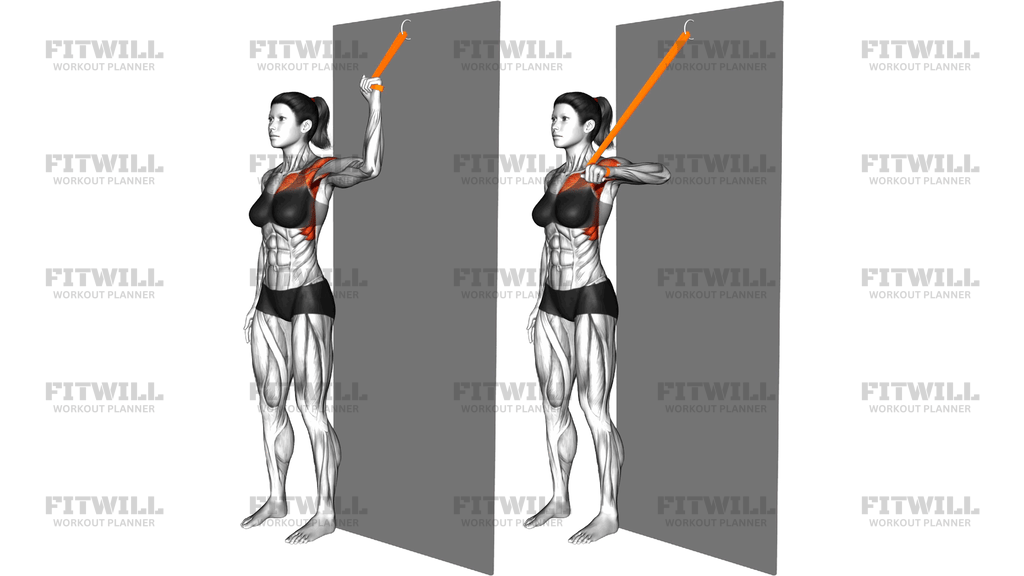
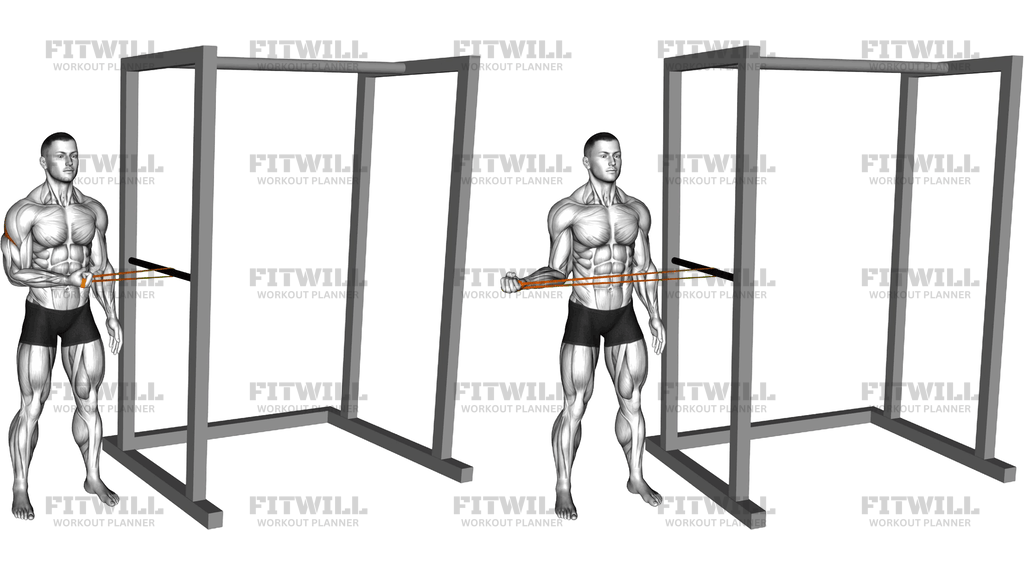
Sitting External Rotation On A Chair
Sitting External Rotation On A Chair is a simple but precise rotator cuff exercise performed with a resistance band while seated upright. You loop the band around both hands, tuck your elbows firmly against your ribs with the arms bent to about ninety degrees, and rotate the forearms outward against the band's tension, then control them back in. The chair keeps your torso stable so the only moving joints are the shoulder joints, which is exactly what makes this drill effective for training external rotation in isolation.
The main muscles working here are the external rotators of the rotator cuff, chiefly the infraspinatus and teres minor, with support from the rear deltoids and the muscles between the shoulder blades that keep the scapula quiet. Because the resistance is light and the range is short, this is a control exercise rather than a strength showcase. The goal is clean, smooth rotations with the elbow glued to your side, not pulling the band apart as far as possible.
This movement is a staple for anyone rebuilding shoulder health after irritation, warming up before pressing or pulling, or counterbalancing lots of pressing, desk work, or internal-rotation-dominant daily positions. Office workers, swimmers, throwers, and lifters who feel their shoulders grinding in overhead work all tend to benefit from regular external rotation practice. The seated version is especially friendly for beginners because the chair removes the balance and posture demands of standing variations.
Setup matters more than load here. Sit tall on the chair with feet flat and the band wrapped around both hands so it stays secure and provides light tension even when the forearms hang down in front of your waist. If your elbows drift away from your ribs, your shoulders shrug, or your wrists bend, the resistance is too heavy or the band is too short. Choose a band that lets you rotate out about thirty to forty-five degrees without any compensation.
To execute well, exhale as you rotate the hands outward, keeping the elbows pinned and the forearms parallel to the floor. Pause briefly at the widest point you can reach with a neutral wrist, then take two to three seconds to return with control rather than letting the band snap your hands back together. The return is where much of the rotator cuff work happens, so resist the pull instead of collapsing.
Keep reps modest, usually ten to fifteen per set, and stop well before form breaks down. A mild working effort in the back of the shoulder is normal; sharp pain, pinching, or tingling is not. If you have a current shoulder injury or recent surgery, check with a qualified professional before adding this to your routine, and start with the lightest band available.
[ Workout Log & Planner ]
Put your next workout in Fitwill
Keep your plan and training log ready when you are.


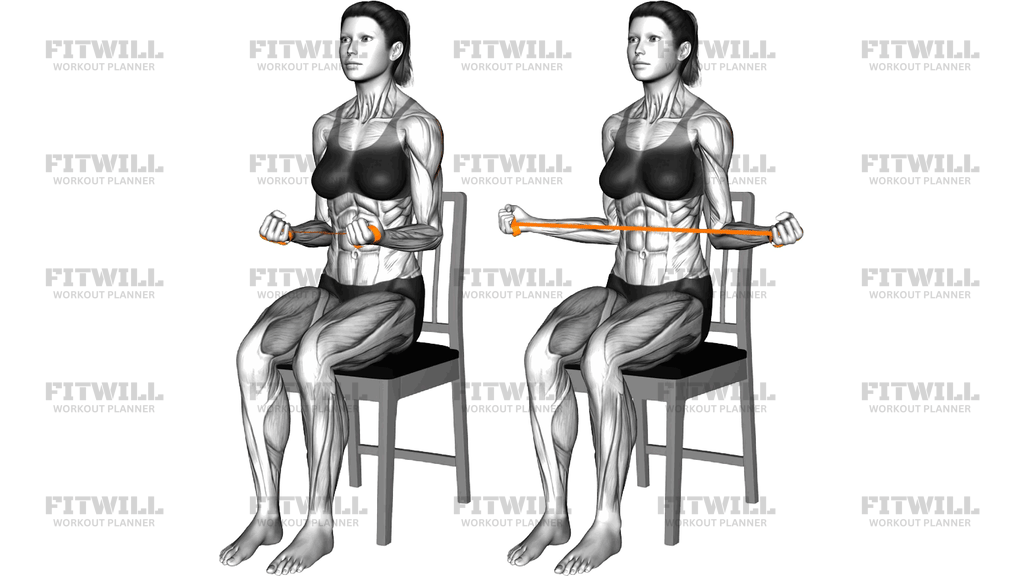
Instructions
- Sit on the edge of a sturdy chair with your feet flat on the floor, knees bent about ninety degrees, and your spine tall without leaning back into the chairrest.
- Loop a light resistance band around both hands and stretch it slightly so there is gentle tension when your hands are held together in front of your waist.
- Bend both elbows to ninety degrees and press your upper arms firmly against your sides, forearms pointing forward and parallel to the floor.
- Brace your abdominals lightly and draw your shoulder blades down and back so your shoulders stay away from your ears.
- Keeping your elbows glued to your ribs, rotate both forearms outward, pulling your hands apart against the band until you reach a comfortable end range, roughly thirty to forty-five degrees.
- Hold the open position for one second, keeping your wrists straight and your elbows in exactly the same spot against your torso.
- Slowly rotate your hands back together over two to three seconds, resisting the band's pull instead of letting it snap your forearms inward.
- Exhale as you rotate outward and inhale as you return to the starting position.
- Complete ten to fifteen controlled repetitions, then reset your posture and band tension before the next set.
Tips & Tricks
- If your elbows float forward or away from your ribs as you rotate out, place a small rolled towel between each upper arm and your side; dropping it means you lost position.
- A band that is too strong is the most common mistake with this drill — it forces your shoulder blades to shrug and your rear shoulders to take over. Downgrade the resistance rather than cheating the path.
- Keep the forearms level with the floor throughout. If your hands drift up toward your chest, the movement becomes a partial row and stops isolating external rotation.
- Do not flare your lower back or arch your chest forward to gain extra range; the rotation should come only from the shoulder joints.
- If one side rotates noticeably farther than the other, train each arm separately with one end of the band anchored or held against your side, and start with the weaker side.
- Slow the return phase deliberately — the band pulling your hands back together is eccentric work for the external rotators and rushing it wastes the exercise.
- Use this as a warm-up before benching, overhead pressing, or pulling rather than as a heavy finisher; pre-fatiguing the rotator cuff at the end of a session reduces its protective value.
- If the band slips off your hands, wrap it one extra time around each palm instead of gripping harder, which creates forearm and wrist tension.
Frequently Asked Questions
Which muscles does Sitting External Rotation On A Chair work?
It primarily targets the external rotators of the rotator cuff, especially the infraspinatus and teres minor, with assistance from the rear deltoids and the upper back muscles that stabilize the shoulder blades.
Is Sitting External Rotation On A Chair suitable for beginners?
Yes, and it is actually one of the best starting points for shoulder training. The chair stabilizes your torso, and the band provides light, adjustable resistance that lets you learn the movement pattern safely.
Why do my elbows have to stay against my sides during this exercise?
Keeping the elbows pinned to your ribs fixes the upper arm so the rotation happens at the shoulder joint itself. If the elbows drift, your chest and rear shoulder muscles take over and the rotator cuff stops doing the work.
How far should I rotate my hands outward?
Rotate only to the point where your forearms move comfortably outward, typically thirty to forty-five degrees while seated with elbows at your sides. Forcing extra range by shrugging or arching your back defeats the purpose.
What band tension should I use for Sitting External Rotation On A Chair?
Use the lightest band that gives you mild resistance through all fifteen repetitions with clean form. If you cannot keep your elbows down or your wrists straight, the band is too strong.
Can I do Sitting External Rotation On A Chair standing instead?
Yes, a standing version works, but sitting removes balance and leg involvement, making it easier to feel the shoulder doing the work. Stand only once you can keep perfect torso position throughout the set.
How many sets and reps should I do?
Two to three sets of ten to fifteen controlled repetitions per session is typical. Because this is a small, endurance-oriented muscle group, higher reps with light resistance work better than heavy, low-rep attempts.
Should I feel this exercise anywhere besides the back of my shoulder?
A mild effort deep in the back of the shoulder and between the shoulder blades is normal. Sharp pain, pinching at the front of the shoulder, or tingling down the arm means you should reduce the range or resistance and reassess.
Can I use a dumbbell instead of a band for this seated rotation?
A light dumbbell works for a side-lying external rotation, but seated upright against gravity the band is more effective because it keeps tension on the rotator cuff through the entire arc, including the return.
When is the best time to include this exercise in my routine?
It works well as a warm-up before pressing, pulling, or overhead sports, or as standalone maintenance work two to three times per week. Avoid training it to fatigue right before heavy pressing sessions.